Summary:
There is a moment most homeowners know, which is when you turn on the shower, wait longer than usual, and the water never really gets hot. Or you hear a low rumbling from the utility room and tell yourself it is probably nothing. Maybe you have already paid for one repair this year and you are hoping to stretch a little more life out of the unit before committing to a replacement.
That instinct makes sense. But it can also cost you more in the long run. Here is how to tell the difference between a water heater that needs a fix and one that is past the point of saving.
Five Warning Signs Your Water Heater Is Failing
A water heater in decline does not usually announce itself dramatically. It gives you small, easy-to-ignore signals for months before it fails completely. The five signs below are the ones we see most often in Staten Island and New York County homes, and the ones that most reliably point toward replacement rather than repair.
Knowing what to look for puts you in a much better position to make a clear-headed decision instead of a panicked one at 7 a.m. when there is no hot water and you have somewhere to be.
If the water coming out of your hot tap looks brownish or has a metallic smell, the first instinct is usually to blame the pipes. But here is a quick way to check: if only the hot water runs discolored and the cold tap runs clear, the problem is almost certainly inside the water heater itself, not your plumbing.
Every tank-style water heater has a component called a sacrificial anode rod, which is a metal rod designed to corrode slowly over time so the tank lining does not. When that rod is spent, the tank starts to rust from the inside out. Discolored hot water is often the first visible sign that this process is well underway.
At this stage, a repair will not fix the underlying problem. You can replace the anode rod if you catch it early enough, but if corrosion has already reached the tank walls, the structural integrity of the tank is compromised. No repair addresses that. Continued use risks a slow leak that turns into a much bigger mess, especially in finished basements, which are common in Staten Island’s older single-family housing stock.
If the tank is showing internal rust, replacement is the right move, not another service call.
A water heater that starts making noise, such as low rumbling, popping, or banging when it heats, is telling you something worth paying attention to. The cause is almost always sediment. Over years of use, minerals from the water supply settle at the bottom of the tank. As the burner heats the water, it has to push through that layer of buildup, and the sounds you hear are the result of that friction and steam pressure.
Beyond the noise, sediment buildup forces your water heater to work harder to do the same job. That means more energy used, higher utility bills, and accelerated wear on the tank itself. Water heating is already the second-largest energy expense in most homes, and a sediment-clogged unit compounds that cost every month it keeps running.
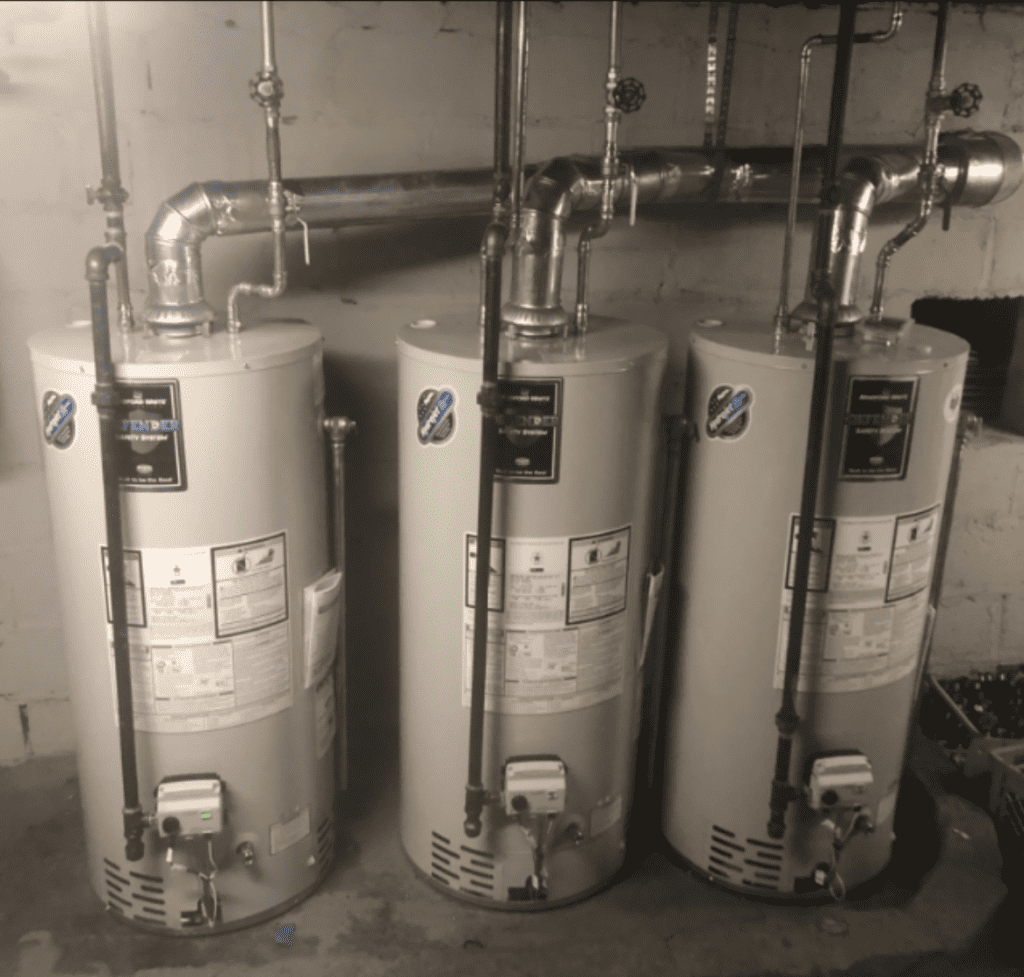
In some cases, a thorough flush can address early-stage sediment buildup. But if the unit is 10 years or older, and a large share of water heaters in Staten Island homes are given that the average home here was built in 1973, sediment accumulation is usually a sign that the tank is nearing the end of its useful life. Flushing it buys time, not longevity.
The other thing to check when you hear these sounds is the pressure relief valve. This is a safety component that releases pressure if the tank gets too hot. A valve that is dripping, hissing, or visibly corroded is a red flag that goes beyond noise, as it is a safety issue that warrants immediate attention.
When Repair Stops Making Financial Sense
The repair-versus-replace decision trips up a lot of homeowners because replacement feels like the bigger commitment. But there is a straightforward framework the industry uses: if a repair is going to cost 50 percent or more of what a full replacement would cost, replace it. Spending $600 to fix a unit that is 11 years old and worth $1,200 installed does not protect you, as it just delays the inevitable and adds to the total you will spend before it is over.
The other clear signal is frequency. If you have called for repairs more than twice in the past year, the pattern itself is the problem. A unit that needs repeated attention is one that is failing incrementally, and each repair is a short-term patch on a long-term decline.
This is one of the first questions people ask, and it is a fair one. Costs in New York City run higher than national averages, since the cost of living here is roughly 75 percent above the national average and labor reflects that. For a standard gas tank replacement of 40 to 50 gallons, expect to pay somewhere in the range of $1,000 to $2,500 installed, depending on access, venting requirements, and the unit itself. A tankless gas system runs higher, typically $2,500 to $5,500 or more, depending on the complexity of the installation.
Every water heater replacement in New York City requires a permit from the NYC Department of Buildings. That permit runs $130 as a flat fee and requires a final inspection before the job is officially closed. Any contractor who suggests skipping the permit is cutting a corner that leaves you exposed to code violations, failed inspections, and potential issues with your homeowner’s insurance.
If you are considering a heat pump water heater, New York State’s NYSERDA Clean Heat program offers $700 to $1,000 off the purchase and installation of qualifying units. There is also a federal tax credit of 30 percent on qualified energy-efficient improvements, plus up to $600 specifically for heat pump water heater purchases. For Staten Island homeowners thinking about the long-term cost of hot water, those numbers are worth factoring in.
The bottom line: replacement is a real expense, but when you account for energy savings on a modern, efficient unit, the total cost over the life of the new water heater often looks very different from the upfront number.
In New York City, gas-connected water heater replacement must be performed by or under the direct supervision of a NYC Licensed Master Plumber. This is a distinct credential issued by the NYC Department of Buildings, separate from a standard state plumbing license, and it requires extensive testing, documented experience, and ongoing compliance with DOB regulations.
This is not a bureaucratic technicality. Gas appliances installed by unlicensed workers are a genuine safety risk, and in NYC, they are illegal. Beyond safety, an installation done without a proper permit or by someone without the right credentials can void your homeowner’s insurance coverage and create serious complications if you ever sell the property.
We hold a NYC Licensed Master Plumber credential and have for 35 years. On every water heater replacement job we take, we pull the permit, coordinate whatever is needed with building management when applicable, handle proper venting and gas line connections, dispose of the old unit according to NYC environmental regulations, and schedule the final DOB inspection. You do not have to manage any of that, as it is part of the job.
When RB Mechanical shows up to do the work, you are getting the people whose names are on the license, not a crew dispatched from a call center. That accountability does not disappear when the job is done. We have built our reputation in Staten Island and New York County one job at a time over three generations, and we are not going to put that at risk by cutting corners on yours.
Ready To Stop Guessing? Here Is What To Do Next
If your water heater is showing any of these signs, such as discolored water, unusual noise, repeated repairs, inconsistent heat, or visible leaking from the tank body, the honest answer is usually that repair is buying time, not solving the problem. The longer you wait, the more likely you are to end up making the decision in an emergency rather than on your own terms.
A straightforward conversation can clear up most of the uncertainty. You do not need to know if you need a tank or tankless unit, or if your building’s venting will require modifications, since that is what the assessment is for.
If you are in Staten Island or New York County and you want a straight answer from a licensed master plumber who will show up and do the work, reach out to RB Mechanical Plumbing and Heating at 646-996-5806 today to schedule your expert water heater assessment and get a straight answer on where your system stands.