Summary:
You received a notice about Local Law 152. Or maybe you’re trying to sell your building and discovered open violations blocking the transaction. Either way, you’re dealing with NYC’s building compliance requirements—and the stakes are higher than most property owners realize.
Local Law 152 isn’t just another bureaucratic checkbox. It’s a gas safety mandate affecting over 280,000 buildings across New York City, with inspection cycles tied to your community district and penalties reaching $10,000 for non-compliance. For Richmond County property owners, understanding these requirements and working with qualified professionals determines whether you face smooth inspections or costly violations that derail financing, sales, and tenant relationships.
Here’s what you actually need to know about building compliance NYC regulations and how to handle Local Law 152 without the confusion.
What Local Law 152 Means for Richmond County Property Owners
Local Law 152 requires periodic inspections of exposed gas piping systems in most NYC buildings. Passed in 2016 and fully implemented in 2020, this law targets buildings with three or more units—meaning if you own a multi-family property, mixed-use building, or commercial space in Richmond County, you’re likely affected.
The law exists because aging gas infrastructure poses real safety risks. Corrosion, illegal connections, and deteriorating piping can lead to gas leaks, explosions, and utility shutoffs. By mandating inspections every four years, the city aims to catch problems before they become emergencies.
Your inspection deadline depends on your building’s community district, not the calendar year. Richmond County follows the same staggered schedule as the rest of NYC, with different districts due in different years. Missing your deadline triggers violations that appear on title searches, block refinancing, and prevent property sales until resolved.
Who Must Comply with Local Law 152 in NYC
Nearly every building in Richmond County with gas piping must comply with Local Law 152, with one major exception: one- and two-family homes classified as Occupancy Group R-3 are exempt. If your building has three or more residential units, operates as a commercial property, or functions as mixed-use space, you need inspections.
The Department of Buildings maintains a list of approximately 280,000 buildings citywide that fall under Local Law 152 requirements. You can verify your building’s status by checking the DOB’s official property list or contacting a Licensed Master Plumber familiar with classification codes.
Even buildings without gas piping aren’t completely exempt. You still must file a certification every four years confirming the absence of gas systems. This certification requires a Licensed Master Plumber, registered architect, or professional engineer to sign and seal the document, then submit it to the DOB on the same schedule as buildings with active gas systems.
What gets property owners in trouble is assuming they don’t need to comply because they “never received a notice.” The law doesn’t require individual notification. Your responsibility begins when your community district’s inspection window opens, regardless of whether you received a letter. Ignorance of the deadline doesn’t prevent violations or penalties.
The inspection covers all exposed gas piping from the point where gas enters your building through common areas, hallways, corridors, mechanical rooms, and boiler rooms. It does not include piping within individual tenant apartments. This scope matters because some property owners mistakenly believe they need tenant access for compliance—you don’t for the standard inspection.
Buildings that previously passed utility company inspections might wonder if that satisfies Local Law 152. It doesn’t. While utility inspections cover similar ground, DOB requires separate compliance through a Licensed Master Plumber who completes the specific GPS1 and GPS2 forms mandated by Local Law 152.
Understanding the Local Law 152 Inspection Timeline
Your inspection deadline is tied to your building’s community district, which follows a four-year rotating cycle. Richmond County property owners need to identify their specific district to determine when inspections are due. The current cycle divides NYC’s community districts into four groups, each with a designated year for compliance.
Once you know your district’s year, you have until December 31 of that year to complete the inspection and file the required certifications with the Department of Buildings. This deadline is firm, though the DOB does allow a one-time 180-day extension per cycle if you request it through their online portal before your deadline passes.
The inspection itself is just the first step. After a Licensed Master Plumber completes the visual inspection of your exposed gas piping, you receive a GPS1 report within 30 days. This report details any deficiencies found during the inspection. You then have 60 days from the inspection date to file a GPS2 certification with the DOB, regardless of whether problems were discovered.
If the inspection reveals issues requiring correction, you have 120 days from the inspection date to fix the problems and file an affirmation of correction. In cases where repairs need more time, the Licensed Master Plumber can indicate on the GPS1 that extended time is necessary, giving you 180 days total to complete corrections and file updated certification.
Missing these deadlines creates a cascade of problems. First, you face DOB violations that become part of your building’s permanent public record. These violations appear during title searches, which means potential buyers, lenders, and insurance companies see them. Second, penalties start accumulating—initially $5,000, but potentially reaching $10,000 for continued non-compliance.
Third, and perhaps most concerning for Richmond County property owners, open violations can prevent you from refinancing your mortgage or selling your property. Real estate transactions routinely stall when title searches reveal outstanding DOB violations. Clearing these violations takes time, often derailing deals and costing you opportunities.
The year-end rush compounds these challenges. Many property owners procrastinate until November or December, creating a bottleneck where Licensed Master Plumbers are booked solid and scheduling becomes nearly impossible. If you’re due for inspection this year, scheduling in the first or second quarter gives you breathing room for any unexpected issues.
Gas Piping Inspection Requirements Under Local Law 152
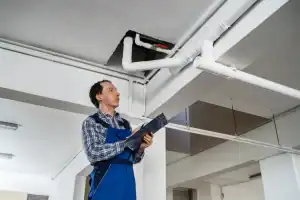
The actual inspection process is more straightforward than most property owners expect. A Licensed Master Plumber conducts a visual examination of all exposed gas piping from the point where gas enters your building through common areas, mechanical rooms, and boiler rooms. The inspector isn’t looking inside walls or requiring pressure tests—just visually assessing what’s already exposed.
During the inspection, the Licensed Master Plumber checks for corrosion, illegal connections, non-code compliant installations, gas leaks, and any conditions that could pose safety hazards. They’re also verifying that piping, valves, regulators, and related equipment meet current code requirements.
No gas shutoff is required for a routine Local Law 152 inspection. Your tenants maintain service throughout the process. The inspection typically takes anywhere from 30 minutes to a few hours depending on your building’s size and complexity. For Richmond County buildings with pre-war systems or complex boiler setups, having an inspector familiar with older infrastructure makes the process smoother.
Working with a Certified Plumber NYC for Compliance
Local Law 152 explicitly requires that inspections be performed by a Licensed Master Plumber or a qualified individual working under the direct and continuing supervision of a Licensed Master Plumber. This isn’t a job for general contractors or handymen—the DOB only accepts certifications signed and sealed by properly licensed professionals.
A Licensed Master Plumber in NYC holds one of the most rigorous credentials in the plumbing industry. Candidates need at least seven years of experience in plumbing system installation and design, must pass both written and practical exams, and undergo extensive background investigations before receiving their license. In New York City, these professionals are licensed and regulated by the Department of Buildings, with license numbers that can be verified through public databases.
When hiring a certified plumber NYC for your Local Law 152 inspection, verify their license is active and in good standing. The DOB maintains a license search tool where you can confirm credentials by name, business name, or license number. You can also check disciplinary records to ensure the plumber hasn’t faced violations or sanctions that might affect their ability to certify your building.
Experience with Local Law 152 specifically matters more than general plumbing experience. The inspection requirements, reporting forms, and DOB filing procedures have nuances that plumbers unfamiliar with the law might miss. Ask potential inspectors how many Local Law 152 inspections they’ve completed and whether they handle the GPS2 filing process or leave that to you.
Some property owners try to save money by hiring the cheapest inspector they can find. This approach often backfires. Inspectors who lowball prices sometimes compensate by finding “problems” that require expensive repairs—conveniently, repairs they’re happy to perform. Working with established professionals who don’t have financial incentive to manufacture issues protects you from this conflict of interest.
For Richmond County property owners, choosing a Licensed Master Plumber with local experience offers additional advantages. Staten Island’s building stock includes many pre-war structures with steam systems and vintage infrastructure that require specialized knowledge. A plumber who understands these systems can differentiate between actual code violations and normal characteristics of older installations.
The relationship between you and your inspector shouldn’t end when they hand you the GPS1 report. If deficiencies are found, you need guidance on what actually requires correction versus what might be negotiable or grandfathered. You need help understanding whether issues are immediately hazardous (requiring utility notification) or simply non-compliant conditions you can address within the 120-day window.
Finally, the best Licensed Master Plumbers handle more than just the inspection—they guide you through the entire compliance process, including GPS2 filing with the DOB, coordination with your regular plumber if repairs are needed, and follow-up certification once corrections are complete. This full-service approach prevents the common scenario where property owners pass the inspection but fail to properly file paperwork, resulting in violations despite actually being compliant.
What Happens When Your Inspection Finds Deficiencies
Not every building passes Local Law 152 inspection on the first attempt. Deficiencies are common, especially in older Richmond County buildings with decades of accumulated modifications and repairs. Finding problems during inspection isn’t a crisis—it’s exactly what the law is designed to catch before they become emergencies.
When the Licensed Master Plumber identifies issues, they document everything in the GPS1 report, which you receive within 30 days of the inspection. This report categorizes problems by severity. Class A conditions are immediately hazardous—active gas leaks, illegal connections, or situations that could cause explosions or injuries. These require immediate notification to the utility company, the DOB, and you as the owner.
If your building has Class A conditions, the Licensed Master Plumber must contact Con Edison (or your gas provider) immediately. The utility may shut off gas service to your building until the hazardous condition is corrected. This is the scenario every property owner fears, but it’s also relatively rare if you’ve maintained your building reasonably well and haven’t had unauthorized work performed.
More commonly, inspections reveal Class B or Class C conditions—problems that violate code but don’t pose immediate danger. These might include corroded piping that hasn’t yet failed, improper support brackets, missing valve labels, or installations that don’t meet current code even though they were acceptable when originally installed.
For non-hazardous deficiencies, you have options. First, determine whether the condition actually requires correction or might be grandfathered under previous code. Experienced Licensed Master Plumbers can advise on this distinction, potentially saving you thousands in unnecessary repairs. Second, prioritize repairs that genuinely affect safety versus those that are purely technical code compliance issues.
You must still file the GPS2 certification within 60 days of the inspection even if deficiencies were found. The certification simply notes that conditions requiring correction were identified. You then have 120 days from the inspection date to complete repairs and file an affirmation of correction, or 180 days if the Licensed Master Plumber indicated extended time was needed on the original GPS1.
Choosing who performs the repair work is your decision. You’re not required to use the same plumber who conducted the inspection. However, the Licensed Master Plumber who performed the inspection must sign and seal the affirmation of correction after verifying repairs were completed properly. This creates a practical reason to maintain a good relationship with your inspector—you’ll need their cooperation to close out the compliance process.
Some property owners attempt to defer repairs indefinitely, assuming they can deal with violations later. This is a costly mistake. Violations accumulate penalties, appear on public records, and block property transactions. If you’re planning to sell or refinance within the next few years, unresolved Local Law 152 violations will surface during due diligence and potentially kill your deal.
The correction process also requires proper permits and code-compliant work. You can’t simply patch problems and call it done. Repairs must meet current NYC Construction Code requirements, and the Licensed Master Plumber certifying the correction puts their license on the line by confirming work was performed correctly. This is why working with qualified professionals throughout the process matters—cutting corners creates liability for everyone involved.
Protecting Your Richmond County Property Through Building Compliance
Building compliance NYC requirements like Local Law 152 aren’t going away. If anything, the city is tightening enforcement and expanding compliance mandates across multiple systems. The DOB began issuing Notices of Deficiency in January 2025 for property owners who missed their Cycle 1 deadlines, signaling that the grace period for Local Law 152 is over.
For Richmond County property owners, the path forward is clear: identify your community district, determine your inspection deadline, and schedule your Local Law 152 compliance inspection well before year-end. Work with a Licensed Master Plumber who has demonstrated experience with gas piping inspections, understands the GPS1 and GPS2 filing process, and can guide you through corrections if deficiencies are found.
Your building’s compliance status affects more than just avoiding fines. It impacts your property value, your ability to secure financing, your success in selling when the time comes, and most importantly, the safety of your tenants and occupants. Taking a proactive approach to building compliance protects all of these interests while giving you peace of mind that your property meets the city’s safety standards.
We’ve served Manhattan and Staten Island property owners since 1983, bringing over 40 years of experience to building compliance challenges. As Licensed Master Plumbers with specialized expertise in Local Law 152 inspections, violation removal, and gas restoration, we understand what Richmond County property owners face and how to navigate the DOB’s requirements efficiently.