


The moment you stop second-guessing that smell is the moment you actually get ahead of the problem. Gas leak detection done right doesn’t just locate the issue — it tells you exactly what you’re dealing with, what needs to happen next, and what it will cost before anyone touches a tool. No surprises. No pressure. Just answers.
South Beach sits in National Grid’s service territory, and the East Shore’s underground gas distribution system is aging — some mains averaging 57 years old, with a documented backlog of active leaks mapped across the borough. When the street-side infrastructure is under that kind of strain, what’s happening on the building side of your service line matters even more. National Grid handles their end. We handle yours.
Then there’s the building stock itself. If your home was here before Sandy, it absorbed what Sandy brought — including saltwater intrusion that accelerates corrosion in underground fittings, connectors, and service lines. If your home was rebuilt after 2012, the gas system may have been replaced quickly under recovery pressure without a thorough post-installation inspection. Either way, professional gas leak detection gives you a clear picture of where things actually stand — not where you hope they do.
We’ve been operating since 1983 — which means we were here long before Sandy, long before the Local Law 152 compliance mandates, and long before the National Grid gas leak investigations made the evening news. That kind of tenure isn’t just a number. We’ve worked on the exact building types you’ll find along Sand Lane and Father Capodanno Boulevard, and we understand what aging gas systems in coastal Staten Island neighborhoods actually look like in practice.
Bobby and Rob run this operation. We’re a father-and-son team, and every technician we send is a NYC Licensed Master Plumber — drug-tested, vetted, and carrying the highest credential available for gas work in New York State. That matters when someone is coming into your South Beach home, not just a commercial building with a front desk.
If National Grid has shut off your gas or flagged an issue on your line, we know exactly what steps come next — because we’ve navigated that process with National Grid across Staten Island more times than we can count.

When you call, the first thing that happens is a real conversation — not a form, not a callback queue. You describe what you’re noticing: a smell, a sound, a utility notice, or just a gut feeling that something isn’t right. From there, we commit to a 30–60 minute response time for true emergencies. That’s a specific window, not a vague promise.
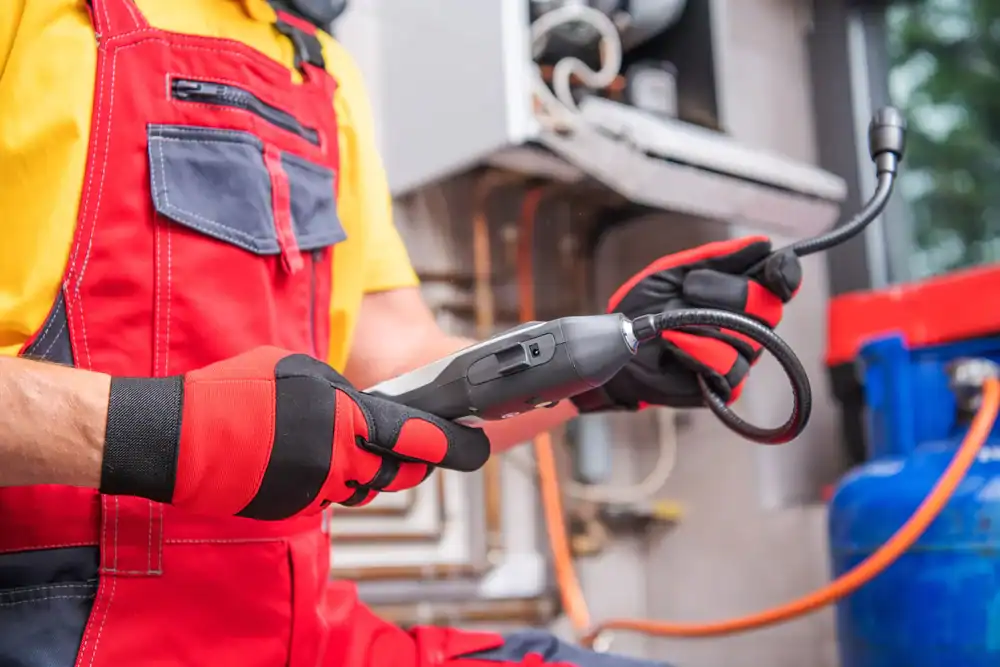
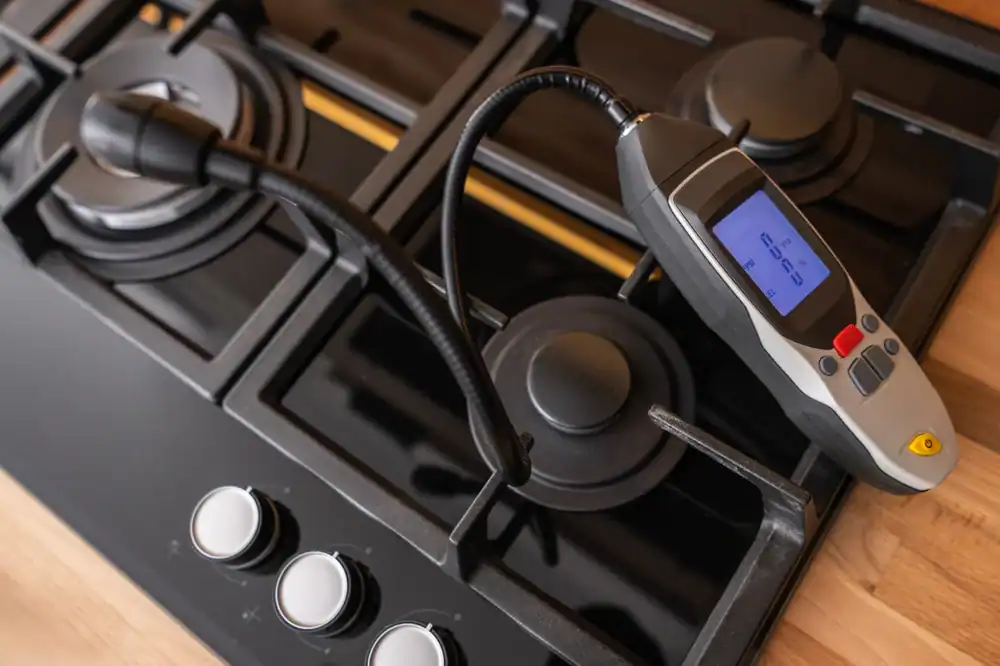
On arrival, our technician uses professional-grade gas detectors and infrared cameras to sweep your property — not just the obvious spots, but behind walls, under floors, and in enclosed utility spaces. This matters in South Beach specifically, where homes with basements or crawl spaces common to the neighborhood’s mid-century building stock can accumulate gas in areas you’d never think to check. Infrared cameras find what the eye — and sometimes even the nose — cannot.
Once the inspection is complete, you get a full picture of what was found before any work begins. Pricing is stated upfront with no hidden fees. If repairs are needed, we handle them with the same licensed team — no handoff to a second contractor. And if your property falls under Local Law 152 requirements, we handle the inspection certification and DOB filing as part of the same process. One call, one team, done.
Ready to get started?
Gas leak detection with us covers the full scope of what a South Beach homeowner or building owner actually needs — not just a quick sweep and a handshake. Our inspection includes a thorough assessment of your building-side gas piping, appliance connections, flexible connectors behind stoves and dryers, and any exposed gas lines. Professional-grade detectors and infrared cameras are used throughout, which means leaks hidden behind finished walls or beneath flooring get found — not guessed at.
For South Beach properties that sustained flood damage during Sandy or that sit in FEMA-designated flood zones, saltwater corrosion to underground service lines and fittings is a specific risk that we evaluate as part of the process. This isn’t a standard line item for most plumbers in the area — it’s a real consideration for East Shore homes with a documented flood history, and it’s part of how we approach inspections differently here than we might in a fully inland neighborhood.
When gas leak damage has occurred, we coordinate directly with your insurance company — reducing the back-and-forth that falls on you during an already stressful situation. For multi-family buildings in South Beach subject to Local Law 152, the inspection, any required repairs, the DOB filing, and the compliance certification are all handled in-house. The $5,000 penalty for non-compliance is a real number, and missing your inspection cycle isn’t something you want to find out about after the fact. One team handles the whole thing, start to finish.
If you smell gas or suspect an active leak, your first call should be to National Grid at 718-643-4050, and you should leave the building immediately. National Grid handles the utility-side infrastructure — the distribution mains and the service line up to your meter. They’ll respond, assess the street-side situation, and if necessary, shut off your gas at the meter to make the immediate area safe.
Here’s where most South Beach homeowners get stuck: National Grid leaves, the utility side is clear, and you still have no gas — because the problem is on the building side of your meter, which is your responsibility as a homeowner. That’s where a Licensed Master Plumber comes in. Only a Licensed Master Plumber can legally inspect, repair, and restore building-side gas piping in New York City. We’ve navigated this exact handoff with National Grid across Staten Island many times. Once National Grid has done their part, one call to us gets your building-side system assessed, repaired if needed, and restored.
Yes, and it’s a more common concern on the East Shore than most homeowners realize. Saltwater is highly corrosive to metal — including the fittings, connectors, and service piping that make up a residential gas system. When Sandy’s storm surge flooded South Beach in October 2012, homes that took on water also exposed their underground and below-grade gas infrastructure to prolonged saltwater contact. That kind of corrosion doesn’t always show up immediately; it develops over time, weakening connections that look fine from the outside.
If your home was flooded during Sandy and your gas system was never professionally inspected for corrosion damage in the years since, that inspection is genuinely overdue. The NYC Department of Design and Construction replaced nearly five miles of century-old cast iron water mains across 61 South Beach blocks after Sandy specifically because aging underground infrastructure in a repeatedly flooded coastal zone carries elevated risk. Gas lines don’t get that same automatic city-funded replacement — that’s on the homeowner. We use professional-grade gas detectors and infrared cameras that can identify corrosion-related leaks behind walls and beneath floors that a visual check would miss entirely.
Consumer-grade gas detectors from a hardware store are useful for alerting you that gas is present — but they can’t tell you where it’s coming from, how severe it is, or whether it’s safe to stay in your home. They also can’t produce the kind of documentation you’d need for an insurance claim or a DOB compliance filing.
Professional-grade gas detectors used by Licensed Master Plumbers are calibrated to detect gas concentrations at levels far below what the human nose can pick up. Infrared cameras take that a step further — they can locate leaks behind finished walls, under flooring, and in enclosed utility spaces without tearing anything apart. This is especially relevant in South Beach homes with basements or crawl spaces, where gas can accumulate in areas that aren’t regularly accessed or ventilated. The mercaptan odorant added to natural gas can dissipate through physical and chemical processes, meaning a leak can be active and growing even when you can’t smell anything. Professional equipment removes the guesswork entirely.
It depends on your policy and the nature of the damage, but in many cases, gas leak damage — particularly when it’s tied to a sudden event rather than gradual wear — can be covered under a standard homeowners policy. South Beach homeowners are in a somewhat unique position because many carry both homeowners insurance and flood insurance as separate policies, given the neighborhood’s FEMA flood zone designation. If a gas leak is connected to flood-related corrosion or storm damage, the question of which policy applies can get complicated quickly.
This is exactly why we coordinate directly with insurance companies when gas leak damage occurs — it’s a stated part of how we work, and it’s a capability that sets us apart locally. Rather than handing you a repair bill and leaving you to sort out the insurance side on your own, we work with your insurer to document the damage properly. For South Beach homeowners who have already navigated Sandy-related insurance claims, having a plumber who understands that coordination process is a meaningful practical advantage.
For most single- and two-family homes in South Beach, there’s no mandated inspection schedule under Local Law 152 — that law applies to larger buildings. But the absence of a legal requirement isn’t the same as the absence of risk. Industry guidance generally recommends having your gas system professionally inspected every few years, and more frequently if your home has specific risk factors.
In South Beach, those risk factors are more common than in a typical inland neighborhood. Homes with documented flood history from Sandy, properties near the waterfront where coastal humidity accelerates corrosion in fittings and connectors, and houses with gas systems that haven’t been touched since before 2012 are all candidates for a sooner-rather-than-later inspection. The fall heating season is the most practical time to schedule one — when your boiler or heating system gets turned back on after sitting idle all summer is exactly when connection issues tend to surface. We can assess your full building-side gas system, identify anything that needs attention, and give you a clear picture of where things stand before winter sets in.
Local Law 152 applies to most NYC buildings with gas piping, with the notable exception of one- and two-family homes. If you own a multi-family building, a mixed-use property, or any other structure in South Beach that falls outside that exemption, Local Law 152 requires a gas piping inspection by a Licensed Master Plumber on a rotating four-year cycle organized by community district. South Beach falls within Staten Island Community District 2 — confirm your current inspection window against the NYC DOB’s published schedule to make sure you’re not already behind.
Missing the deadline carries a $5,000 civil penalty, and that’s before factoring in the cost of any violations discovered during a late or deferred inspection. The inspection itself must be performed by a Licensed Master Plumber, and if repairs are required, they need to be completed and a certification submitted to the NYC DOB within 60 days of the inspection. We’re licensed to perform the inspection and handle any necessary repairs — so building owners in South Beach don’t need to coordinate two separate contractors to get into compliance. One call covers the inspection, the repairs if needed, the DOB filing, and the certification.
Other Services we provide in South Beach