

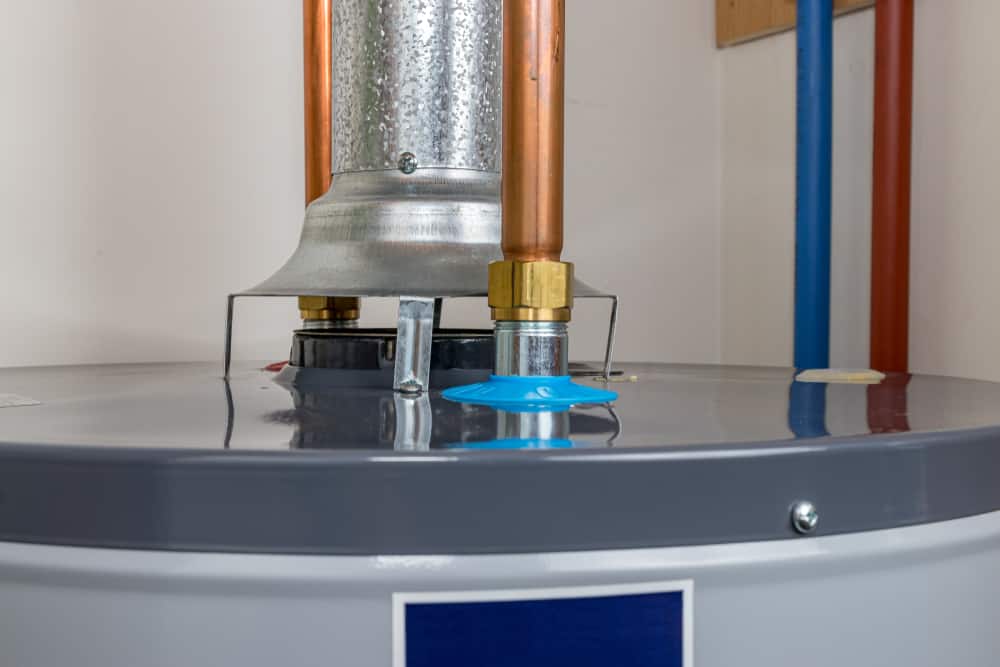
Great Kills was built out fast after the Verrazzano-Narrows Bridge opened in 1964. Block after block of homes went up through the 60s, 70s, and into the 80s — and the gas lines that went in with them were sized for the appliances of that era. Standard ranges, tank water heaters, older boilers. That infrastructure is now 40 to 60 years old, and it’s being asked to feed professional-grade gas ranges drawing 60,000 BTU, tankless water heaters demanding close to 200,000 BTU, and sometimes both at the same time. That’s not what those lines were built for.
When you get a new gas line installed correctly — sized to the full demand of every appliance connected to it, pressure-tested, permitted through the NYC Department of Buildings, and authorized through National Grid — you stop dealing with the symptoms. Appliances that underperform. Pilots that won’t stay lit. The nagging feeling that something isn’t right with the system.
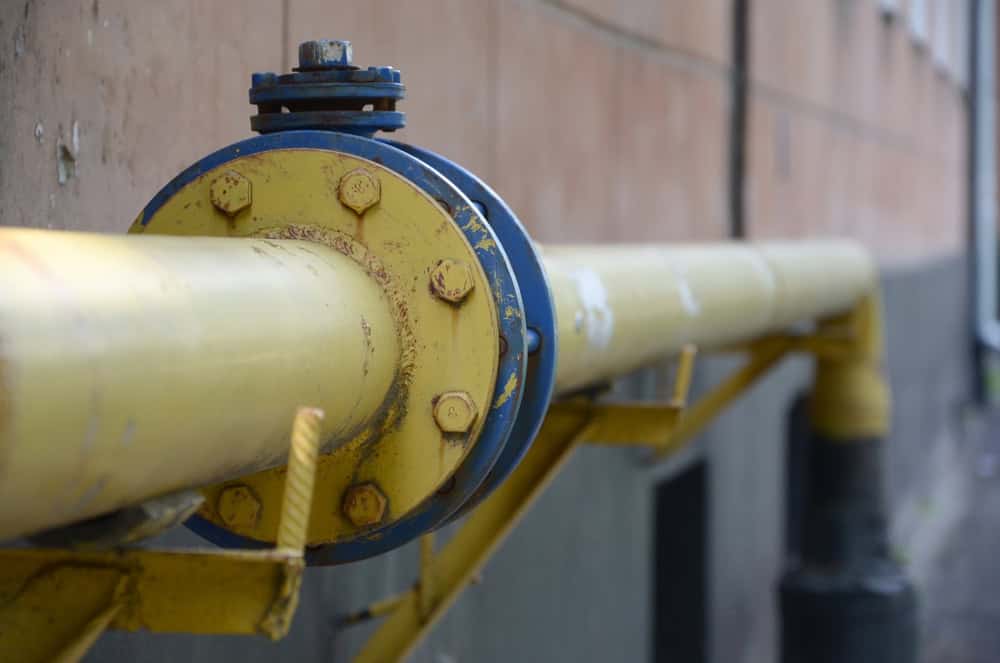
For homes near Great Kills Harbor and the Raritan Bay waterfront, there’s an added layer. Salt air and elevated humidity accelerate corrosion in aging black iron pipe in ways that aren’t always visible. A line that looks fine from the outside can have pressure loss and micro-leaks building for years. Getting it assessed and replaced before it becomes an emergency is the smarter move — especially in a neighborhood where homes are selling at $700K and above and buyers scrutinize everything.
We’ve been doing this work since 1983. That’s before most of Great Kills’ current housing stock had its first appliance upgrade. Over four decades, the permit systems have changed, the utility requirements have evolved, and the appliances have gotten more demanding — but the fundamentals haven’t. You hire a Licensed Master Plumber, you pull the right permits, you test the work properly, and you document everything.
That’s what we do on every job. The Licensed Master Plumber isn’t a name on a license while someone else does the work — they’re on site, accountable for every connection and every pressure test. And because Staten Island runs on National Grid, not Con Edison, we know that process specifically: the authorization requirements, the inspection sequence, and how to move a meter activation forward without delays.
From the single-family homes along Amboy Road to the condo buildings at Port Regalle overlooking Great Kills Harbor, this neighborhood has a range of gas infrastructure situations. We’ve seen them all.

The first thing that happens is an assessment. Before any pipe gets touched, the existing gas infrastructure gets evaluated — what’s there, what condition it’s in, and whether it can support what you need. If you’re upgrading to a high-BTU range or adding a tankless water heater, the BTU load of every connected appliance gets calculated. That calculation determines pipe diameter, run length, and whether the existing line is adequate or needs to be replaced. This step is what prevents the situation where a new appliance gets installed and then underperforms because the line feeding it was undersized from the start.
Once the scope is clear, we file the required permit through DOB NOW — the NYC Department of Buildings’ online portal. All gas line work in New York City requires a DOB permit, no exceptions. On Staten Island, new service or upsized capacity also requires National Grid authorization, which runs parallel to the DOB process. Both get handled on your behalf.
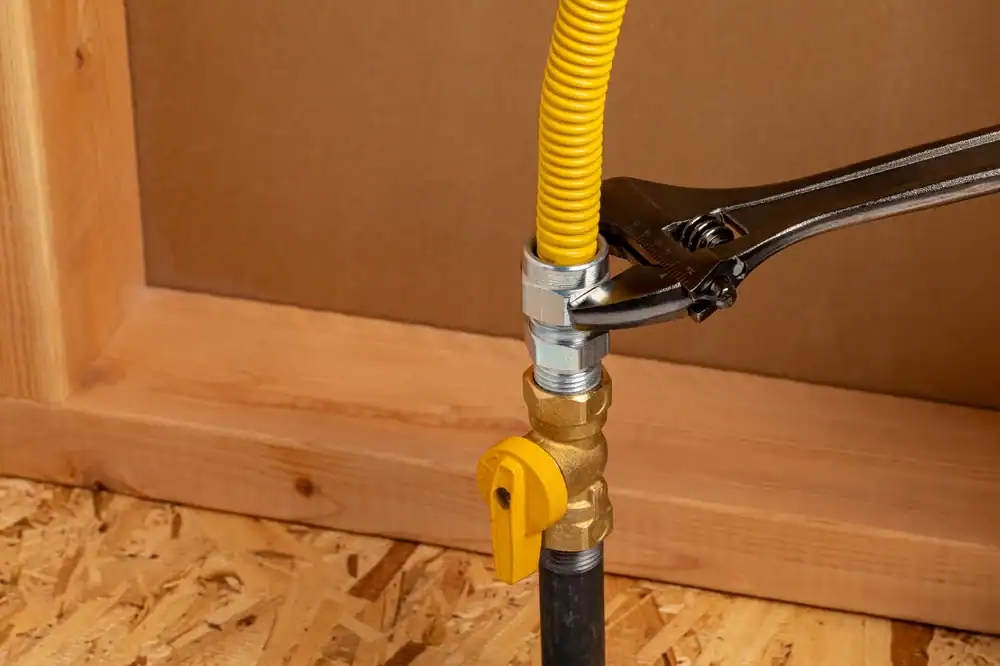
Installation follows the permit. Black iron pipe or listed CSST systems, depending on the application. Every installation is pressure-tested at 1.5 times working pressure before gas service is activated — that’s the NYC Fuel Gas Code standard. After the test, National Grid schedules their inspection and the meter gets reactivated. You get written documentation of the safety test results, permit records, and LMP certification when the job is complete. That paperwork matters — for your insurance, for building management if applicable, and for any future buyer of your home.
Ready to get started?
Gas line installation isn’t just running pipe from point A to point B. The work includes load calculation, material selection, permit filing, installation, pressure testing, utility coordination, and documentation — and each of those steps has real consequences if it’s skipped or done carelessly.
For Great Kills homeowners doing kitchen renovations, the appliance gas hookup piece often involves more than people expect. A professional-grade gas range pulls significantly more BTU than a standard residential model, and the existing line may not be adequate. The same applies to gas dryers, outdoor grills, whole-home generators, and especially tankless water heaters — which have among the highest BTU demands of any residential appliance. Each of these gets a dedicated manual shutoff valve in the same room, within reach of the appliance, as required by code. That’s not optional.
For the condo and co-op buildings in Great Kills — Port Regalle, Avon at Great Kills, Armstrong Gardens, and the mixed-use buildings along Hylan Boulevard — Local Law 152 adds another layer. NYC requires gas piping inspections every four years for virtually all buildings outside of one- and two-family homes. Great Kills falls in Staten Island Community District 3, which completed its most recent LL152 cycle with a December 2024 deadline. We handle the full LL152 package: the inspection by a Licensed Master Plumber, any required repairs, and GPS-2 certification filing directly with the DOB. Missing that filing carries penalties up to $10,000 — it’s not a deadline worth pushing.
It depends on what’s already there — and the only way to know for certain is to have a Licensed Master Plumber evaluate the existing line. Most homes in Great Kills were built between the 1960s and 1980s, and the gas lines installed during that period were sized for the appliances of that era. A standard residential range from 1975 might draw 30,000 BTU. A professional-grade gas range today can draw 60,000 BTU or more. If the existing line was sized for the old appliance and the run is long, there’s a real chance it can’t carry the load without a pressure drop — which means your new range won’t perform the way it’s supposed to.
The assessment takes into account the total BTU demand of every appliance connected to the line, the pipe diameter, the length of the run, and the gas pressure at the meter. If the existing line is adequate, you’ll know. If it needs to be upsized or replaced, you’ll get a clear explanation of why and what it involves before any work starts. Pricing for single-appliance hookups in the Great Kills area typically ranges from $500 to $2,000 depending on the complexity of the run.
We handle it. On Staten Island, National Grid is the gas utility — not Con Edison, which serves Manhattan. Any new gas service, upsized capacity connection, or restoration of service after a shutoff requires National Grid authorization in addition to the NYC DOB permit. These are two separate processes that run in parallel, and both need to be completed before gas service can be activated.
The authorization process involves National Grid reviewing the scope of work, scheduling their own inspection after installation is complete, and ultimately reactivating the meter. If you’ve never dealt with National Grid’s authorization process before, it’s not something you want to navigate on your own while also managing a kitchen renovation or waiting for heat to come back on. Having a contractor who knows the sequence — and has an established working relationship with the utility — makes a measurable difference in how quickly the process moves.
It’s more common than people expect, and the path back to service is not a quick one. When National Grid detects a gas leak or receives notice of a code violation, they shut off service at the meter — and they won’t reactivate it until a Licensed Master Plumber has identified and repaired the problem, certified the repair, and filed the appropriate documentation with the NYC Department of Buildings. Only after that does National Grid schedule their own inspection, and only after that does the meter get reactivated.
For a family in Great Kills without heat or hot water in January, every day that process drags on is a real problem. The way to minimize that time is to work with an LMP who knows exactly what National Grid needs, can file with DOB quickly, and can get their inspection scheduled without delays. We offer 24/7 emergency availability specifically for situations like this — and customer reviews confirm same-day and next-day response. That matters most when you’re in the middle of a shutoff.
Yes, always. Every gas line installation, alteration, or repair in New York City requires a permit filed through DOB NOW — the Department of Buildings’ online portal. There are no exceptions for small jobs, single-appliance hookups, or work that seems minor. The permit requirement applies to every scope of gas work, and only a Licensed Master Plumber can legally file it and perform the work. A handyman, general contractor, or unlicensed plumber cannot legally touch gas lines in NYC — and if they do, the utility company won’t activate service to that work, and your homeowner’s insurance can be voided.
Beyond the DOB permit, work in Great Kills also involves National Grid on the utility side. If the project includes new service or a capacity increase, National Grid’s authorization process runs alongside the DOB permit. Both are handled by us as part of the job — you don’t need to manage either process separately. The permit fees themselves typically range from $100 to $300 for standard gas work, and those costs are factored into the written estimate you receive before anything starts.
The physical installation itself — running pipe, making connections, pressure testing — typically takes anywhere from a few hours for a straightforward single-appliance hookup to a full day or more for longer runs or whole-home work. But the total timeline from permit filing to gas activation is longer than just the installation day, and that’s the number most homeowners actually care about.
DOB permit processing adds time at the front end, and National Grid’s inspection and meter reactivation adds time at the back end. For a routine installation with no complications, the full permit-to-activation process can be completed in a matter of days. More complex jobs — oil-to-gas conversions, whole-home re-piping, or situations where violations need to be remediated before service is restored — take longer. We’ll give you a realistic picture of what to expect before the job starts, not after. Whole-home gas installations in the Great Kills area typically range from $1,300 to $3,500 depending on complexity.
Local Law 152 applies to virtually all New York City buildings except one- and two-family homes — which means it covers the multifamily rentals, condo buildings, co-ops, and mixed-use properties in Great Kills, including buildings along Amboy Road and Hylan Boulevard and complexes like Port Regalle and Avon at Great Kills. The law requires gas piping inspections every four years, performed by a Licensed Master Plumber. After the inspection, the LMP files a GPS-2 certification with the NYC Department of Buildings confirming the building’s gas system was inspected and is compliant.
Great Kills falls within Staten Island Community District 3. The most recent LL152 inspection cycle for Community District 3 had a deadline of December 31, 2024. Buildings that missed that deadline or are currently managing violation remediation from the cycle are already in penalty territory — non-compliance carries fines up to $10,000. If violations were found during the inspection, they need to be repaired before the GPS-2 can be filed. We handle the complete process: inspection, repairs, and GPS-2 filing directly with the DOB. For building owners and property managers in Great Kills, that’s the full compliance package in one place.
Other Services we provide in Great Kills