
A gas shutoff in New Springville hits differently than it does in a high-rise apartment building with a super down the hall. You’re in a single-family or two-family home, mid-island, car-dependent, and when the gas goes off — especially between November and March — there’s no shared boiler room to call about and no nearby neighbor to borrow a shower from. It’s your problem, entirely, and the clock starts ticking the moment National Grid locks that meter.
For two-family homeowners in New Springville and the adjacent Heartland Village area, the stakes are doubled. Your tenant’s heat and hot water go out the same moment yours does. That creates legal exposure on top of the practical emergency — HPD violations, rent abatement claims, and a tenant who is understandably not patient. Getting this resolved quickly isn’t just about comfort; it’s about protecting the investment you’ve made in a property worth well over half a million dollars.
When the restoration is handled correctly — permits filed the right way, pressure test passed on the first attempt, National Grid coordinated from the start — you’re looking at days to a couple of weeks, not months. That’s the difference we make. In a neighborhood where the housing stock is 35 to 55 years old and the utility is National Grid, knowing this process isn’t optional — it’s everything.
We’ve been doing gas work on Staten Island since 1983 — which means we were working on the island’s gas systems before most of New Springville’s current housing was even finished being built. The neighborhood’s post-Verrazzano-Narrows Bridge housing boom produced a lot of two-family homes with aging black iron pipe gas systems. That’s not unfamiliar territory for us. It’s Tuesday.
Every job is performed by Licensed Master Plumber Bobby and his son Rob Jr. — not handed off to a crew you’ve never met. LMP #1169, Gas Work Qualification, FDNY Certificates of Fitness #89078745 and #88089263. These aren’t just credentials on a website — they’re verifiable on the NYC DOB site, and they represent the exact qualifications New York City law requires for gas restoration work. A lot of plumbers can’t legally touch this job. We can, and have, for over four decades.
When you call, you get a straight answer about what needs to happen, in what order, and what it’s going to cost — before anything starts.
The first thing that has to happen after a National Grid shutoff in New Springville is an Emergency Work Notification filed with the NYC Department of Buildings. This is the legal gateway to beginning any repair work — without it, nothing else moves. We handle this filing immediately so there’s no delay sitting at the starting line while your house stays cold.
From there, the actual repair work begins. Depending on what triggered the shutoff — a detected leak, aging pipe fittings, a failed Local Law 152 inspection — the scope of repair varies. In New Springville’s older housing stock, what looks like a simple fix sometimes reveals deteriorating black iron pipe that needs to be addressed properly to pass inspection. That’s not a surprise when you’ve been doing this work on Staten Island since 1983. The DOB permit gets filed, the repair gets done right, and a pressure test gets scheduled.
That pressure test is a hard gate — National Grid won’t restore service until the system passes. Getting it right the first time is what keeps this process measured in days and weeks rather than months. Once the pressure test clears and DOB signs off, we coordinate with National Grid for final reconnection. Their stated timeline is one to two days after everything is approved, not exceeding five business days. The difference between hitting that window and missing it entirely comes down to how well the plumber has managed every step leading up to it. We manage all of it.
Ready to get started?
Gas restoration in New York City isn’t a single task — it’s a sequence of regulatory steps, and every one of them has to be completed correctly before the next one can begin. In New Springville, where all gas service runs through National Grid, that sequence involves the Emergency Work Notification, DOB permit filing, the physical repair, a DOB pressure test, and final coordination with National Grid for meter restoration. We handle every step, which means you’re not managing multiple contractors or chasing down paperwork on your own.
For two-family homeowners — which describes a significant portion of New Springville’s housing stock, particularly in the Heartland Village area — the restoration covers both units under a single coordinated process. There’s no filing for one unit and then starting over for the other. The work gets done, the permit covers the full scope, and National Grid gets called once everything is ready.
Beyond the restoration itself, we also handle Local Law 152 compliance inspections — the mandatory gas piping inspections NYC requires for most buildings on a four-year cycle. If your building failed one of those inspections and that’s what triggered the shutoff, that’s handled here too. If you want to get ahead of the next inspection cycle before it becomes an emergency, that’s a conversation worth having. Non-compliance carries penalties of up to $10,000, and a proactive inspection costs considerably less than a restoration.
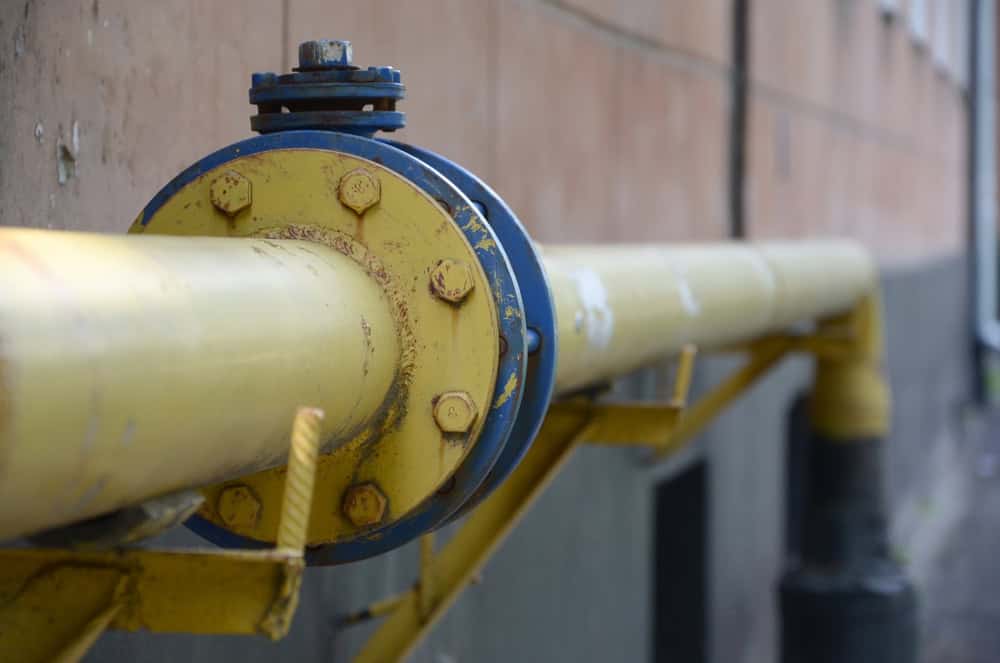
The first thing to understand is that you cannot turn the gas back on yourself. Once National Grid locks the meter, only the utility can restore service — and they won’t do that until a Licensed Master Plumber has repaired the problem, filed the necessary permits with the NYC DOB, and passed a pressure test. Tampering with a locked meter is illegal and genuinely dangerous.
What you need to do immediately is contact a Licensed Master Plumber who holds a Gas Work Qualification — that’s a specific credential required by NYC Local Law 150 of 2016, and not every plumber has it. We’ll file an Emergency Work Notification with the DOB, assess what caused the shutoff, and start the repair and permitting process. In New Springville, that means working within National Grid’s specific restoration procedures, which differ from Con Edison’s process used in other parts of the city. The sooner that process starts, the sooner your household — or both households, if you have a two-family home — gets heat and hot water back.
National Grid’s stated timeline is one to two days after all work is complete and approved, and they commit to no more than five business days. That’s actually faster than Con Edison’s typical one-to-three-week window, which is relevant since every home in New Springville is on National Grid — not Con Edison.
The catch is that the clock doesn’t start until everything on your end is finished: the repair is done, the DOB permit is filed, and the pressure test has passed. If any of those steps stalls — because the wrong paperwork was filed, because the pressure test failed and has to be rescheduled, or because the plumber isn’t familiar with National Grid’s coordination process — the restoration drags out well past that five-business-day window. The plumber you hire controls how fast you get to the point where National Grid’s clock starts. That’s why experience with National Grid specifically, not just NYC gas work in general, matters here.
Not since January 1, 2020. Under Local Law 150 of 2016, all gas work in New York City must be performed by a Licensed Master Plumber who also holds a Gas Work Qualification — a separate, specific credential from the NYC DOB. An LMP without that qualification cannot legally perform the repair, file the required permits, or conduct the pressure test. Many licensed plumbers do not hold this qualification.
This matters more than it might seem. If you hire a plumber who isn’t properly qualified and they attempt the work anyway, the job will fail at inspection — and you’ll be starting over, without gas, while you find someone who can actually do it legally. You can verify any plumber’s LMP status and Gas Work Qualification on the NYC DOB website. We hold LMP #1169 with Gas Work Qualification — look it up before you call anyone.
It can, and it’s worth knowing about upfront. Most of New Springville’s housing stock was built between the mid-1960s and the late 1980s, following the Verrazzano-Narrows Bridge opening that triggered the neighborhood’s suburban development. Homes from that era typically have black iron pipe gas systems that are now 35 to 55 years old. When National Grid detects a leak in one of these systems, the source is often a corroded fitting or a section of pipe that’s been deteriorating quietly for years.
What this means practically is that the repair scope sometimes turns out to be larger than the immediate leak. We assess the full system during the repair — not just patch the obvious problem — because a DOB inspector will be looking at the work, and a repair that doesn’t address underlying deterioration can fail inspection and require additional work before the pressure test can pass. Getting a thorough assessment upfront is faster than a quick fix that fails.
Yes, it can. Local Law 152 of 2016 requires most NYC buildings — anything other than single or two-family homes classified as R-3 — to undergo gas piping inspections on a four-year rotating cycle. If a building fails that inspection, the NYC Department of Buildings can issue a gas shutoff order. This is a separate path to a shutoff from a National Grid-detected leak, and it’s one that building owners sometimes don’t see coming because the inspection cycle can sneak up on them.
For New Springville property owners with multi-unit buildings or mixed-use properties near the Richmond Avenue corridor, staying current on the Local Law 152 cycle is genuinely important. Non-compliance carries penalties of up to $10,000. We handle both the compliance inspections and the restoration work if a shutoff results — so if you’re not sure where your building stands in the inspection cycle, that’s a question worth asking before the DOB asks it for you.
This is one of the most common concerns homeowners in New Springville raise, and it’s a fair one. Gas restoration jobs can involve DOB permit fees, inspection fees, the repair itself, and utility coordination — and if those costs aren’t laid out clearly at the start, the final invoice can be a significant surprise on a property you’ve invested heavily in.
We give you a detailed cost breakdown before any work begins. No hidden charges, no fees that appear after the fact. In a neighborhood where median home values exceed $500,000 and residents have real financial plans to protect, knowing what you’re committing to upfront isn’t a luxury — it’s a basic expectation. The quote covers the full scope of what’s needed to get from shutoff to restored service, and if something unexpected comes up during the repair, you hear about it and approve it before the work continues. That’s how it should work, and that’s how we work.
Other Services we provide in New Springville