
When National Grid locks your meter, the clock starts immediately. No heat, no hot water, no cooking gas — and in a Woodrow winter, that’s not a minor inconvenience. It’s a real problem that affects every room in the house, every day it drags on. The outcome you need isn’t just a repaired pipe. It’s a completed DOB pressure test, a passed National Grid inspection, and a utility reconnection that actually sticks. That’s what a fully coordinated gas restoration looks like — and it’s the only version worth paying for.
Woodrow’s housing stock makes this more complex than people expect. Most homes here were constructed in the 1980s, which means gas piping systems are now 40-plus years old. Corrosion, aging fittings, and decades of pressure cycles mean the repair often involves more than one problem area. Getting a clear picture of the full scope upfront — before work starts — is what separates a two-week restoration from a two-month one. You get a detailed cost breakdown before anything begins, so there are no surprises when the invoice comes.
For homeowners in Woodrow’s townhome and semi-attached communities, the stakes are even higher. Shared gas lines mean one shutoff can affect multiple units at once, and restoring service requires someone who understands building-wide restoration — not just a single-family repair. Whether it’s your home or your entire development, the goal is the same: gas back on, system verified safe, and no reason for National Grid to come back and shut it off again.
We’re based at 49 Englewood Ave, Staten Island — ZIP code 10309, the same ZIP code as Woodrow. When you call, you’re not waiting on a plumber to drive in from Brooklyn or Queens. We’re already on the island, already familiar with South Shore streets, and ready to move.
Bobby and Rob Jr. have been doing gas work on Staten Island since 1983 — which means we were working on homes in Woodrow when most of them were being built. That’s not a marketing line. It’s 40-plus years of knowing the infrastructure, the DOB process, and the National Grid coordination that gas restoration in this borough actually requires. Licensed Master Plumber #1169 with Gas Work Qualification. FDNY Certificates of Fitness #89078745 and #88089263. Every job performed by the LMP himself — not handed off.
The Woodrow community, from the cul-de-sacs off Woodrow Road to the townhome developments near the West Shore Expressway, has the kind of housing stock that rewards experience. These aren’t simple jobs, and the person doing the work shouldn’t be learning on your system.
The first thing to understand is that once National Grid locks your meter, you cannot turn it back on yourself. Only the utility can restore service — and only after our plumber’s work passes both the DOB inspection and National Grid’s own field review. That sequence is fixed, and it’s why who you hire matters so much. A plumber who misfiles the paperwork or fails the pressure test doesn’t just delay the job — they restart the clock.
Here’s how it actually goes. After an initial assessment of your gas system, an Emergency Work Notification gets filed with the NYC Department of Buildings — this is the legal authorization to begin the repair work. From there, we complete the necessary repairs, pull permits, and schedule a DOB pressure test. That test has to pass before anything else moves forward. Once it does, National Grid is notified and their field team schedules their own inspection. National Grid’s stated timeline from that point is one to two days, with a maximum of five business days, to restore service once everything is approved.
In Woodrow specifically, the age of the gas infrastructure means the assessment phase is critical. Homes built in the early 1980s can have piping conditions that aren’t visible until the system is properly evaluated. Catching the full picture before the pressure test — not after a failed one — is what keeps the restoration on track. We handle every step of this process, from the EWN filing through the final National Grid reconnection, so you’re not coordinating between multiple contractors or figuring out the DOB system on your own.
Ready to get started?
Gas restoration isn’t one task — it’s a chain of coordinated steps, each of which has to happen correctly for the next one to move. We handle the full chain: Emergency Work Notification filing with the NYC DOB, permit coordination, gas line repair or replacement, DOB pressure testing, National Grid coordination, and final utility reconnection sign-off. One call covers everything. You’re not managing pieces of this yourself.
For Woodrow homeowners, there’s an additional layer that matters: fuel-burning appliances. Larger homes along Woodrow Road and throughout the neighborhood’s 1980s developments often run gas boilers with multiple heating zones, gas fireplaces, and gas dryers. When gas service is restored, every one of those appliances needs to be re-lit and verified safe before the job is done. We hold FDNY Certificates of Fitness for fuel-burning equipment — which means we’re credentialed to inspect and recommission those systems, not just hand you back a repaired pipe and leave.
For the townhome and semi-attached communities in Woodrow — particularly those with private streets and shared gas infrastructure managed by an HOA — building-wide restoration is also within our scope. That means filing an EWN that covers the full structure, pressure testing a multi-unit system, and coordinating with National Grid on a timeline that brings gas back to every affected unit. And because Local Law 152 requires periodic gas piping inspections for most NYC buildings on a four-year cycle, we offer proactive compliance work too — so you’re addressing the most common non-emergency cause of a shutoff before National Grid ever shows up at the door.
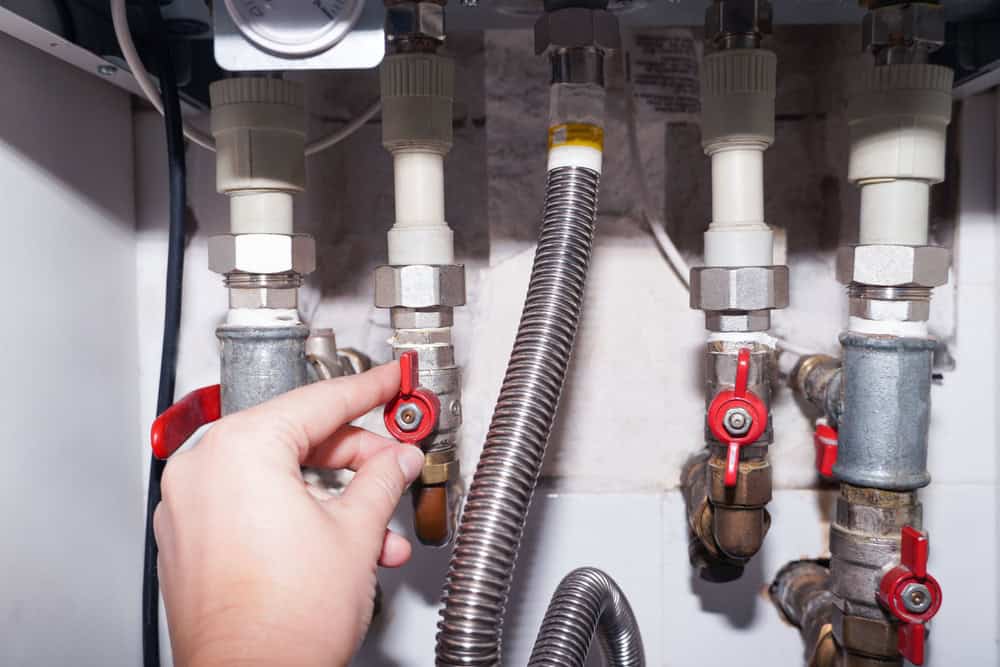
The first thing to know is that you cannot restore gas service yourself once National Grid has locked the meter. Tampering with a locked meter is illegal and genuinely dangerous. What you need is a Licensed Master Plumber who holds a Gas Work Qualification — that’s a specific credential required under NYC Local Law 150 of 2016, and not every licensed plumber has it. Without it, they cannot legally perform the repair work or file the required paperwork with the DOB.
Once you have the right plumber on the job, the process starts with an Emergency Work Notification filed with the NYC Department of Buildings. This is the legal gateway to beginning repair work. From there, we assess the system, complete the repairs, pull the necessary permits, and schedule a DOB pressure test. That test has to pass before National Grid will schedule their own field inspection for reconnection. In Woodrow, where most homes have gas systems that are 40-plus years old, the assessment phase often reveals more than one issue — which is exactly why it matters to get a clear scope of work defined before anything starts.
Once all the repair work is complete, the DOB pressure test has passed, and National Grid has been properly notified, their stated timeline is one to two days — with a maximum of five business days — to restore service. That’s the utility’s own published standard. The part that varies is everything that happens before that final step, and that’s entirely dependent on how efficiently your plumber moves through the DOB filing, the repair work, and the pressure test.
A plumber who files the wrong paperwork, fails the pressure test, or doesn’t coordinate proactively with National Grid can drag a restoration from two weeks to two months or longer. The difference isn’t the utility — it’s the plumber. For Woodrow homeowners dealing with a shutoff in the middle of winter, when the Korean War Veterans Parkway is icing over and the house has no heat, that timeline difference is not abstract. It’s the difference between a manageable disruption and a serious situation. Getting the process right from the first day is what keeps the restoration on the shorter end of the timeline.
No — and this is one of the most important things to understand before you hire anyone. Under NYC Local Law 150 of 2016, which took effect January 1, 2020, all gas work in New York City must be performed by a Licensed Master Plumber who also holds a Gas Work Qualification. A standard plumbing license alone is not enough. If a plumber does not have the Gas Work Qualification, they cannot legally perform the repair, file the required DOB permits, or conduct the pressure test. Any work they do is unauthorized, and it won’t pass inspection.
You can verify a plumber’s LMP status and Gas Work Qualification directly on the NYC DOB website — the license number is searchable, and gas qualification cards now include a QR code for instant verification. We hold LMP #1169 with Gas Work Qualification. That credential is what legally authorizes the work from start to finish, and it’s the first thing you should confirm before any plumber touches your gas system. In a neighborhood like Woodrow, where homes carry significant value and gas systems are aging, hiring someone without the right credentials doesn’t save money — it creates a much larger problem.
If the pressure test fails, the process resets. The DOB will not approve the restoration, National Grid will not schedule their reconnection, and additional repairs will need to be made before the test can be rescheduled. This is exactly why the assessment phase matters so much — a thorough evaluation of the gas system before the pressure test is scheduled is what prevents a failed test from adding weeks to the restoration timeline.
In Woodrow’s older housing stock, where gas piping may have been in place since the early 1980s, a failed pressure test often points to a secondary issue that wasn’t visible during a surface-level inspection. Aging joints, corroded sections, or undersized fittings can all cause a test failure. An experienced plumber identifies these conditions during the initial assessment and addresses them before the test date — not after. Our 40-plus years of gas work on Staten Island means we know what to look for in systems of this age, and we complete the scope of repairs in a way that’s designed to pass the first time.
It depends on where National Grid shuts off service. In a single-family home, they typically lock the meter at the point where gas enters the building, which cuts service to every appliance in the house — your boiler, water heater, range, dryer, and any gas fireplace. In Woodrow’s townhome and semi-attached communities, where multiple units share a gas line or a common meter, a shutoff can affect every unit connected to that line simultaneously.
This is one of the more complicated scenarios in Woodrow specifically, because several developments in the neighborhood have private streets and shared gas infrastructure managed by an HOA. When that happens, the restoration isn’t a single-unit job — it requires an Emergency Work Notification that covers the full structure, a pressure test on the multi-unit system, and National Grid coordination that accounts for every affected unit. If you’re an HOA board member or property manager dealing with a building-wide shutoff, that’s a different scope of work than a standard single-family restoration, and not every plumber is set up to handle it. We have experience with both scenarios.
The most common non-emergency cause of a gas shutoff in NYC isn’t a dramatic leak — it’s a failed or missed Local Law 152 inspection. Under LL152, most NYC buildings are required to undergo a gas piping inspection on a four-year cycle, conducted by a Licensed Master Plumber with a Gas Operator Qualification. If the inspection reveals a problem and it isn’t corrected within the required timeframe, the DOB can order a gas shutoff. If the inspection deadline is missed entirely, the building is out of compliance and subject to penalties of up to $10,000.
For Woodrow homeowners, this is particularly relevant given the age of the housing stock. Gas systems installed in the 1980s are now old enough that an LL152 inspection may surface issues that have been developing quietly for years — small pressure losses, aging fittings, or deteriorating sections of pipe that haven’t caused a visible problem yet but will eventually. Scheduling a proactive inspection with a qualified LMP is the most straightforward way to find those issues on your own timeline, address them at a controlled cost, and avoid the scenario where National Grid shows up unannounced and locks your meter. We perform LL152 inspections and handle any repair work that follows, so you’re dealing with one team from inspection through resolution.
Other Services we provide in Woodrow