Summary:
You searched “water heater installation near me” because something is wrong, either your water heater already failed, or it has been making noises that tell you it is not far off. Either way, you want real answers, not a page full of national averages that have nothing to do with what you will pay in New York County or Staten Island.
The numbers you find on most guides are built for markets that are not yours. New York County and Staten Island have their own permit requirements, their own tax rate, their own building challenges, and their own labor costs. What follows is a straightforward look at what this costs and how it works where you live.
What Does Water Heater Installation Cost In New York County And Staten Island?
For a standard gas tank water heater, the 40 to 50-gallon units that most homes and apartments run on, you are looking at roughly $2,000 to $3,500 installed in New York County and Staten Island in 2026. Electric units in the same size range typically land between $1,800 and $3,200. Those ranges are wide because the final number depends on your building, your existing setup, and what the job requires once work begins.
What most quotes leave out is the full picture. There are several NYC-specific costs that get added on, and if you are not expecting them, the invoice can feel like a surprise even when nothing went wrong.
Every water heater replacement in New York County and Staten Island legally requires a permit from the NYC Department of Buildings. That permit costs a flat $130, non-negotiable, every time, no exceptions. We pull it; you pay for it. It is a small line item, but it is one that some contractors quietly leave off their initial estimate and add back later.
Sales tax is another one. NYC charges 8.88 percent on the unit itself. On a $1,200 water heater, that is roughly $107 you need to budget for that will not show up in the headline price.
Then there is disposal. Getting your old unit out of the building and hauled away typically costs $75 to $200. Some contractors include it; many do not. Always ask before you agree to anything.
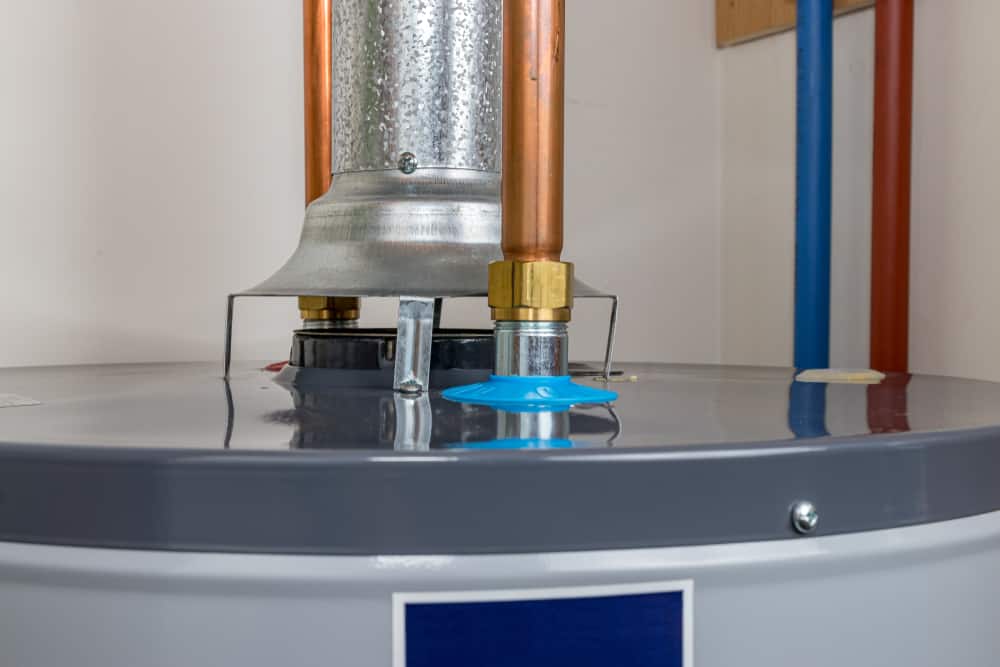
The one that tends to catch people off guard, especially in older Manhattan buildings and pre-war Staten Island homes, is venting. If the existing flue pipe or venting system is deteriorated or no longer meets current code, it has to be upgraded before the new unit can be installed. That work can add $300 to $600 or more to the total, depending on what is there and what is needed.
Add all of that together on a mid-range job, and you are potentially looking at $600 to $1,000 in line items beyond the unit and labor. That is not a contractor being dishonest, that is what it costs to do this job correctly and legally in New York County and Staten Island. The problem is when those items are not disclosed upfront, so you cannot plan for them.
If you are in a co-op or condo in Manhattan or a condo building in Staten Island, there is one more layer: board approval. Depending on your building requirements, getting sign-off before work can begin may add one to four weeks of administrative time. We have worked in these buildings long enough to know what to expect and how to move the process along.
Most standard water heater installations, where the access is reasonable, the venting is sound, and no surprises turn up, take somewhere between two and four hours. That is the job from arrival to cleanup.
In Manhattan, it often takes longer. Tight utility closets, basement mechanical rooms with low clearance, older buildings with narrow hallways, all of these add time. For jobs in Manhattan specifically, two to six hours is a more realistic window, and that is for a straightforward replacement. If venting needs to be upgraded or the old plumbing requires modification to accept the new unit, you are looking at more.
Staten Island jobs typically run on the faster end of that range, since many homes there have better access to mechanical spaces than older Manhattan apartments. That said, pre-war Staten Island homes can present their own challenges, including older venting systems, tighter spaces in some basements, and plumbing configurations that do not always accommodate modern equipment without modification.
The thing worth understanding is that a longer job is not a problem. It is often a sign that the work is being done right. Cutting corners on venting or skipping a proper inspection to finish faster creates code violations that become your problem, not the contractor’s, when you go to sell or refinance the property.
Speaking of inspections: after installation, a NYC DOB plumbing inspector needs to approve the work before the system is placed into service. We coordinate this through the DOB eFiling portal. It is a required step, not optional, and we handle it as part of the job. If someone offers to skip the inspection to save time, that is a red flag worth taking seriously.
One more thing that affects timeline is the type of unit. A standard tank replacement is the most straightforward job. Switching from a tank-style unit to a tankless water heater is a more involved installation, typically taking longer, potentially requiring gas line upgrades in older buildings, and costing significantly more in labor. If you are considering making that switch, it is worth having a real conversation about the capacity of your building before anyone orders equipment.
How To Know If You Need A Repair Or A Full Replacement
This is the question most people are trying to answer when they start searching. Not every failing water heater needs to be replaced, but not every one can be saved with a repair, either. Knowing the difference saves money when repair is the right call, and prevents throwing good money after bad when it is not.
A useful rule of thumb: multiply the age of your unit by the cost of the repair. If that number exceeds what a new water heater would cost installed, replacement is almost always the better financial decision. A 12-year-old unit that needs a $400 repair, meaning 12 times $400 equals $4,800, is almost certainly past the point where repair makes sense.
Tank water heaters last an average of 8 to 12 years. If yours is in that range or past it, any repair you make is essentially buying time on borrowed equipment. The unit will fail again, probably sooner than you would like, and possibly at the worst moment.
Rumbling or popping sounds coming from the tank are a common sign of sediment buildup. Over time, minerals in the water settle at the bottom of the tank and harden. The noise you hear is water heating underneath that layer of sediment. It is inefficient, it stresses the tank, and it accelerates wear. New York County and Staten Island water is generally high quality, but it does contain minerals, and hard water can take two or more years off a water heater’s service life.
Rusty or discolored hot water usually points to corrosion inside the tank. Once the interior has started to rust, the unit is on its way out. No repair addresses that root cause.
Inconsistent hot water, such as fine one morning and lukewarm the next, can mean a failing heating element in electric units or a failing thermocouple or gas valve in gas units. Some of these are repairable. Determining if they are worth repairing depends on the age of the unit and what the repair costs relative to replacement.
Visible leaking around the base of the tank is generally the end of the road. A cracked tank cannot be repaired. Once water is pooling underneath the unit, replacement is the only option.
If you are on Staten Island and your home was affected by Hurricane Sandy back in 2012, it is worth noting that flood-damaged mechanical systems often have hidden corrosion that does not become obvious until years later. If your water heater survived the flooding but has never been replaced, its condition may be worse than its age alone would suggest.
In New York County and Staten Island, water heater installation must be performed by, or under the direct supervision of, a Licensed Master Plumber. This is a specific credential issued by the NYC Department of Buildings, and it is different from a general plumbing license. You can verify any plumber’s license through the DOB online license search tool before you agree to anything.
Why does this matter? Because the permit for your water heater replacement can only be pulled by a Licensed Master Plumber. If the person doing the work is not licensed at that level, no permit gets pulled. And unpermitted work creates code violations that attach to your property, not to the contractor who did the work. When you go to sell or refinance, those violations surface, and fixing them after the fact is expensive and disruptive.
Beyond licensing, the questions worth asking before you hire anyone are straightforward. Will you pull the permit? Is disposal of the old unit included in the quote? What does the quote include and not include specifically? Who will be doing the work?
That last question matters more than people realize. In a city this size, it is common for a large plumbing company to send out whoever is available, which may or may not be the person who gave you the estimate. For a job that involves your home’s hot water supply, knowing who is showing up and what their experience is with buildings like yours is a reasonable thing to ask.
We have been doing this work in New York County and Staten Island since 1983. When you call RB Mechanical Plumbing and Heating, you get Bobby and Rob directly, the owners, the licensed professionals, the people who will be on the job. No subcontractors. No crews you have never met. That is not a marketing line, it is just how we have always operated, and it is something our customers specifically mention when they leave reviews.
A written estimate that itemizes the unit, labor, permit, disposal, and any anticipated upgrades is reasonable to ask for. Any contractor worth hiring should be able to provide one without hesitation.
Ready To Move Forward With Water Heater Installation In New York County Or Staten Island?
The short version: water heater installation in New York County and Staten Island costs more than national guides suggest, takes longer in older or more complex buildings, and requires a Licensed Master Plumber who will pull the proper permits and coordinate the required inspection. If you go in knowing that, there are no surprises.
The repair-or-replace question comes down to age, repair cost, and honest advice from someone who is not trying to upsell you. If your unit is under 8 years old and the repair is minor, fixing it usually makes sense. If it is pushing 12 years or more and something significant has gone wrong, replacement is almost always the smarter call.
If you are in New York County or Staten Island and you want a straight answer about what your specific situation requires, reach out to RB Mechanical Plumbing and Heating today to schedule your expert water heater assessment and get a straight answer on where your system stands.