

There’s a version of this where you keep ignoring that faint smell that comes and goes. And there’s a version where a Licensed Master Plumber runs a proper inspection, finds the source, fixes it, and you actually know your Saint George building is safe. The second version is better — and it’s more available than most residents realize.
Saint George’s housing stock is unlike anything else on Staten Island. The Victorian-era and Shingle Style homes climbing up Westervelt Avenue, Hamilton Avenue, and Fort Place have been modified, patched, and extended over generations. Gas lines that were installed decades ago — sometimes before current safety codes even existed — are still running behind plaster walls and under original floors. A professional inspection using calibrated gas detectors and infrared cameras finds what a nose can’t, and what a consumer-grade detector from a hardware store won’t document.
For building owners and co-op boards managing multifamily properties along Richmond Terrace or Bay Street, there’s a compliance dimension on top of the safety one. Saint George falls within Staten Island Community District 1, which had a December 31, 2024 deadline for Local Law 152 gas piping inspections. If your building missed it, the exposure doesn’t go away on its own. Getting compliant — with a single plumber who handles the inspection, any required repairs, and the DOB filing — is the fastest way to close that gap.
We’ve been operating in New York City since 1983. That’s four decades of pre-war buildings, aging infrastructure, DOB filings, and gas systems that don’t look anything like what the textbooks show. Bobby and Rob — the father-and-son team behind RB Mechanical Plumbing and Heating — have seen the kind of layered, modified gas systems that show up in neighborhoods like Saint George, where a building might have three different eras of piping running through the same wall.
Every technician who comes to your door is a NYC Licensed Master Plumber. Not a subcontractor, not a supervised journeyman doing the work while someone else signs off. An actual Master Plumber. That matters legally — it’s the only credential that authorizes gas piping work in New York City — and it matters practically, because the person diagnosing your system is the same person qualified to fix it.
Technicians are also drug-tested and vetted, which matters for the co-ops, condos, and managed buildings throughout Saint George where building access requires accountability on both sides.

When you call about a suspected gas leak in Saint George, the first question is whether this is an active emergency or a precautionary inspection. If you’re smelling gas right now, the immediate step is to leave the building, don’t use any switches or appliances, and call National Grid at 718-643-4050 from outside. National Grid handles the utility side — the street main and the service line up to your building. Once they’ve made the utility side safe and cleared the scene, that’s where we come in.
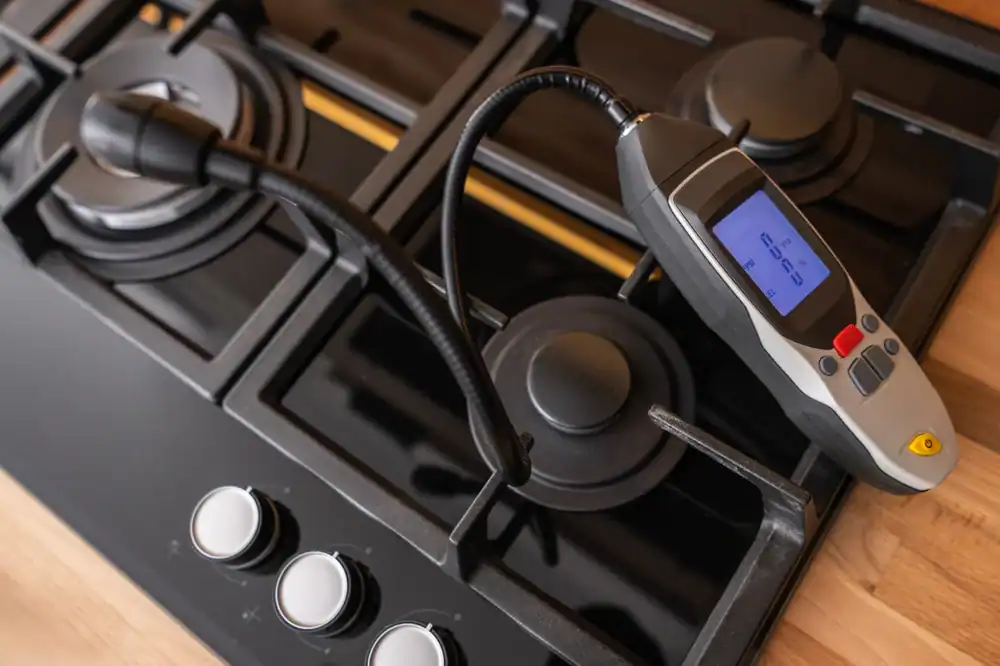
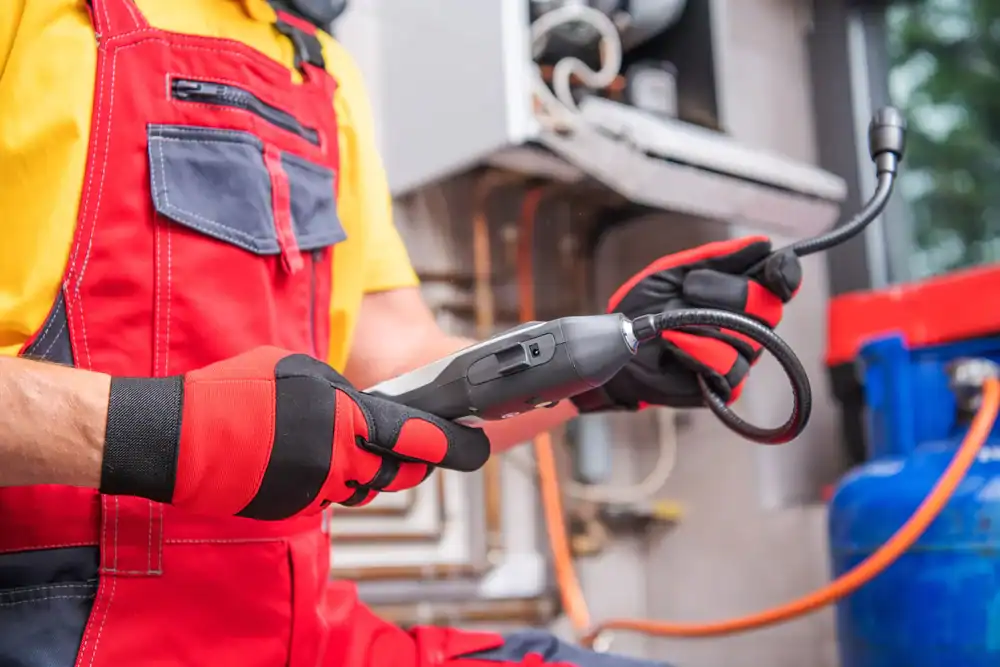
A Licensed Master Plumber arrives — within 30 to 60 minutes for true emergencies — with professional-grade gas detectors and infrared cameras. The inspection covers the building-side piping: the lines running from your meter into and through the structure, connections at appliances, valves, flexible connectors behind stoves and ranges, and any exposed piping in utility spaces or basements. In Saint George’s older buildings, this often means checking configurations that have been altered multiple times by previous owners. The infrared cameras are particularly useful here — they locate leaks hidden behind walls or in enclosed spaces that a surface-level check would miss entirely.
If a leak is found, you get a clear explanation of what was found, where it is, and what the repair involves — with transparent pricing stated before any work begins. For multifamily buildings requiring Local Law 152 compliance, the process extends to the DOB filing and certification after repairs are complete. One call, one team, no coordinating between multiple vendors.
Ready to get started?
A gas leak detection visit from us isn’t a quick walk-through with a clipboard. It’s a methodical inspection of your entire building-side gas system using equipment that finds what human senses can’t. Professional-grade gas detectors measure gas concentration at connection points, valve fittings, and along exposed piping runs. Infrared cameras identify leaks in enclosed or concealed spaces — behind walls, under floors, in basement utility areas. In Saint George’s historic district buildings, where original plaster walls and century-old construction hide decades of modifications, this level of inspection is the only way to be thorough.
For residential properties — whether you’re a homeowner on Daniel Low Terrace or a tenant in a Bay Street Landing condo — the inspection covers all accessible gas piping, appliance connections, and flexible connectors. If you’ve recently moved into an older Saint George apartment and have no idea when the gas system was last looked at, this is the starting point. For building owners and co-op boards managing properties subject to Local Law 152, the service extends further: we’re licensed to perform the LL152 inspection itself and certified to make any repairs the inspection requires, then handle the DOB filing and certification. That’s the full compliance workflow under one roof.
Pricing is transparent — you’ll know what the work costs before it starts, with no hidden fees added after the fact. If your situation involves gas leak damage and an insurance claim, we coordinate directly with your insurance company, which reduces the back-and-forth during an already stressful situation.

Leave the building immediately. Don’t flip any light switches, don’t use your phone until you’re outside, and don’t try to locate the source yourself. Once you’re clear of the building, call National Grid at 718-643-4050 — they’re the gas utility for Staten Island and will respond to the utility-side emergency. They’ll check the street main and the service line coming into your building.
Here’s what a lot of Saint George residents don’t realize: National Grid’s responsibility ends at your building’s gas meter. Everything on the building side — the piping running through your walls, the connections at your stove, the valves in the basement — is the building owner’s responsibility, and it requires a Licensed Master Plumber to inspect and repair. Once National Grid clears the utility side, that’s when you call us. Don’t assume that because National Grid didn’t find anything, the building side is clean. Those are two separate systems.
Intermittent gas odor is one of the most common reasons people delay getting an inspection — and one of the most dangerous reasons to delay. The smell coming and going doesn’t mean the leak is small or harmless. It often means the leak is real but variable: affected by air pressure changes, ventilation patterns, or the position of a connection that shifts slightly depending on temperature or use.
There’s also a documented phenomenon called odor fade, where the mercaptan added to natural gas to give it that rotten egg smell can dissipate through physical and chemical processes. In older Saint George buildings with enclosed utility spaces or basement areas with limited airflow, gas can accumulate without ever triggering a strong odor at the living-space level. If you’ve noticed the smell more than once — even briefly — that’s reason enough to have a Licensed Master Plumber run a proper inspection with calibrated equipment. The absence of smell is not clearance.
National Grid handles the utility infrastructure — the underground mains running beneath Saint George’s streets and the service line that connects to your building’s meter. That’s their jurisdiction, and they’ll respond to utility-side emergencies. But their responsibility ends at the meter. Everything from the meter into your building — the gas piping running through walls and floors, the connections at your boiler, your stove, your water heater — is the building owner’s domain, and National Grid cannot legally perform that work.
To repair, replace, or even inspect building-side gas piping in New York City, you need a NYC Licensed Master Plumber. This isn’t a technicality — it’s a legal requirement. Unlicensed gas work on the building side can result in DOB violations, loss of gas service for the entire building, and significant fines. If National Grid has responded to a call at your Saint George property and flagged a building-side issue, the next call is to a Licensed Master Plumber who can assess, repair, and file the necessary permits with the DOB.
Local Law 152 requires most NYC buildings — everything except one- and two-family homes — to have their exposed gas piping inspected by a Licensed Master Plumber once every four years. The inspections are scheduled by community district on a rotating cycle. Saint George falls within Staten Island Community District 1, which was assigned the January 1 through December 31, 2024 inspection window.
If your building is a multifamily property, a co-op, a condo, or a mixed-use structure in Saint George and you haven’t completed the LL152 inspection for this cycle, you’re currently out of compliance and subject to civil penalties. The inspection itself must be performed by a Licensed Master Plumber, and any deficiencies found must be repaired before the building can receive its certification. We’re licensed to perform the inspection and certified to make any required repairs — so the entire compliance process, from the initial inspection through DOB filing and certification, is handled by one team. Building owners and co-op boards managing properties along Richmond Terrace, Bay Street, or anywhere in the historic district should address this now rather than wait for enforcement.
For a standard residential inspection — a single-family home or an apartment unit — the detection visit typically takes one to two hours depending on the size of the space and the complexity of the gas system. In Saint George’s older buildings, where piping runs through multiple floors and utility areas, it can take longer to be thorough. The inspection itself is non-invasive: technicians use gas detectors and infrared cameras to scan connections and piping without opening walls unless a specific area of concern warrants closer access.
If a leak is found and can be repaired during the same visit, gas service disruption is usually brief — often the same day. More complex repairs in older buildings, particularly in the pre-war structures throughout Saint George’s historic district, may require a follow-up visit or permit filing before work is complete. You’ll know what the repair involves and how long it will take before any work starts. The goal is always to restore safe, functional gas service as quickly as possible — not to leave you without heat or hot water any longer than necessary.
No — and this is a common source of confusion in Saint George’s multifamily buildings, where supers handle a wide range of maintenance tasks and residents reasonably assume gas issues fall under that umbrella. In New York City, gas piping repairs are legally restricted to work performed by or under the direct supervision of a NYC Licensed Master Plumber. A building super, regardless of how experienced or capable they are, cannot legally perform gas line repairs, replace flexible connectors, or address any piping deficiency identified in a Local Law 152 inspection.
Attempting to have unlicensed personnel perform gas work — even minor repairs — can result in DOB violations against the building, potential loss of gas service for all units, and significant liability for the building owner or co-op board. In a neighborhood like Saint George, where many buildings are managed by co-op boards or property management companies with fiduciary responsibility to residents, this is not a gray area. The right call is a Licensed Master Plumber who can do the work legally, pull the necessary permits, and provide documentation that protects the building and its owners. That’s exactly what we provide.
Other Services we provide in Saint George