
A properly installed gas line removes a worry most homeowners don’t even know they’re carrying. No wondering whether the line can handle the load. No second-guessing whether permits were pulled. No scrambling when National Grid shows up and the paperwork isn’t there.
For Annadale homeowners, that peace of mind has real stakes. The colonials and split-levels built from the 1950s through the 1970s were originally designed around oil heat and basic gas ranges. If your home has never had a full gas line assessment, the infrastructure almost certainly hasn’t kept pace with what you’re asking it to do today.
A professional-grade range pulling 50,000 to 60,000 BTUs. A tankless water heater. A gas dryer. These aren’t the same demand as what those lines were sized for decades ago. Running multiple high-BTU appliances on undersized piping means weak pressure, incomplete combustion, and appliances that don’t perform the way they’re supposed to.
Getting this right also matters at resale. With median home sale prices in Annadale around $870,000, and Southeast Annadale waterfront properties running well past a million, documented gas work isn’t a minor detail. Buyers, inspectors, and insurers all want to see the permit records and pressure test results. A properly permitted, fully documented installation protects what you’ve built.
RB Mechanical Plumbing and Heating has been doing this work since 1983. That’s four decades of navigating NYC’s permitting system, coordinating with utilities, and working through the specific challenges that come with Annadale’s housing stock — the postwar neighborhoods where most of the residential gas work on Staten Island happens.
On Staten Island, that means working with National Grid, not Con Edison. The authorization process is different, the timelines are different, and knowing how to move through it without delays is something that comes from experience — not from reading the utility’s website the night before a job.
Every gas line installation we do is performed by a Licensed Master Plumber on staff. That’s not a technicality — it’s the law in New York City, and it’s what separates work that gets approved from work that doesn’t. When the job is done, you get the documentation: permit records, pressure test results, LMP certification. Everything you need for your insurance, your building file, and the day you eventually sell.
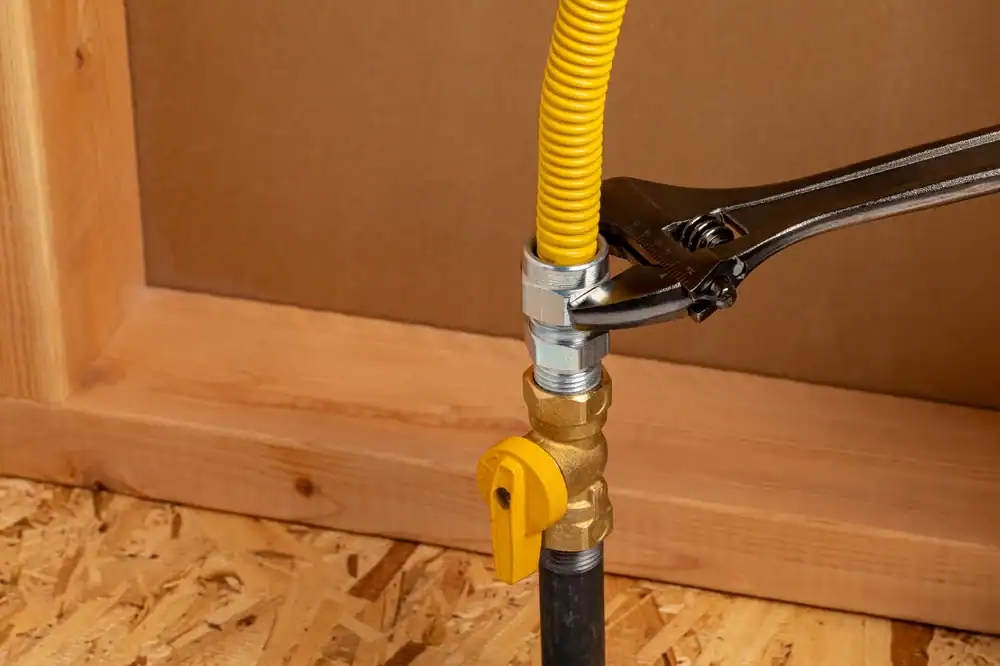
It starts with understanding what you actually need. Before any pipe goes in, we assess your existing gas infrastructure — what’s there, what condition it’s in, and whether it can handle the load you’re planning to put on it.
For a lot of Annadale homes, this step surfaces things the homeowner didn’t know about: undersized lines, aging fittings, or a configuration that made sense for a 1960s kitchen but not for a modern professional range pulling 60,000 BTUs. We calculate the full BTU demand of every connected appliance — not just the one being added — and size the line to match.
Once we know the scope, we handle the DOB permit filing through DOB NOW — the city’s required digital portal for all gas work. On Staten Island, there’s an additional step that Manhattan jobs don’t always require: National Grid authorization. Any new gas service connection or capacity increase needs utility sign-off before work can be activated. We coordinate that directly so you’re not caught waiting on a callback that stalls your project.
After the permit is in place, we run the line, test it at the required pressure, and make sure every appliance connection and shutoff valve meets current NYC Fuel Gas Code. When everything checks out, you get the full documentation package. Most residential installations in Annadale wrap up within one to three days depending on scope — and you’ll know exactly where things stand at every step.

Ready to get started?
Gas line installation through RB Mechanical Plumbing and Heating covers the full scope: load calculation, pipe sizing, DOB permit filing, installation, pressure testing, National Grid coordination where required, and complete documentation at the end.
Pricing runs $12 to $25 per linear foot depending on pipe type and project complexity. Single-appliance hookups typically fall between $500 and $2,000. Whole-home installations generally range from $1,300 to $3,500. For full oil-to-gas conversions — which are common in Annadale given how much of the neighborhood was built with oil heat — the total scope runs higher, and we’ll walk you through exactly what’s involved before anything starts.
For Southeast Annadale’s waterfront properties, where homes sit closer to the Raritan Bay and older infrastructure has had decades of salt air exposure, we also assess existing pipe condition as part of any installation. Corroded or compromised sections get flagged before they become a problem. Every job ends with written documentation — the kind that holds up when your insurer or a future buyer asks for it.

Yes — every gas line installation or alteration in New York City requires a permit filed through the DOB NOW portal, and Annadale is no exception. This applies regardless of the scope of the work. A single appliance hookup, a new line run to a boiler, a full home re-pipe — all of it requires a permit before work begins and before gas service can be activated.
In addition to the DOB permit, any new gas service connection or capacity increase on Staten Island requires National Grid authorization. That’s a step that doesn’t always come up in conversations about gas work in other boroughs, but it’s a real part of the process here. Skipping it means National Grid won’t activate your service, no matter how clean the installation looks. We handle both the DOB filing and the National Grid coordination — so you’re not navigating two separate bureaucratic processes on your own.
The honest answer is: you probably don’t, unless someone has assessed it recently. Gas lines are sized based on the total BTU demand of every appliance connected to them, the length of the run, and the pipe diameter. A line that was perfectly adequate for a standard 30-inch range and a conventional water heater in 1975 may not be able to deliver full pressure to a professional-grade range pulling 50,000 to 60,000 BTUs — especially if you’re adding a tankless water heater to the same system.
This is one of the most common issues we find in Annadale’s postwar housing stock. The homes were built well, but the gas infrastructure was designed for the appliances of that era. Before any installation, we calculate the full BTU load of every connected appliance, measure the longest pipe run, and confirm the line diameter can support it all simultaneously. If it can’t, we’ll tell you exactly what needs to change and what it costs — before the new appliance is sitting in your kitchen waiting to be connected.
An oil-to-gas conversion is more than swapping out the boiler. Before a new gas boiler can be installed, you need gas service brought into the home and a main gas line run to the boiler location. If you’re also adding gas appliances elsewhere — a range, a water heater, a dryer — those lines need to be run and sized as part of the same project. It’s a complete gas line installation, and it requires a Licensed Master Plumber, a DOB permit, and National Grid authorization for the new service connection.
For Annadale homeowners still on oil, the conversion typically pays for itself over time. Heating costs on natural gas tend to run meaningfully lower than oil, and modern gas boilers operate more efficiently than older oil-fired systems. We have specific experience with oil-to-gas conversions on Staten Island — including the National Grid coordination that’s required to get new service established — and can walk you through the full scope and cost before any commitment is made.
For most residential jobs in Annadale — a single appliance hookup or a straightforward line extension — the physical installation takes anywhere from a few hours to a full day. The total project timeline, however, depends on the permit and utility authorization process. DOB permit filing through DOB NOW is required before work begins, and on Staten Island, National Grid authorization adds an additional coordination step for new service connections or capacity increases.
In practice, most residential gas line installations in Annadale wrap up within one to three days from the time permits are in place. More complex projects — a full oil-to-gas conversion, a whole-home re-pipe, or a job that requires new service from the street — take longer, and we’ll give you a realistic timeline upfront based on the specific scope. You’ll know what to expect before we start, including how long you can anticipate being without gas service if any interruption is required.
A failed pressure test means gas service cannot be activated — full stop. The NYC Fuel Gas Code requires that all gas piping be tested at one and a half times the working pressure before any connection to the utility is made. If there’s a leak or a weak joint somewhere in the system, the pressure test finds it before gas ever flows through the line. That’s the point of the test.
When we install a gas line, we don’t move forward to the pressure test until we’re confident the installation is correct. If something doesn’t pass — a fitting that wasn’t seated properly, a section of pipe that needs to be redone — we fix it before the inspector arrives. The goal is to get it right the first time, not to schedule a re-inspection and delay your project. Every installation we complete is documented with the pressure test results, so you have written confirmation that the system was tested and passed — not just a verbal assurance.
Yes, and it’s work we approach with the specific conditions of those properties in mind. Southeast Annadale’s waterfront homes along the Raritan Bay have been exposed to decades of coastal weather — salt air, humidity, and in some cases storm surge from events like Hurricane Sandy. Older gas infrastructure in these homes, particularly black iron pipe that was installed in the 1970s or 1980s, can show corrosion and wear that isn’t visible from the outside but shows up clearly during a proper assessment.
Before any new installation in a waterfront property, we evaluate the condition of the existing gas piping. If sections are compromised, we identify them and include the repair or replacement in the project scope — with pricing documented before work begins. For homes in the million-dollar-plus range that Southeast Annadale regularly sees, having a gas system that’s been properly assessed, updated where needed, and fully documented isn’t just about code compliance. It’s about protecting a significant asset and making sure the paperwork holds up when it matters.
Other Services we provide in Annadale