
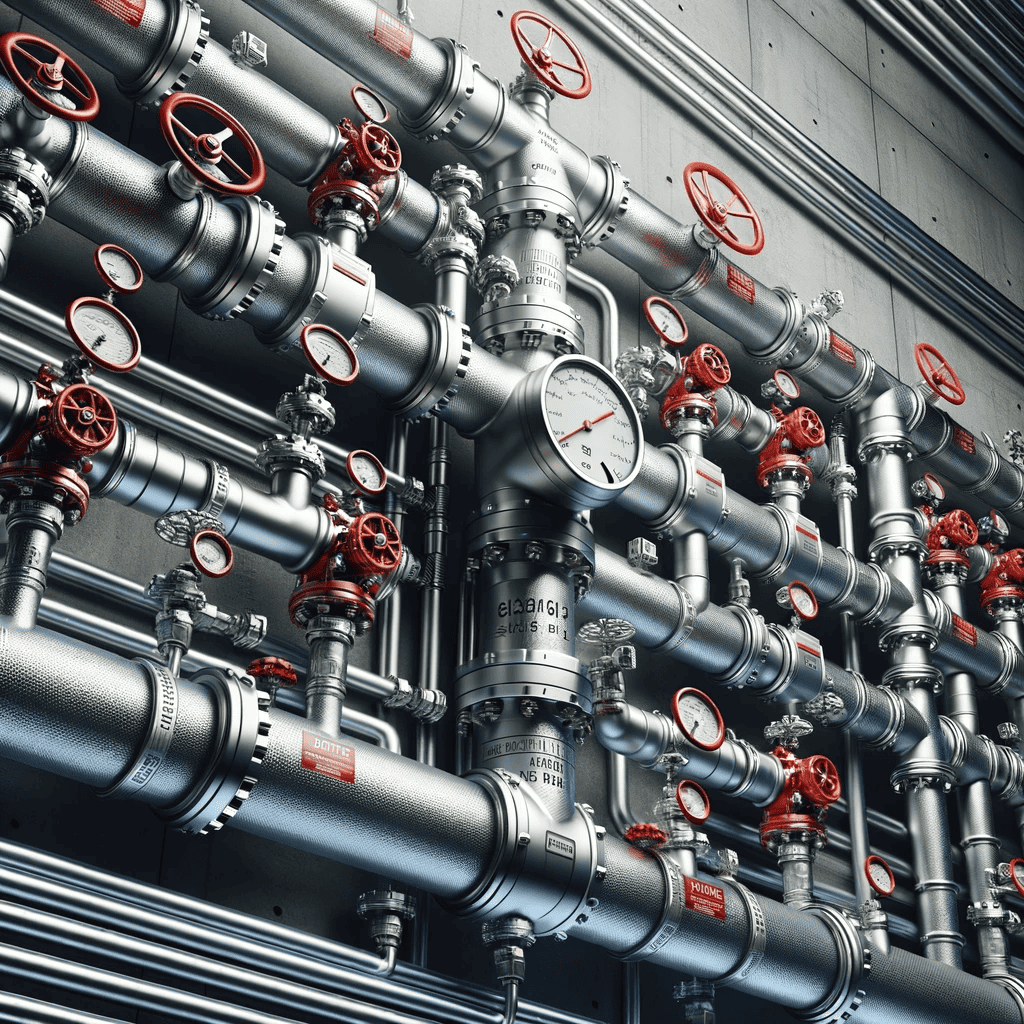

The moment you get a Notice of Deficiency or a formal Notice of Violation from the DOB, your options narrow fast. What was a manageable inspection and filing process becomes an urgent remediation problem — one you’re now solving under pressure instead of on your own schedule. Getting compliant now, even after the deadline, puts you back in control.
Richmond Valley’s housing stock tells you why this matters. A significant share of the neighborhood consists of small two-, three-, and four-unit apartment buildings — a higher concentration than you’d find in most American neighborhoods. If you own a three-family or four-family building on one of the streets off Amboy Road, you have a direct LL152 obligation, and your CD3 deadline has passed.
The coastal environment adds another layer of risk. Richmond Valley sits along the Arthur Kill, bordered by tidal marshes and the wetlands of Long Pond Park. Salt air and coastal moisture accelerate atmospheric corrosion on exposed gas piping — the exact condition LL152 inspections are designed to catch. Older buildings in Richmond Valley, many built before 1939, face a higher baseline corrosion risk than inland properties. That’s not a reason to avoid the inspection — it’s a reason to get it done now, before a utility finds the problem for you.
We’ve been working in New York City buildings since 1983. That’s not a marketing number — it means Bobby and Rob have personally been inside the kind of aging, pre-war gas infrastructure that’s common throughout Staten Island’s South Shore, including the older building stock you’ll find in Richmond Valley and the surrounding CD3 neighborhoods like Pleasant Plains, Tottenville, and Rossville.
When you hire RB Mechanical Plumbing and Heating, you get Bobby and Rob. Not a crew dispatched from a dispatch board, not a subcontractor you’ve never met. The licensed master plumbers whose names appear on the GPS1 report are the ones who physically performed the inspection. That matters when you’re dealing with a DOB notice and need a clean, defensible compliance record.
We’re fully licensed, fully insured, and our LMP credentials are publicly verifiable on the NYC DOB’s own database — which the DOB explicitly recommends you check before hiring anyone for this work.

If you’ve received a Notice of Deficiency or you know your CD3 inspection is overdue, the path forward is straightforward — but it has to be done in the right order, by the right person.
It starts with scheduling the inspection. A Licensed Master Plumber comes to your building and conducts a visual survey of all exposed gas piping — boiler rooms, mechanical rooms, common hallways, rooftop equipment. For buildings near the Arthur Kill waterway, that survey pays close attention to atmospheric corrosion, which progresses faster in coastal conditions. Electronic leak detection equipment is used throughout. Everything found is documented in the GPS1 report, which the LMP signs and seals and delivers to you within 30 days.
If deficiencies are found, that’s where having an inspect-and-repair LMP matters. We can address repairs immediately — no second contractor, no second scheduling window, no gap between finding the problem and fixing it. Once repairs are complete, an Affirmation of Correction is filed with the DOB. Then comes the GPS2 certification — the building owner’s legal obligation to file with the DOB within 60 days of the inspection, now submitted digitally through the DOB NOW portal. We walk you through that process so nothing falls through the cracks. For buildings already holding a Notice of Violation, the DOB violation removal process runs parallel — and that’s work we know well.
Ready to get started?
Local Law 152 covers all exposed gas piping from the point where the gas service enters the building through the common areas — boiler rooms, mechanical rooms, hallways, and rooftop equipment. It does not include piping hidden inside walls or the individual gas lines inside tenant apartments. For a three- or four-unit building in Richmond Valley, that typically means the basement boiler room, any shared mechanical spaces, and common-area piping running through the building.
The inspection evaluates the condition of exposed piping for atmospheric corrosion — rated on a severity scale where Level 3 and Level 4 findings require pipe replacement. Given Richmond Valley’s coastal position and the age of much of its building stock, corrosion is one of the more common findings in this area. The inspection also checks for gas leaks using electronic detection equipment, verifies proper pipe supports, confirms shut-off valve tagging, and flags any illegal connections or non-compliant installations. All of this is documented in the GPS1 Gas Piping Periodic Inspection Report.
For buildings in Staten Island Community District 3 that have already passed the December 31, 2024 Cycle 2 deadline, there’s also the question of what cycle comes next. CD3’s Cycle 3 deadline will be December 31, 2028. Getting compliant now means your next scheduled inspection is four years out — and if you use the same LMP, they’ll already know your building’s gas system when that cycle arrives.
If your building is located in Richmond Valley, you’re in Staten Island Community District 3. The Cycle 2 Local Law 152 deadline for Community District 3 was December 31, 2024. That date has passed. If your building has gas piping and you haven’t completed the inspection and filed your GPS2 certification with the DOB, you are currently out of compliance.
The DOB began issuing Notices of Deficiency to non-compliant CD3 buildings in early 2025, and formal Notices of Violation have been issued since early 2026. That doesn’t mean it’s too late to act — it means the window for handling this quietly, before a notice arrives, has closed for some buildings. The right move now is to schedule the inspection as soon as possible, complete any necessary repairs, file the GPS2 through the DOB NOW portal, and address any outstanding DOB notices. That’s the full remediation path, and it’s one engagement, not several.
Not every deficiency triggers a gas shutoff. The law distinguishes between Class 1 conditions — immediate hazards like active gas leaks or severely compromised piping — and Class 2 conditions, which are less urgent issues that can be corrected within a set timeframe while gas service continues. Most inspections, even in older Richmond Valley buildings, result in minor findings or none at all.
If a Class 1 condition is found, the gas utility — Con Edison or National Grid — must be notified, and gas may be shut off until repairs are made and the utility conducts its own final inspection before restoring service. That process follows Con Ed’s Yellow Book or National Grid’s Blue Book standards. For Richmond Valley buildings near the water, where atmospheric corrosion on older piping is a real possibility, knowing what level of corrosion exists before a utility emergency inspection finds it is always the better position to be in. When we perform the inspection and find a deficiency, we can handle the repair immediately — no second contractor, no gap in the timeline.
It depends on the occupancy classification. One- and two-family homes classified as Occupancy Group R-3 are generally exempt from the inspection requirement. However, if you own a three-family, four-family, or larger building — which describes a significant portion of Richmond Valley’s rental housing stock — you have a direct LL152 obligation.
Many owners of small multi-family buildings in Richmond Valley don’t think of themselves as “building owners” in the formal sense. They own a three-family house, they rent out two units, and the compliance landscape for larger commercial landlords doesn’t feel like it applies to them. But it does. If your building has three or more units and has gas piping, you needed to complete your inspection and file your GPS2 by December 31, 2024. The civil penalty for non-compliance is $5,000 per violation — though for three-family buildings specifically, that figure was reduced to $1,500 effective November 2024. Either way, the inspection cost is a fraction of the penalty, and the penalty is now actively being enforced in CD3.
The inspection must be performed by a Licensed Master Plumber, or by a Registered Journeyman Plumber working under the direct supervision of an LMP who has completed a DOB-approved seven-hour Periodic Gas Piping Inspector Qualification course. The GPS1 report — the official gas piping inspection report — must be signed and sealed by the LMP. If the person who performs your inspection doesn’t hold an active LMP license, the GPS1 report they produce won’t be accepted by the DOB, and you’ll be back to square one.
The NYC DOB specifically recommends that building owners verify both the current license status and the disciplinary record of any LMP they hire before the work begins. That’s a public search on the DOB’s own database — it takes about two minutes and tells you whether the license is active and whether there are any disciplinary actions on record. Bobby and Rob at RB Mechanical Plumbing and Heating hold active LMP licenses, and our credentials are fully verifiable through that same search.
Yes. Buildings without gas piping are not exempt from all LL152 obligations — they’re exempt from the inspection requirement, but they still have a filing requirement. If your building has no gas piping, a registered design professional must sign and file a certification with the DOB confirming the absence of gas piping. Skipping this step can still result in a DOB notice.
This is one of the most commonly overlooked aspects of the law, and it catches building owners off guard. If you own a property in Richmond Valley that runs entirely on electric — no gas range, no gas boiler, no gas water heater — you still need to confirm that formally with the DOB. As of 2026, all filings go through the DOB NOW digital portal only; there are no more paper submissions. And new 2026 rules attach a filing fee of $480 per BIN for no-gas-service documentation, so a property with multiple building identification numbers can face significant fees before any inspection or repair costs even enter the picture.
Inspection costs vary based on building size, the number of gas meters, the total length of exposed piping, and the complexity of the gas system. For smaller multi-family buildings — the type common throughout Richmond Valley — inspections generally start around $800 to $1,000. Larger or more complex properties can run significantly higher.
What matters as much as the starting number is what’s included and how the pricing is communicated upfront. The range across NYC providers is wide enough that two quotes for the same building can look very different. We provide a detailed cost breakdown before any work begins — no hidden charges, no surprise bills at the end. For a Richmond Valley building owner who is already navigating a DOB notice and the stress that comes with it, knowing exactly what the inspection will cost before anyone sets foot in the building removes one more variable from a situation that already has too many.
Other Services we provide in Richmond Valley