
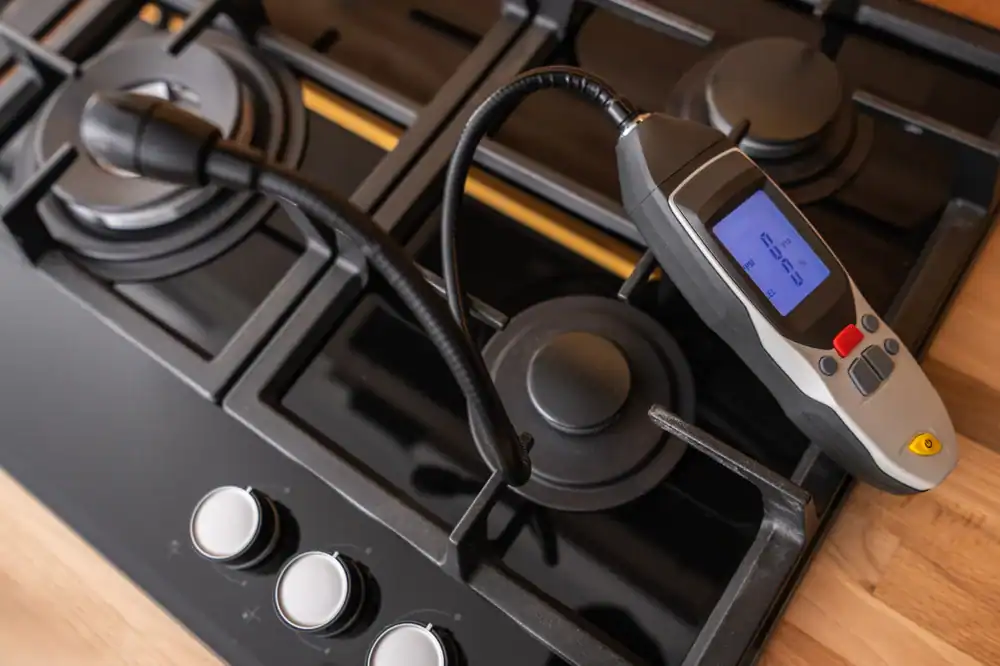

In a detached house a gas leak is a household problem. In a Bay Ridge walk-up or a Shore Road co-op it is a building problem, because the piping is shared.
Gas comes into the building, goes to the meters, and then runs up through risers that feed branch lines to individual apartments. When a leak is found anywhere on that shared run, the safe response is to isolate it, and depending on how the building was piped that can mean shutting gas to the whole line rather than one unit.
Which is why the diagnosis matters so much here. A pressure test tells us which section is failing. If the fault is on one branch, one apartment loses gas. If it is on the riser, everybody does. Guesswork means shutting more than you needed to, for longer than you needed to.
And in a co-op or condo, there is a second question running alongside the plumbing: whose repair is it. We will tell you plainly where the fault sits so the board and the shareholder are arguing from facts rather than assumptions.
RB Mechanical Plumbing and Heating is third generation and owner operated, licensed master plumbers working in New York City since 1983. We are on Staten Island’s south shore, directly across the Verrazzano from Bay Ridge, and on the same gas utility.
Bay Ridge’s housing is the reason this work exists here. Brick walk-ups and prewar co-ops along Shore Road and Ridge Boulevard carry gas piping that has been extended, branched and re-routed repeatedly since the buildings went up. Threaded steel joints loosen over decades. Basements are damp and steel corrodes.
So the most common gas leak we find in Bay Ridge is not dramatic. It is a slow seep at an old joint on a riser or a basement run, in a building where nobody has pressure tested the system in living memory.
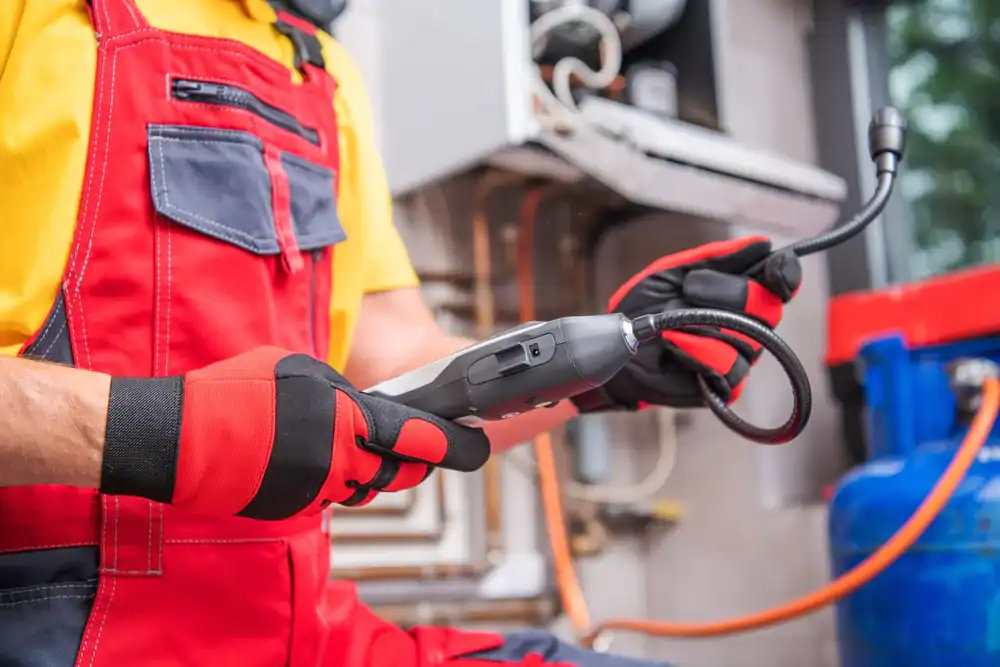
If there is an active smell, the utility or the fire department makes the building safe first and shuts the gas off. That is correct, even when it is inconvenient for twenty apartments.
We then locate the fault, working the exposed piping in the basement, the service entry and the risers with a combustible gas detector and a pressure test. The test tells us whether a section holds. The detector tells us where it does not.
We repair under the correct filing. Everything goes through DOB NOW: Build, because the Department of Buildings no longer accepts paper filings. Repair or replacement of existing equipment commonly runs under a self-permitted Limited Alteration Application.
Then the part that decides how long your tenants or shareholders are without gas: restoration has to be authorized by the Department of Buildings. We request the Gas Authorization through DOB NOW: Inspections, the Plumbing Unit reviews it, and the utility reconnects on that approval.

Ready to get started?
Leave. Do not touch a light switch, the intercom or an elevator button, and do not use a phone until you are outside. Any spark is a spark.
Call 911 or National Grid on 718-643-4050 from outside the building. Both are answered around the clock and both are correct.
Do not reopen a gas valve that has been closed. In New York City that is not yours to reopen, and restoring service without an authorization is how a safety problem becomes a legal one.
In a multi-unit Bay Ridge building, tell the super or the managing agent as well as the utility. Neighbours on the same riser need to know, and the person who holds the basement keys is the person the responders will need.

Leave the building and call 911 or National Grid on 718-643-4050 from outside. Do not touch switches, the intercom or an elevator on the way out. Tell your super or managing agent too, because in a shared riser building your neighbours are on the same line.
We are not the emergency responder and we will not pretend otherwise. We are who finds the fault, repairs it, and gets your building’s gas legally restored once it is safe.
It depends where the fault is. If it is on a branch line feeding one apartment, that apartment can often be isolated. If it is on the riser or the basement run, the line it feeds goes off, which in most Bay Ridge buildings is several apartments.
A pressure test is what settles it. Without one, the safe assumption is always the larger shutdown, which is why testing properly usually gets more people their gas back sooner.
That is a question for your proprietary lease and your board, not for your plumber, and we will not pretend to answer it. What we will do is tell you exactly where the fault is, in writing, because almost every one of these arguments turns on whether the failure is on shared piping or inside a unit.
Boards generally treat risers and building service piping differently from piping inside an apartment. Get the location established first and the responsibility question usually answers itself.
Because they are not permitted to. After a gas shutoff, a Department of Buildings inspection is required to authorize restoration of service, and the utility reconnects on that authorization.
So the route back runs through a Licensed Master Plumber: the repair, the filing, the Gas Authorization Request in DOB NOW: Inspections, and the Plumbing Unit’s approval. Buildings that only chase the utility are the ones that stay cold longest.
Age alone is not the test, condition is. Plenty of prewar steel piping is sound. What matters is corrosion, how many times the run has been altered, and whether it still holds pressure.
That said, if a building has never had a pressure test and the piping is original, the honest answer is that nobody knows its condition, including the people telling you it is fine.
Yes. We are licensed master plumbers, which New York City requires for any fuel gas piping repair, so detection, repair, filing and the restoration sign off stay with one company.
That matters more than it sounds. Where detection and repair sit with different firms, the handover is usually where a building loses days of gas.