

There’s a specific window where gas system problems are still manageable — before a slow leak turns into a shutoff, a DOB violation, or something worse. Most Charleston homeowners don’t find out they have a problem until National Grid shows up or a neighbor calls it in. A professional inspection changes that timeline entirely.
Charleston’s housing stock tells a particular story. The bulk of the neighborhood was built during the suburban expansion of the 1970s through the 1990s, which means a large portion of local gas systems are now between 25 and 55 years old. Flexible connectors behind stoves, galvanized fittings at appliance hookups, and underground service lines beneath driveways and yards weren’t designed to last indefinitely — and most of them have never been checked.
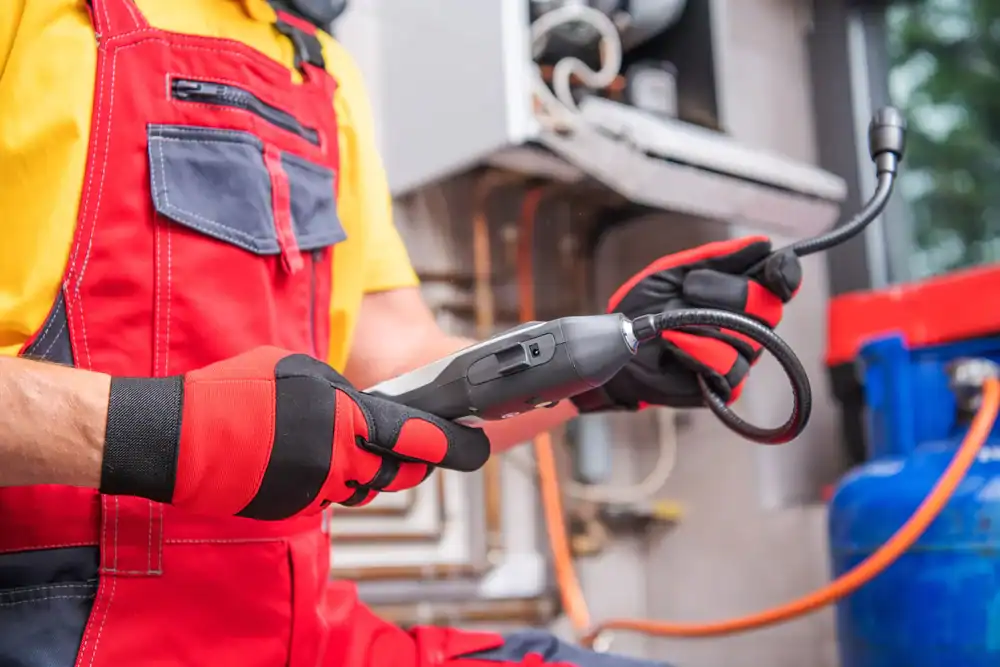
The waterfront geography adds another layer. Charleston borders the Arthur Kill, and the ambient moisture and salt air that come with that proximity accelerate corrosion on metal piping — both inside your home and underground. A home a few blocks from the water faces a different level of wear than an inland property. We use professional-grade gas detectors and infrared cameras to find what’s happening inside walls and beneath surfaces without unnecessary demolition. You get a clear picture of your system’s condition and a straight answer about what, if anything, needs to be done.
We’ve been operating in the New York City market since 1983. That’s not a marketing number — it means we’ve worked through every generation of NYC gas regulation, every DOB policy shift, and every utility protocol change that’s come down since before most of Charleston’s homes were built.
Bobby and Rob run this operation as a father-and-son team. Every technician who comes to your door is a NYC Licensed Master Plumber — drug-tested, vetted, and credentialed at the highest level the state issues for gas work. This matters in a neighborhood like Charleston, where homeowners are protective of their properties and careful about who they let inside.
Staten Island is National Grid territory, not Con Edison, and we know that distinction cold. When National Grid identifies a utility-side issue and gas service goes off at your home near Veterans Road West or anywhere along the South Shore, the building-side repairs and the DOB coordination that follow require a licensed plumber who has done this before — not one who’s figuring out the process on your time.

When you call about a suspected gas leak — or when you just want to know the condition of a system that’s been in service since the Reagan administration — the process starts with a conversation, not a sales pitch. You describe what you noticed: a smell that came and went, a hissing sound near an appliance, a National Grid notice, or simply a home that hasn’t had its gas lines looked at in decades. That context shapes where the inspection begins.
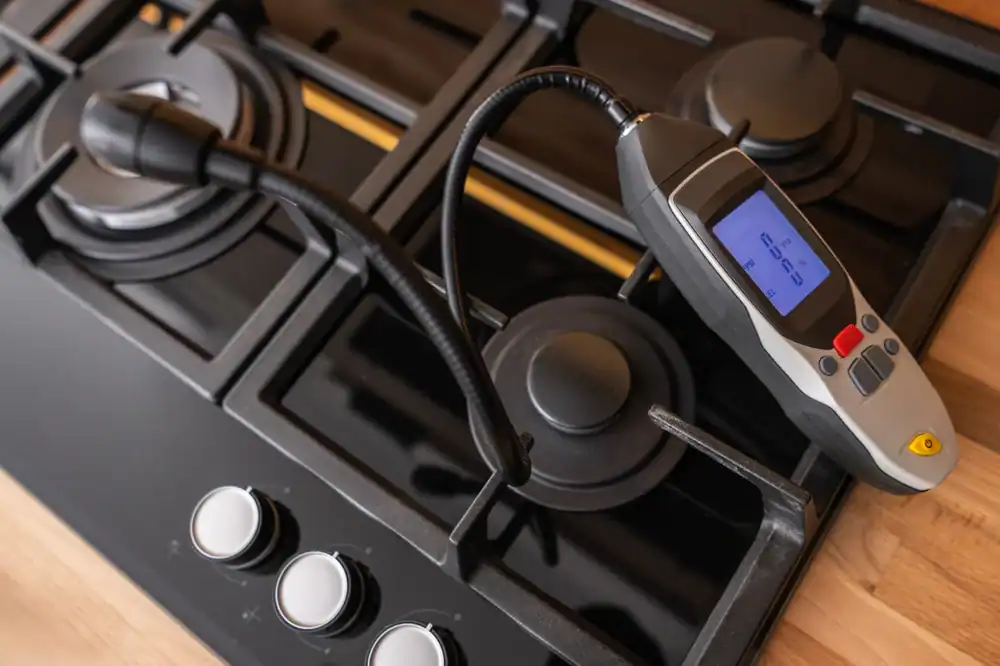
On-site, our technician works through your exposed gas piping, appliance connections, and any accessible lines using professional-grade gas detectors calibrated to find leaks that your nose might miss. This matters more than most people realize — the odorant added to natural gas can dissipate over time, which means the absence of a smell is not the same as the absence of a leak. Infrared cameras extend the inspection to areas behind walls and underground, which is particularly relevant for Charleston properties where underground service lines run beneath driveways and landscaped yards.
If a leak or problem is found, you get a clear explanation of what it is, where it is, and what it takes to fix it — with pricing stated before any work begins. No hidden fees, no pressure. If repairs are needed and permits must be filed with the NYC DOB, we handle that paperwork. If National Grid needs to be coordinated for service restoration, that’s handled too. The goal is to get your system safe and your gas back on, not to leave you with a half-finished job and a stack of forms you don’t know what to do with.

Ready to get started?
Gas leak detection with us isn’t a single scan and a handshake. The inspection covers your exposed gas piping, appliance connections — including the flexible connectors behind your stove and dryer that tend to degrade quietly over time — and any accessible underground lines. For Charleston homeowners with larger lots along Arthur Kill Road or the streets running toward the waterfront, that underground component is worth taking seriously. Soil conditions near the tidal shoreline are not kind to aging metal pipe.
Beyond the inspection itself, we’re equipped to handle the full compliance picture. If your property includes a multi-family unit or a commercial space subject to Local Law 152’s mandatory gas piping inspection schedule, that service is available — with a Licensed Master Plumber performing the inspection, handling any required repairs, and filing the certification with the NYC DOB. Missing that deadline carries a $5,000 civil penalty, and it’s the kind of thing that tends to get discovered at the worst possible moment.
For every Charleston homeowner, regardless of building type, New York City’s Local Law 157 requires natural gas detectors to be installed in all residences by January 1, 2027. The placement requirements are specific — within one foot of the ceiling and within ten feet of gas appliances. If you’re not sure whether your current setup meets the standard, that question can be answered during the same visit as a gas line inspection. One call, one visit, full picture.
The first move is to get out of the house without stopping to open windows, flip light switches, or use your phone inside. Once you’re outside and clear of the building, call 911 and then National Grid — Staten Island is National Grid territory, and they handle the utility-side response. Do not go back inside until emergency responders have cleared the property.
What happens after that is where a lot of Charleston homeowners get stuck. National Grid and the FDNY will address the utility-side infrastructure, but they cannot repair building-side gas piping. If the issue is inside your home — a corroded fitting, a degraded flexible connector, a line that’s been slowly leaking behind a wall — that requires a Licensed Master Plumber. We can respond quickly, assess the building-side system, make the necessary repairs, coordinate any required DOB filings, and work with National Grid on service restoration. The goal is to get your heat and gas back on as fast as safely possible.
The absence of a smell is not clearance. The odorant added to natural gas — mercaptan — can dissipate through physical and chemical processes over time, particularly in enclosed spaces or in systems with older piping. A slow leak in a basement, crawl space, or behind a wall may never produce a detectable smell at the surface, even as gas accumulates in the space.
For Charleston homeowners, the age of the housing stock is the more useful indicator. If your home was built between 1970 and 1999 — which describes a large portion of the neighborhood — and your gas system has never been professionally inspected, that alone is a reason to schedule a check. Add in the corrosion risk that comes with living near the Arthur Kill waterfront, and the case for a proactive inspection gets stronger. Professional-grade gas detectors and infrared cameras can locate leaks that a nose would never catch and that a consumer-grade detector from a hardware store cannot pinpoint or document.
When National Grid shuts off gas service to a Staten Island home, the path to restoration depends on why the shutoff happened. If it was triggered by a utility-side issue, National Grid handles their end. But if there’s a building-side problem — a violation, a failed inspection, or a repair that needs to be made on the piping inside your home — you need a Licensed Master Plumber to address it before service can be restored.
This is where the process gets confusing for a lot of homeowners. National Grid will not tell you exactly what a plumber needs to do; they will tell you that service cannot be restored until the building-side issue is resolved and, in some cases, until a permit is filed and inspected by the NYC DOB. We’ve navigated this exact sequence for Charleston homeowners — the diagnosis, the repair, the permit filing, and the coordination with National Grid to get the gas back on. If you’re heading into a South Shore winter without heat, that process moving quickly is not a small thing.
Local Law 157 is New York City’s natural gas detector law, and yes — it applies to every NYC residence, including single-family homes in Charleston. The compliance deadline is January 1, 2027. By that date, natural gas detectors must be installed in all residences, placed within one foot of the ceiling and within ten feet horizontally of any gas appliance.
This is different from Local Law 152, which applies to gas piping inspections in multi-family and commercial buildings and exempts one- and two-family homes. Local Law 157 has no such exemption. Every Charleston homeowner with a gas stove, a gas dryer, a boiler, or a gas water heater has a compliance task to complete before the deadline. If you’re not sure whether your current detectors meet the placement requirements — or if you don’t have them at all — that’s a straightforward question to answer during a gas system inspection. Getting it right the first time is easier than correcting a non-compliant installation later.
It can, and it’s a more common concern than most homeowners realize. Excavation and trenching near existing gas infrastructure is one of the documented causes of gas line damage. Charleston is currently in the middle of a significant development surge — the large mixed-use development project, the Broadway Stages studio complex, and ongoing commercial construction along Veterans Road West all involve heavy equipment operating near established residential neighborhoods.
Underground gas service lines run beneath driveways, lawns, and property edges throughout Charleston. If excavation work has happened near your property line — whether by a utility crew, a developer, or a landscaping contractor — and you’ve noticed any change in gas smell, appliance performance, or pressure, that’s worth having checked. A professional inspection using infrared cameras and calibrated gas detectors can assess whether underground lines have been disturbed, and it can do that without digging up your yard unnecessarily. If something is found, the repair and any required DOB filings are handled in the same process.
The most important credential to verify is the NYC Licensed Master Plumber license. In New York City, gas piping work must be performed by or under the direct supervision of a Licensed Master Plumber — it is a legal requirement, not a preference. A contractor who cannot provide a verifiable NYC LMP license number should not be doing gas work in your home, period. Our license number is public record and available on request.
Beyond licensing, the things that matter in a neighborhood like Charleston are the ones that travel by word of mouth: Does the plumber show up when they say they will? Do they explain what they found and what it costs before they start work? Are their technicians vetted and drug-tested — people you’re comfortable letting into your home? We’ve operated in the NYC market since 1983, and we’re a named father-and-son operation. Bobby and Rob are accountable in a way that an anonymous dispatch service is not. For South Shore homeowners who take their properties seriously, that kind of accountability is not a small thing — it’s the whole point.
Other Services we provide in Charleston