
When gas line work is done correctly, you stop worrying about it. The stove performs the way it should. The water heater delivers. The inspector signs off. That’s the outcome — not a complicated one, but one that requires the right person doing the job from start to finish.
For Charleston homeowners, the stakes are a little more specific. Most of the housing stock here was built between the late 1970s and mid-1990s, which puts a lot of gas infrastructure right in that 30-to-50-year window where things start to need attention. Add in Charleston’s flat, low-lying terrain near the Arthur Kill and the wetlands around Clay Pit Ponds, and you’ve got conditions where buried or older gas lines are more susceptible to moisture and corrosion than they would be in a drier, higher-elevation part of the borough.
Getting a properly sized, properly permitted gas line installed means your high-BTU range actually reaches full heat, your tankless water heater doesn’t starve for pressure, and your home has documentation that protects you — for insurance, for resale, and for your own peace of mind. That paper trail matters more than most people realize until they need it.
We’ve been doing licensed gas line work in New York City since 1983. That’s before most of the homes along Arthur Kill Road in Charleston were built. Over 40 years, the permit systems have changed, the appliances have changed, the code requirements have gotten more detailed — and we’ve stayed current through all of it.
Staten Island is an active part of our service area, not an afterthought. We’re familiar with how National Grid handles new gas service and authorization on this side of the borough — which matters when you’re waiting for your gas to be activated after a job. We know the specific challenges Charleston properties face: the age of the housing stock, the moisture conditions from proximity to the water, and the permit coordination that’s required before any work can begin.
What you get is a Licensed Master Plumber doing the work, filing the permits through DOB NOW, coordinating with National Grid, and handing you documentation when the job is done. No subcontractors running the show while a license sits in a drawer somewhere. The person accountable for the work is the person doing it.

It starts with a conversation about what you’re trying to do — adding a new appliance, replacing aging infrastructure, hooking up a range or water heater, or dealing with a situation that came up during an inspection. Before any work is recommended, we evaluate the existing gas line. In a Charleston home built in 1988, that line may have been sized for a basic stove and a conventional water heater. If you’re adding a professional-grade range or a tankless unit, the load calculation has to account for the full BTU demand of everything connected to the system — not just the new appliance.
Once the scope is clear, a DOB permit gets filed through DOB NOW. In New York City, there’s no such thing as a minor gas job that skips the permit process. The permit is filed, the installation is completed, and then the system is pressure-tested at 1.5 times working pressure before anything is turned on. That’s not optional — it’s code.
After the pressure test, we coordinate National Grid authorization for any work involving new service or upsized capacity. This is the step that often delays gas activation when it’s left to the homeowner to figure out. We manage that coordination directly. When the job is finished, you receive written documentation of everything — the permit, the test results, the LMP certification — so the record exists for your insurance, your building file, and anyone who asks about it down the road.

Ready to get started?
Gas line installation isn’t one thing — it depends on what you’re starting with and where you’re trying to end up. For a single appliance hookup in a Charleston home, the range typically runs $500 to $2,000. For whole-home gas line work, the range is $1,300 to $3,500. Linear footage is priced at $12 to $25 per foot depending on complexity and pipe type. Those figures come from the actual scope of the work, not a number pulled out of the air — and every job starts with a written estimate before anything begins.
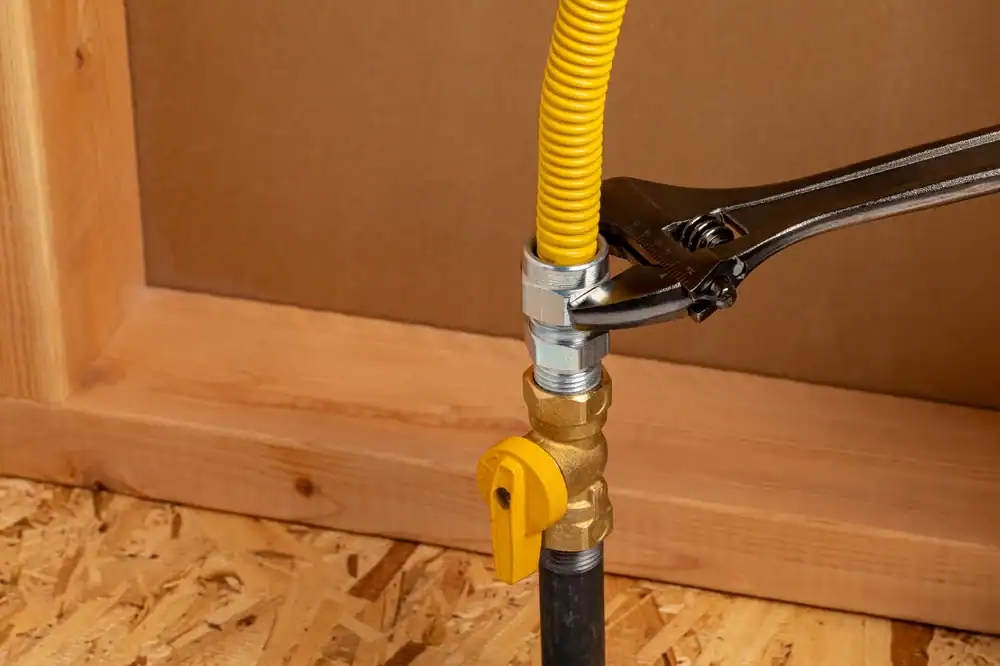
What’s included in that scope: the load calculation to confirm your existing line can handle the new demand, the DOB permit filing, the installation itself using the correct materials for NYC code compliance, a full pressure test, National Grid coordination where applicable, and written documentation delivered when the job is complete. We use electronic gas detection equipment during the process. Every appliance gets a dedicated manual shutoff valve in the same room, as required.
For Charleston properties that aren’t single-family homes — multifamily units, mixed-use buildings, or commercial spaces near the Bricktown Centre corridor — Local Law 152 compliance is also part of the picture. That means gas piping inspections, violation remediation if needed, and GPS-2 certification filed with the DOB. The $10,000 penalty for missing that deadline is real, and the filing process is not something to hand off to someone who hasn’t done it before.
In New York City — which includes all of Staten Island and Charleston — only a Licensed Master Plumber registered with the NYC Department of Buildings can legally perform gas line work. This isn’t a preference or a recommendation; it’s the law. A handyman, a general contractor, or an unlicensed plumber cannot legally touch a gas line in Charleston, regardless of how straightforward the job looks.
The reason this matters practically: utility companies won’t activate gas service to work that wasn’t permitted and performed by a licensed master plumber. If someone does the work without the right credentials and the right permit, you can end up with an appliance that’s physically installed but can’t be turned on — or worse, work that voids your homeowner’s insurance coverage. Verifying a contractor’s LMP status is easy through the NYC DOB website. Any contractor who hesitates to give you their license number is a contractor worth walking away from.
For a single appliance hookup in Charleston, the typical range is $500 to $2,000. Whole-home gas line installations generally run $1,300 to $3,500. Linear footage is priced at $12 to $25 per foot depending on the complexity of the run and the type of pipe required. These aren’t ballpark guesses — they reflect the real scope of work involved, including materials, labor, and the permit filing that’s required for every gas job in NYC.
What affects where your job lands in that range: how long the gas line run is, whether it requires penetrating walls or ceilings, whether your existing line needs to be upsized to handle a new appliance load, and whether any National Grid coordination is needed for new or upgraded service. In a Charleston home built in the late ’80s, it’s not unusual to find that the existing line was sized for appliances that drew significantly less BTU than what’s being installed today. That evaluation happens before any work is quoted, so you know exactly what you’re looking at before anything starts.
Yes — every gas line job in New York City requires a permit filed through DOB NOW, the city’s online portal. There are no exceptions for small jobs, single appliances, or existing lines that are being extended. The permit requirement applies across all five boroughs, including Staten Island and Charleston.
We handle the permit filing as part of the job. You don’t need to create a DOB NOW account, navigate the portal, or coordinate with the Department of Buildings directly. The permit is filed, the work is completed, the pressure test is performed, and the documentation is handed to you when everything is done. For Charleston homeowners who are already juggling work, family, and a commute, not having to manage a government filing process on top of a home project is a meaningful part of what makes this straightforward rather than stressful.
National Grid is the natural gas utility serving Staten Island, including Charleston. Con Edison handles gas service in Manhattan and the Bronx — not Staten Island. This distinction matters more than it might seem, because any work involving new gas service, upsized capacity, or meter changes requires National Grid authorization in addition to the NYC DOB permit. These are two separate processes, and both need to be completed before gas service is activated.
When a contractor handles the DOB permit but leaves the National Grid coordination to the homeowner, that’s where delays happen. Getting the permit filed and the installation done is one thing — but if the utility authorization isn’t managed in parallel, you can be sitting on a finished job waiting days or weeks for gas to actually flow. We coordinate directly with National Grid as part of every applicable installation, so the activation process moves as quickly as possible after the work is complete.
This is more common than most people expect, especially in Charleston where a significant portion of the housing stock was built in the 1980s. The gas lines installed in those homes were sized for the appliances of that era — standard ranges, conventional water heaters, maybe a gas dryer. A professional-grade range can draw 60,000 BTU or more. A tankless water heater demands 150,000 to 199,000 BTU. If the existing line was never sized to carry that kind of load, the appliance won’t perform the way it’s supposed to — and depending on the situation, it may not meet code either.
Before any new appliance is connected, the full BTU demand of every appliance on the system needs to be calculated — not just the one being added. If the existing line can handle it, that’s documented and the hookup proceeds. If it can’t, the line gets upsized as part of the job. Either way, you know the answer before the work starts, and you’re not left guessing why your new range isn’t heating the way it should after the installer is gone.
Local Law 152 applies to virtually all New York City buildings except one- and two-family homes. So if you own a multifamily property, a mixed-use building, or a commercial space in Charleston — including anything along the Veterans Road West corridor near Bricktown Centre or in the areas seeing new development activity — LL152 applies to you. The law requires gas piping inspections every four years, performed by a Licensed Master Plumber. After the inspection, a GPS-2 certification has to be filed electronically through DOB NOW. If violations are found, they need to be corrected before the certification can be filed.
Missing the deadline carries penalties up to $10,000. The filing process changed in 2026 with new requirements through DOB NOW and new filing fees, so property owners who went through this process a few years ago may find the current requirements different from what they remember. We handle the full LL152 process — inspection, any necessary repairs, and the GPS-2 filing — so the deadline gets met and the documentation is in order.
Other Services we provide in Charleston