


When Hurricane Sandy tore through Midland Beach in 2012, it didn’t just flood homes — it pushed saltwater into foundations, behind walls, and around the gas fittings and flexible connectors that most renovations never touched. The visible damage got fixed. The Build It Back program helped a lot of families get back on their feet. But saltwater corrosion doesn’t announce itself. It works from the inside out, quietly degrading metal gas connections over months and years until something finally gives.
If your Midland Beach home was renovated after Sandy rather than fully rebuilt, there’s a real chance your gas piping was never fully assessed. New drywall went up. New appliances went in. But the service connection under your foundation or the lines running behind those new walls may be original — and may have spent hours submerged in corrosive saltwater.
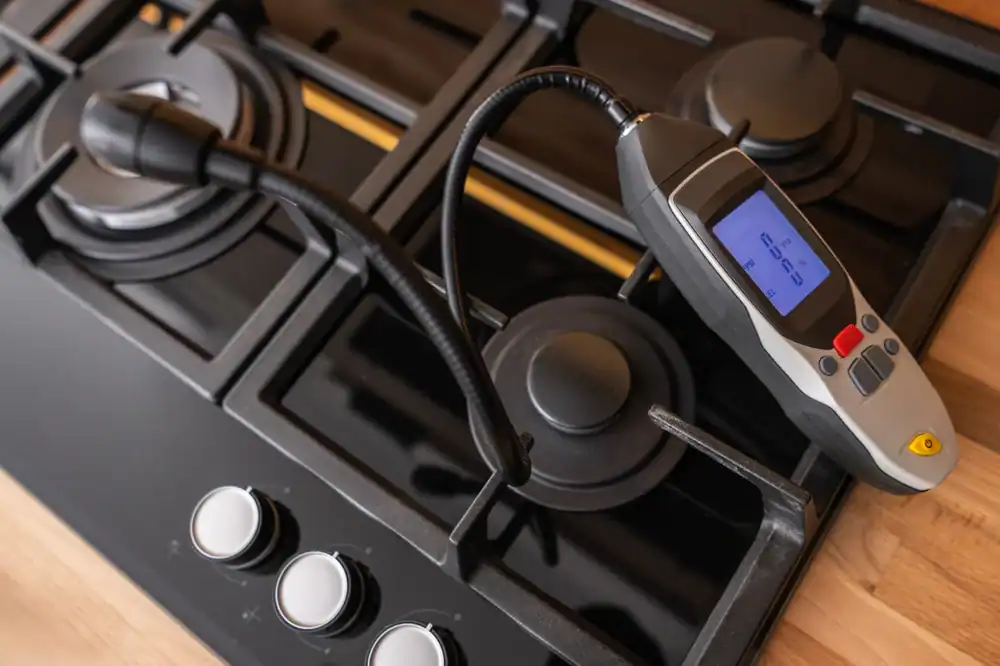
Getting a professional gas leak inspection means you’re not guessing anymore. We use professional-grade gas detectors and infrared cameras to locate leaks behind walls and underground — the exact conditions that post-Sandy renovations in Midland Beach can obscure. You get a clear answer, not a maybe. And if something does need to be fixed, you know exactly what it is and why, before any work begins.
We’ve been doing this work since 1983 — over 40 years of navigating NYC’s gas codes, DOB requirements, and the kind of aging infrastructure that defines Midland Beach. These are bungalows built as summer cottages that have been running full residential gas loads for decades, with piping systems assembled piece by piece over generations. We know this neighborhood’s gas systems inside and out.
Bobby and Rob are the people you’re calling. Not a dispatch center, not a rotating crew of subcontractors. Every technician who touches a gas line is a NYC Licensed Master Plumber — the highest credential for this work in New York State, and the specific credential National Grid requires before they’ll restore gas service to your Midland Beach home after a building-side repair.
We’re also drug-tested and vetted. In a tight-knit neighborhood like Midland Beach, where people know their neighbors and are protective of their homes, that matters. It’s a real commitment to who we send to your door.

When you reach out to us, the first thing that happens is a real conversation — not a scripted intake form. You describe what you’re noticing: a smell that comes and goes near the stove, a hissing sound you heard once near the water heater, a National Grid notice that showed up in the mail.
From there, a Licensed Master Plumber is dispatched with a 30 to 60 minute response window for true emergencies. On arrival, we do a full assessment using professional-grade gas detectors and infrared cameras. This isn’t a visual check or a sniff test. The detectors identify the presence and concentration of natural gas in areas you can’t see, and the infrared cameras pick up temperature differentials that indicate gas escaping from behind walls or underground — the kind of leak that a converted Midland Beach bungalow with original piping behind new drywall might produce without ever creating a detectable smell at the surface.
Odor fade is real: the mercaptan odorant added to natural gas can dissipate, which means the absence of a smell is not the same as the absence of a leak.
If we find a leak, you’re told exactly what it is, where it is, and what it takes to fix it — with transparent pricing stated before any repair work begins. If the situation requires a DOB permit, a National Grid coordination call, or a Local Law 152 inspection certification, we handle all of it. You don’t need to manage multiple vendors or figure out the paperwork yourself.

Ready to get started?
Midland Beach sits within Staten Island Community District 2, which is currently in the active Local Law 152 inspection cycle running through December 31, 2025. If you own a covered building in this community district — any multifamily property with more than two units, commercial, or mixed-use — and you haven’t completed your gas piping inspection yet, you’re under a live deadline. The penalty for non-compliance is a $5,000 civil fine, and the inspection must be performed by a Licensed Master Plumber who can also certify any necessary repairs. We handle the inspection, the repairs, the DOB filing, and the certification. One call, one vendor, no runaround.
For homeowners in Midland Beach, our service covers the full building-side gas system: the lines from your service connection to your stove, water heater, boiler, dryer, and any other gas appliances. In a neighborhood like Midland Beach, where a lot of homes have been extended and upgraded piecemeal over 80 or more years — a furnace added in the 1970s, a gas dryer connection in the basement, a new range hookup after Sandy — the full system has often never been inspected as a whole. That’s exactly the kind of situation where a professional detection visit finds things that were never on anyone’s radar.
If your gas gets shut off by National Grid — whether from a utility inspection, a neighbor’s 911 call, or a DOB action — we perform and certify the building-side repair so National Grid can restore your service. We also coordinate directly with insurance companies when gas leak damage is involved, which matters in Midland Beach where many homeowners are already navigating NFIP flood policies alongside standard homeowners coverage.
National Grid handles the utility distribution side — the main lines running under the street and up to your building’s service connection. That’s their responsibility. What’s inside your Midland Beach home — the gas piping from the service entry to your appliances — is the building owner’s responsibility, and National Grid cannot repair it. This is one of the most common points of confusion for Staten Island homeowners, and it becomes a real problem when National Grid shuts off your gas after finding an issue.
Once National Grid shuts off service, they won’t restore it until a Licensed Master Plumber performs and certifies the building-side repair. That’s the specific process here on Staten Island, and it’s why having a licensed plumber — not just any contractor — matters. We know the National Grid coordination process and can move through it efficiently so you’re not left without heat, hot water, or cooking gas longer than necessary.
Yes, and the fact that it goes away is not reassurance — it’s actually a reason to take it more seriously. The odorant added to natural gas (mercaptan) can dissipate through physical and chemical processes, a phenomenon called odor fade. A slow or intermittent leak may produce a smell that comes and goes at the surface while gas continues to accumulate in enclosed spaces like wall cavities, under floors, or in crawl spaces. By the time the smell becomes constant, the situation has already progressed.
This pattern — a smell that’s present sometimes and gone other times — is exactly what residents in several NYC neighborhoods described before serious incidents. Don’t wait for it to get worse or more consistent. A professional detection visit with calibrated gas detectors can confirm whether there’s an actual leak and where it’s coming from, even if you can’t smell anything at the time of the visit.
If your Midland Beach home was renovated after Sandy rather than fully rebuilt from the foundation up, a gas inspection is worth doing. Sandy’s storm surge reached up to 14 feet in Midland Beach, and saltwater corrosion attacks metal gas fittings, flexible connectors, and buried service connections from the inside out. A renovation that replaced drywall, flooring, and appliances may not have assessed the condition of the gas piping behind those new walls or the service line under the foundation — especially if the renovation was done quickly under the pressure of the Build It Back timeline.
Corrosion doesn’t produce obvious symptoms right away. It weakens fittings gradually until a connection fails or begins leaking at a level too low to trigger your nose. Infrared cameras can detect temperature differentials caused by gas escaping from behind walls — the kind of hidden condition that a visual inspection or a sniff test won’t catch. If your Midland Beach home went through Sandy and you’ve never had a dedicated gas piping inspection since, this is a reasonable step to take.
Local Law 152 is a New York City law that requires most buildings — multifamily properties with more than two units, commercial properties, and mixed-use buildings — to have their exposed gas piping inspected by a Licensed Master Plumber once every four years. One- and two-family homes are exempt. The inspections are scheduled on a rotating cycle by community district, and Midland Beach falls within Staten Island Community District 2.
Community District 2 is currently in its active inspection cycle, which runs through December 31, 2025. If you own a covered building in Midland Beach and haven’t completed your inspection yet, you’re working against a live deadline. Non-compliance carries a $5,000 civil penalty. The inspection must be filed with the NYC DOB within 60 days of completion. We’re licensed to perform the inspection and certified to make any repairs the inspection identifies — so you’re not left with a failed inspection and no clear path forward.
A standard gas leak detection visit typically takes one to two hours depending on the size of the home and the complexity of the gas system. For a Midland Beach bungalow with a straightforward layout, it’s usually on the shorter end. For a larger home or one with a more extensive gas system — multiple appliances, a boiler, a gas dryer, and older piping that’s been extended over the years — it may take longer to assess everything properly.
In most cases, the detection visit itself is non-invasive. Our technician uses gas detectors and infrared cameras to assess the system without cutting into walls or disrupting your gas service. If a leak is found and a repair is needed, the scope of that work determines whether service needs to be temporarily shut off and for how long. Most repairs can be completed the same day. We always state pricing for any repair work transparently before anything begins.
It depends on your specific policy, but in many cases, the cost of detecting and repairing a gas leak — and any resulting damage — can be covered under a standard homeowners insurance policy, particularly if the leak caused property damage. For Midland Beach homeowners who also carry NFIP flood insurance, the coverage picture can be more layered, since flood policies and homeowners policies cover different types of damage and the two don’t always coordinate cleanly.
What helps significantly in a claim situation is having a licensed professional who can document the source, extent, and cause of the leak with proper written findings. We work directly with insurance companies when gas leak damage is involved, which reduces the administrative burden on you and helps ensure the documentation the insurer needs is accurate and complete. If you’re unsure what your policy covers, calling your insurer before the repair work begins — and having your plumber available to speak to the scope of work — is the most straightforward path.
Other Services we provide in Midland Beach