
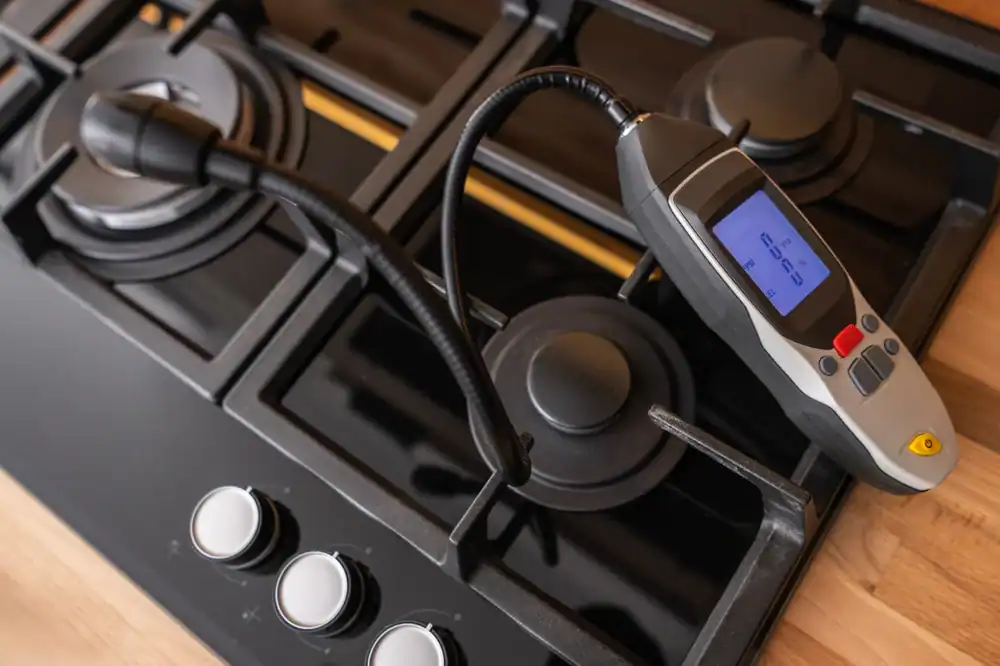

Most people wait until they smell something. The problem is that the odorant added to natural gas — mercaptan — can actually dissipate over time. That means a real leak can be present in your building without triggering your nose at all. A professional inspection with calibrated detection equipment gives you a factual answer, not a guess based on whether the air smells off today.
Old Place sits at the intersection of aging residential housing stock and one of the most heavily documented gas leak zones in the country. The Environmental Defense Fund and Google Street View specifically chose Staten Island as one of only three locations in the entire United States to map underground methane leaks — and found roughly 1,000 leaks across National Grid’s system. That research focused on the North Shore, which includes Old Place. Your building’s internal gas piping is separate from National Grid’s mains, but if the underground infrastructure nearby has been compromised, the risk context for your property is real.
There’s also the construction angle. The Goethals Bridge replacement and the ongoing West Shore industrial build-out along Gulf Avenue and Goethals Road North have brought years of heavy excavation to the ground directly surrounding Old Place. Ground disturbance near aging gas lines is a documented cause of pipe damage — damage that doesn’t always announce itself immediately. Getting a professional inspection means you’re not finding out about a problem the hard way.
We’ve been operating since 1983. That’s not a marketing line — it means we were working on Staten Island’s gas infrastructure before the original Goethals Bridge was replaced, before Local Law 152 existed, and before the West Shore corridor became what it is today. The North Shore’s older building stock isn’t a learning curve for us. It’s familiar ground.
Bobby and Rob run the operation. We’re a father-and-son team, and when you call, you’re dealing with people who are personally accountable for the work — not a dispatcher routing you to whoever’s available. Every technician we send is a NYC Licensed Master Plumber, drug-tested, and vetted. For residents of managed buildings like the Goethals Homes along Goethals Road North, that matters before you hand anyone access to your building.
Old Place is part of our core Staten Island service area — not a stretch call. We know National Grid’s processes, we know the DOB, and we know what it takes to get your gas back on after a shutoff without you having to figure out who handles what.
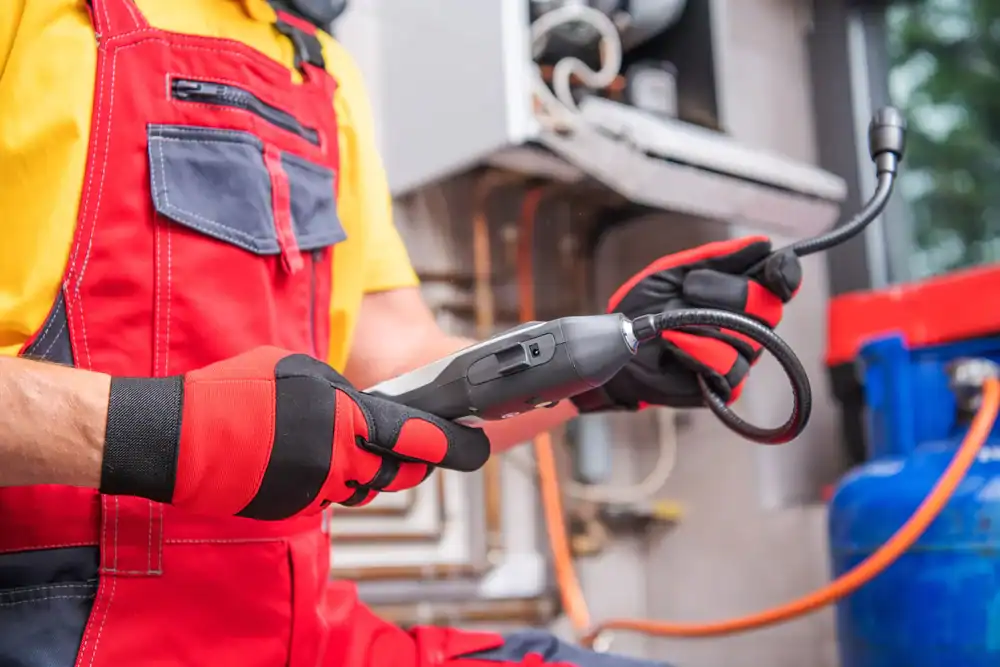
When you call, the first thing that happens is a real conversation — not a form. You describe what you’re experiencing: a smell that comes and goes, a hissing sound near an appliance, a National Grid shutoff notice, or a DOB violation you’re trying to resolve. Based on that, we give you a clear picture of what the visit will involve and what it will cost before anyone shows up. No surprises on the bill.
On-site, our technician uses professional-grade gas detectors and infrared cameras to inspect your building’s gas system. The infrared equipment matters because it can identify leaks hidden behind walls or in areas that aren’t visually accessible — something a consumer-grade detector from a hardware store simply cannot do. For properties in Old Place, where mid-century construction is common and some buildings haven’t had their gas fittings evaluated in decades, this level of inspection is what separates a real answer from a surface-level check.
If a leak is found, we handle repairs with the same licensed master plumber on the same visit whenever possible. If your building falls under Local Law 152 — which applies to all NYC buildings except one- and two-family homes — Old Place sits within Community District 1, whose inspection cycle ran through 2024. We handle the inspection, the repair if needed, and the DOB certification filing. You don’t have to coordinate multiple vendors or figure out the paperwork yourself.

Ready to get started?
Our gas leak detection service covers the full scope of what a building in Old Place might actually need. That includes locating the source using professional-grade equipment, assessing the severity, making the repair, and handling any compliance documentation required by the NYC DOB. For building owners who are currently out of compliance with the Local Law 152 deadline that passed at the end of 2024 for Community District 1, that last part isn’t optional — the civil penalty for non-compliance is $5,000, and it doesn’t go away on its own.
We also handle the practical side of gas restoration. If National Grid has shut off your gas — whether due to a utility inspection, a DOB violation, or a neighbor’s complaint — getting it back on requires a Licensed Master Plumber to resolve the building-side issue first. National Grid handles the distribution main. Everything inside your building is your responsibility, and only a licensed plumber can legally authorize and perform that work in New York City. We know exactly how to work within National Grid’s process to get your service restored without unnecessary delays.
For residential buildings approaching the Local Law 157 compliance deadline of January 1, 2027 — which mandates natural gas detector installation in all NYC residences — we can assess your current setup and make sure you’re covered on that front as well. One call, full coverage, no runaround.

This is one of the most common points of confusion for residents in the 10303 area. National Grid handles the distribution infrastructure — the underground mains that run beneath the streets of Old Place and the surrounding North Shore neighborhoods. When there’s a problem on their side of the meter, National Grid addresses it. But everything on the building side of that meter — your internal gas piping, appliances, connectors, and fittings — is entirely separate, and National Grid does not repair it.
That’s where a NYC Licensed Master Plumber comes in. In New York City, only a Licensed Master Plumber can legally perform gas piping work inside a building. If National Grid shuts off your gas service, they won’t restore it until the building-side issue has been resolved and documented by a licensed plumber. We handle both the repair and the coordination with National Grid to get your service back on — so you’re not stuck navigating that process on your own.
Not necessarily. The smell associated with natural gas comes from mercaptan, an odorant that’s added to the gas specifically so people can detect it. The problem is that mercaptan can dissipate through a process called odor fade — meaning the odorant breaks down or disperses while the gas itself continues leaking. This has been documented by gas utilities including National Grid and is a recognized safety concern that most people aren’t aware of.
A smell that comes and goes, or one that seemed to fade on its own, is not clearance. It’s a reason to have a professional inspection done with calibrated detection equipment. Consumer-grade gas detectors can alert you to the presence of gas, but they can’t pinpoint the source, assess severity, or produce documentation that holds up for insurance or compliance purposes. If you noticed something and it seemed to go away, that’s worth a professional look — not a reason to assume everything is fine.
Local Law 152 is a New York City law that requires all buildings — except one- and two-family homes — to have their exposed gas piping inspected by a Licensed Master Plumber on a rotating four-year cycle. The inspection covers visible gas piping throughout the building, and the results have to be filed with the NYC Department of Buildings within 60 days of the inspection being completed.
Old Place falls within Staten Island Community District 1, and the inspection cycle for Community District 1 ran from January 1 through December 31, 2024. If you own or manage a qualifying building in Old Place and haven’t filed your Gas Piping System Periodic Inspection Certification with the DOB, you’re currently out of compliance. The civil penalty for missing the deadline is $5,000. We’re licensed to perform the inspection, make any required repairs, and handle the DOB filing — so you’re not piecing together multiple vendors to get compliant.
We commit to a 30 to 60 minute response time for true emergencies. That’s a specific number, not a vague “we’ll be there soon.” For Old Place, which sits directly at the Staten Island terminus of the Goethals Bridge along Gulf Avenue and Forest Avenue, the access is straightforward — there’s no complicated routing through the borough’s interior neighborhoods. A plumber who knows Staten Island’s road network can get to the North Shore efficiently.
What matters in an emergency is that you’re not waiting two hours for someone who’s never been to the area and isn’t sure how to navigate around the West Shore corridor. If you smell gas, the first step is always to leave the building and call 911. Once the immediate safety situation is addressed, a Licensed Master Plumber is who you need to evaluate the building-side system, make the repair, and document everything properly so your gas service can be restored.
It’s a legitimate concern. Ground disturbance from heavy construction near aging gas infrastructure is a documented cause of gas line damage — and Old Place has had more than its share of major excavation activity over the past decade. The replacement of the original 1928 Goethals Bridge with the current cable-stayed structure brought years of construction through the Gulf Avenue and Goethals Road North corridor. The ongoing West Shore industrial development, including road upgrades near the Amazon fulfillment center and surrounding logistics facilities, continues to bring heavy equipment to the area surrounding Old Place’s residential pockets.
Gas line damage from nearby excavation doesn’t always produce an immediate obvious sign. A connection that was vibrated loose or a fitting that was stressed by ground movement might not produce a detectable smell for weeks or months. If your building is near an area that’s seen significant construction activity — and in Old Place, that describes most of the neighborhood — a professional inspection with infrared camera equipment is the only way to know for certain that your internal gas system is intact.
They’re two completely different hazards that require different detection equipment and different responses. Natural gas — primarily methane — has mercaptan added to it specifically so you can smell it. That rotten egg or sulfur odor is the warning system. Carbon monoxide, on the other hand, is a combustion byproduct that is completely odorless and colorless. You cannot smell it, see it, or taste it, which is what makes it so dangerous. The two are not interchangeable, and a natural gas detector will not alert you to carbon monoxide, and a CO detector will not alert you to a gas leak.
In a home with gas appliances — stoves, boilers, water heaters — both risks are relevant, but they come from different failure points. A gas leak typically comes from a pipe, fitting, connector, or appliance connection. Carbon monoxide exposure typically results from incomplete combustion in a poorly maintained or malfunctioning appliance. New York City’s Local Law 157 specifically mandates natural gas detector installation in all NYC residences, with a compliance deadline of January 1, 2027. If your building in Old Place doesn’t have compliant natural gas detectors installed yet, that’s something we can assess and address as part of a broader gas safety inspection.
Other Services we provide in Old Place