


Port Ivory sits on the waterfront between two bodies of water, which means salt air is working on your gas fittings every single day. A metal connection that might last twenty years inland can start to fail in half that time here. The absence of a smell doesn’t mean the absence of a leak — and in a marine environment like Port Ivory, that gap between “fine” and “dangerous” closes faster than most homeowners realize.
If you live in the mobile home park on Goethals Road North, the situation is even more specific. Manufactured homes rely on flexible gas connectors — corrugated metal lines that link your home’s internal gas system to the supply. Those connectors have a finite service life, they’re sensitive to vibration and age, and many haven’t been looked at in years. A professional inspection with the right equipment doesn’t just check for active leaks. It tells you where your system stands before something goes wrong.
After a proper gas leak detection visit from RB Mechanical Plumbing and Heating, you know exactly what you’re working with. No guessing, no anxiety every time you catch a faint smell and wonder if it’s real. You get a clear picture of your gas system, documentation if anything needs to be addressed, and the peace of mind that comes from having a Licensed Master Plumber actually look — not just a consumer detector from a hardware store.
We’ve been operating in New York City since 1983 — over forty years of working through code changes, utility shifts, and every type of building this city produces. That includes the older North Shore properties and industrial structures that define Port Ivory and the surrounding Howland Hook corridor. Bobby and Rob are the father-and-son team behind RB Mechanical Plumbing and Heating, and when you call, you’re dealing with people who are accountable by name, not a dispatch center routing you to whoever’s available.
Every technician who touches a gas line holds a NYC Licensed Master Plumber credential — the highest level of licensing for this work in New York State. That’s not a technicality. It’s what the law requires, and it’s what separates work that holds up under DOB review from work that creates new problems. Our team is also drug-tested and vetted, which matters when you’re letting someone into your home or onto your property near the Howland Hook Marine Terminal.
Port Ivory is in our service territory, and that includes the 10303 ZIP — Mariners Harbor, Elm Park, and the waterfront areas. National Grid is your utility here, not Con Edison, and understanding how National Grid’s restoration process works on the building side comes from actually working this borough, not just reading about it. We know Port Ivory’s specific challenges: the salt-air corrosion, the mix of older homes and manufactured housing, and the industrial context that shapes how gas systems fail here.
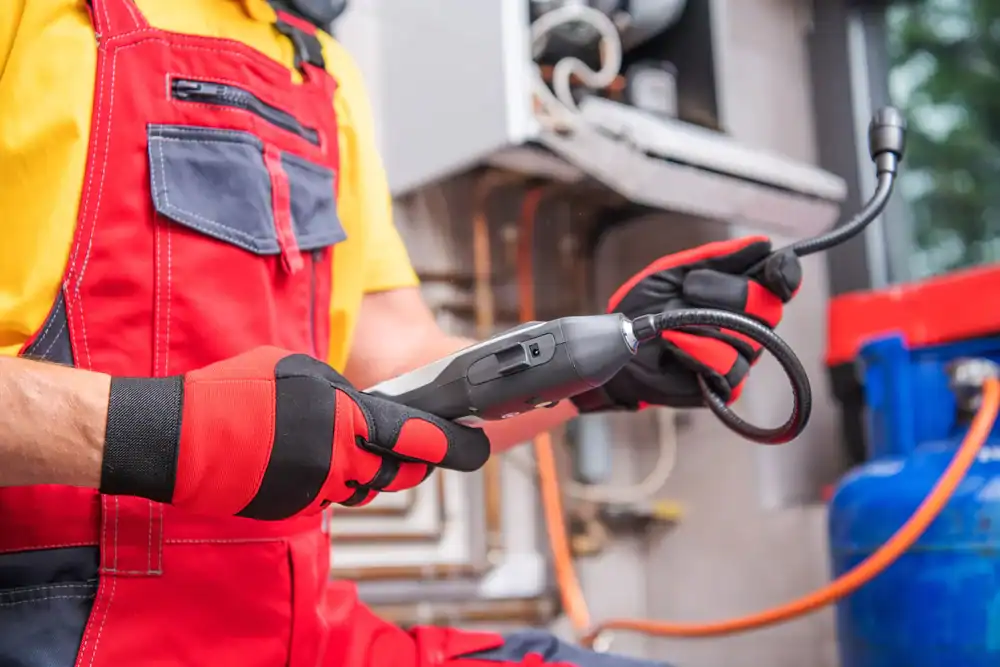
The call comes first. You describe what you’re noticing — a smell that comes and goes, a utility notice, a hissing sound, or just a gut feeling that something’s off. From there, we dispatch a Licensed Master Plumber with a 30 to 60 minute emergency response time for true emergencies. That’s a specific commitment, not a vague promise.
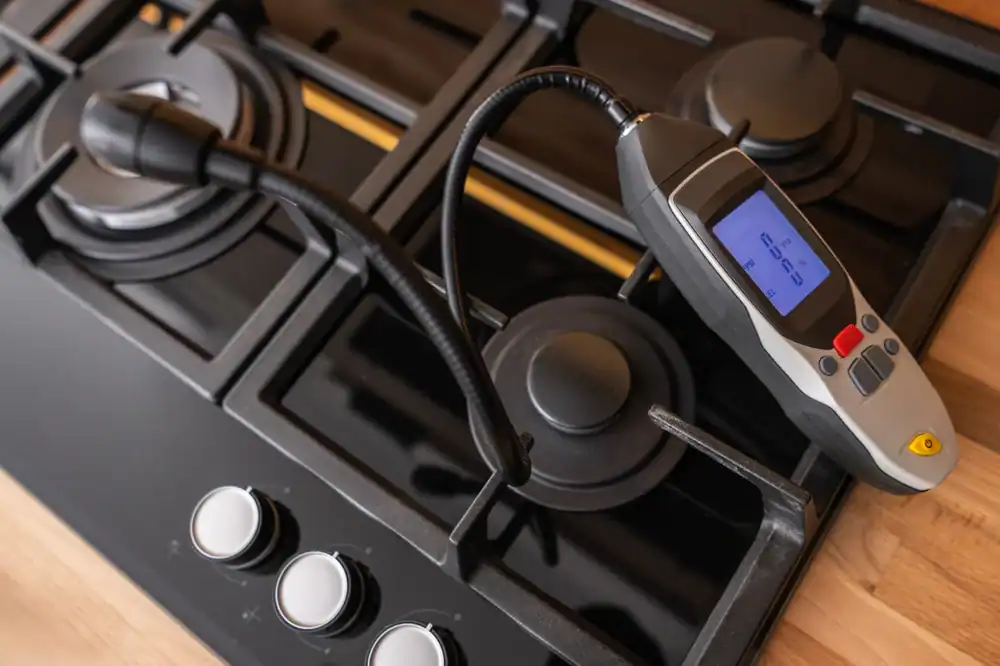
When our technician arrives, they bring professional-grade gas detectors and infrared cameras — not the kind of equipment you’d pick up at a hardware store. Infrared cameras can find leaks developing behind walls and in concealed fittings without tearing anything open. In Port Ivory’s salt-air environment, where corrosion can work on fittings from the outside in, this equipment makes the difference between finding a problem early and discovering it after damage has already occurred.
The inspection covers exposed gas piping, connections, valves, and — for manufactured homes on Goethals Road North — the flexible connectors that are a known failure point in that type of housing. If a leak is found, you get a clear explanation of what was found, where it is, and what fixing it involves — with transparent pricing stated before any work begins. No hidden fees, no pressure to approve something on the spot without understanding it.
If the situation requires DOB filings, permit work, or coordination with National Grid on the utility side, we handle that too. The goal is a fully resolved gas system with documentation you can actually use.
Ready to get started?
Gas leak detection from RB Mechanical Plumbing and Heating isn’t just a pass/fail check. It’s a full assessment of your gas system using professional-grade detectors and infrared cameras, performed by a Licensed Master Plumber who can legally identify the problem and fix it in the same visit. That single-vendor approach matters because once a leak is confirmed, you don’t want to start over with a different contractor to handle the repair.
For property owners and commercial operators near the Howland Hook Marine Terminal, there’s a compliance layer that’s easy to overlook. Most NYC buildings — excluding one- and two-family homes — are subject to Local Law 152, which requires gas piping inspections by a Licensed Master Plumber on a four-year cycle. Missing that deadline carries a $5,000 civil penalty. We’re licensed to perform those inspections and certified to make any repairs that come out of them, so you’re not managing two separate vendors or two separate timelines.
Local Law 157 is also in play for anyone living in Port Ivory’s residential areas, including the mobile home park on Goethals Road North. NYC now requires natural gas detectors in all residences, with a compliance deadline of January 1, 2027. Detectors need to be within one foot of the ceiling and within ten feet of any gas appliance. If you’re not sure whether your setup meets that requirement, we can assess and document it during the same visit. And if a gas leak has caused property damage, we work directly with insurance companies — which is one less process you have to manage on your own during an already stressful situation.

Leave immediately — don’t flip light switches, use your phone inside, or try to find the source yourself. Once you’re outside and away from the structure, call 911 and then National Grid (your gas utility on Staten Island). After the utility responds and handles their side, you’ll need a Licensed Master Plumber to assess and repair the building-side gas system before service can be restored.
This is especially important in Port Ivory’s manufactured homes because the flexible gas connectors used in that type of housing are a known failure point. They’re corrugated metal lines that connect your home’s internal system to the supply, and they have a finite service life. Vibration, age, and the salt-air environment around Port Ivory can all accelerate their deterioration. A professional inspection after any suspected leak will assess those connectors specifically — not just the main line — and give you a clear picture of where your system stands.
No — and this is one of the most common points of confusion for NYC residents. Con Edison doesn’t serve Staten Island at all. National Grid is the gas utility for this borough, including Port Ivory. But regardless of which utility you’re on, the utility company only handles the distribution side — the infrastructure up to your building. Everything inside your building’s gas system is building-side piping, and that’s the jurisdiction of a Licensed Master Plumber, not the utility.
When National Grid responds to a reported leak in Port Ivory, they’ll secure the utility side and may shut off service if they find a problem. But they won’t repair your internal gas lines, and they can’t restore service until a licensed plumber has resolved whatever building-side issue triggered the shutoff. We handle that building-side work — the inspection, the repair, the permit filing with the NYC DOB, and the coordination with National Grid to get your service restored.
Salt air is a continuous corrosion factor for any metal infrastructure, and gas fittings are no exception. The moisture and chloride content in marine air accelerates oxidation on exposed metal connections, valves, and piping — particularly on older fittings that may not have been inspected or treated in years. Port Ivory’s position on Newark Bay, with the Arthur Kill on the west side as well, means this exposure is coming from multiple directions year-round, not just during storms.
The practical effect is that gas fittings in Port Ivory can develop slow leaks earlier than you’d expect based on their age alone. A fitting that looks intact from the outside may have corrosion working on it from the surface inward. This is exactly why professional-grade infrared cameras matter here — they can detect temperature anomalies and gas presence in fittings and behind surfaces that a visual check or a consumer-grade detector would miss entirely. If you haven’t had your gas connections inspected recently and you’re in Port Ivory, the coastal environment alone is a reasonable reason to schedule one.
Local Law 152 is a New York City law requiring periodic gas piping inspections for most buildings — specifically any building that is not a one- or two-family home. The inspection must be performed by a Licensed Master Plumber, or a qualified gas operator working under LMP supervision, and it covers exposed gas piping throughout the building. After the inspection, a certification must be filed with the NYC Department of Buildings within 60 days. Missing the filing deadline carries a $5,000 civil penalty.
For Port Ivory, the law applies to any commercial or multi-unit structure in the area — including facilities near the Howland Hook Marine Terminal corridor. Inspections are scheduled on a four-year rotating cycle by community district, so the timing depends on which district your property falls under. We’re licensed to perform Local Law 152 inspections and certified to make any repairs that come out of them, which means you’re not managing separate vendors for the inspection and the remediation. One call covers the full compliance workflow.
The honest answer is that you usually can’t tell without a professional inspection — and the cause matters less in the moment than confirming the leak and making it safe. That said, in Port Ivory’s environment, corrosion is a more likely culprit than it would be in an inland neighborhood. Salt air from Newark Bay and the Arthur Kill degrades metal fittings over time, and older gas connections that haven’t been inspected in years are the most common failure points in coastal areas like this one.
Other common causes include loose connections from vibration — which is relevant for manufactured homes on Goethals Road North, where the structure itself can transmit movement to gas fittings — and aging flexible connectors that have cracked or separated. During a professional inspection, our technician uses both gas detectors and infrared cameras to identify where gas is escaping and what the condition of the surrounding piping looks like. That gives you a clear answer on the source and the scope, not just a confirmation that something is wrong.
It depends on your policy and the nature of the damage. Most standard homeowner’s insurance policies cover sudden and accidental damage caused by a gas leak — things like structural damage or property loss resulting from an event. The detection and repair work itself is less consistently covered, and policies vary significantly on whether they include the cost of finding the leak versus just repairing the damage it caused.
For residents in the 10303 area — including homeowners in Port Ivory and residents of the mobile home park on Goethals Road North — the most practical step is to call your insurer after you’ve addressed the immediate safety situation, not before. We work directly with insurance companies when gas leak damage has occurred, which means the documentation and coordination process doesn’t fall entirely on you. Having a Licensed Master Plumber’s inspection report on hand — with specifics on what was found, where, and what was done — is exactly what insurers need to process a claim, and that’s part of what you get from a professional detection visit.
Other Services we provide in Port Ivory