

Silver Lake is a tight-knit neighborhood, and when something goes wrong in one unit of a multi-family building on Clove Road or Victory Boulevard, it doesn’t stay one unit’s problem for long. A gas issue in a shared building means shared risk — for heat, for hot water, for cooking, and for everyone on your floor. When that issue gets properly diagnosed and resolved, the whole building breathes easier.
The housing stock here tells a specific story. Many of Silver Lake’s residential buildings were constructed between 1940 and 1969, and a meaningful portion predate that entirely. That means gas piping, flexible connectors, and appliance connections that have been in place for decades — sometimes without a comprehensive inspection since the building was first plumbed. Finding a slow leak in aging infrastructure before it becomes a crisis is a fundamentally different outcome than responding to one after the fact.
For co-op owners at the Fountains at Clove Lake or renters in the Victory Boulevard apartment complexes, a professional gas leak detection visit also produces something beyond a fixed pipe: documentation. A written assessment from a Licensed Master Plumber, the paperwork your building board needs, and a clear record that the work was done correctly and completely.
We’ve been operating in New York City since 1983. That’s over 40 years working inside the specific building types that define Silver Lake — pre-war apartment buildings, mid-century co-ops, boiler rooms that haven’t been touched since the Eisenhower administration. Bobby and Rob aren’t dispatchers routing a subcontractor to your door. We’re the ones who pick up the phone and, when needed, show up ourselves.
Every technician we send is a NYC Licensed Master Plumber — the highest credential available for gas work in New York State. We’re also drug-tested and vetted, which matters when you’re asking a building super at a Clove Road co-op to authorize entry into a managed residential building. Full insurance coverage with a COI available isn’t an afterthought here; it’s a baseline expectation for any building board in Staten Island.
Silver Lake falls within Staten Island Community Board 1, and we know this territory — the National Grid infrastructure, the DOB requirements, and the building types that line the edges of Silver Lake Park.

When you call us, the first thing that happens is a real conversation — not a form submission or a callback queue. You describe what you’re noticing: a smell that comes and goes near the stove, something you caught in the hallway outside the boiler room, a neighbor who mentioned something odd. That context matters before anyone walks through the door.
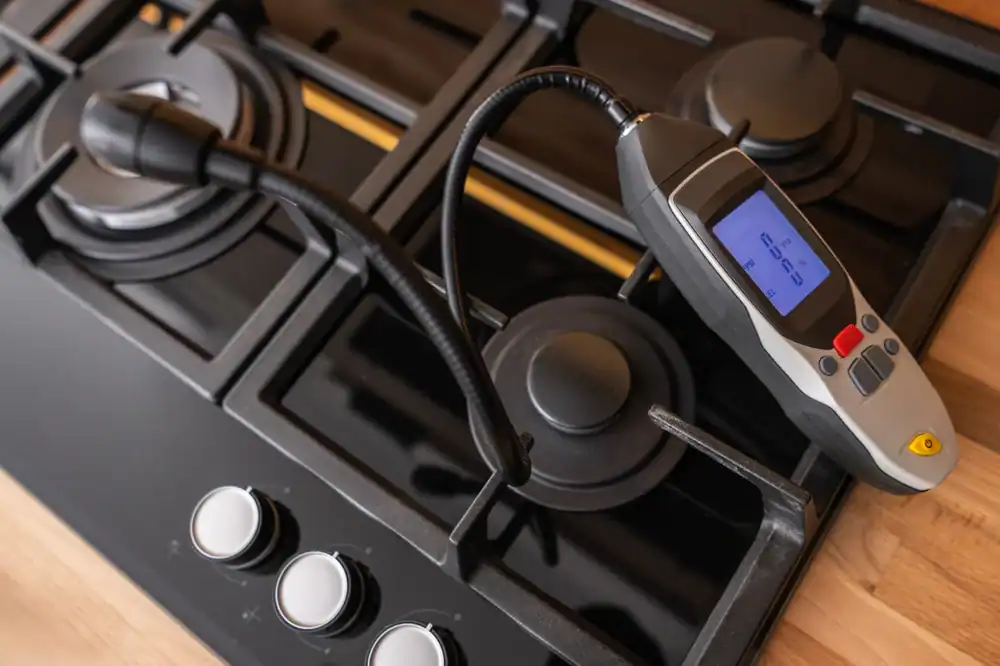
Once on-site, our technician works through the building systematically using professional-grade combustible gas indicators and infrared cameras. This is where the difference between a hardware store detector and professional equipment becomes clear. Consumer detectors tell you gas is present somewhere. Professional instruments locate the source — behind a wall, beneath a floor, inside a boiler room connection — and give you a specific, documented answer rather than a general alarm. In Silver Lake’s older multi-unit buildings, where gas piping may run through shared walls and common areas, that precision matters.
If a leak is found, we address the repair directly. If your building requires a Local Law 152 gas piping inspection — which applies to any multi-unit residential or commercial building beyond a one- or two-family home — we handle the inspection, any required repairs, the NYC DOB filing, and the certification. Silver Lake is served by National Grid, not Con Edison, and when National Grid has shut off service to a building, we coordinate the building-side resolution that’s required before service can be restored. Our goal is always to get your building back to normal as quickly and cleanly as possible.

Ready to get started?
A gas leak detection visit from us isn’t a single-point check. Our technician assesses the full scope of your gas system — exposed piping, appliance connections, flexible connectors behind stoves and ranges, boiler room lines, and any areas where aging infrastructure raises concern. In Silver Lake’s pre-1970 building stock, that scope is broader than most people anticipate, and that’s exactly why it matters to have someone with 40 years of NYC experience reading the results.
For building owners and co-op boards in Silver Lake — particularly those managing properties along Victory Boulevard or Clove Road — the service extends into full Local Law 152 compliance. That means the inspection itself, documentation of any hazardous conditions, required repairs performed by a Licensed Master Plumber, and the certification filed with the NYC DOB. The penalty for missing a Local Law 152 deadline is $5,000, and we handle the entire workflow so building managers aren’t coordinating multiple vendors or navigating DOB Now on their own.
When gas leak damage has occurred, we also work directly with insurance companies — reducing the back-and-forth that building owners and tenants typically face during an already disruptive situation. Pricing is stated transparently before work begins, with no hidden fees added after the fact.

The first step is to leave the building without using any electrical switches, appliances, or your phone while still inside. Once you’re outside and at a safe distance, call National Grid’s emergency line — Silver Lake is in National Grid territory, not Con Edison, so the number to call is 718-643-4050. National Grid will respond to assess the utility side of the situation and can shut off the gas supply to the building if necessary.
Here’s the part most people don’t realize: National Grid handles the utility infrastructure, but they do not repair the building’s internal gas piping. Once they’ve completed their assessment and left, a Licensed Master Plumber is required to diagnose and repair any building-side issues before service can be restored. That’s where we come in. The gap between National Grid leaving and your building getting gas back is exactly the window a licensed plumber fills — and in a multi-unit building where dozens of residents share the same gas system, closing that gap quickly matters.
No — and this is one of the most common misunderstandings in NYC multi-unit buildings. Building supers in New York City are not legally authorized to perform gas piping repairs, regardless of how experienced or capable they are in other areas of building maintenance. All gas line work — installation, repair, replacement — must be performed by or under the direct supervision of a NYC Licensed Master Plumber. That’s not a recommendation; it’s a legal requirement enforced by the NYC DOB.
In Silver Lake’s co-op buildings and managed rental complexes, this matters for liability reasons as much as safety ones. If a building super performs unpermitted gas work and it’s later discovered during an inspection, the consequences can be severe. A documented case from nearby Park Hill Avenue on Staten Island resulted in 150 apartments going more than 10 days without gas after the DOB discovered unpermitted plumbing work. The cost of doing it right the first time — with a Licensed Master Plumber, proper permits, and DOB filings — is almost always less than the cost of undoing work that wasn’t done correctly.
Local Law 152 is a New York City law that requires periodic gas piping inspections for most buildings in all five boroughs, including Staten Island. The inspection must be performed by a Licensed Master Plumber, and it covers exposed gas piping throughout the building. If the inspection uncovers a hazardous condition, it must be reported to the NYC DOB within 24 hours and repaired promptly. Once the inspection and any required repairs are complete, the building owner must file a Gas Piping System Periodic Inspection Certification with the DOB within 60 days.
The law applies to any building beyond a one- or two-family home — which means the co-op complexes along Clove Road, the apartment buildings on Victory Boulevard, and the smaller multi-unit residential buildings throughout Silver Lake are all subject to it. Inspections are scheduled on a four-year rotating cycle by community district. Silver Lake falls within Staten Island Community Board 1, and building owners should confirm their current inspection window with the NYC DOB. The penalty for non-compliance is a $5,000 civil penalty — and we handle the full process from inspection through DOB filing so building managers aren’t navigating it alone.
This is a more common situation than most people realize, and it’s one of the reasons professional detection equipment exists. The odorant added to natural gas — mercaptan — can dissipate through a process called odor fade. Physical and chemical factors can reduce its concentration over time, meaning a real, active leak may produce little to no detectable smell. Relying solely on your nose is not a reliable safety strategy, especially in older buildings where leaks can be slow, gradual, and hidden behind walls or beneath floors.
Other signs worth paying attention to include a hissing or whistling sound near a gas appliance or pipe, dead or discolored vegetation near an outdoor gas line, and unexplained increases in your gas bill. In Silver Lake’s mid-century apartment buildings, where gas infrastructure may be routed through shared walls and common areas, a slow leak in one section of the building can go undetected by residents in nearby units for an extended period. Professional-grade combustible gas indicators and infrared cameras find what the human nose cannot — and they produce a documented result, not just a reassurance.
We commit to a 30–60 minute emergency response time for true gas emergencies. For a neighborhood like Silver Lake, where a single gas system often serves an entire multi-unit building, that response window is meaningful — the faster the source is located, the faster the building can be assessed, repaired, and restored to normal service.
Detection itself is typically completed in a single visit. The time it takes depends on the size and complexity of the building — a pre-war apartment building with a shared boiler room and multiple gas risers takes longer to assess than a single-family home, but the process is systematic and thorough rather than rushed. If repairs are needed, many can be completed same-day. When a Local Law 152 inspection is involved, the DOB filing follows the inspection and any required repairs, and we handle that paperwork directly. Our goal is always to minimize the disruption to residents — particularly in a building where heat, hot water, and cooking all depend on the same gas supply.
It depends on the policy and the circumstances, but in many cases, damage caused by a gas leak — not just the detection visit itself — may be covered under a homeowner’s or renter’s insurance policy. The detection service is typically considered a maintenance or repair expense, while damage to property resulting from a leak is more likely to fall within coverage territory. The specifics vary significantly by policy, so it’s worth reviewing your coverage or calling your insurer before assuming either way.
What makes a meaningful difference in the insurance process is documentation. Insurers need a clear record of what was found, where, and what was done to address it — and that record needs to come from a licensed professional, not a consumer-grade detector reading. We work directly with insurance companies when gas leak damage has occurred, which reduces the back-and-forth that building owners and tenants typically have to manage on their own. For co-op owners in Silver Lake, where the building’s master policy and individual unit policies may overlap in complicated ways, having a Licensed Master Plumber’s documentation on file is a practical necessity, not just a formality.
Other Services we provide in Silver Lake