

Travis sits at the western edge of Staten Island, bounded by the Arthur Kill, the William T. Davis Wildlife Refuge, and the former Fresh Kills landfill to the south. It’s one of the most geographically isolated neighborhoods in New York City — and that isolation matters when something goes wrong with your gas.
When a leak develops at 2 AM on a Tuesday in Travis, you need someone who can actually get to Victory Boulevard’s western end without getting lost on the way. The older homes throughout this neighborhood — many built during or shortly after the American Linoleum Company era — can have gas piping that’s 60, 70, or more years old.
Galvanized steel lines from that period corrode from the inside out. They develop pinhole leaks that don’t always produce a strong odor, especially if the mercaptan odorant has partially dissipated over time. That phenomenon — called odor fade — is real, documented, and exactly why professional inspection with calibrated detection equipment finds things a homeowner’s nose never will.
After we complete a proper gas leak detection visit, you know exactly what you’re dealing with. No guessing, no “it’s probably fine,” no vague reassurances. You get a clear picture of your gas system’s condition, what needs attention, and what it will cost before we touch a single fitting.
We’ve been operating since 1983 — over 40 years serving Travis and the rest of Staten Island. That’s long enough to have worked on the postwar suburban homes that filled Travis after WWII, the commercial buildout that brought the Teleport business park to the neighborhood’s eastern edge in the 1980s, and everything in between.
Bobby and Rob are the business. When you call, you’re reaching the people who will stand behind the work — not a dispatch center routing your job to whoever’s available. Every technician who touches a gas line is a NYC Licensed Master Plumber, which is the highest credential for gas work in New York State and a legal requirement for this type of job.
Our technicians are also drug-tested and vetted, which matters when we’re entering your home on Meredith Avenue or Travis Avenue to check lines behind the stove or in the basement. We price work transparently and state costs before we begin — no hidden fees, no surprises after the fact.

A professional gas leak detection visit is not invasive. We don’t tear open walls, and we don’t shut your system down indefinitely. Our goal is to locate the problem — or confirm there isn’t one — and give you a clear path forward.
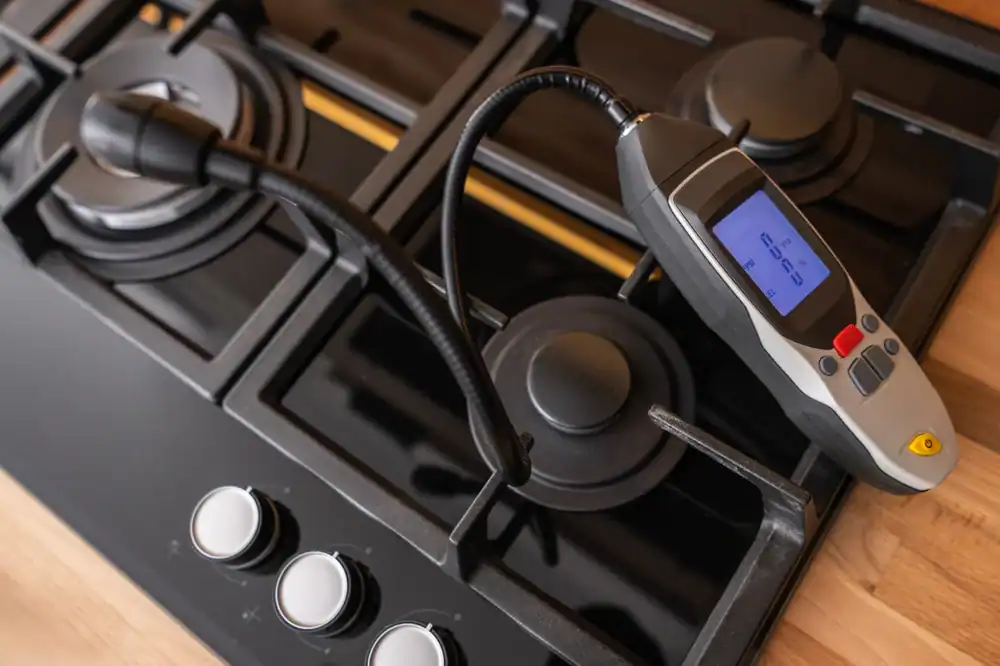
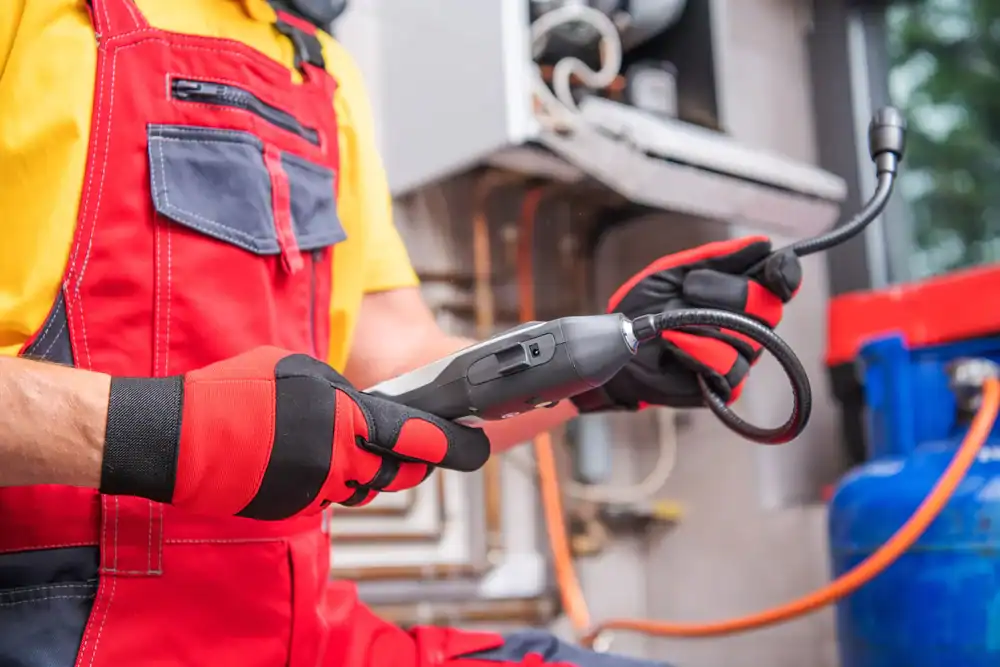
When our technician arrives, we use professional-grade gas detectors and infrared cameras to inspect your gas system. This includes the lines running from your meter into the home, connections at the boiler, the stove, the water heater, and any other gas appliances. Infrared cameras are particularly useful in older Travis homes where lines run through walls or under floors — they identify temperature anomalies and leak points that a handheld sensor alone would miss.
If we find a leak, you get a straight explanation of what it is, where it is, and what repair looks like. If your gas has already been shut off by National Grid — which operates the gas distribution system across Staten Island — we handle the repair and coordinate directly with the utility for service restoration.
That process requires a Licensed Master Plumber to complete the work and file the appropriate documentation before National Grid will restore service. Having a plumber who already knows that process and has done it before in this borough cuts down the time your family spends without heat or hot water.
For commercial properties in Travis — including buildings subject to Local Law 152 gas piping inspection requirements — the same workflow applies. We handle full DOB filing and compliance certification as part of the job.
Ready to get started?
Gas leak detection in Travis isn’t just about finding a smell and patching a line. For homeowners, it’s about knowing whether a 70-year-old gas system in a factory-era home is still safe. For building owners and commercial property managers — including anyone operating in the Teleport business park or managing multi-family residential units along the Victory Boulevard corridor — it’s also a compliance question.
Travis falls within Staten Island Community District 2. Under Local Law 152, buildings in Community District 2 were required to complete gas piping inspections by the end of 2025. Missing that deadline carries a $5,000 civil penalty, and the clock doesn’t stop while you figure out who to call.
We’re licensed to perform Local Law 152 inspections and certified to make any repairs those inspections require — so you’re not coordinating between two different vendors or waiting on a second contractor to close out the compliance paperwork.
Local Law 157, which mandates natural gas detector installation in all NYC residences, has a compliance deadline of January 1, 2027. If your Travis home doesn’t yet have detectors installed in the required locations — within one foot of the ceiling and within ten feet of gas appliances — that’s part of what a full gas safety visit can address.
We handle the entire scope of work, from detection through repair through documentation, transparently. Pricing is confirmed before anything begins.

If you smell something like rotten eggs — even faintly, even if it comes and goes — don’t wait to see if it gets stronger. Leave the building without using any light switches, appliances, or your phone while you’re still inside. Once you’re outside and clear of the building, call 911 and then National Grid, which is the gas utility serving Travis and the rest of Staten Island. They will respond to secure the utility side of the situation.
Once National Grid and the FDNY have cleared the immediate emergency, that’s when a Licensed Master Plumber comes in. National Grid handles the distribution lines running under your street — they do not repair the gas piping inside your home or building. That building-side work, from the meter through the walls to your appliances, is your responsibility as a property owner, and it legally requires a Licensed Master Plumber to address.
The intermittent nature of gas smells in Travis homes is also worth taking seriously. Odor fade is a documented phenomenon where the mercaptan odorant added to natural gas dissipates over time, meaning a leak that seemed to go away may still be present and accumulating in an enclosed space.
No — and this is one of the most common points of confusion for Staten Island homeowners. National Grid’s responsibility covers the gas distribution main running under your street and the service line up to your meter. Everything from the meter into your home — the piping through your walls, the connections at your boiler, your stove, your water heater — is building-side infrastructure, and it belongs to you as the property owner.
When National Grid shuts off gas service to a Travis home, they will not restore it until a Licensed Master Plumber has made the necessary repairs to the building-side system and the work has been properly documented. That means calling a plumber isn’t optional — it’s the only path to getting your gas back on.
We’ve worked within National Grid’s service territory across Staten Island for decades and know exactly what documentation and coordination the restoration process requires. The faster that work gets done correctly, the faster your heat and hot water come back.
This is exactly the right question to be asking, especially in a neighborhood like Travis where some homes date back to the early 1900s. Odor fade is a real and documented safety issue — the mercaptan odorant that gives natural gas its rotten egg smell can dissipate through physical and chemical processes, particularly in homes with certain soil conditions, older materials, or specific ventilation patterns. A leak can be present and accumulating without ever triggering a strong enough smell to alert the occupants.
Professional gas leak detection uses calibrated equipment — gas detectors and infrared cameras — that doesn’t rely on your nose. These tools can identify gas concentrations well below what a human would smell, and infrared imaging can locate anomalies behind walls and under floors in older construction where the piping isn’t visible.
Consumer-grade detectors from a hardware store are useful for triggering an alarm, but they can’t pinpoint a source, assess severity, or produce documentation for insurance or compliance purposes. If your Travis home has gas lines that haven’t been professionally inspected in years — or ever — that’s a gap worth closing, particularly given the age of the housing stock in this neighborhood.
Local Law 152 applies to virtually all NYC buildings except one- and two-family homes — so if you own or manage a multi-family residential building, a commercial property, or any other multi-unit structure in Travis, it almost certainly applies to you. The law requires exposed gas piping to be inspected by a Licensed Master Plumber on a four-year rotating cycle, organized by community district.
Travis falls within Staten Island Community District 2, which had a Local Law 152 compliance deadline of December 31, 2025. If that deadline passed without a completed inspection and filed certification, your building is currently out of compliance and subject to a $5,000 civil penalty. The penalty doesn’t pause while you search for a plumber — it accrues from the missed deadline.
Getting into compliance now requires a Licensed Master Plumber to perform the inspection, complete any required repairs, and submit the Gas Piping System Periodic Inspection Certification to the NYC DOB within 60 days of the inspection. We handle all of that as a single workflow, so you’re not managing multiple contractors or chasing down paperwork on your own.
For most residential properties, a professional gas leak detection visit takes one to three hours depending on the size of the home and the complexity of the gas system. In Travis’s older homes — particularly those with original or early-generation piping running through finished walls, basements, and utility spaces — the inspection may take longer simply because there’s more to cover and some of it requires infrared imaging to assess properly.
In most cases, gas service does not need to be shut off for the inspection itself. Our detection process is non-invasive — we use external sensors and imaging equipment to identify leak points without cutting into walls or disconnecting appliances. If a repair is needed and requires a brief shutoff at a specific section, we handle that as part of the repair work, not the inspection.
Most repairs can be completed the same day, and our goal is always to restore full service as quickly as possible. If your gas is already off because National Grid shut it down, the timeline shifts to how quickly the repair can be completed and the restoration coordination with National Grid can be finalized — a process we’ve navigated many times across Staten Island.
Yes — and it’s worth knowing this upfront, because most homeowners don’t think to ask until they’re already in the middle of a stressful situation. When a gas leak causes property damage — whether that’s fire damage, structural damage from pressure, or related water damage from emergency suppression — we work directly with insurance companies to coordinate the claim process. That means you’re not left translating between your insurer and your plumber while also dealing with a home that’s been damaged.
For Travis homeowners, this matters in a practical way. The homes here carry real equity — the median home value in the 10314 ZIP is over $680,000 — and a gas-related incident that damages a property is a significant financial event, not just an inconvenience.
Having a plumber who understands the documentation insurers need, can communicate directly with adjusters, and knows how to frame the scope of work accurately takes a real burden off the homeowner during an already difficult time. If you’re dealing with a gas leak that has caused or risks causing damage, mention the insurance question when you call — it’s part of how we handle these situations.
Other Services we provide in Travis