

West New Brighton is one of the most architecturally distinct neighborhoods on Staten Island — Victorian rowhouses, Second Empire homes, and early 20th-century apartment buildings lining Castleton Avenue and Bement Avenue. That character comes with a cost. A lot of those buildings are running on gas infrastructure that hasn’t been seriously looked at in decades, and in some cases, since the pipes were first installed.
When we inspect gas piping in a pre-war West New Brighton building, the outcome isn’t just peace of mind. It’s clarity. You find out whether the connections behind your boiler are still sound, whether the flexible lines behind your stove have started to degrade, and whether anything in the system is leaking at a level too small to smell but large enough to matter. That’s the difference between waiting for a problem and actually knowing what you’re dealing with.
For building owners with multiple units — and there are a lot of subdivided Victorians in West New Brighton — a proper inspection also takes care of your Local Law 152 compliance obligation. That’s a city requirement for most buildings with three or more units, and the penalty for missing it is a $5,000 civil fine. One inspection. One visit. One less thing on your plate.
We’ve been doing this work in New York City since 1983 — over 40 years of pre-war buildings, aging boiler rooms, co-op boards, DOB filings, and utility company coordination. Not as a franchise or a call center, but as a family operation. Bobby and Rob are the business. When something goes wrong, there’s a name attached to it.
Every technician we send to a West New Brighton home or building is a NYC Licensed Master Plumber — the credential the city legally requires for any gas piping work. Not a journeyman under remote supervision. A Master Plumber on-site. That matters in a neighborhood where older multifamily buildings often have a history of gas modifications that were done without permits during the mid-century conversion of single-family Victorians into rental units.
The North Shore’s gas infrastructure has its own documented history. National Grid — the utility serving Staten Island, not Con Edison — has publicly acknowledged the presence of hundreds of underground gas leaks along the island’s distribution system, with older cast iron and unprotected steel pipes being the most vulnerable. We understand this terrain. We’ve been working in it for a long time.

The visit starts with a conversation. Before any equipment comes out, a Licensed Master Plumber walks through what you’ve noticed — a smell that came and went, a hissing sound you’re not sure about, a utility notice, or just a building that hasn’t had its gas lines looked at in years. That context matters, because it shapes where the inspection focuses first.
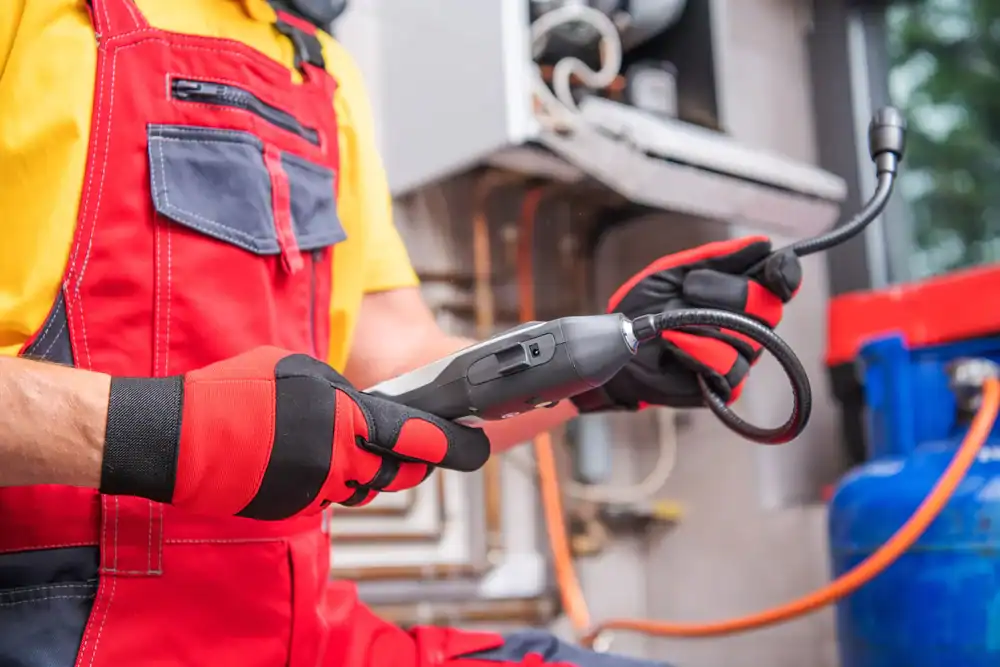
From there, our technician uses professional-grade gas detectors and infrared cameras to check the system — not just the visible connections, but the areas behind walls, under floors, and in basement boiler rooms where older West New Brighton buildings tend to hide their problems. One important thing to understand: the absence of a smell doesn’t mean the absence of a leak. The odorant added to natural gas can dissipate over time, a phenomenon called odor fade. Equipment that detects gas at the molecular level catches what your nose misses.
If a leak is found, you get a clear explanation of what it is, where it is, and what needs to happen. Pricing is stated before any work begins — no surprises, no pressure. If the inspection is part of a Local Law 152 compliance requirement for your building, we handle the repair, the DOB filing, and the certification. You don’t need to coordinate multiple vendors or navigate the paperwork yourself. And if your gas was shut off by National Grid, our goal is to get it restored as quickly as possible — not to extend the job.

Ready to get started?
Our gas leak detection service covers the full scope of what a pre-war North Shore building actually needs. That includes the gas lines running to your boiler, your stove, your water heater, and any other appliances — checked with professional-grade detectors and infrared cameras that can locate leaks behind walls and in areas you’d never think to look. For West New Brighton’s older building stock, where gas piping has sometimes been modified or extended without proper permits over the decades, a thorough inspection isn’t just useful — it’s overdue.
For multifamily building owners in Staten Island Community District 1, Local Law 152 compliance is a real and recurring obligation. Buildings with three or more units must have exposed gas piping inspected by a Licensed Master Plumber every four years, with the certification filed with the NYC DOB within 60 days. Missing that deadline carries a $5,000 civil penalty. We’re licensed to perform the inspection, make any required repairs, and handle the DOB filing — start to finish, one vendor.
Beyond compliance, our service also covers gas line repair and replacement, gas stove and range installation, boiler gas connection inspection, and backflow prevention. If National Grid has shut off your gas service — whether from a utility inspection, a neighbor complaint, or a DOB violation — we can address the building-side issues that need to be resolved before service is restored. We also coordinate directly with insurance companies when gas leak damage has occurred, which takes a significant burden off homeowners and landlords during an already stressful situation.
The first step is to leave the building immediately — don’t stop to open windows, turn lights on or off, or use your phone until you’re outside. Once you’re clear, call National Grid at 718-643-4050. National Grid is the gas utility serving Staten Island, and they’ll respond to make the distribution side of the system safe. What they won’t do is repair building-side piping — that’s not their jurisdiction.
After National Grid clears the utility side, a Licensed Master Plumber needs to assess the internal gas system before anyone returns to the building and before service is restored. In a West New Brighton building — especially one built before 1939 — the internal gas piping may have decades of wear, and a utility response doesn’t tell you whether the problem is inside your walls. That’s the part we handle, and we can typically respond within 30 to 60 minutes for genuine emergencies.
An intermittent smell is one of the most common reasons people delay calling a plumber — and one of the most dangerous reasons to wait. Natural gas has an odorant called mercaptan added to it specifically so people can detect it by smell. But mercaptan can dissipate through a process called odor fade, which means a real and active leak can become undetectable to your nose over time. The leak doesn’t go away just because the smell does.
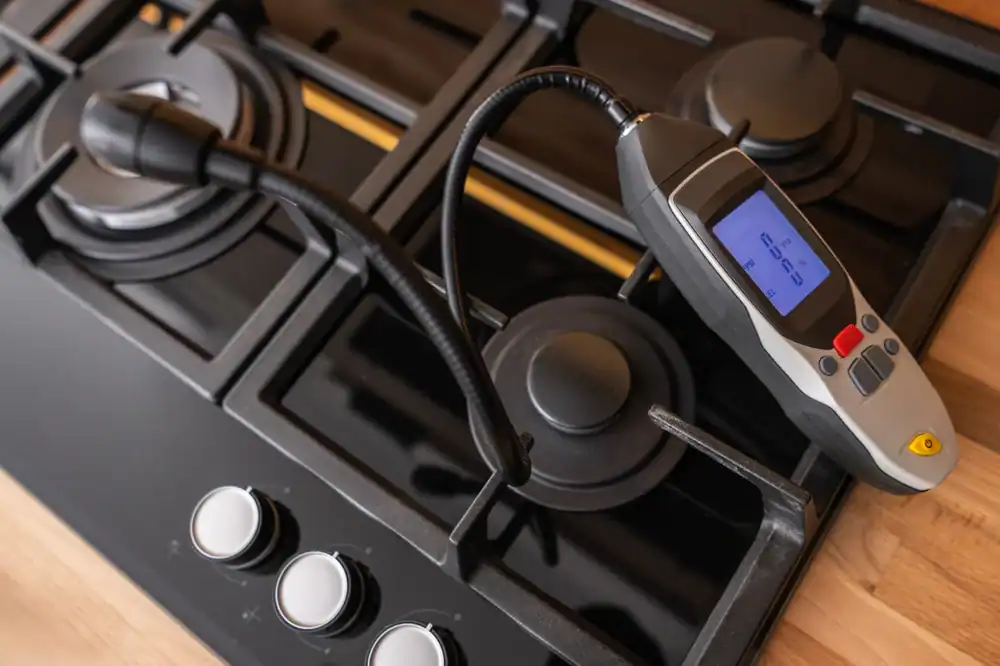
This is especially relevant in older West New Brighton buildings, where gas piping runs through enclosed wall cavities, basement boiler rooms, and areas with limited ventilation. Gas can accumulate in those spaces without ever reaching a concentration strong enough to smell at the surface. Professional-grade gas detectors pick up methane at levels far below what a human nose can register, which is why equipment matters in a neighborhood full of pre-war construction. If the smell came and went, that’s still a reason to get it checked — not a reason to assume it’s fine.
Local Law 152 is a New York City law that requires most buildings — specifically those that aren’t one- or two-family homes — to have their exposed gas piping inspected by a Licensed Master Plumber once every four years. The inspection must be filed with the NYC Department of Buildings within 60 days of completion. If you miss the deadline, the civil penalty is $5,000.
West New Brighton is part of Staten Island Community District 1, which falls within the citywide rotating inspection schedule. If you own a multifamily building in the neighborhood — a subdivided Victorian, a small apartment building, a mixed-use property — and you haven’t had a gas piping inspection done recently, it’s worth confirming where you stand in the cycle. We’re licensed to perform the inspection, handle any repairs the inspection uncovers, and file the required certification with the DOB. You don’t need to manage multiple contractors or figure out the paperwork on your own.
No — and this is one of the most common points of confusion for Staten Island homeowners and landlords. National Grid is responsible for the gas distribution system up to the point where it enters your building. That includes the main line running under the street and the service line connecting to your meter. When there’s a utility-side emergency, National Grid responds and can shut off service to make things safe. But their responsibility ends at the building’s gas entry point.
Everything inside — the piping running through your walls, the connections to your boiler, the lines feeding your stove and water heater — is building-side infrastructure. That’s the property owner’s responsibility, and any repairs to it must be performed by a NYC Licensed Master Plumber. This distinction matters in West New Brighton because National Grid has publicly acknowledged that Staten Island’s older underground distribution system has documented leak issues, and the building-side infrastructure in pre-war North Shore homes is often just as old. Two separate systems, two separate responsibilities.
The most important window is early fall — September or October, before the first cold snap triggers boiler startup season. West New Brighton has a high concentration of pre-war buildings with steam and hot-water boiler systems that sit completely idle from spring through early fall. During those dormant months, gas connections can develop slow leaks or degraded fittings that go undetected because the system isn’t under operating pressure. The moment the boiler fires up in late October, those issues become active.
Scheduling an inspection before heating season starts means you find out about any problems while there’s still time to address them without disrupting your heat. It also avoids the rush that happens once cold weather arrives and everyone with a boiler problem calls at the same time. The waterfront proximity along Richmond Terrace and the northern blocks of the neighborhood also means elevated ambient humidity year-round, which accelerates corrosion in older gas fittings — another reason annual or pre-season checks make sense for buildings in this part of Staten Island.
In New York City, gas piping work — including inspections, repairs, and new installations — must be performed by or directly supervised by a NYC Licensed Master Plumber. This isn’t a marketing credential; it’s a legal requirement. A Licensed Master Plumber holds the highest level of plumbing licensure in New York State and is legally authorized to pull permits, file with the DOB, and certify compliance inspections. Work performed by someone without that license can result in DOB violations, fines, and potentially a gas shutoff for the entire building until the violations are resolved.
When you’re vetting a plumber in West New Brighton, ask for their NYC Master Plumber license number — any legitimate provider will give it to you without hesitation. Also confirm they carry full insurance and can provide a certificate of insurance if your building requires it, which is common for co-ops, managed rental properties, and buildings near Richmond University Medical Center where property managers have strict vendor requirements. We send Licensed Master Plumbers to every job — not journeymen working under remote supervision — and our credentials are verifiable.
Other Services we provide in West New Brighton