
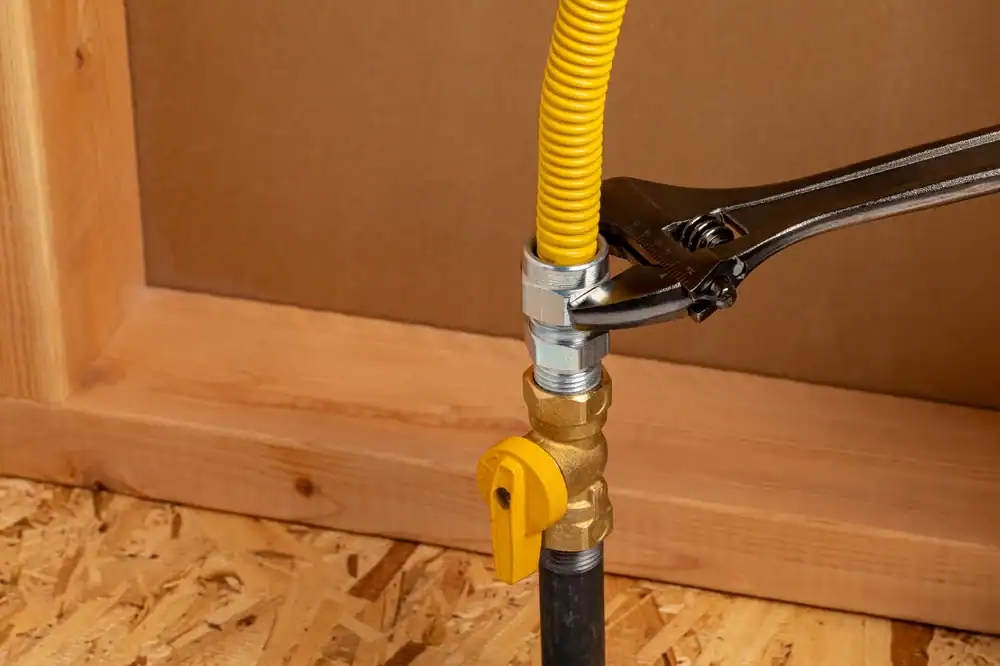

West New Brighton is one of Staten Island’s most architecturally rich neighborhoods, and that’s exactly what makes gas work here more complicated than people expect. A lot of these homes were built in the 1920s and 1930s — some earlier — and the original gas piping was sized for the appliances of that era. When you drop a modern professional range or a tankless water heater into a kitchen that hasn’t been touched in decades, you’re not just adding an appliance. You’re asking an 80 or 90-year-old system to do something it was never designed to do.
When the gas line is properly sized and installed, your appliances actually perform the way they’re supposed to. No weak flame on a high-BTU burner. No lukewarm water from a tankless heater that’s starved for gas. No failed inspection because someone connected the line without pulling a permit. The job is done, documented, and filed — and you have the paperwork to prove it.
For building owners in West New Brighton, there’s another layer to this. The neighborhood sits in NYC Community District 1, and the next Local Law 152 gas piping inspection deadline for Community District 1 buildings is December 31, 2025. If violations are found during that inspection, the clock doesn’t pause — you still need to remediate and refile before the penalty stops accruing. Getting ahead of that now, rather than scrambling in the fall, is the smarter move.
We’ve been doing gas line work in New York City since 1983. That’s over four decades of navigating pre-war building configurations, DOB permit systems, Con Edison coordination, and the kind of older infrastructure that makes a less experienced contractor nervous. The Licensed Master Plumber on our staff isn’t a name on a certificate while someone else does the work — they’re on-site, accountable, and the one signing off on every installation.
West New Brighton’s North Shore location and its concentration of pre-war buildings mean we’re familiar with the specific challenges this neighborhood presents. The same building complexities that define the blocks around Walker Park and the Sunset Hill corridor — finished basements, irregular layouts, aging risers — are the environments our team has been working in for years. That experience matters when you’re routing a new gas line through a 100-year-old home and you can’t afford to get it wrong.
Every job we complete comes with written documentation: pressure test results, permit records, and LMP certification. That paper trail protects your insurance coverage, satisfies building management, and holds up at resale.

It starts with an honest assessment. Before any pipe is touched, our Licensed Master Plumber evaluates your existing gas infrastructure — what’s there, what condition it’s in, and whether it can handle the BTU load of what you’re adding. In a West New Brighton home built in the 1920s or 1930s, that assessment often surfaces things the previous owner never knew about: undersized lines, corroded fittings, or runs that no longer meet current NYC Fuel Gas Code. You get a clear, written estimate before any work begins — no surprises mid-job.
Once the scope is confirmed, we file the required DOB NOW permit. All gas line work in NYC requires a permit regardless of scope, and the filing goes through the city’s all-digital portal. For West New Brighton building owners approaching the Community District 1 Local Law 152 deadline, this also means coordinating the inspection, documenting any violations, completing the repairs, and filing the GPS-2 certification with the DOB — all handled under one roof.
After installation, the line is pressure-tested at 1.5 times working pressure, as required by the NYC Fuel Gas Code. Then Con Edison is coordinated for service activation. The timeline from permit to gas flowing typically runs one to three days for a standard installation, depending on the scope of work. You get written documentation of every step when the job is complete.
Ready to get started?
Gas line sizing isn’t a guess. Every appliance has a BTU demand, and the line feeding it has to be sized to meet that demand — accounting for pipe length, the number of appliances on the same line, and the total run from the meter. A modern professional range can draw 60,000 BTUs or more. A tankless water heater can demand up to 199,000 BTUs. In a Sunset Hill home where the original gas line was installed in 1928, that math almost never works out in your favor without a new or upsized run.
We handle appliance gas hookups for stoves, ranges, water heaters, dryers, boilers, and generators. Each hookup includes a dedicated manual shutoff valve installed in the same room per NYC code, a full pressure test, and documented safety testing with electronic leak detection equipment. Single appliance installations typically range from $500 to $2,000. Whole-home gas line installations range from $1,300 to $3,500. Pricing depends on linear footage, pipe complexity, and the scope of the permit required — and it’s all laid out in writing before work starts.
For building owners in West New Brighton managing multifamily properties or mixed-use buildings, our full Local Law 152 compliance service covers the inspection, any repairs needed to clear violations, and GPS-2 certification filing with the NYC Department of Buildings. That’s the complete package — not just the inspection, but everything that follows if something is found.
Yes, every gas line installation in New York City requires a permit — there’s no minimum scope threshold that exempts you. The permit is filed through DOB NOW, the city’s all-digital portal, and it must be pulled by a Licensed Master Plumber. You can’t file it yourself as a homeowner, and a general contractor without an LMP license can’t file it either.
In West New Brighton, this matters more than people realize. The neighborhood’s older building stock means inspectors sometimes flag additional issues when a permit is pulled — things that were grandfathered in but now need to meet current NYC Fuel Gas Code. We handle the entire permit process, including any coordination with Con Edison required before gas service is activated. You don’t touch a portal or make a phone call to the utility — that’s handled.
Maybe, but you shouldn’t assume it can. Gas line sizing depends on the total BTU demand of every appliance connected to the line, the diameter of the pipe, and the length of the run from the meter to the farthest appliance. A modern professional range can draw 60,000 BTUs or more. A tankless water heater can demand up to 199,000 BTUs. If your home was built in the 1920s or 1930s — which describes a large share of West New Brighton’s housing stock — the original line was sized for appliances that drew a fraction of that load.
The only way to know for certain is a proper load calculation performed by a Licensed Master Plumber. We do that assessment before any installation begins. If the existing line is adequate, we’ll tell you. If it isn’t, we’ll show you exactly what needs to change and what it will cost — in writing, before any work starts.
Local Law 152 requires periodic gas piping inspections for virtually all NYC buildings except one- and two-family homes. That means multifamily buildings, mixed-use properties, and small apartment buildings in West New Brighton are all covered. Inspections must be performed by a Licensed Master Plumber, and the results are filed with the NYC Department of Buildings using a GPS-2 certification form through DOB NOW.
West New Brighton falls within NYC Community District 1, and the next GPS-2 filing deadline for Community District 1 buildings is December 31, 2025. If your building hasn’t been inspected and you miss that deadline, penalties can reach up to $10,000. If violations are found during the inspection, you’ll need to complete repairs and refile before the penalty clock stops — which is why waiting until November to schedule an inspection is a real risk. We handle the full LL152 process: the inspection, any required repairs, and the GPS-2 filing.
For a standard single appliance hookup — a new gas range, water heater, or dryer — the installation itself typically takes anywhere from a few hours to a full day, depending on how the line needs to be routed and whether any walls or floors need to be accessed. In West New Brighton’s pre-war homes, routing can take longer than in newer construction because the building configurations are more complex: finished basements, irregular framing, and original piping that doesn’t always run where you’d expect it to.
The broader timeline from start to finish — permit filing, installation, pressure testing, and Con Edison coordination for service activation — typically runs one to three days. If you’re also completing a Local Law 152 inspection as part of the same project, factor in additional time for any violations to be remediated before the GPS-2 certification can be filed. We’ll give you a realistic timeline upfront, not an optimistic one that falls apart mid-job.
Finding violations during a Local Law 152 inspection doesn’t mean you’ve failed permanently — it means you have more work to do before the GPS-2 certification can be filed. The violations need to be repaired by a Licensed Master Plumber, and once the repairs are complete, the LMP re-inspects and files the GPS-2 with the DOB. Until that filing is in, the penalty clock is still running.
This is where a lot of building owners get caught off guard. They schedule the inspection thinking it’s a one-step process, and then discover they need a second contractor to handle the repairs, which adds time and cost. We handle both sides of this — the inspection and any repairs needed to clear violations — so you’re not coordinating between multiple contractors while the deadline approaches. For West New Brighton building owners with older gas infrastructure, having one team manage the full process from inspection to GPS-2 filing is the cleaner path.
Gas line installation pricing in West New Brighton depends on the scope of the job. For a single appliance hookup — connecting a new stove, water heater, or dryer to an existing line — costs typically range from $500 to $2,000. If you’re running a new line from scratch or upsizing an existing one to handle a higher-BTU appliance, pricing is generally calculated at $12 to $25 per linear foot depending on pipe type and job complexity. Whole-home gas line installations typically fall in the $1,300 to $3,500 range.
In West New Brighton specifically, the age of the housing stock can affect cost in ways that aren’t always obvious upfront. Older homes sometimes require more complex routing, additional fittings, or repairs to adjacent infrastructure that’s been in place since the 1920s or 1930s. That’s why we provide a written, itemized estimate before any work begins — so you know exactly what you’re paying for and why, without a surprise invoice at the end.
Other Services we provide in West New Brighton