

Your appliances perform the way they were built to. A professional-grade range draws the BTUs it needs. A tankless water heater delivers consistent hot water without pressure drops. When the gas line is properly sized for your actual load — not just what was there in 1971 — everything downstream works better.
For Bay Terrace homeowners, that matters more than people realize. The neighborhood’s housing stock was built in two major waves: the late 1950s and the 1970s. Most of the gas infrastructure in these homes is 50 to 70 years old, sized for appliances that no longer exist. If you’ve upgraded your kitchen or you’re planning to, you may be running a modern, high-demand appliance on a line that was never built for it.
There’s also the documentation side of this. Every installation we complete comes with written safety test results, permit records, and Licensed Master Plumber certification. For a homeowner protecting a $700,000-plus asset in Bay Terrace, that paper trail matters — for your insurance, for your building records, and for the next buyer who asks what work was done and when.
We’ve been doing gas line work in New York City since 1983. That’s four decades of navigating DOB permits, utility coordination, aging building infrastructure, and the specific demands of NYC’s housing stock — from Manhattan co-ops to Staten Island single-family homes like those throughout Bay Terrace.
Staten Island runs on National Grid, not Con Edison. That distinction matters operationally, and we know the difference. Whether it’s a new gas service activation, a line extension for a kitchen renovation on Keegans Lane, or a full gas hookup tied to a boiler replacement, National Grid’s authorization process is part of the job — and it’s handled.
The credential that makes all of this legal is the Licensed Master Plumber. In New York City, no one can perform gas line work without one. We have an LMP on staff — not a subcontractor arrangement, not a name on a license while someone else does the work. The person who signs the permit is the person accountable for the installation.
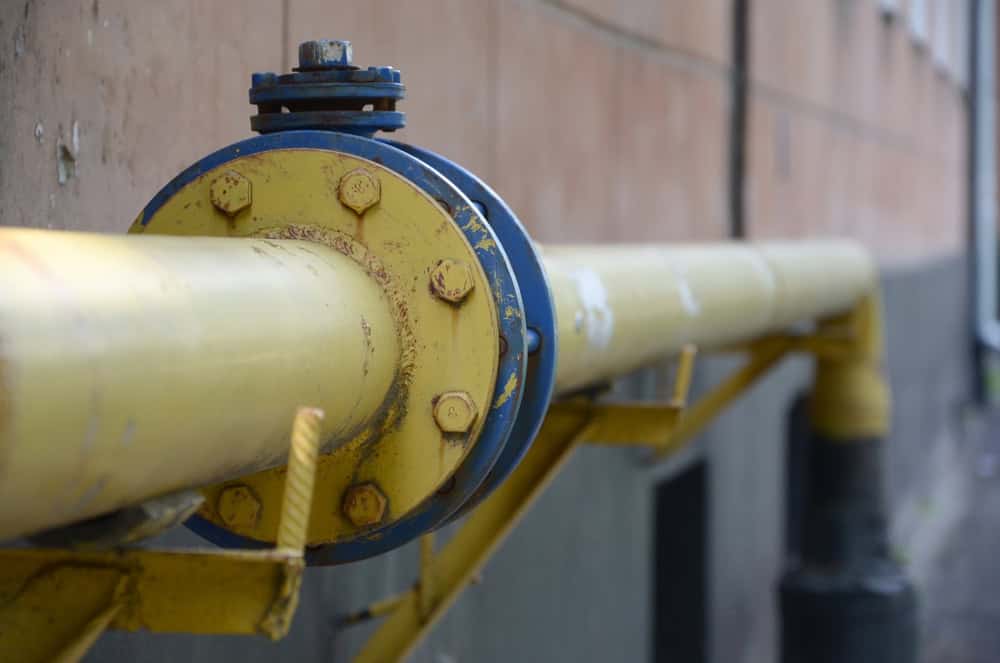
It starts with an assessment. Before any pipe gets cut, the existing gas infrastructure in your home gets evaluated — what’s there, how old it is, what diameter it is, and whether it can handle the BTU load of what you’re adding or replacing. For a lot of Bay Terrace homes built in the 1950s and 1970s, this step reveals that the existing line is undersized for today’s appliances. Better to know that before the new range arrives than after.
From there, the DOB permit gets filed through DOB NOW — the NYC Department of Buildings’ online portal. No paper submissions, no shortcuts. The permit is filed under the Licensed Master Plumber’s credentials, which is the only legal way to do it in New York City. Once the permit is active, installation begins.
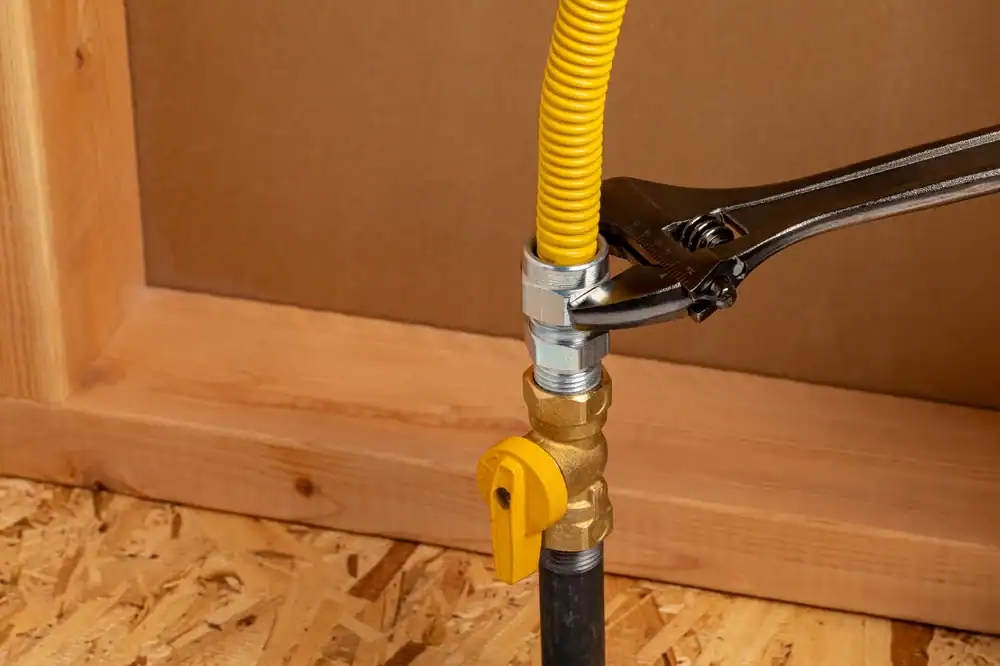
The work follows the NYC Fuel Gas Code: proper pipe sizing, correct materials, a dedicated shutoff valve at each appliance, and a pressure test at 1.5 times working pressure before anything gets turned on. The final step is National Grid coordination. New gas service, a service upgrade, or restoration after a shutoff all require utility authorization before the meter gets activated. We handle that coordination directly.
When the job is done, you receive the full documentation package — permit records, pressure test results, and LMP certification — so everything is on file for your insurance and your records.
Ready to get started?
Gas line installation isn’t one-size-fits-all, and the range of work reflects that. A single appliance hookup — connecting a new stove, gas dryer, or water heater to an existing line — typically runs $500 to $2,000 for most Staten Island installations. A whole-home installation or full re-pipe runs $1,300 to $3,500. For work priced by the linear foot, the range is $12 to $25 depending on pipe type and project complexity. Every job gets a written, itemized estimate before work starts.
For Bay Terrace specifically, a few service categories come up consistently. Oil-to-gas conversions are one of them. A portion of the South Shore’s housing stock was built with oil heating, and converting to natural gas means running an entirely new gas line from the street meter to the heating system — not just swapping a boiler. That’s a full-scope installation that requires a DOB permit, National Grid service activation, and proper line sizing for the new system’s BTU demand.
Appliance gas hookups for high-demand equipment are another. Professional-grade ranges, tankless water heaters, and gas generators each have specific BTU requirements that need to be calculated against the full load of everything else on the line. For residents at The Woodlands at Bay Terrace on Amboy Road, or in any of the neighborhood’s townhouse clusters, gas work in a multifamily setting also involves building management coordination and documentation that satisfies the property’s requirements — something we’ve handled extensively through decades of NYC building work.

It depends on what you’re adding and what’s already there — but for a lot of Bay Terrace homes, the honest answer is yes. Most of the neighborhood was built in the late 1950s and 1970s, which means the gas piping in many of these homes is 50 to 70 years old and was sized for the appliances of that era. A standard range from 1965 might have drawn 40,000 to 50,000 BTUs. A professional-grade range today can draw 60,000 BTUs or more. A tankless water heater pulls 150,000 to 199,000 BTUs. That’s a completely different demand on the same pipe.
The way to know for certain is a load calculation — adding up the BTU demand of every appliance on the line, calculating the longest pipe run, and checking whether the current pipe diameter can deliver adequate pressure to all of them simultaneously. If it can’t, an undersized line doesn’t just cause performance problems with your new appliance — it can be a code violation. We evaluate the existing infrastructure before recommending any new work, so you’re not guessing.
In New York City — which includes all of Staten Island and Bay Terrace — only a Licensed Master Plumber can legally install, alter, repair, or maintain gas piping. This is codified in the NYC Fuel Gas Code and the Administrative Code. It’s not a suggestion or a best practice. Unlicensed gas work in NYC is a criminal offense.
Beyond the legal issue, there’s a practical one. National Grid, which serves Bay Terrace and Staten Island, will not activate gas service to work that was done without a permit. If a handyman or unlicensed contractor does the work, you won’t be able to get your gas turned on — and you may face violations if the work is discovered. Your homeowner’s insurance can also be voided by unpermitted gas work. The only path that ends with gas flowing legally and safely is hiring a Licensed Master Plumber who pulls the DOB permit and files everything correctly.
National Grid is the natural gas utility for Staten Island, and their involvement goes beyond just supplying gas to your meter. For new gas service, a service upgrade, or restoration after a shutoff, National Grid authorization is required in addition to the NYC DOB permit. These are two separate processes, and both have to be completed before gas service can be activated or restored.
In practice, this means coordinating with National Grid to schedule their inspection, meet their specific requirements for new or upgraded service, and get their sign-off before the meter gets turned on. This is where a lot of homeowners run into delays when they hire a contractor who handles the DOB side but isn’t experienced with the utility coordination side. We manage both — the DOB permit filing and the National Grid authorization — so the process moves in sequence rather than stalling between steps.
The range depends on the scope of work. For most Staten Island single-appliance installations — connecting a new stove, water heater, or dryer to an existing gas line — the typical range is $500 to $2,000. Whole-home installations or full re-pipes run $1,300 to $3,500. Work priced by the linear foot falls between $12 and $25 depending on pipe type and how complex the run is.
What affects where your project lands in that range: how far the new line needs to run, whether walls or ceilings need to be penetrated, whether the existing service capacity is adequate or needs to be upgraded with National Grid, and whether a DOB permit fee applies (which it will for any permitted gas work). For Bay Terrace homes undergoing oil-to-gas conversions, the scope is typically larger — running a new line from the street meter to the heating system — so those projects tend to sit at the higher end of the range. Every job gets a written, itemized estimate before any work starts.
For a straightforward single-appliance hookup, the installation itself typically takes a few hours once the permit is active. But the full timeline — from first call to gas flowing — involves more steps than just the physical work. The DOB permit needs to be filed through DOB NOW and processed. The installation needs to be completed and pressure-tested. And then National Grid needs to authorize and activate the service, which involves their own inspection and scheduling.
For Bay Terrace homeowners, the realistic timeline from start to finish on a standard project is usually a few days to about a week, depending on permit processing times and National Grid’s scheduling. More complex projects — oil-to-gas conversions, whole-home re-pipes, or work that requires a service upgrade at the meter — can take longer. The key is not letting the process stall between steps, which is why having one contractor manage the permit, the installation, and the utility coordination matters.
Yes, but the process involves more coordination than a standard single-family home installation. For a building like The Woodlands at Bay Terrace on Amboy Road — a mid-rise condo with building management, a doorman, and 24-hour security — gas work requires more than just a DOB permit. You’ll typically need building management approval, documentation that satisfies the condo association’s requirements, and scheduling that works around the building’s systems and access rules.
This is where a lot of contractors fall short. They’re comfortable with residential single-family work but aren’t set up to navigate the building management layer that comes with multifamily properties. We’ve spent four decades working in Manhattan co-ops and luxury buildings — environments where board approvals, building engineer sign-offs, and management company documentation are standard parts of the job. That experience transfers directly to Bay Terrace’s condo and townhouse properties. The permit process, the National Grid coordination, and the building management documentation all get handled, and the unit owner receives a complete documentation package when the work is done.
Other Services we provide in Bay Terrace