

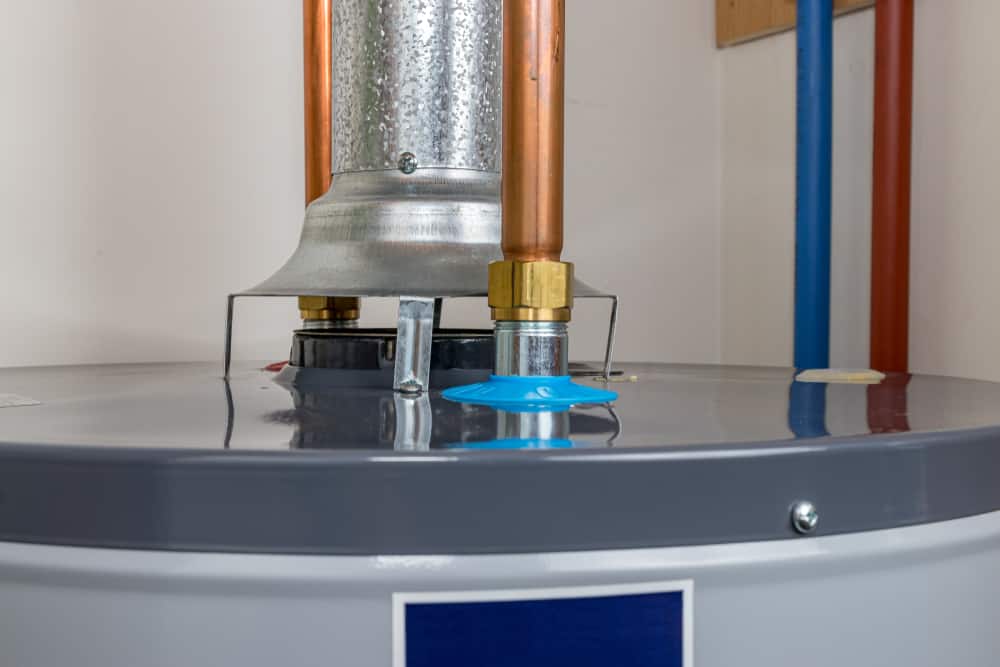
When the gas line in your Oakwood home was installed in 1967, nobody was planning for a tankless water heater pulling 199,000 BTUs or a professional range that outperforms what most restaurants use. The pipe diameter, the run length, the total load — none of it was sized for what you have now. When that mismatch goes unaddressed, you end up with appliances that underperform, pressure that drops mid-use, and a system that’s technically out of code even if it’s been running for years without incident.
Getting that fixed means more than swapping a pipe. It means calculating the full BTU demand of everything connected to your gas system, sizing the line correctly for the longest run in your home, pulling the required DOB permit through the city’s filing system, and coordinating with National Grid — the gas utility that serves Oakwood and the rest of Staten Island — before a single connection is made. That last part matters more than most people realize. National Grid’s authorization process is different from what Con Edison handles in Manhattan, and a plumber who doesn’t know that difference will cost you time you didn’t plan to lose.
Once the work is done right, you get appliances that actually perform, documentation you can hand to your insurance company or a future buyer, and a system that’s been pressure-tested and signed off by a Licensed Master Plumber. That’s the outcome. Everything else is just getting there cleanly.
We’ve been doing gas line work in Oakwood and across Staten Island since 1983. That’s not a tagline — it’s the year most of the semi-attached colonials in Oakwood Heights were hitting their first renovation cycle. We’ve worked in the same building types you’re living in: post-war two-families, 1960s ranches, homes with original black iron pipe that’s been in the walls longer than most of their owners have been alive.
Every gas line job is handled by a Licensed Master Plumber on our staff — not a subcontractor brought in to sign paperwork. In New York City, that credential is legally required for all gas work, and it means the person accountable for your installation is the same person who supervised it. We file every DOB permit through DOB NOW, manage the National Grid authorization for Oakwood and Staten Island jobs, and deliver written documentation when the work is complete. No handoffs, no gaps in the chain of responsibility.
If you’re in Oakwood Heights or anywhere in the 10306 area, you’re not dealing with a company learning your neighborhood. You’re dealing with one that’s been working it for decades.

It starts with an assessment. Before any pipe gets touched, we look at what you have — the existing gas infrastructure, the appliances currently connected, and whatever you’re planning to add. For a lot of Oakwood homes, that means evaluating original mid-century piping to determine whether it can be extended or whether a portion needs to be replaced to handle the new load. If you’re in a two-family home in Oakwood Heights, that assessment covers both units, because the shared gas system doesn’t care which apartment you’re renovating.
From there, the BTU load gets calculated. Every appliance connected to the system — existing and new — factors into the pipe sizing. Once the sizing is confirmed, a DOB permit gets filed through DOB NOW before any installation work begins. There’s no legal way around that step in New York City, and any plumber who suggests otherwise is putting you at risk.
After the permit is issued, the installation happens: new line run, fittings made, shutoff valves installed at each appliance location per code. When the physical work is done, the system gets pressure-tested at 1.5 times working pressure. That’s the NYC Fuel Gas Code standard, and it’s not optional. Then comes National Grid coordination — authorization for the gas service on Staten Island runs through them, not Con Edison, and we handle that communication directly. Once National Grid signs off and the meter is active, you get written documentation of everything: the permit, the pressure test results, and the LMP certification. That paperwork is yours to keep.
Ready to get started?
Gas line installation covers a wider scope than most homeowners expect when they first call. For a single appliance hookup — a new stove, a gas dryer, a water heater — the work typically runs between $500 and $2,000 depending on the length of the run, the complexity of the route through the home, and whether the existing supply line is adequately sized. For whole-home gas line work, that range moves to $1,300 to $3,500. The per-linear-foot cost for the pipe itself runs $12 to $25 depending on the pipe type and job complexity. All of that gets laid out in a written estimate before work begins — no adjustments after the fact.
For Oakwood homeowners upgrading a kitchen or adding a high-efficiency appliance, the gas line sizing piece is where things get specific. A professional-grade range or a tankless water heater draws significantly more BTUs than what most 1960s gas lines were designed to carry. We calculate the full load — every appliance on the system, not just the new one — and size the line accordingly. That calculation also accounts for the total run length, which in a two-family home on a street off Hylan Boulevard can involve multiple floors and longer lateral distances than a single-family home.
Local Law 152 compliance is also part of what we handle for building owners in Oakwood with multifamily or mixed-use properties. That means LMP inspection, any required repairs, and GPS-2 certification filed with the NYC DOB. The penalty for missing that deadline is up to $10,000, and the filing now has to go through DOB NOW electronically — there’s no paper submission option anymore.
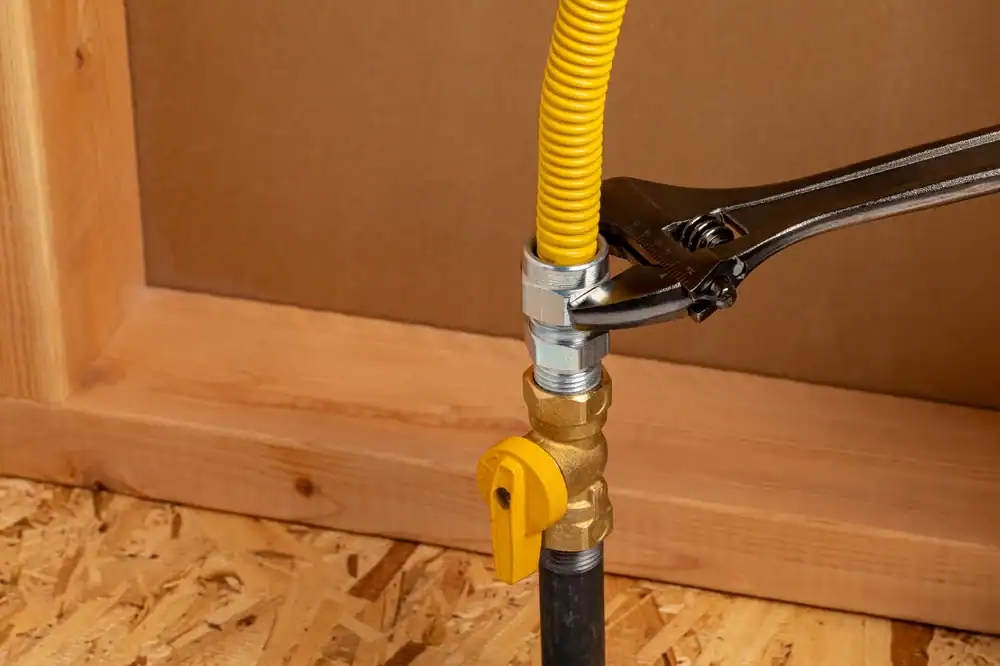
It depends on what the existing pipe can handle, and that’s not something you can determine by looking at it. Most homes in Oakwood were built in the 1960s and 1970s, and the original black iron gas piping from that era was sized for the appliances of that time — typically a standard range, a furnace, and a water heater with modest BTU demands. If you’re adding a high-BTU appliance or reconfiguring your kitchen, the existing line may be undersized for the new total load even if it’s in perfectly good physical condition.
The assessment process involves calculating the combined BTU demand of every appliance connected to the system, measuring the longest pipe run to the farthest appliance, and determining whether the existing diameter can carry that load without a pressure drop. In many cases, the existing pipe can be extended with a properly sized new section. In others, a portion of the original line needs to be upsized. Either way, that determination has to come from an actual load calculation — not a visual inspection and not an assumption that because the old line worked before, it’ll work with the new appliance added.
We handle that coordination directly. National Grid is the gas utility for Oakwood and the rest of Staten Island — it’s not Con Edison, which is the utility most people associate with New York City gas service. That distinction matters because new gas service connections, capacity increases, and post-permit gas restoration in Oakwood all go through National Grid’s authorization process, which has its own forms, contacts, and inspection requirements separate from what Con Edison manages in Manhattan or Brooklyn.
When a plumber who primarily works in Manhattan takes a job in Oakwood and doesn’t know the difference, you end up waiting. The permit gets filed correctly, the installation gets done, and then the gas doesn’t come back on because the utility coordination went to the wrong place or the wrong department. We’ve been doing gas work in Oakwood and across Staten Island for decades and coordinate directly with National Grid for every job here. That means the authorization process runs in parallel with the installation work, not after it, and you’re not sitting without gas longer than necessary.
Yes, every gas line installation or alteration in New York City requires a permit filed with the NYC Department of Buildings — there are no exceptions for smaller jobs or single-appliance hookups. The permit has to be filed through DOB NOW, the city’s online portal, and it has to be filed by or on behalf of a Licensed Master Plumber. Paper submissions are no longer accepted. Once the permit is issued, the installation can proceed, and after the work is complete, the job has to pass inspection before the gas service is fully restored.
We handle the entire permit process. That means filing the DOB NOW application, scheduling any required inspections, and delivering the permit documentation to you when the job is closed out. You don’t need to create a DOB NOW account, navigate the city’s filing system, or track down an inspection status. For Oakwood homeowners who already have enough to manage with a renovation or appliance upgrade in progress, having the permit handled end-to-end is one less thing that can fall through the cracks and delay your gas being turned back on.
Gas line sizing is the process of determining what pipe diameter is needed to deliver enough gas pressure to every appliance in your home without a drop in performance. The calculation takes into account the total BTU demand of all connected appliances, the length of the pipe run from the meter to the farthest appliance, and the type of pipe being used. If the diameter is too small for the load, the appliances at the end of the run don’t get enough gas pressure to operate correctly — a range that won’t reach full flame, a water heater that can’t keep up with demand, or a boiler that short-cycles.
This is especially relevant in Oakwood because the housing stock is predominantly from the 1960s and 1970s, and those homes were plumbed for the appliances of that era. A standard range from 1968 might have drawn 35,000 BTUs. A professional-grade range today can draw 60,000 or more. A tankless water heater can pull 150,000 to 199,000 BTUs on its own. When you add one of those appliances to a system that was never sized for that load, the existing pipe diameter often can’t keep up. Sizing the new line correctly — and sometimes upsizing a section of the existing line — is what makes the appliance actually perform the way it’s supposed to.
No. In New York City, gas line installation, alteration, and repair can only be performed legally by a Licensed Master Plumber registered with the NYC Department of Buildings, or by a Registered Journeyman Plumber working under direct LMP supervision. This is state law, not a local preference or a guideline — it applies to every property in Oakwood the same as it does anywhere else in the five boroughs. A handyman or unlicensed contractor who installs or modifies a gas line is committing a criminal offense under the NYC Administrative Code.
Beyond the legal risk, there are practical consequences. National Grid will not authorize gas service restoration to work that wasn’t permitted and performed by a licensed plumber. Your homeowner’s insurance can deny a claim if a gas-related incident is traced back to unlicensed work. And if you sell the home, unpermitted gas work will surface during the buyer’s inspection and can become a significant obstacle at closing. The licensing requirement exists for real reasons — gas line work done incorrectly doesn’t always fail immediately, but when it does fail, the consequences are serious. Hiring an LMP isn’t a formality; it’s the only way the work is legal, insurable, and built to last.
For a straightforward single-appliance hookup — a new stove connection or a dedicated line for a dryer — the physical installation typically takes a few hours, and gas can often be restored the same day once the pressure test is complete and National Grid has been coordinated with in advance. For more involved work, like running a new line through multiple floors of a two-family home in Oakwood Heights or upsizing a section of original piping to handle a higher BTU load, the job itself might take a full day, with gas restoration following once the utility authorization clears.
The variable that most homeowners don’t anticipate is the National Grid coordination timeline. If that authorization isn’t initiated until after the installation is finished, you can add days to the process. We start the National Grid coordination early — before the installation is complete where possible — so the utility’s side of the process is running in parallel, not waiting in a queue after the fact. Given that Oakwood’s winters are genuinely cold with the coastal exposure off the Lower New York Bay, being without heat or hot water for longer than necessary isn’t just inconvenient. It’s something worth planning around from the start, and that’s exactly what the scheduling process is designed to minimize.
Other Services we provide in Oakwood