

When gas gets shut off in a Fox Hills apartment building, the ripple effect is immediate. Cooking stops. Heat stops. In a neighborhood where most residents rely on public transit and can’t easily absorb the disruption of eating out or waiting days for a resolution, every hour without gas matters more than it might somewhere else.
The large residential buildings along Park Hill Avenue and Vanderbilt Avenue were mostly built between the mid-1960s and 1970s. That means the gas infrastructure inside those buildings is pushing 60 years old in many cases. Corroded fittings, aging risers, and decades of incremental repairs — some permitted, some not — are exactly the kind of conditions that turn a small issue into a National Grid shutoff affecting hundreds of units simultaneously.
Getting the repair done right the first time, with proper DOB permits and direct coordination with National Grid, is what actually closes the loop. That’s the difference between gas restored in days versus gas restored in weeks.
We’ve been doing licensed gas line work on Staten Island since 1983. Bobby and Rob — father and son — have worked in the kind of aging multi-unit buildings that define Fox Hills and Park Hill for decades. We know what 1960s-era gas infrastructure looks like inside a building that’s been through multiple rounds of tenant turnover, building management changes, and repair work of varying quality.
Staten Island is National Grid territory, not Con Edison. That distinction matters when you need gas restored after a repair or a violation. We work directly with National Grid through the restoration process — not just completing the physical repair and handing you a phone number. From the DOB permit to the utility sign-off, we handle the process end to end.
Both of us are fully licensed master plumbers with the Gas Work Qualification endorsement required by NYC to file gas piping permits. That’s not a given — it’s a specific credential, and it’s what legally authorizes this work in New York City.

It starts with a call. Whether you’re a building manager at one of the Park Hill Avenue complexes dealing with a National Grid shutoff, or a resident who smells something off near the meter, the first step is the same: get a licensed master plumber on the phone who can assess what you’re actually dealing with.
Once on-site, we begin with a full inspection of the affected gas lines — checking for leaks, corrosion, pressure loss, and any signs of prior unpermitted work. In Fox Hills’s older apartment buildings, that last part matters more than most people expect. Unpermitted modifications from years past don’t always show up as obvious problems until a licensed inspection uncovers them.
A gas pressure test confirms whether the system holds before anything is signed off. If repairs are needed, the right permits get pulled from the NYC DOB before work begins — not after. Once the licensed repair work is complete and certified, we coordinate directly with National Grid for the restoration inspection and service turn-on. That coordination step is where a lot of building owners get stuck when they’re working with someone who doesn’t know the process. Here, it’s part of the job.
If your building is approaching a Local Law 152 inspection deadline, that compliance filing can be handled as part of the same visit.
Ready to get started?
Gas line repair in Fox Hills covers more ground than most people realize going in. The immediate issue — a leak, a shutoff notice, a smell near the meter — is usually the entry point. But in buildings that are 55 to 60 years old, the repair often surfaces connected issues that need to be addressed at the same time to bring the system into compliance.
We offer emergency gas leak response around the clock. If National Grid has locked off your building’s service, we can assess the violation, pull the necessary DOB permits, complete the corroded gas pipe replacement or gas pipe leak repair, and coordinate the restoration directly with the utility. For buildings on Park Hill Avenue or Vanderbilt Avenue that have received a DOB notice or an ECB violation, we handle that violation clearance process as part of the scope — not passing it back to you to figure out separately.
Gas line rerouting is also available for units or buildings undergoing kitchen renovations or appliance upgrades, including the kind of plumbing enhancements that are part of the ongoing rehabilitation work happening in the neighborhood right now. We perform gas pressure testing after every repair before the system goes back into service.
For building owners in the 10304 zip code with an active Local Law 152 compliance obligation, we offer the full inspection and GPS filing to keep you on the right side of the $10,000-per-year fine risk. No after-hours surcharge applies — the rate is the same whether the call comes in on a Tuesday afternoon or a Saturday night.
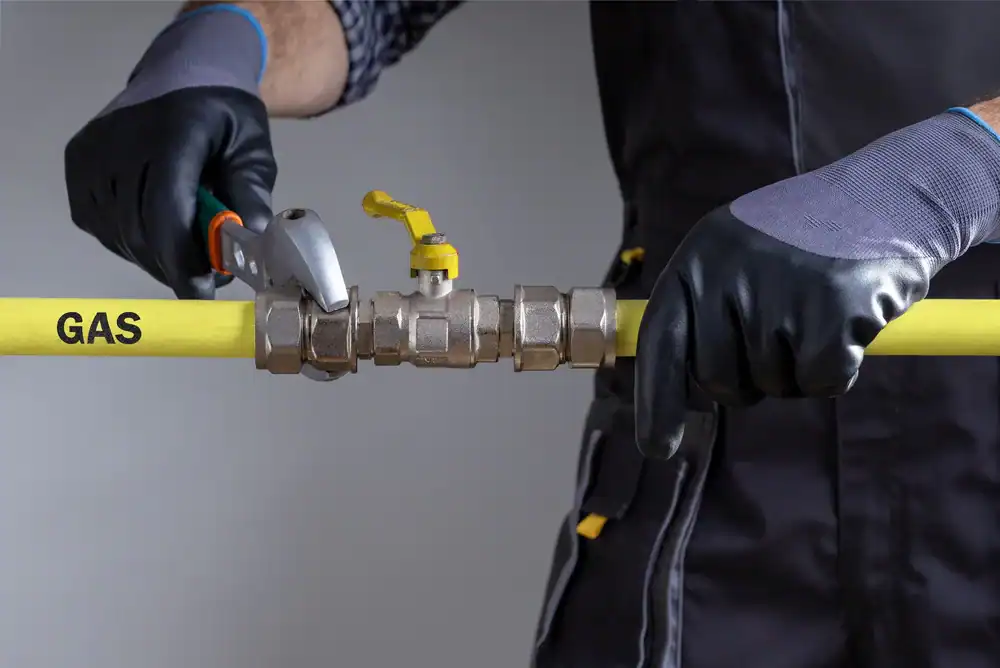
A National Grid shutoff in a multi-unit building like those on Park Hill Avenue or Vanderbilt Avenue is a two-part problem. First, the underlying cause — usually a leak, a failed pressure test, or unpermitted plumbing work discovered during an inspection — has to be repaired by a Licensed Master Plumber who holds a Gas Work Qualification endorsement. That repair requires a DOB permit to be filed before work begins, and the completed work has to be certified before anything moves forward.
The second part is where a lot of building owners in Fox Hills get stuck. National Grid doesn’t automatically restore service once the plumber says the work is done. The utility has its own inspection and restoration process, and they control the timeline. A plumber who coordinates directly with National Grid — submitting the required documentation and following up through the utility’s process — compresses that timeline significantly. Left to navigate it alone, building owners often wait far longer than necessary. We handle that coordination as part of the job, not as an add-on.
The honest answer is that you often can’t tell from the outside. Gas pipes in buildings constructed in the 1960s — which describes a significant portion of the Fox Hills housing stock — are now approaching or past 60 years of age. Black iron pipe at that age is susceptible to corrosion at fittings and joints, especially in areas where there’s been moisture exposure or where the pipe runs through concrete or masonry. A pipe can look intact and still be losing pressure.
The determination gets made through a gas pressure test. The system is pressurized and monitored to see whether it holds. If it doesn’t, the next step is isolating where the loss is occurring. In some cases, a targeted repair at a specific fitting or joint is sufficient. In others — particularly where corrosion is widespread or where the pipe has thinned significantly — full corroded gas pipe replacement is the right call. We can tell you which situation you’re actually in after a proper inspection, not before.
Most gas line work in New York City requires a DOB permit, and Staten Island is no exception. The specific requirement depends on the scope of the work — ordinary repairs and replacements of existing in-kind components may qualify for a Limited Alteration Application, while more significant work like gas line rerouting or new connections requires a standard permit filing. Either way, the permit has to be filed by a Licensed Master Plumber who holds a Gas Work Qualification endorsement from the NYC DOB. That’s not a general plumbing license — it’s a separate credential that authorizes gas piping permit filings specifically.
Skipping the permit isn’t a shortcut — it’s the thing that causes National Grid shutoffs. The case at 185 Park Hill Avenue in Fox Hills, where unpermitted plumbing led to gas being cut off for over 150 apartments, is a direct local example of what happens when gas work gets done without proper authorization. Permitted work protects the building, protects the tenants, and protects the building owner from DOB violations that follow the property.
Local Law 152 is a New York City law that requires all buildings — with limited exceptions — to have their gas piping systems inspected by a Licensed Master Plumber every four years. The inspection covers exposed gas piping, valves, meters, shut-offs, and any visible signs of corrosion, leakage, or unpermitted work. After the inspection, a report has to be filed with the NYC DOB within 30 days. The current compliance cycle runs from 2024 through 2028.
Yes, it applies to buildings in Fox Hills. The large multi-unit residential buildings along Park Hill Avenue and Vanderbilt Avenue are subject to this requirement, and the consequences of missing the deadline are significant — fines can reach $10,000 per year for non-compliance, and National Grid can shut off gas service to buildings that fail to file. Building owners and property managers in the 10304 zip code who aren’t sure where they stand in the current compliance cycle should get that confirmed before a Notice of Deficiency shows up from the DOB. We handle the full Local Law 152 process, from the inspection itself through the GPS filing with the DOB.
No. We charge the same rate for emergency calls regardless of when they come in — Tuesday afternoon or Saturday night, the price doesn’t change. A lot of plumbing companies add 50 to 100 percent surcharges for after-hours service. In a neighborhood like Fox Hills, where residents are working with tighter budgets and a gas shutoff in a large building affects hundreds of people at once, the last thing anyone needs is a surprise bill on top of an already stressful situation.
The rate you’re quoted is the rate you pay. Before any work begins, you get a written estimate so there’s no ambiguity about what you’re committing to. That applies to emergency calls the same as it applies to scheduled work.
It depends on what the inspection actually finds, but there are a few factors that affect the timeline in Fox Hills specifically. The physical repair work — fixing a gas pipe leak, replacing a corroded section of pipe, or rerouting a line — can often be completed in a single visit once the scope is clear and the permits are in place. The permit filing itself adds some lead time at the front end, though emergency situations can be handled with expedited filings when warranted.
The part of the timeline that surprises most building owners is the National Grid restoration process. After the licensed repair work is certified, National Grid has to complete their own inspection and formally restore service — and that process runs on the utility’s schedule, not the plumber’s. Buildings in Fox Hills and the Park Hill area that have experienced a National Grid shutoff should expect the full process to take several days at minimum, sometimes longer depending on the utility’s workload and the complexity of the violation. A plumber who actively coordinates with National Grid — submitting documentation, following up, and keeping the process moving — makes a real difference in how quickly that final step gets completed. That coordination is standard practice for us, not something you have to ask for separately.
Other Services we provide in Fox Hills