
The moment a Notice of Deficiency or Notice of Violation shows up from the DOB, the situation shifts from “I should handle this” to “I need to handle this now.” For Greenridge property owners in Staten Island Community Board 3, that window opened in early 2026 when the DOB began issuing formal violations to buildings that missed the Sub-cycle A deadline.
Getting your inspection done resolves the compliance gap, but it also does something more practical: it tells you exactly what’s going on inside your building’s gas piping. Greenridge has a meaningful share of housing stock built before 1939, and some of those buildings have gas pipes that have never been systematically looked at. The neighborhood’s western edge borders Richmond Creek and the old Fresh Kills wetland system — the area was literally called “Marshland” for a reason. That ambient moisture accelerates corrosion on exposed gas piping, and corrosion is one of the primary deficiency types LL152 inspections are designed to catch.
Once the inspection is done, you get a clear picture: what’s there, what’s fine, what needs attention, and exactly what has to be filed with the DOB. That’s a much better place to be than operating under an open violation with no idea what’s actually in your walls.
We’ve been working in New York City’s building stock since 1983. That’s four decades of navigating pre-war co-ops, aging gas infrastructure, and the DOB’s regulatory environment — long before Local Law 152 existed. When the law came into effect, it wasn’t a new category of work for us. It was a formal inspection framework built around problems we’d already been finding and fixing for years.
Bobby and Rob are the licensed master plumbers behind RB Mechanical Plumbing and Heating, and we’re the ones who show up. Not a subcontractor, not a crew sent from a dispatch center — the people whose names are on the license are the people doing the work. That matters when the GPS1 report we sign is a legal document you’re filing with the city.
For Greenridge and the broader South Shore, that means you’re working with a team that understands both the older building stock common along the Richmond Avenue corridor and the National Grid coordination process that applies specifically to Staten Island — not the Con Edison protocols that most NYC-centric plumbing content defaults to.

The process starts with a straightforward conversation about your building: how many units, what the gas system looks like, and whether you’ve received any notices from the DOB already. If there’s an open Notice of Deficiency or Notice of Violation from the missed 2024 deadline, we factor that into the approach from the start — because resolving an existing violation isn’t the same process as completing a first-time inspection.
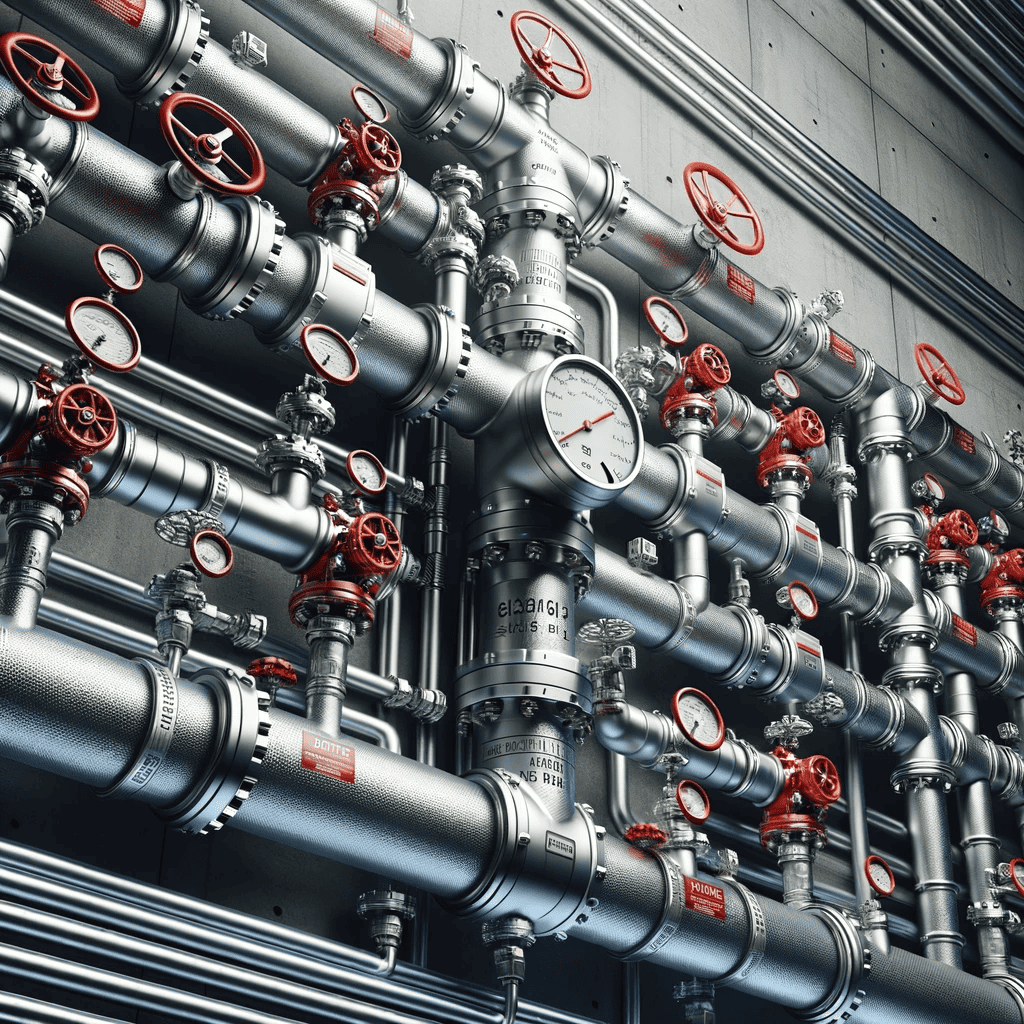
The inspection itself covers all exposed gas piping from the point where gas enters your building through the common areas, mechanical rooms, and boiler room — up to but not including individual tenant spaces. We conduct the inspection using electronic leak detection equipment alongside a visual survey, checking for atmospheric corrosion, proper pipe supports, and any Abnormal Operating Conditions. Given Greenridge’s proximity to the Richmond Creek wetlands, moisture-related corrosion gets particular attention in buildings near the western end of the neighborhood.
After the inspection, you receive the GPS1 report within 30 days. From there, the GPS2 certification — the document you’re legally required to file with the NYC DOB — needs to be submitted within 60 days. We walk you through that filing process, and if repairs are needed before the certification can be filed, we handle them. One engagement, start to finish, including any required coordination with National Grid for gas restoration if a deficiency triggers a service interruption.
Ready to get started?
The LL152 inspection covers every foot of exposed gas piping in your building’s common areas — boiler room, mechanical spaces, hallways, and rooftop where applicable. It does not cover piping inside individual apartments or units, and it does not include hidden or in-wall piping. What it does cover is the infrastructure most likely to develop problems over time, especially in Greenridge’s older multi-family and mixed-use buildings along the Richmond Avenue and Arthur Kill Road corridors.
Atmospheric corrosion gets rated on a defined scale during the inspection. If corrosion reaches Level 3 or Level 4, pipe replacement is required — not optional. That’s a finding that carries real weight for property owners, and it’s one reason having a team that can both inspect and repair matters. You don’t want to receive a GPS1 report flagging a serious deficiency and then spend two weeks finding a separate contractor while your deadline clock runs.
The civil penalty for non-compliance with Local Law 152 is currently $5,000 per violation — reduced from the original $10,000 figure you may have seen cited elsewhere. For three-family buildings specifically, that penalty was reduced further to $1,500 as of late 2024. New for 2026, the DOB also added filing fees: $35 when submitting the GPS2 certification, and $480 per BIN for buildings filing a no-gas-service certification. If your building has multiple BINs, those fees stack. Getting this handled cleanly the first time — inspection, any necessary repairs, and proper filing — avoids all of it.

If your building is in Greenridge, you’re in Staten Island Community Board 3, which was assigned to Sub-cycle A of the LL152 inspection schedule. That means your Cycle 2 deadline was December 31, 2024. If you didn’t complete the inspection and file the GPS2 certification by that date, your building is currently out of compliance, and the DOB began issuing formal Notices of Violation to buildings in this situation starting in early 2026.
The path forward isn’t complicated, but it does need to move. You’ll need to complete the inspection with a Licensed Master Plumber, receive the GPS1 report, address any deficiencies found, and file the GPS2 certification through the DOB NOW portal — which as of 2026 is digital-only, no paper submissions accepted. If you’ve already received a Notice of Deficiency or Notice of Violation, that has to be resolved in the DOB system as part of the process, not just alongside it. We have specific experience with DOB violation removal, which means we understand how to move through this efficiently rather than just completing an inspection and leaving you to sort out the paperwork.
Local Law 152 applies to most buildings in NYC that have gas piping — but not all. One- and two-family homes classified as Occupancy Group R-3 are generally exempt from the inspection requirement. That covers the majority of the single-family and semi-detached two-family homes that make up much of Greenridge’s residential character. If you own a three-family or larger residential building, a mixed-use property, or a commercial building — including anything along the Richmond Avenue or Arthur Kill Road commercial corridor — you’re almost certainly subject to the law.
There’s also an important nuance for buildings without gas service: even if your building has no gas piping, you’re still required to file a certification with the DOB confirming that absence. This is signed by a registered design professional and filed through DOB NOW. Many building owners in this situation assume they have no obligation and end up with a violation for failing to file. If you’re genuinely unsure whether your specific property is covered, a quick conversation with a Licensed Master Plumber familiar with the DOB’s criteria will give you a straight answer faster than trying to parse the law yourself.
The inspection covers all exposed gas piping from the point where gas enters your building through the common areas — boiler room, mechanical rooms, hallways, and rooftop areas where gas piping is present. It does not include piping inside individual tenant apartments or any hidden or in-wall piping. The scope is specifically the infrastructure in shared and mechanical spaces, which is where the most significant risks tend to develop over time.
During the inspection, we conduct both a visual survey and electronic leak detection. The visual portion looks at pipe condition, support brackets, signs of atmospheric corrosion (rated on a scale from Level 1 through Level 4, with Level 3 and 4 requiring pipe replacement), and any connections or modifications that don’t meet code. For buildings near Greenridge’s western boundary — where the Richmond Creek wetlands create higher ambient moisture conditions — corrosion is a particularly relevant finding. Anything identified as an Abnormal Operating Condition gets documented in the GPS1 report, and Class 1 conditions (immediate hazards) require correction before the gas system can remain in service. Class 2 conditions typically allow a correction window before the next filing deadline.
These are two separate documents with two separate responsibilities, and confusing them is one of the most common mistakes building owners make after an inspection is completed. The GPS1 is the Gas Piping Periodic Inspection Report — it’s prepared and signed by the Licensed Master Plumber who performed the inspection, and it must be delivered to you, the building owner, within 30 days of the inspection date. It documents everything found during the inspection: pipe conditions, any Abnormal Operating Conditions, and the LMP’s professional findings.
The GPS2 is the Gas Piping System Periodic Inspection Certification — and this one is your legal obligation to file. As the building owner, you’re required to submit the GPS2 to the NYC DOB within 60 days of the inspection. As of 2026, all GPS2 filings go through the DOB NOW portal — there’s no paper option. The filing fee is $35 per GPS2 submission. If you miss that 60-day window, you’re exposed to a separate compliance failure even if the inspection itself was completed on time. We walk building owners through the GPS2 filing process so nothing falls through the cracks between the inspection and the official certification on record with the city.
Finding a deficiency during a scheduled LL152 inspection is a much better outcome than having a problem discovered during an emergency or flagged by National Grid during a routine service call. When you’re in control of the timeline, you have options. When a utility shuts off service due to a safety concern, you don’t.
Not every deficiency means your gas gets shut off immediately. Class 1 conditions — things like active leaks or immediately hazardous situations — do require prompt action, and in those cases gas service may be interrupted until repairs are made. Class 2 conditions are less urgent and typically allow a defined correction window. Once repairs are completed, we notify National Grid (the utility serving all of Staten Island), and National Grid schedules a Final Inspection per its Blue Book standards before service is restored. This is a step that requires familiarity with National Grid’s specific protocols — which differ from the Con Edison process that most NYC plumbing content describes. We handle both the repairs and the utility coordination, so you’re not managing that process on your own while your tenants are without gas heat.
For buildings in Greenridge — Staten Island Community Board 3 — the next scheduled LL152 deadline is December 31, 2028. That’s the Cycle 3 deadline for Community District 3, and it’s roughly four years away from the time this is being written. That may feel like plenty of time, but the lesson from Cycle 2 is worth taking seriously: buildings that waited until Q3 or Q4 of 2024 found themselves competing for scheduling slots as the December deadline approached, and last-minute inspections are harder to book and leave no room to address deficiencies before the cutoff.
If your building completed its Cycle 2 inspection on time, scheduling your Cycle 3 inspection in 2026 or 2027 means no deadline pressure, no scheduling backlog, and maximum time to address anything found before 2028 arrives. If your building missed the Cycle 2 deadline and is currently out of compliance, the priority is resolving that first — completing the overdue inspection, addressing any open DOB notices, and getting the GPS2 certification filed. Once that’s done, you’re in a clean position heading into Cycle 3 rather than carrying unresolved exposure forward. Either way, the earlier you act, the more straightforward the process.
Other Services we provide in Greenridge