
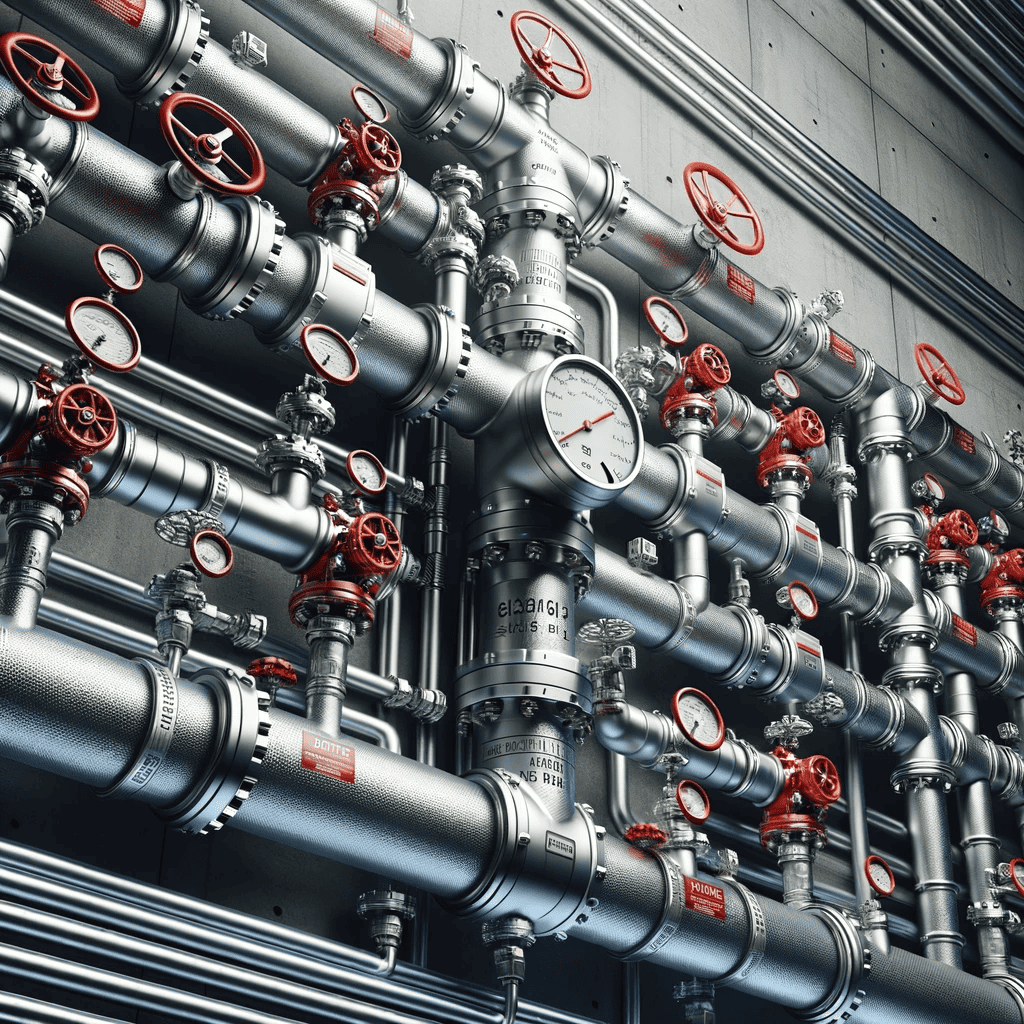

Missing the LL152 deadline doesn’t mean you’re out of options — it means you need to move now, not later. The DOB has been issuing formal Notices of Violation to buildings that missed prior cycle deadlines, and those violations don’t disappear when the next cycle opens. If you own a multi-family building or investment property in Mariners Harbor, the exposure sitting on your plate right now is real and active.
Here’s what changes once you get this handled: the notice stops being something you’re dreading in the mail, your tenants aren’t at risk of a gas disruption you didn’t see coming, and you’ve got a signed GPS1 report from a licensed master plumber on file — the legal document that proves your building was inspected and cleared. That’s the finish line.
For buildings in Mariners Harbor specifically, there’s an added layer worth understanding. A significant portion of the housing stock here was built before 1939 — some of it considerably earlier. Gas piping in buildings that old has been sitting in walls, boiler rooms, and mechanical spaces for decades, breathing salt air off the Kill Van Kull. That kind of environment accelerates atmospheric corrosion on exposed metal piping in ways that newer South Shore neighborhoods simply don’t face at the same rate. Getting an inspection isn’t just a compliance checkbox here — for a lot of these buildings, it’s the first time anyone has actually looked.
We’ve been working in New York City since 1983. That’s four decades of pre-war co-ops, aging boiler rooms, non-standard gas layouts, and the kind of building complexity that younger or out-of-borough plumbers haven’t had to figure out yet. When you call, you get Bobby and Rob — the licensed master plumbers whose names are on the license and on the GPS1 report. No subcontractors, no rotating crew, no guessing who’s actually showing up.
For Mariners Harbor building owners dealing with the aftermath of a missed CD1 deadline, that accountability matters more than usual. The GPS1 is a legal document. The person who signs and seals it is personally responsible for every finding in it. When it’s Bobby or Rob, that’s not a formality — it’s a direct line of professional accountability that protects you as the building owner.
We also carry specific experience with DOB violation removal, which is exactly what a number of Mariners Harbor building owners need right now — not just an inspection going forward, but help resolving the compliance gap that already exists.

The process starts with a conversation about your building — its size, the number of gas meters, how many floors, and whether you’ve received any notices from the DOB already. That information shapes the scope of the inspection and gives you a clear cost breakdown before anything starts. No surprises after the fact.
The inspection itself covers all exposed gas piping from the point where gas enters your building through the common areas, boiler room, mechanical spaces, and up to (but not including) individual tenant units. For older Mariners Harbor buildings — particularly those closest to Richmond Terrace and the Kill Van Kull waterfront — the inspection includes a close assessment of atmospheric corrosion on exposed metal piping. Salt air from the tidal strait and the area’s long industrial history create conditions that can degrade piping over time, and that’s exactly what a qualified licensed master plumber is trained to catch. If anything is found, we can handle the repairs directly — you don’t need to go find a second contractor while the clock is ticking.
After the inspection, you receive the GPS1 report within 30 days. From there, the GPS2 certification needs to be filed with the DOB within 60 days — and as of early 2026, that filing happens exclusively through the DOB NOW digital portal. We walk you through that process so you’re not navigating a government portal on your own. One call, full compliance.
Ready to get started?
The Local Law 152 inspection covers exposed gas piping in your building’s common areas — boiler rooms, mechanical rooms, hallways, rooftops, and anywhere gas piping runs through shared building space. It does not include piping inside individual apartments. We’re looking for atmospheric corrosion, improper pipe supports, gas leaks detected with electronic equipment, illegal connections, and any condition classified as an Abnormal Operating Condition (AOC). Findings are rated and documented in the GPS1 report, which the licensed master plumber signs and seals.
For Mariners Harbor buildings, the corrosion assessment tends to carry more weight than it does in newer construction. Pre-war buildings near the Kill Van Kull waterfront have been exposed to salt air and industrial microclimate conditions for generations. Atmospheric corrosion rated at Level 3 or 4 under LL152 standards requires pipe replacement — and that’s not a finding you want to discover for the first time during a utility emergency rather than a scheduled inspection.
Staten Island runs on National Grid, not Con Edison. If a Class 1 deficiency is found and gas needs to be shut off, the restoration process follows National Grid’s Blue Book standards. We handle the repair, the utility notification, and the coordination required to get gas service restored — so your tenants aren’t left waiting while you figure out who to call next. The civil penalty for non-compliance is $5,000 per violation. For three-family buildings, that figure is $1,500 as of November 2024. New 2026 filing fees also apply: $35 per GPS2 certification filed through DOB NOW.

Mariners Harbor is in Staten Island Community District 1. Under the current Local Law 152 four-year inspection cycle, the Cycle 2 deadline for Community District 1 buildings was December 31, 2024. That date has passed. If your building has gas piping and you haven’t completed your inspection and filed your GPS2 certification with the DOB, you are currently out of compliance — not approaching a deadline, but past it.
The next cycle (Cycle 3) for CD1 opens with a deadline of December 31, 2028, but outstanding violations from Cycle 2 don’t reset when Cycle 3 begins. They stack. The DOB has been issuing Notices of Deficiency and formal Notices of Violation to buildings that missed prior cycle deadlines, and enforcement has tightened significantly since January 2026. If you’ve received any notice from the DOB, or if you simply know you haven’t filed, the right move is to get the inspection scheduled now rather than wait for the situation to escalate further.
Not every finding results in a gas shutoff — that’s one of the most common misconceptions building owners have going into an LL152 inspection. Deficiencies are classified as either Class 1 or Class 2. A Class 1 condition is an immediate hazard — things like an active gas leak or a severely compromised pipe — and those do require immediate action, which can include a utility-ordered gas shutoff until repairs are made. A Class 2 condition is a deficiency that needs to be corrected but doesn’t pose an immediate safety risk. In those cases, gas typically stays on while corrections are made within the required timeframe.
For older buildings in Mariners Harbor — particularly those built before 1939 and located near the Kill Van Kull waterfront — the most common findings tend to involve atmospheric corrosion on exposed metal piping and deteriorated pipe supports. These are manageable issues when caught during a scheduled inspection. They become significantly more disruptive when they’re discovered during a utility emergency. We can perform the inspection and handle any repairs that come out of it, so you’re not scrambling to find a second contractor while a deficiency clock is running.
Most one- and two-family homes classified as Occupancy Group R-3 are exempt from the LL152 inspection requirement. If your property falls into that category, you’re generally not required to have an inspection performed. However, “exempt from inspection” is not the same as having no obligation at all. If your building has no gas piping, you are still required to file a certification — signed by a registered design professional — confirming the absence of gas piping. Ignoring that requirement can still result in a DOB violation, even for buildings that don’t use gas.
If you own a three-family, four-family, or larger multi-family building in Mariners Harbor — which covers a significant portion of the neighborhood’s older investment property and semi-detached housing stock — you are almost certainly subject to LL152 requirements. The easiest way to confirm your building’s status and community district is to look up your address in the DOB’s online database, or simply call and we can walk you through it quickly.
The inspection must be performed by a Licensed Master Plumber, or by a Registered Journeyman Plumber working under the direct and continuing supervision of a Licensed Master Plumber who has completed a DOB-approved seven-hour Periodic Gas Piping Inspector Qualification course. The GPS1 report — the official inspection document — must be signed and sealed by the Licensed Master Plumber. Without that credential, the report has no legal standing and your GPS2 filing will not be accepted by the DOB.
The DOB explicitly encourages building owners to verify a plumber’s current license status and disciplinary record before hiring. That information is publicly searchable through the DOB’s online database. This matters because the GPS1 is a legal document, not just a receipt for services rendered — and if the person who signed it wasn’t properly credentialed, the building owner bears exposure for a defective filing. Our licensed master plumbers are fully credentialed, active, and verifiable through the DOB’s public records.
Inspection costs vary based on building size, the number of gas meters, the total length of exposed piping, and the overall complexity of the gas system. Industry-wide, the range runs from approximately $800 for smaller buildings up to $10,000 or more for larger properties. Most multi-family buildings in Mariners Harbor — the older semi-detached homes, three-families, and mid-sized investment properties that make up a large part of the neighborhood’s housing stock — would typically fall somewhere in the lower to middle portion of that range.
What matters as much as the number is what’s included. Some inspectors hand over the GPS1 report and leave the GPS2 filing entirely to you. We walk you through the filing process so the certification actually gets submitted correctly and on time. As of 2026, there are also new DOB filing fees to factor in: $35 per GPS2 certification filed through DOB NOW. We provide a detailed cost breakdown before any work starts — no adjustments after the fact, no charges that weren’t discussed upfront.
It’s not too late to act, but the window for getting ahead of enforcement is narrowing. The Cycle 2 deadline for Staten Island Community District 1 — which includes Mariners Harbor — was December 31, 2024. Buildings that missed that deadline are now in the DOB’s enforcement queue. Notices of Deficiency have been going out, and as of January 2026, the DOB began issuing formal Notices of Violation to buildings that missed prior cycle deadlines. The civil penalty is $5,000 per violation, or $1,500 for three-family buildings under the amendment that took effect in November 2024.
Getting the inspection done now doesn’t erase the missed deadline, but it demonstrates good-faith compliance and gives you the documentation needed to address any outstanding notice. In many cases, completing the inspection, filing the GPS2 certification, and resolving any deficiencies found is the practical path to getting a violation removed or resolved — and that’s an area where we have direct experience. DOB violation removal is part of what we do, not something we refer out. If you’ve already received a notice or you know you’re past due, the conversation starts with a call.
Other Services we provide in Mariners Harbor