

The nine co-op sections that define Bay Terrace were built between 1952 and the mid-1960s. That means the gas piping running through those garden apartments is the same vintage — and in a multi-unit building, one corroded fitting or failing valve doesn’t just affect your unit. It can shut down gas for an entire floor, trigger a DOB violation, and leave dozens of shareholders without heat or hot water until a licensed plumber clears it.
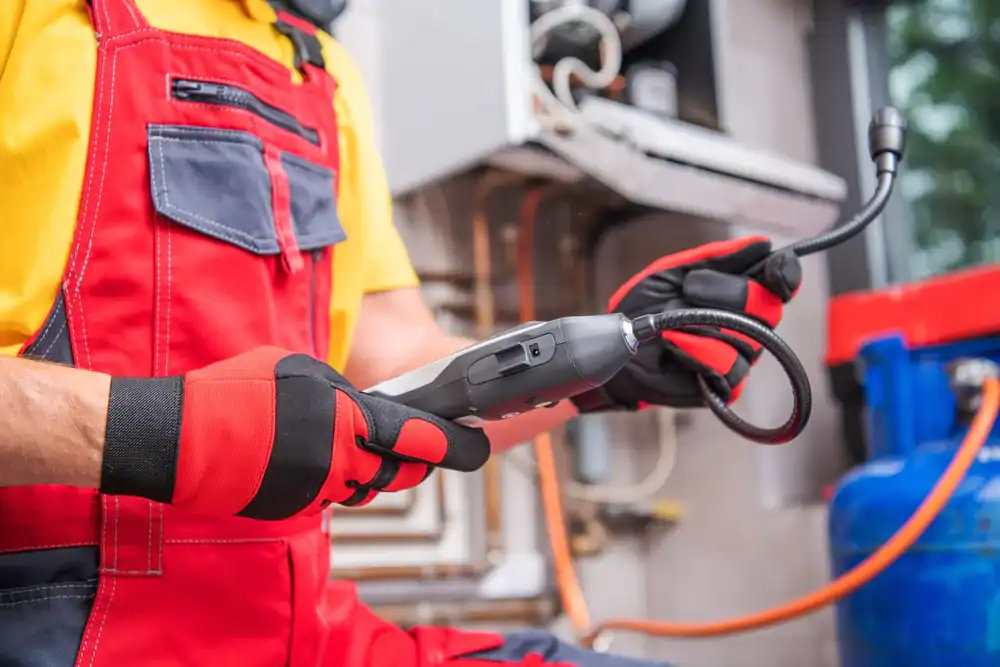
When we show up to a Bay Terrace property, you’re not getting a technician with a basic sensor and a clipboard. Professional-grade gas detectors and infrared cameras mean leaks hiding behind walls, inside ceiling cavities, or in aging pipe joints get found — not guessed at. Bay Terrace sits on a waterfront plateau above the East River, and the salt air off Little Bay and the Throgs Neck Bridge corridor accelerates corrosion on metal fittings faster than most inland Queens neighborhoods. That’s a real factor, and it’s one that gets missed when the person doing the inspection doesn’t understand what they’re looking at.
After the work is done, you get clarity. You know what was found, what was repaired, and what documentation was filed. No open questions, no follow-up confusion.
We’ve been operating in New York City since 1983 — more than 40 years of working on the exact kind of aging residential and multi-unit building stock that makes up Bay Terrace. Pre-war co-ops, mid-century garden apartments, large-scale condominiums like The Bay Club on 23rd Avenue — we know these buildings inside and out.
Bobby and Rob are the father-and-son team behind the business. When something goes wrong at your Bay Terrace building, there’s a name attached to the work. Not a dispatch line. Not a rotating crew of subcontractors.
Every technician we send to a Bay Terrace property is a NYC Licensed Master Plumber — the highest credential in New York State for gas piping work. They’re also drug-tested and vetted, which matters when you’re coordinating building access through a co-op board or property management office. We carry full insurance with COI available, which is a standard requirement for contractor access in managed residential buildings throughout Queens Community District 7.

When you reach out, the first thing that happens is a real conversation about what you’re dealing with — whether that’s an odor that comes and goes, a Con Edison notice, a DOB violation, or a Local Law 152 inspection deadline your co-op board needs to meet before the end of 2025. Bay Terrace falls within Queens Community District 7, and the LL152 inspection window for District 7 runs through December 31, 2025. If your building hasn’t completed that inspection yet, the $5,000 civil penalty for non-compliance is a real and immediate risk.
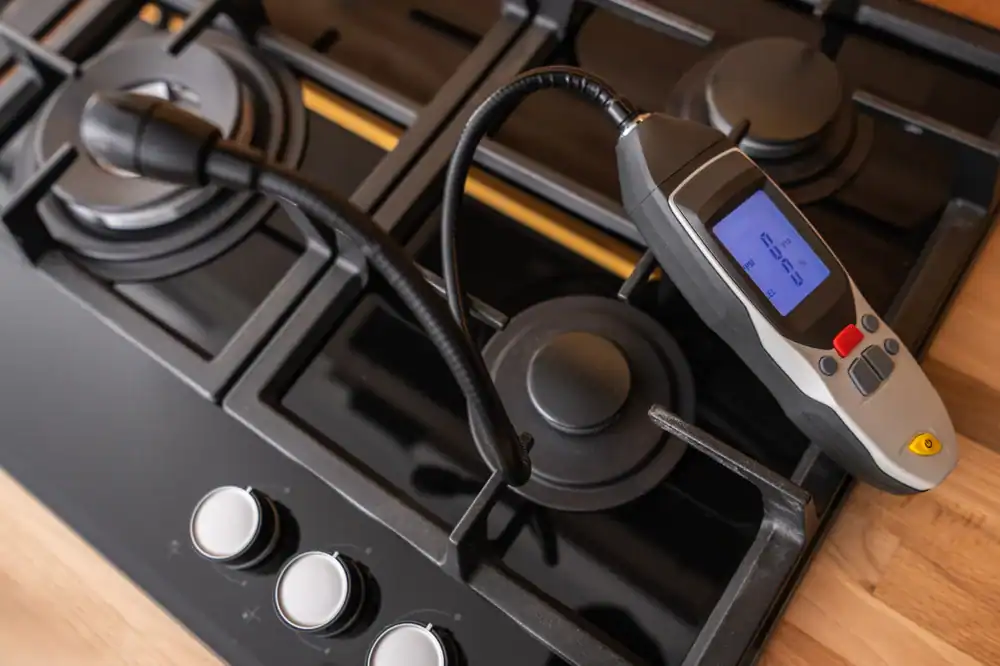
Once on-site, our technician uses professional-grade gas detectors and infrared cameras to assess the full gas system — exposed piping, connections, valves, appliances, and any areas of concern flagged during the walkthrough. In Bay Terrace’s older co-op sections, that often means paying close attention to aging black iron piping and the fittings most likely to show corrosion from decades of use and coastal air exposure. Nothing is assumed clear just because there’s no odor. Odor fade is a documented phenomenon — the mercaptan odorant added to natural gas can dissipate, meaning a slow leak can exist without producing a smell you’d notice.
If a repair is needed, we handle it. RB Mechanical Plumbing and Heating takes care of the repair, the DOB filing, and the LL152 certification — all in one engagement. Your co-op board doesn’t have to coordinate three separate vendors to close out a compliance obligation.
Ready to get started?
Gas leak detection in Bay Terrace isn’t a one-size-fits-all service. The neighborhood’s dominant housing stock — nine co-op sections with roughly 1,800 garden apartments, plus The Bay Club’s 1,037-unit high-rise on 23rd Avenue — means the gas systems here operate at building scale, not unit scale. The co-op board or property manager is typically the decision-maker for gas inspections and repairs, and they need a licensed master plumber who can handle the full workflow: inspection, repair if needed, DOB coordination, and compliance documentation.
We cover all of it. Local Law 152 inspections for Queens Community District 7 buildings, any required repairs discovered during the inspection, permit filing, and the DOB certification that closes out your compliance obligation. For buildings served by Con Edison — which covers Bay Terrace and the surrounding northern Queens area — we understand exactly where Con Edison’s responsibility ends and where the building-side gas system begins. That distinction matters when a utility shutoff has happened and you need to know what steps are required before service is restored.
For single-family and two-family homeowners on the southern edges of Bay Terrace near 26th Avenue, the same licensed standard applies. Every job gets a written estimate with transparent pricing before any work begins. No hidden fees, no surprises after the fact.

Yes, and the deadline is active right now. Local Law 152 requires all NYC buildings — except one- and two-family homes — to have their exposed gas piping inspected by a Licensed Master Plumber on a rotating four-year cycle. Bay Terrace falls within Queens Community District 7, and District 7’s current inspection window runs January 1 through December 31, 2025. That means every co-op and condo building in Bay Terrace with gas piping needs to complete a certified inspection and file the Gas Piping System Periodic Inspection Certification with the NYC DOB before the window closes.
Missing that deadline carries a $5,000 civil penalty. For co-op boards that completed their land-lease buyouts in 2017 and 2018 and now hold full ownership responsibility for their buildings and infrastructure, this is not something to push to next quarter. We’re licensed to perform LL152 inspections and handle any required repairs — so your board isn’t coordinating between an inspector and a separate plumber to get the certification filed.
This is one of the most common points of confusion for Bay Terrace residents and co-op boards. Con Edison handles the utility side — the main distribution line that brings gas to your building. When Con Ed responds to a report of a gas smell, they assess and address the utility infrastructure. What they do not do is repair the gas piping inside your building. Once Con Ed leaves and the problem is still present, that’s the building-side system, and only a Licensed Master Plumber can legally authorize and perform that repair work in New York City.
In practical terms, this means a Con Ed clearance does not mean your building is clear. If the leak is in the internal gas distribution system — the piping running through your co-op’s common areas, risers, or individual unit connections — Con Ed won’t touch it. We handle the building-side repair, file any required permits, and coordinate with the DOB if a violation needs to be cleared before gas service is restored. Understanding this distinction upfront saves a lot of time when you’re dealing with a shutoff.
Yes, and don’t wait for it to get stronger or more consistent. An intermittent gas odor is not a sign that the problem is minor or resolving on its own. Gas leaks do not fix themselves. What you’re often dealing with in a situation like this is a slow leak — one that produces enough odor to notice at certain times but not a constant, heavy smell. In older buildings like Bay Terrace’s mid-century co-op sections, slow leaks from aging fittings or corroded connections are exactly the kind of problem that gets dismissed for months before something more serious happens.
There’s also a documented phenomenon called odor fade, where the mercaptan odorant added to natural gas dissipates over time through physical and chemical processes. This means a leak can exist — and continue to exist — without producing the rotten egg smell you’d expect. Professional-grade gas detectors don’t rely on your nose. They measure gas concentration levels that no human sense can reliably catch. If you’re smelling something intermittently in your apartment, report it to your building management and get a licensed plumber on-site to do a proper assessment.
No. This is a legal boundary, not a capability question. In New York City, all gas piping work — including repairs, replacements, and any modification to a gas system — must be performed by or under the direct supervision of a NYC Licensed Master Plumber. Building supers, no matter how experienced, are not authorized to perform gas line repairs. If a super attempts unlicensed gas work and it’s discovered, the building can face DOB violations, fines, and potentially a full gas shutoff until a licensed plumber clears the work and files the appropriate permits.
For Bay Terrace’s co-op boards, this matters because the shared gas infrastructure — the piping running through common areas, risers, and building systems — is the board’s legal responsibility. When something goes wrong with that infrastructure, the board needs a licensed master plumber, not a maintenance workaround. We send only NYC Licensed Master Plumbers to every job, and our technicians are drug-tested and vetted — meeting the contractor access standards that Bay Terrace’s managed co-op buildings require before authorizing entry.
It’s a real and underappreciated factor. Bay Terrace sits on a waterfront plateau overlooking the East River, Little Bay, and the approach to the Throgs Neck Bridge. The coastal salt air that comes off the water accelerates corrosion on metal components — including gas fittings, connectors, and valves — faster than it would in an inland Queens neighborhood. In buildings that are already 60 to 70 years old, that added corrosion exposure compounds the natural aging of the gas system.
What this means practically is that gas infrastructure in Bay Terrace’s waterfront-facing buildings may show deterioration earlier than the inspection cycle alone would suggest. Exterior gas piping and fittings on building faces exposed to prevailing winds off the water are particularly vulnerable. This is one of the reasons that professional-grade equipment — gas detectors and infrared cameras that can find leaks in corroded fittings before they become visible failures — matters more here than in neighborhoods without the same coastal exposure. A thorough inspection in Bay Terrace accounts for where the building sits, not just what the piping looks like on the surface.
Once a leak is identified, the repair is the straightforward part. The more involved piece — especially for Bay Terrace co-op and condo buildings — is the documentation and filing that follows. In New York City, gas piping repairs require permits, and any work done to resolve a DOB violation needs to be filed and closed out properly with the NYC Department of Buildings. If the inspection was part of a Local Law 152 compliance obligation, the Gas Piping System Periodic Inspection Certification also needs to be submitted to the DOB within 60 days of the inspection.
We handle all of it — the repair, the permit filing, the DOB coordination, and the LL152 certification if that’s what triggered the visit. For co-op boards in Queens Community District 7 working against the 2025 inspection deadline, that means one call closes the loop. There’s no hand-off between an inspector and a separate plumber, no chasing down paperwork, and no uncertainty about whether the filing was completed correctly. The goal is to restore safe gas service and leave your board with the documentation it needs — nothing left open.
Other Services we provide in Bay Terrace