


Most gas leaks don’t announce themselves dramatically. They develop slowly — in aging connections behind stoves, in corroded fittings near a boiler, in flexible lines that haven’t been looked at in years. By the time you smell something, the situation may have been building for a while. A professional gas leak detection visit tells you exactly what’s happening, where, and what it takes to fix it.
For Mariners Harbor homeowners specifically, this matters more than it might in a newer neighborhood. The housing stock along Richmond Terrace and throughout the North Shore includes older frame homes and postwar brick residences — many of which have never had a professional gas inspection beyond a utility meter check. National Grid handles the distribution line to your building. Everything from the meter inward is yours, and it doesn’t get inspected unless you arrange it.
The active brownfield remediation and construction work happening throughout the Port Richmond–Mariners Harbor corridor adds another layer of risk. Ground disturbance from excavation — the kind that’s been ongoing as part of the state-funded cleanup effort in this area — can stress underground service lines and create new leak points in pipes that were already aging. If there’s been active work on or near your block in Mariners Harbor, a gas leak inspection isn’t being overly cautious. It’s the right call.
We’ve been operating since 1983 — over 40 years in the same market. We’re not a franchise or dispatch service; we’re a family-run operation where Bobby and Rob are accountable for the work. Every technician who touches a gas line is a NYC Licensed Master Plumber, which is the legal requirement for all gas piping work in New York State and the highest credential available.
Staten Island is explicitly our primary service area, not an afterthought extension from Manhattan. That distinction matters if you’ve ever called a plumber only to be told Mariners Harbor is too far out. We know National Grid’s protocols for service restoration on the island, understand how Staten Island’s aging infrastructure affects the work, and can handle the full compliance picture from inspection through DOB filing.
All our technicians are drug-tested and vetted. If you’re a homeowner on South Avenue or a small landlord managing a multi-family off Forest Avenue, you’re letting someone into your building. That’s not a minor consideration, and we treat it accordingly.

When you reach out, the first thing we do is understand what you’re dealing with — whether it’s an active smell, a National Grid shutoff, a DOB violation, or a proactive inspection you’ve been meaning to schedule. We give you a clear picture of what the visit will involve and what it costs before anyone shows up. No surprises on the bill. That’s our stated policy, not a marketing line.
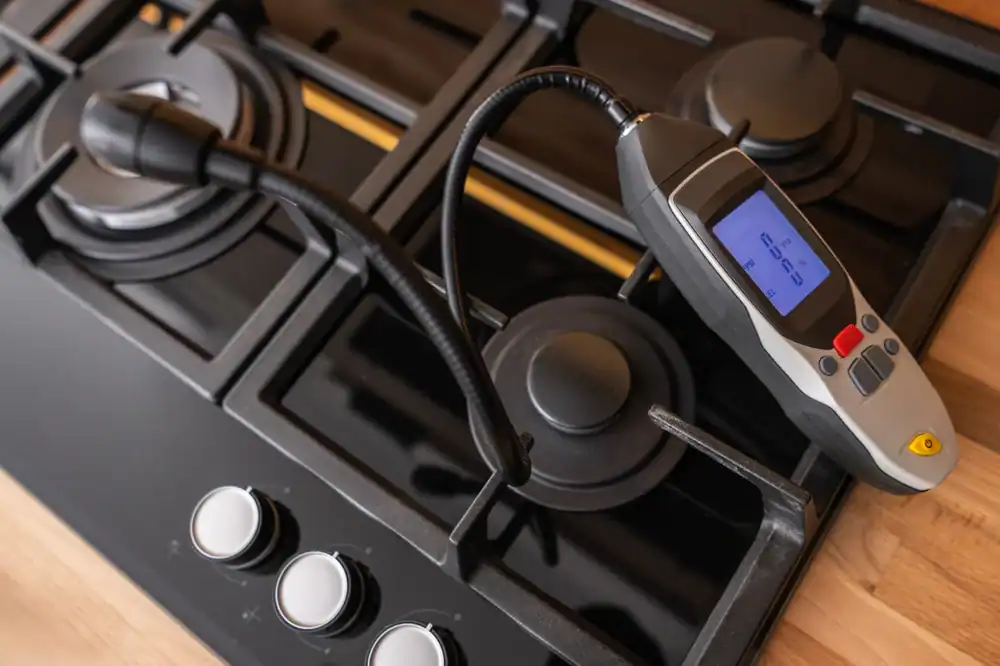
On arrival, our technician uses professional-grade gas detectors and infrared cameras to assess your gas system. This is not a visual walkthrough — the equipment can identify leaks behind walls, under floors, and in areas that aren’t accessible to the eye. In Mariners Harbor’s older housing stock, where gas connections may not have been updated in decades, this level of detection matters.
If a leak is found, you get a clear explanation of what was found, where it is, and what the repair involves. We can handle the repair in the same visit in most cases, and we manage any required permit filings with the NYC Department of Buildings directly. For building owners in Staten Island Community District 1 navigating Local Law 152 compliance — the gas piping inspection requirement for multi-unit and commercial buildings — we handle the inspection, any necessary repairs, and the DOB certification filing as a single-vendor process. The 2024 deadline for CD1 has passed, and buildings that haven’t filed are currently out of compliance. That’s a $5,000 civil penalty exposure, and it doesn’t resolve itself.
Ready to get started?
Gas leak detection with us covers the full scope of what a licensed gas inspection should include. That means a thorough assessment of your exposed gas piping, appliance connections, shut-off valves, flexible connectors, and any areas where aging or corrosion are likely. In Mariners Harbor, where homes often have older gas systems that haven’t been professionally evaluated, this kind of comprehensive review is where the real value is — not just confirming whether a leak exists today, but understanding the condition of the system overall.
When repairs are needed, we perform them under proper permit with the NYC DOB. We also coordinate directly with National Grid when service restoration is required after a shutoff — which is a different process than working with Con Edison in Manhattan, and one that requires familiarity with National Grid’s specific protocols for Staten Island. If you’ve had your gas shut off and don’t know what comes next, this is exactly the kind of operational knowledge that gets your service restored faster.
For building owners and landlords, the service extends to Local Law 152 gas piping inspections, DOB violation removal, and full compliance documentation. If you own a three-or-more-unit building or a commercial property with gas service in Mariners Harbor, you’re required to have your gas piping inspected on a four-year cycle by a Licensed Master Plumber. We’re licensed to perform the inspection and certified to complete any required repairs — one call, one vendor, no coordination headache.

National Grid’s responsibility ends at the meter. When they respond to a gas odor or a reported leak, they assess and make safe the distribution system — the utility-side infrastructure that runs from the main line to your building’s meter. Once they’ve addressed that side, their job is done. The gas piping inside your building, from the meter to your stove, boiler, water heater, and every connection in between, is your responsibility as the property owner.
That’s where a Licensed Master Plumber comes in. In New York State, all gas piping work on the building side — repairs, replacements, new installations — must be performed by or under the direct supervision of a NYC Licensed Master Plumber. National Grid cannot perform this work, and neither can your building super, legally. If National Grid has shut off your service or flagged a building-side issue in Mariners Harbor, the path to getting your gas restored runs through a licensed plumber, not back through the utility.
The most recognized sign is the rotten egg or sulfur smell — that’s the mercaptan odorant added to natural gas specifically so you can detect it. But there are other indicators worth knowing. A hissing sound near a gas appliance or along a pipe run, dead or discolored vegetation in a patch of your yard directly above where a gas line runs underground, and a white mist or fog near a gas line can all point to a leak.
What’s important to understand — especially in Mariners Harbor’s older housing stock — is that the absence of a smell doesn’t mean there’s no leak. Odor fade is a documented phenomenon where mercaptan dissipates through physical and chemical processes, making a leak undetectable by smell alone. In older homes with aging connections that may not have been inspected in years, a leak can be present without triggering your nose. That’s precisely why professional detection equipment — gas detectors and infrared cameras — exists.
Call. An intermittent gas smell is not a sign that the problem is minor or resolving itself. Gas leaks do not fix themselves. What you’re likely experiencing is a leak that fluctuates based on pressure changes, appliance use, ventilation, or air movement in the home. The fact that it comes and goes doesn’t mean the gas isn’t accumulating in enclosed spaces when you’re not noticing it.
This pattern — dismissing an intermittent smell for weeks or months — is one of the most documented behaviors in gas leak incidents. It’s completely understandable. You smell something, it fades, life gets busy. But in a neighborhood like Mariners Harbor where the surrounding distribution infrastructure is already documented as aging, and where many homes have older internal gas systems, a slow or intermittent leak deserves the same response as a strong, constant one.
Local Law 152 is a New York City law requiring periodic gas piping inspections for most buildings — specifically, any building with more than two units or a commercial property with gas service. The inspection must be performed by a NYC Licensed Master Plumber, and the results must be filed with the NYC Department of Buildings within 60 days of the inspection. The penalty for non-compliance is a $5,000 civil penalty.
Mariners Harbor is in Staten Island Community District 1. The second-cycle Local Law 152 deadline for Community District 1 was December 31, 2024. If you own a qualifying building in Mariners Harbor and haven’t yet filed your GPS1 certification, you are currently out of compliance. The next required inspection cycle for CD1 is due by December 31, 2028. We’re licensed to perform the inspection, complete any repairs the inspection identifies as required, and handle the DOB filing — so you’re not managing multiple contractors or navigating the paperwork on your own.
Yes, and it’s a more relevant concern in Mariners Harbor right now than in most other Staten Island neighborhoods. Ground disturbance from excavation — trenching, soil removal, foundation work — is a documented cause of damage to underground gas mains and service lines. The Port Richmond–Mariners Harbor Brownfield Opportunity Area is an active, state-funded remediation and redevelopment program that has involved significant excavation throughout the neighborhood. If construction has been active on or near your block, the underground gas infrastructure serving your property may have experienced stress or displacement.
This doesn’t mean a leak is guaranteed, but it does mean a proactive inspection is warranted. National Grid has also been actively replacing aging pipes on Staten Island as part of its pipeline replacement program, which involves its own trenching and service reconnection work. Temporary pressure changes and reconnection activity during pipe replacement can create new exposure points at existing building connections. If you’ve seen active work in your immediate area and haven’t had your gas system checked, it’s worth scheduling an inspection before a problem shows up on its own.
We explicitly serve Staten Island as a primary market — not as a secondary area we’ll get to when it’s convenient. That means we know National Grid’s service restoration process for the island, which is a different workflow than restoring service through Con Edison in Manhattan. When your gas has been shut off and you need it back on, working with a plumber who knows the specific steps National Grid requires for Staten Island properties gets you to resolution faster than one who’s figuring it out as they go.
Beyond the logistics, our detection approach is different from what most local plumbers offer. Professional-grade gas detectors and infrared cameras mean the inspection goes beyond what’s visible. In Mariners Harbor’s older homes — frame houses along Richmond Terrace, postwar brick buildings throughout the neighborhood — gas connections can be in areas that a visual check won’t reach. We handle the permit filing with the NYC DOB directly, so you’re not left managing that step yourself after the technician leaves.
Other Services we provide in Mariners Harbor