

A lot of New Brighton homeowners don’t think about their gas lines until something forces them to. Then National Grid shows up, shuts off the gas, and walks away — leaving you without heat or hot water and no clear path forward. That moment of confusion is exactly what a licensed Master Plumber is there to resolve.
New Brighton is one of Staten Island’s oldest neighborhoods. A significant share of the housing stock here was built no later than 1939, and homes in the Hamilton Park area date back to the 1840s and 1860s. That means the gas piping in your home may be 60, 80, or even 100 years old — corroding quietly behind original plaster walls, under floors, and in basements that haven’t been touched in decades. That’s not a hypothetical risk. It’s just math.
When a leak is found and repaired correctly, you get more than the gas turned back on. You get documentation. You get the DOB filing handled. You get the kind of thorough inspection that tells you what’s actually going on in your home — not just what’s visible from the street. That’s what gas leak detection should look like in a neighborhood with infrastructure this old.
We’ve been operating in New York City since 1983. That’s over 40 years of working in the same buildings, dealing with the same utility companies, and filing the same paperwork that NYC requires — including everything National Grid and the NYC DOB need before your gas service gets restored.
We’re a father-and-son operation — Bobby and Rob — and every technician is a licensed Master Plumber in both Manhattan and Staten Island. Not a journeyman working under a distant supervisor’s license. An actual Master Plumber, on-site, accountable, and familiar with the building types that define New Brighton: pre-war row houses, converted Victorians, multi-family buildings along Richmond Terrace, and landmark-adjacent properties in Hamilton Park where the work has to be done right the first time.
Every technician is also drug-tested and vetted. When someone needs access to your home, your basement, or a shared building space, that matters.
When you call us about a suspected gas leak, the first thing that happens is a real conversation — not a form, not a callback queue. You’ll get a clear response time. For true emergencies, that’s 30 to 60 minutes. We cover New Brighton as part of our stated Staten Island service area, so this isn’t a stretch commitment — it’s a realistic one.
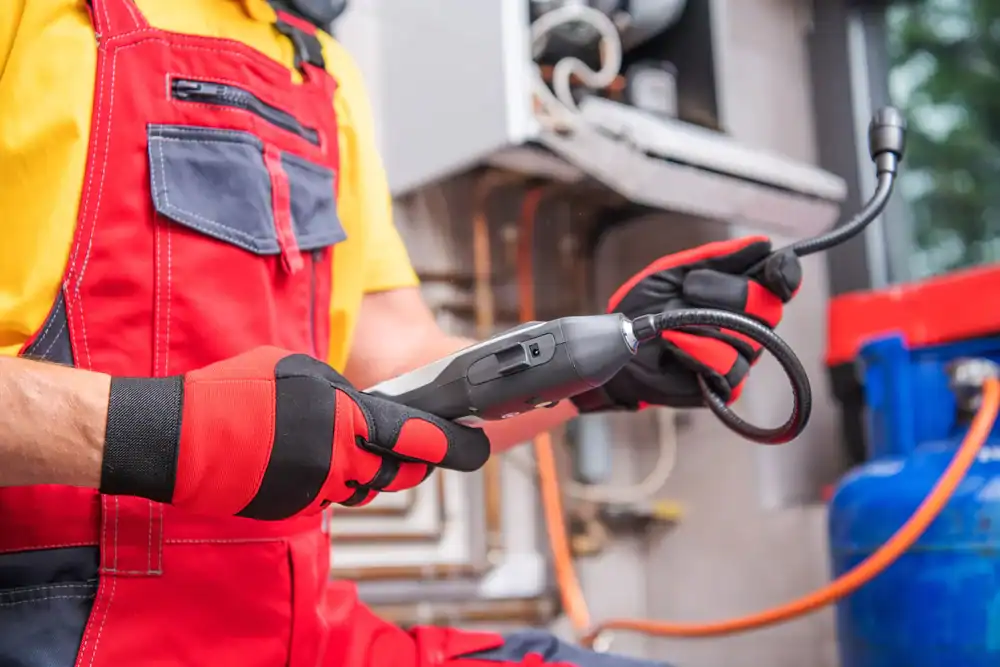
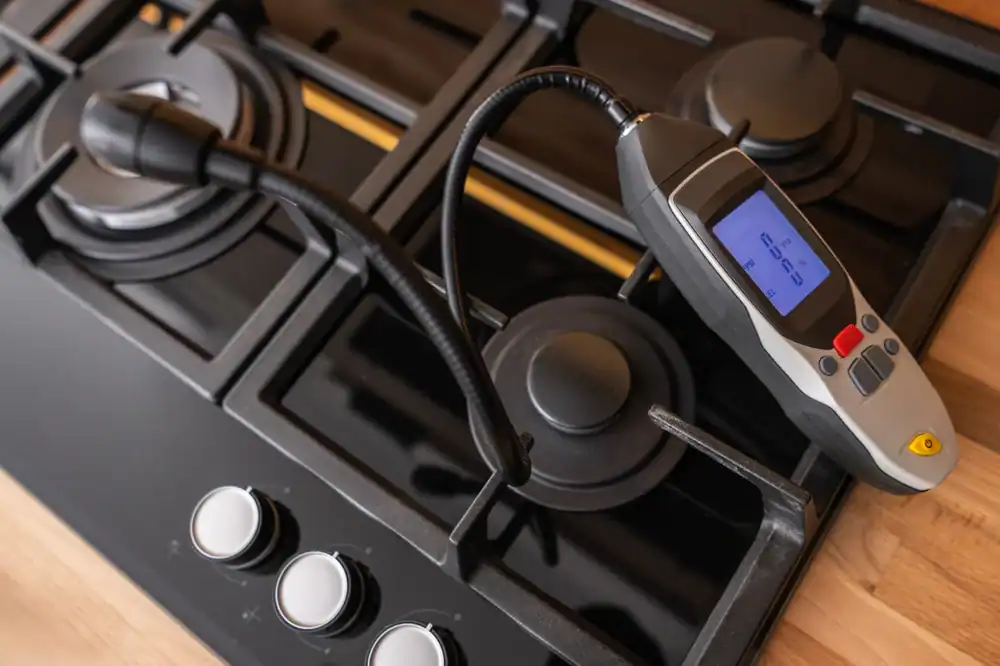
Once on-site, our technician uses professional-grade gas detectors and infrared cameras to locate the source of the leak. This matters more than it might sound. National Grid’s equipment is designed for the utility distribution system — the mains and service lines under the street. It does not inspect the building-side piping inside your home. In a New Brighton Victorian with original plaster walls and decades of accumulated modifications, a leak can exist in an enclosed space where the gas odorant has already dissipated and your nose won’t catch it. The equipment finds what your senses can’t.
Once the source is identified, you’ll know exactly what needs to happen before any work begins — transparent pricing, no hidden fees, stated upfront. After the repair, we handle the DOB paperwork and any required filings. For multi-family buildings in New Brighton subject to Local Law 152 gas piping inspections, that compliance documentation gets handled as part of the same visit — not as a separate project you have to coordinate later.

Ready to get started?
Gas leak detection in a neighborhood like New Brighton isn’t the same job it is in a newer suburban development. The building stock here is genuinely old, the piping configurations are complex, and the compliance requirements stack up in ways that most plumbers aren’t equipped to handle all at once.
What you get with us at RB Mechanical Plumbing and Heating is a complete workflow — detection, repair, and compliance documentation handled by the same licensed team. That includes Local Law 152 gas piping inspections for multi-family and converted buildings in New Brighton’s Community District 1, which carry a $5,000 civil penalty for non-compliance. It also includes coordination with National Grid on the utility side, because on Staten Island, National Grid is the gas utility — not Con Edison — and the restoration process requires specific documentation that a licensed Master Plumber provides.
For homeowners in the Hamilton Park Historic District or near the New Brighton Historic District, there’s an additional layer to consider. Any exterior-facing gas infrastructure work — meter relocations, piping modifications, vent changes — may require coordination with the NYC Landmarks Preservation Commission on top of standard DOB permitting. That’s a compliance detail most plumbers never encounter. Our institutional knowledge of NYC agencies and processes means you’re not left navigating that alone. We also work directly with insurance companies when gas leak damage is involved, handling the coordination so you don’t have to manage a claim on top of everything else.

This is one of the most common scenarios we see on Staten Island’s North Shore. National Grid handles the utility distribution system — the mains and service lines running under the street. When they detect a problem and shut off your gas, they’ve done their part. What they cannot do is repair the building-side piping inside your home. That work legally requires a Licensed Master Plumber, and National Grid will not restore service until a licensed plumber has located the issue, made the repair, and provided the documentation they require.
The process moves faster than most people expect once the right person is involved. We come to your New Brighton home, use professional-grade detection equipment to find the source of the leak inside the building, perform the repair, and provide the paperwork National Grid needs to restore service. If there are any DOB filings required — which is common in New Brighton’s older multi-family and converted building stock — those get handled as part of the same process. You don’t need to coordinate multiple contractors or make separate calls to the city.
The most honest answer is: don’t wait to find out. The rotten egg smell associated with natural gas is caused by mercaptan, an odorant added specifically so leaks can be detected. But mercaptan can dissipate over time through a process called odor fade — meaning the smell can come and go, or disappear entirely, even when a leak is still present. If you noticed the smell once and it went away, that doesn’t mean the leak resolved itself. Gas doesn’t fix itself.
Beyond the smell, other signs include a hissing sound near gas lines or appliances, dead or dying vegetation in an area near underground piping, or a higher-than-normal gas bill without a clear explanation. In New Brighton’s older housing stock — particularly in pre-war row houses and Victorian homes where flexible connectors behind stoves and dryers may be original or decades old — slow leaks can develop gradually without triggering an obvious alarm. If something feels off, the right call is to get a professional with actual detection equipment on-site, not to wait and see.
No — and this is a common source of confusion in New Brighton’s multi-family buildings. Building supers can handle a lot of maintenance tasks, but gas piping work is not one of them under NYC law. Any repair, modification, or installation involving gas lines must be performed by or under the direct supervision of a NYC Licensed Master Plumber. This isn’t a technicality — it’s a legal requirement enforced by the NYC Department of Buildings, and work performed by unlicensed individuals can result in DOB violations, fines, and the loss of gas service for the entire building.
If your super has identified a potential gas issue, the right move is to contact a licensed Master Plumber directly. In a converted Victorian or row house with multiple units — which is common throughout New Brighton — a single gas leak can affect everyone in the building simultaneously. Getting a licensed professional involved quickly protects not just your unit but your neighbors as well. The building owner is ultimately responsible for the building-side gas system, but tenants have every right to escalate if they smell gas and management isn’t responding promptly.
Local Law 152 is a New York City law that requires most buildings — with the exception of one- and two-family homes — to have their exposed gas piping inspected by a Licensed Master Plumber on a rotating four-year cycle. The inspection covers visible gas piping throughout the building, and the results must be filed with the NYC Department of Buildings within 60 days of the inspection. Failure to comply carries a civil penalty of $5,000.
New Brighton falls within Staten Island Community District 1. Building owners should confirm their specific inspection window with the NYC DOB’s published district rotation schedule, since the four-year cycle means the deadline varies depending on which district cycle your building falls into. If your building is a multi-family property, a converted Victorian, or any residential structure with more than two units — which describes a significant portion of New Brighton’s housing stock — Local Law 152 almost certainly applies to you. We at RB Mechanical Plumbing and Heating are certified to perform the inspection and make any required repairs, so you’re dealing with one team from start to finish rather than coordinating separate contractors for the inspection and the remediation.
It can, depending on the nature of the damage and the specifics of your policy. Most standard homeowner’s insurance policies cover sudden and accidental damage caused by a gas leak — things like structural damage, appliance damage, or property loss resulting from an explosion or fire. What they typically don’t cover is the cost of the repair to the gas line itself, which is considered a maintenance issue rather than a covered loss. That distinction matters when you’re trying to figure out what to file and what to pay out of pocket.
Where things get complicated is in the documentation. Insurance companies need a clear record of what happened, what was found, and what was repaired — and that documentation needs to come from a licensed professional. We work directly with insurance companies when gas leak damage is involved, which takes a significant administrative burden off homeowners who are already dealing with a disrupted household. If you’re in the middle of a claim or anticipating one, having a licensed Master Plumber who can communicate directly with your insurer and provide the right documentation is a practical advantage that most people don’t think about until they need it.
It’s one of the most direct risk factors there is. New Brighton contains some of the oldest residential housing on Staten Island — homes in the Hamilton Park area date to the 1840s and 1860s, and a significant share of the neighborhood’s housing stock was built no later than 1939. The gas piping in a home that old may be original black iron or galvanized steel that has been in place for 60, 80, or more years. Over that kind of timeframe, corrosion accumulates, joints deteriorate, and flexible connectors behind appliances wear down — often without any visible warning sign on the surface.
The Kill Van Kull waterfront location adds another layer. New Brighton’s proximity to the water means the soil conditions along Richmond Terrace and the surrounding streets are subject to more moisture exposure and freeze-thaw cycling than inland neighborhoods, which accelerates corrosion in underground gas piping. If your home was built before World War II, a proactive gas line inspection isn’t an overreaction. It’s just responsible ownership of an older building.
Other Services we provide in New Brighton