

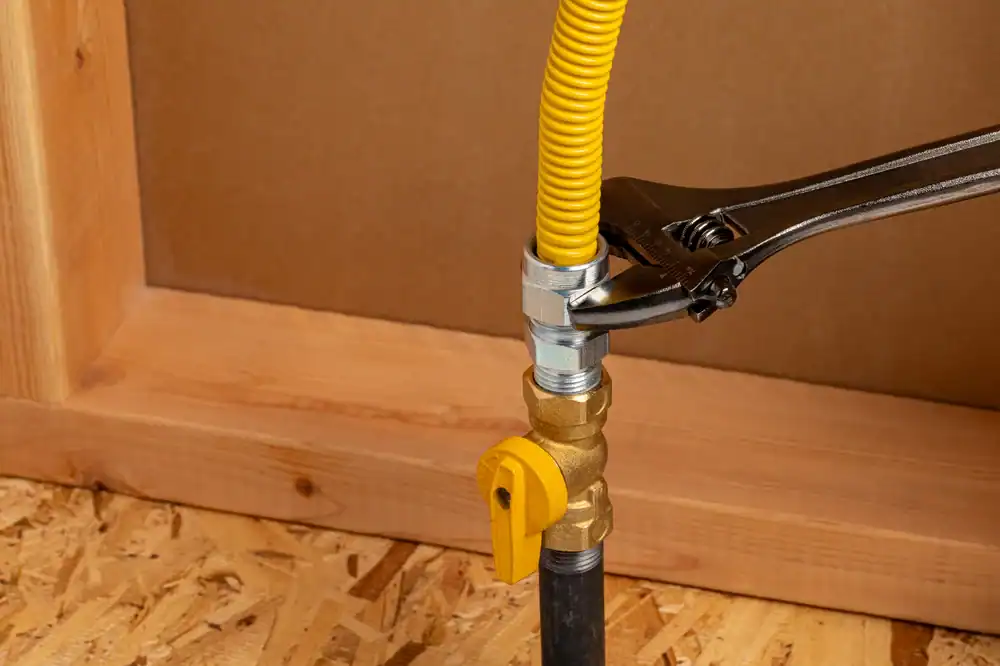
A lot of Mariners Harbor’s housing stock is old. Not charming-old — functionally old, in the way that matters when you’re upgrading a kitchen or swapping out a water heater. The gas line that served a mid-century stove on Van Pelt Avenue or a 1930s boiler on Grandview Avenue was sized for the appliances of that era. It was never meant to carry the BTU load of a modern high-output range, a tankless water heater, and a gas dryer running on the same system.
When you add a new appliance without checking the existing infrastructure, you’re not just risking underperformance — you’re risking a failed inspection and a Con Edison shutoff.
What you get from a properly sized, properly permitted gas line installation is straightforward: appliances that perform the way they’re supposed to, a system that passes inspection the first time, and documentation that protects you with your insurer and your building management. For property owners managing rental units along the North Shore, that documentation also satisfies Local Law 152 compliance requirements — the four-year inspection cycle that applies to virtually every multi-unit building in the five boroughs, including here in Mariners Harbor.
The North Shore is Staten Island’s fastest-growing area, and older homes in Mariners Harbor are being renovated at a real pace. Kitchens are being updated, boilers are being replaced, and appliances are being upgraded. Every one of those projects touches the gas system. Getting it right from the start means you’re not calling someone back six months later to fix what the first contractor missed.
We’ve been doing gas line work in New York City since 1983. That’s over 40 years of navigating DOB permits, coordinating with Con Edison, working inside pre-war buildings, and handling the kind of infrastructure surprises that only show up when you open a wall in a house that’s been standing since before World War II.
We operate with a Licensed Master Plumber on staff — not a subcontractor arrangement, not a name on a license while someone else does the work. In NYC, an LMP is the only person legally authorized to install, alter, or repair a gas line. That’s not a marketing point; it’s the law. And it matters especially in a neighborhood like Mariners Harbor, where the building stock is older, the infrastructure is more unpredictable, and the margin for error is zero.
From the Mariners Harbor Houses to the wood-framed homes along Union Avenue, we’ve seen what decades of deferred maintenance and aging pipe systems look like — and we know how to address them correctly.

The process starts with an honest assessment of what you already have. Before any new pipe goes in, the existing gas line gets evaluated — its diameter, its condition, and whether it’s sized to handle the full BTU demand of every appliance connected to it. In Mariners Harbor, where a lot of homes were built before modern appliance loads existed, this step isn’t optional. It determines whether you need a new run, a replacement, or just a properly sized extension.
Once the scope is clear, a DOB permit gets filed through DOB NOW — the city’s required electronic portal for all gas piping work. No permit, no legal installation. No exceptions. If new service capacity is needed or a meter needs to be involved, Con Edison coordination happens at this stage too. We handle all of that without you needing to create a city account or figure out which form applies to your situation.
After installation, the system is pressure-tested at 1.5 times working pressure — the NYC Fuel Gas Code standard — using electronic gas detection equipment to verify there are no leaks before anything goes live. You receive written documentation of the pressure test, the permit record, and the LMP certification. That paperwork matters for your insurance, for your building management if applicable, and for anyone who owns or manages a multi-unit property with Local Law 152 obligations.
The goal is that when the gas gets activated, everything works correctly and you have the records to prove it was done right.
Ready to get started?
Gas line installation covers more ground than most people expect. It’s not just running pipe from point A to point B. Every installation includes a load calculation — adding up the BTU demand of every appliance on the line, not just the one being added — to determine the correct pipe diameter for the full system. This matters especially for high-demand appliances like professional-grade ranges, tankless water heaters, and gas dryers, which require more capacity than the lines in many older Mariners Harbor homes were ever designed to carry.
Pricing runs $12 to $25 per linear foot depending on pipe type and project complexity. For a single appliance hookup, most installations in Mariners Harbor fall between $500 and $2,000. Whole-home gas line work typically ranges from $1,300 to $3,500. You get a written, itemized estimate before any work starts — what you’re quoted reflects the actual scope, not a lowball number that grows once the walls are open.
For property owners and landlords managing multi-unit buildings in Mariners Harbor, Local Law 152 compliance services are also available. That means a full LMP inspection, identification of any violations, repair work, and GPS-2 certification filing with the DOB — the complete cycle, not just the inspection piece. With penalties reaching up to $10,000 for missed filing deadlines, having one firm handle the entire process from inspection through certification is a meaningful advantage.
Every appliance hookup, new gas line run, and compliance inspection comes with full written documentation delivered at job completion.
It depends on what’s already there — and the honest answer is that you won’t know until someone actually evaluates it. A lot of homes in Mariners Harbor were built before 1939, and the gas lines running through those walls were sized for the appliances of that era. Small-BTU stoves, older boilers, and standard water heaters from decades past put a fraction of the demand on a gas line that today’s equipment does.
A modern high-BTU range can draw 60,000 BTUs or more. A tankless water heater can demand 150,000 to 199,000 BTUs. If your existing line wasn’t sized for that load, the appliance will underperform — and it may not pass inspection.
The right move before any new appliance gets connected is a BTU load calculation that accounts for every appliance on the line, not just the one being added. If the existing pipe diameter can handle the full demand, you may only need a properly sized extension. If it can’t, a new line is the correct answer. Either way, you want that determination made before the installation happens — not after a failed pressure test or a Con Edison shutoff.
In New York City, only a Licensed Master Plumber registered with the NYC Department of Buildings can legally install, alter, repair, or maintain a gas line. This applies everywhere in the five boroughs, including Mariners Harbor and the rest of Staten Island. It’s not a preference or a recommendation — it’s codified in the NYC Fuel Gas Code and the Administrative Code. Unlicensed gas work is a criminal offense in New York City, not just a code violation.
This matters for a few practical reasons. Utility companies will not activate gas service to work that was done without a permit, and permits can only be pulled by a Licensed Master Plumber through the DOB NOW portal. If a handyman, contractor, or unlicensed plumber does the work, you could end up with a system that can’t be legally activated, an insurance policy that won’t cover a gas-related incident, and potential liability for any building violations that result.
When you’re getting quotes, ask for the DOB license number — it’s publicly verifiable on the NYC DOB website.
The permit process in NYC is fully digital. All gas piping permit applications are filed through DOB NOW, the city’s online portal — paper submissions are no longer accepted. The permit application is filed by the Licensed Master Plumber performing the work, not by the homeowner or property owner. If new service capacity is required or a meter is being relocated, a separate authorization from Con Edison or National Grid is also required before the utility will activate service.
Once the permit is filed and approved, installation proceeds. After installation, the system must be pressure-tested at 1.5 times working pressure before gas service is activated — that’s the NYC Fuel Gas Code standard. A final inspection may be required depending on the scope of work.
The full sequence — permit filing, installation, pressure testing, utility coordination, and inspection — typically takes anywhere from one to several days depending on the complexity of the project and how quickly the utility company schedules their inspection. Having a Licensed Master Plumber who handles all of this directly, rather than leaving pieces of it to you, is what keeps the timeline predictable.
Local Law 152 requires gas piping inspections every four years for virtually all buildings in New York City except one- and two-family homes. If you own or manage a multi-unit residential building, a mixed-use building, or a commercial property in Mariners Harbor, LL152 almost certainly applies to you. The inspection must be performed by a Licensed Master Plumber or a Registered Journeyman Plumber under direct LMP supervision.
After the inspection, a GPS-2 certification form must be filed electronically through DOB NOW to document that the building’s gas piping system was inspected and found to be compliant — or that violations were identified and addressed.
The penalty for missing the filing deadline is up to $10,000 per building. For landlords managing rental properties on the North Shore, where margins are already tight and more than half of renters are rent-burdened, a $10,000 penalty is not an abstraction. The compliance cycle — inspection, any required repairs, and GPS-2 filing — needs to be completed before the deadline, not started the week before. If violations are found during the inspection, there has to be time to perform the repair work and re-certify before the filing window closes.
For a single appliance hookup or a straightforward new gas line run, the installation itself typically takes a few hours to a full day. The part that takes longer is the permit and utility coordination that happens around it. Once the DOB permit is filed and approved, installation can proceed. After installation, the pressure test has to be completed before gas service is restored or activated.
If Con Edison or National Grid needs to inspect the work or authorize new service capacity, their scheduling adds time to the overall timeline. For most standard installations — a new line for a stove, a water heater hookup, or an extension to a new appliance — you’re typically looking at one to three days from start to gas activation, depending on how quickly the utility company moves.
Emergency situations, like a Con Edison shutoff due to a suspected leak or an LL152 violation, can take longer if violations need to be repaired and re-certified before service is restored. The clearest thing you can do to minimize downtime is work with a Licensed Master Plumber who handles the permit filing and utility coordination directly, rather than leaving those steps to you to figure out after the installation is done.
It can, and it’s worth understanding why. Properties along Richmond Terrace and the northern blocks of Mariners Harbor sit close to the Kill Van Kull, the tidal strait that separates Staten Island from Bayonne. That waterfront environment generates sustained humidity and salt-laden air year-round — conditions that are measurably harder on older gas piping than what inland Staten Island neighborhoods experience.
Black iron pipe fittings, shutoff valves, and any exposed sections of gas line in waterfront-adjacent buildings are subject to accelerated corrosion compared to equivalent infrastructure a few miles south toward Forest Avenue or the Staten Island Expressway. Corrosion doesn’t always announce itself visibly. A fitting or valve that looks intact from the outside can be compromised at the joint.
This is why electronic gas detection equipment matters more in this part of Mariners Harbor than a visual inspection alone. If you own or manage a property on or near Richmond Terrace and haven’t had your gas piping evaluated in several years — particularly in a home built before the 1960s — it’s worth having a Licensed Master Plumber assess the condition of the system, not just connect whatever new appliance is being added.
Other Services we provide in Mariners Harbor