

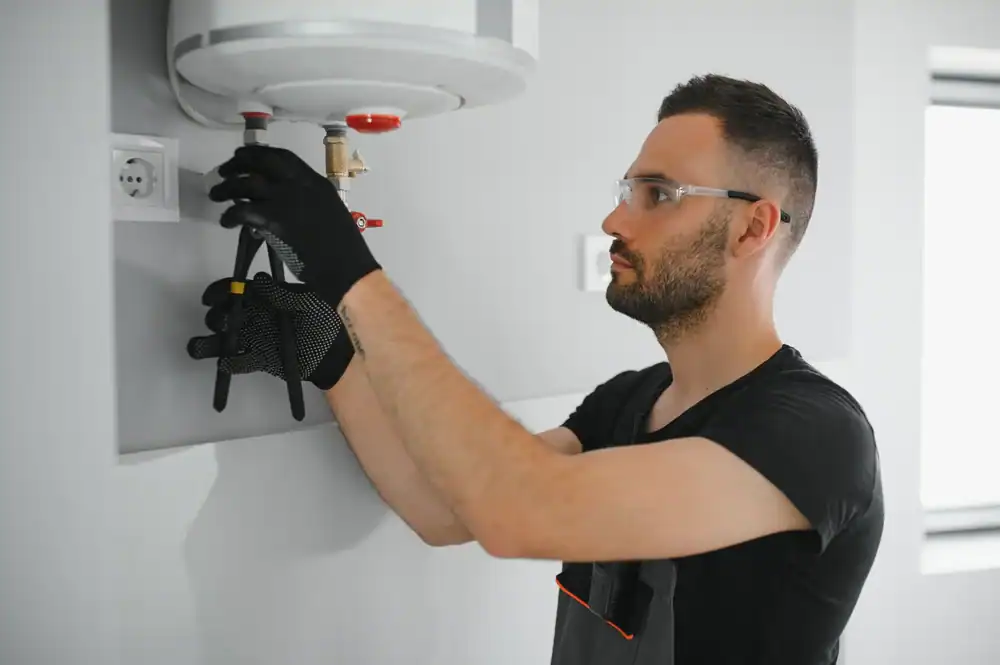
When something goes wrong with your gas line, the disruption hits fast. No heat. No cooking. No hot water. And if you’re one of the many Greenridge residents commuting 45-plus minutes to work every day, the last thing you need is a gas problem that drags on for days because someone doesn’t know how to navigate National Grid’s restoration process.
Getting the gas back on isn’t just about fixing the pipe — it’s about coordinating with National Grid after the work is done, filing what needs to be filed, and moving the process forward so your household isn’t sitting in the cold waiting on a utility callback. We handle that coordination directly, so you’re not left managing the bureaucracy on top of everything else.
Greenridge’s terrain also creates a specific challenge that most plumbers overlook. The neighborhood sits on historically low-lying, marshy ground near the Fresh Kills waterway system. That means buried gas lines in parts of Greenridge are exposed to higher soil moisture than upland areas of Staten Island. External corrosion builds over time — invisible from inside the house, but real. Homes here that have never had their buried gas connections inspected may be carrying more risk than the owner realizes, especially in properties where the original infrastructure is 50, 60, or even 80-plus years old.
We’ve been doing this work since 1983. Bobby and Rob — father and son — are the people who show up, do the work, and put our names behind it. There’s no anonymous dispatch, no rotating crew you’ve never met. You know who’s coming to your home.
That kind of continuity matters in a neighborhood like Greenridge, where people have lived in the same house for decades and expect the same from the people they hire. Our reputation here has been built job by job — not through advertising.
Every gas line job we perform is completed by a NYC DOB Licensed Master Plumber with a Gas Work Qualification endorsement. That’s the specific credential required by New York City law to file permits for gas piping work — and not every contractor advertising gas services in Staten Island actually holds it. We do, and every repair is done to code, with proper permits pulled and documentation provided.
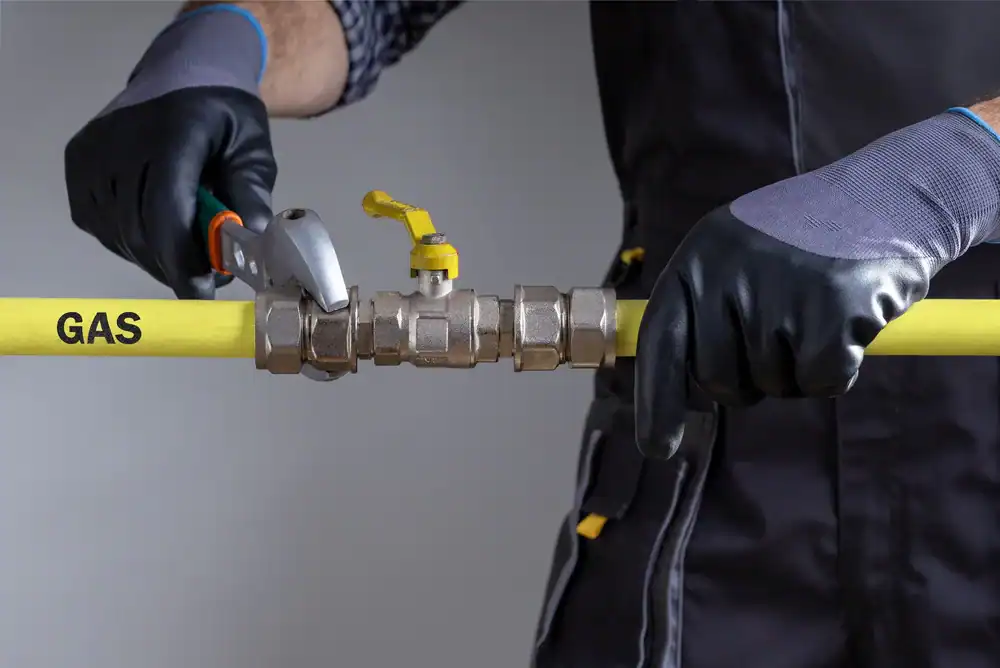
It starts with a call — any time of day or night. If you’re smelling gas, the first step is always to get out and call 911 and National Grid to shut off service. Once the immediate danger is handled, that’s when you call us to take it from there.
When we arrive, the first priority is a full assessment — not just the section that’s obviously leaking, but the surrounding system. In Greenridge homes with layered building history, that matters. A 1970s kitchen addition connected to original pre-war mains creates transition points that need to be evaluated carefully. We determine exactly what needs to be repaired or replaced, and you get a written estimate before any work begins. No surprises.
Once the repair is complete — whether that’s patching a corroded joint, replacing a section of gas pipe, or rerouting a line for a renovation — the system goes through pressure testing to confirm it’s sealed and safe. That’s not optional; it’s required by NYC code before gas service can be restored. After testing is documented, we coordinate directly with National Grid for service restoration. That coordination step is where a lot of homeowners get stuck when they use a plumber who doesn’t know the process — and it’s where having a team that has worked Greenridge gas systems for over 40 years makes a real difference.
Ready to get started?
The full scope of what we handle in Greenridge goes well beyond emergency leaks. Gas pipe leak repair, corroded gas pipe replacement, gas pressure testing, gas line rerouting for kitchen or appliance upgrades, and Local Law 152 compliance inspections are all part of our work — handled under one licensed roof, start to finish.
Corroded pipe replacement is particularly relevant in this part of Staten Island. Greenridge’s historical terrain — low-lying, marshy ground near the Fresh Kills waterway system — means that buried gas lines in parts of the neighborhood are exposed to higher soil moisture than upland areas of the island. That external corrosion is invisible from inside the house, but it builds over time. Homes in Greenridge that have never had their buried gas connections inspected may be carrying more risk than the owner realizes, especially in properties where the original infrastructure is 50, 60, or even 80-plus years old.
For property owners with two-family homes — common throughout Greenridge and the South Shore — Local Law 152 compliance is a real obligation. NYC requires gas piping inspections every four years, and the current cycle runs through 2028. Missing the deadline can mean fines up to $10,000 per year and a potential National Grid service shutoff. We handle the full compliance process: inspection, report preparation, and DOB filing — not just the physical walkthrough.

Local Law 152 applies to all buildings in New York City — including Staten Island and Greenridge — not just commercial or large residential properties. If you own a two-family home in Greenridge, which is a common property type throughout the South Shore, you are subject to the same four-year gas piping inspection requirement as a Manhattan apartment building. The current compliance cycle runs from 2024 through 2028, and buildings that missed the first cycle (2020–2023) have been receiving Notices of Deficiency from the NYC Department of Buildings since late 2025.
The inspection itself must be performed by a Licensed Master Plumber — not a general contractor, not a home inspector. After the inspection, a report must be submitted to the DOB within 30 days. If deficiencies are found, they need to be corrected and certified before the filing is complete. Non-compliance can result in fines up to $10,000 per year, and National Grid has the authority to shut off gas service to buildings that remain out of compliance. If you’re not sure where your property stands in the compliance cycle, that’s a straightforward question we can help you answer.
National Grid will not restore gas service on their own after a shutoff — whether it was triggered by a leak, a failed inspection, or a DOB violation. Before the utility will turn the gas back on, a Licensed Master Plumber must complete and certify the required repairs, conduct a pressure test to confirm the system is sealed, and coordinate with National Grid directly. The utility controls the final restoration step, and they won’t move on it until the plumber’s documentation is in order.
This is where a lot of Greenridge and Staten Island homeowners run into delays. If the plumber you hire doesn’t have experience navigating National Grid’s specific process for restoration — including the right contacts and the proper documentation format — you can wait significantly longer than necessary. We’ve been working with National Grid on Staten Island gas systems for over 40 years. That familiarity with the utility’s restoration process means the gap between “repair complete” and “gas back on” is as short as it legally can be, which matters a great deal when your heat and cooking are offline.
The most obvious sign is a sulfur or rotten egg smell — that’s the mercaptan odorant added to natural gas, and it’s detectable at extremely low concentrations. If you’re smelling it anywhere in the house, that’s a call-now situation, not a wait-and-see one. But corrosion and joint degradation in older pipes often don’t produce a detectable smell until the problem is already significant.
In Greenridge specifically, homes built before World War II may still have original black iron gas piping that is now 80 or more years old. The 1960s through 1980s homes — built during the post-Verrazzano Bridge boom — have systems that are 40 to 60 years old. Both age ranges are well past the point where fittings can loosen, joints can degrade, and external corrosion can compromise the pipe wall. Other warning signs include a gas appliance that won’t stay lit, a noticeable drop in gas pressure, a hissing sound near a pipe or connection, or a utility bill that has increased without a change in usage. Any of these warrants a professional inspection, not just a visual check.
Yes, in most cases. New York City’s Administrative Code requires permits for gas piping work, and those permits can only be filed by a Licensed Master Plumber who also holds a Gas Work Qualification endorsement — a separate credential issued by the NYC Department of Buildings. This requirement applies throughout all five boroughs, including Staten Island. The GWQ endorsement requires specific supervised experience and completion of a DOB-approved training course, which means not every plumber who advertises gas work is actually authorized to file the permits.
Skipping the permit process creates real problems for property owners. Unpermitted gas work is a code violation that stays with the property — not just with the contractor who did it. It can surface during a sale, trigger fines, or become a liability issue if something goes wrong later. The permit process also ensures that the work is inspected and documented, which protects you as the homeowner. We pull proper permits for all gas line work in Greenridge and handle the DOB filing process, so the paperwork is done correctly from the start.
Gas line repair costs vary depending on what’s actually found once the assessment is done. Simple repairs — fixing a leaky faucet connection or a loose fitting — typically run in the range of $150 to $300. More involved work, like a water heater replacement, can range from $1,200 to $2,500 depending on the unit and what the installation requires. Gas line rerouting for a kitchen renovation or appliance upgrade involves additional variables, including how much pipe needs to be moved and whether any buried sections are involved.
What you should expect from any reputable plumber is a written estimate before work begins — not a ballpark over the phone followed by a different number on the invoice. We provide detailed written estimates before any work starts, so you know exactly what you’re agreeing to. One thing worth noting: emergency calls don’t carry an after-hours surcharge with us. The rate is the same whether it’s a Tuesday afternoon or a Saturday night — which is not standard practice across the Staten Island market, where some companies add 50 to 100 percent for after-hours work.
Yes, and this is one of the more underappreciated risks for homeowners in Greenridge. The neighborhood was historically known as “Marshland” — the name reflects Greenridge’s low-lying terrain near the Fresh Kills waterway system. While the area has been developed over many decades, parts of Greenridge retain higher soil moisture content than upland neighborhoods on the North Shore or mid-island. That moisture, combined with the natural acidity of soil over time, creates conditions where the exterior of a buried black iron gas pipe can corrode significantly while everything inside the house appears to be functioning normally.
You won’t smell anything. The appliances will light. The pressure may seem fine. The corrosion is happening on the outside of the pipe, underground, where no one is looking. This is why age alone is a reason to have buried gas connections inspected — not just visible interior piping. If your home in Greenridge was built before 1980 and the buried gas connections have never been assessed, that’s worth addressing proactively. A corroded pipe caught before it fails costs far less to replace than an emergency repair that involves excavation after a line has already failed.
Other Services we provide in Greenridge