

Backflow prevention exists to stop contaminated water being pulled back into the public supply through a cross connection. The city’s cross connection control program targets premises where that risk genuinely exists, which is why it lands mostly on commercial, industrial, food service and larger buildings.
A single family house usually has no such hazard and no device. Where a home does end up with one, it is normally because of a specific installation: an in ground irrigation system, a pool, a fire sprinkler connection, or a heating system with a direct water feed.
If you have any of those and are not sure whether a device is required or already fitted, that is a question worth answering rather than assuming. If you have none of them, you are probably not in this conversation at all, and we would rather tell you that than sell you a test.
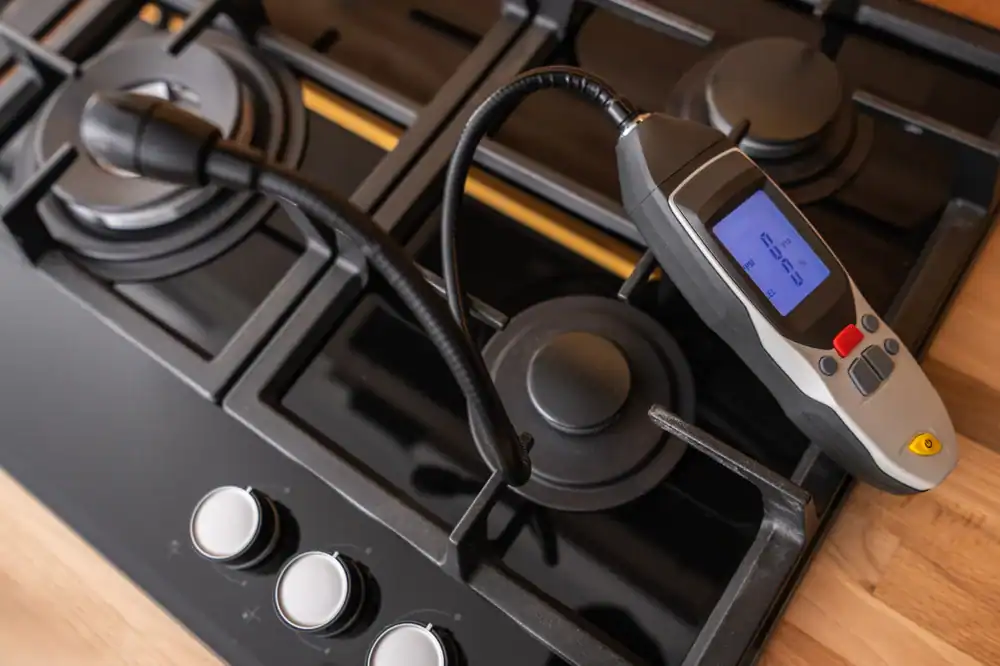
One thing that is NOT the same subject, and gets confused with it constantly: Local Law 152, the periodic gas piping inspection. That is gas, not water, and one and two family homes in Occupancy Group R-3 are generally exempt from it. Different rule, different agency, different exemption.
RB Mechanical Plumbing and Heating is third generation and owner operated, licensed master plumbers working in New York City since 1983. We are minutes from Dyker Heights over the Verrazzano, on Staten Island’s south shore.
We put this page up because homeowners here get contacted about backflow testing and have no easy way to tell whether it applies to them. Some of that contact is legitimate. Some of it is a company working a list.
Our position is simple. If you do not have a device and your property has no reason to need one, there is nothing for you to buy and we will say so on the phone. If you do have one, it needs testing every twelve months and the paperwork needs a licensed master plumber’s signature, which is work we do.
The first conversation is about the property, not the price. Is there an irrigation system, a pool, a sprinkler connection or a boiler with a direct feed? Has anyone ever mentioned a device, and is there one near the water service entry?
If the answer is no across the board, that is usually the end of it and it costs you a phone call.
If there is a device, the annual test applies: every twelve months, by a New York State certified tester, from installation onwards. The form is GEN215B, parts A and B for an annual test, completed by the tester and signed by a licensed master plumber. We file the results with the Department of Environmental Protection.
If a device needs installing, note that a plumbing permit is required before installation, relocation or replacement, and installation may only be done by a licensed master plumber. The initial report also needs the signature of the engineer or architect who designed the plan and is due at the Department within 30 days.

Ready to get started?
Do you have an in ground irrigation or sprinkler system? That is the most common reason a house in a neighborhood like this has a device.
Do you have a pool with a fill line plumbed in, rather than filled by hose?
Is there a fire sprinkler system in the building?
Does your heating system have a direct water feed for making up pressure?
Is any part of the property used commercially, or is there a separate unit operating a business?
If all five answers are no, you very likely have nothing to do. If any is yes, it is worth a proper look rather than guessing, because the annual obligation that follows a device is permanent and the penalty for ignoring it can include disconnection of water service.

The Department of Environmental Protection does send a notification letter when a device’s annual test is due, so a genuine notice is possible. It is also true that contractors work lists.
The way to tell is simple: does your property actually have a backflow prevention device? If it does not, there is nothing to test. We will help you establish that over the phone without a visit.
An in ground irrigation system is one of the classic reasons a residential property has a backflow device, because of the cross connection risk it creates.
Whether yours requires one depends on how it was installed and what was filed at the time. Worth checking properly rather than assuming either way, particularly if the system was put in by a landscaper rather than a plumber.
No, and they get confused constantly. Local Law 152 is the periodic GAS piping inspection, run by the Department of Buildings, on a four year cycle by community district. One and two family homes classified in Occupancy Group R-3 are generally exempt.
Backflow prevention is about WATER, run through the Department of Environmental Protection’s cross connection control program, tested annually. Different system, different agency, different rules.
Every twelve months by a New York State certified tester, from installation onwards, for the life of the device. The form is completed by the tester and signed by a licensed master plumber.
The Department’s handbook also recommends the assembly is rebuilt or overhauled roughly every five years. That is a separate date from the annual test and it is the one owners never have.
No. Testing requires a New York State certified tester, who completes a four day training course and holds a certification valid for three years. The form then needs a licensed master plumber’s signature.
Repairs and overhauls to the assembly may only be carried out by a New York City licensed master plumber. None of that is optional for a filing the Department will accept.
Failing to perform the annual test can result in fines or disconnection of your water service. We are not quoting an amount, because the figures sit in city rules and there is legislation before the City Council that would change them.
For a homeowner the practical point is that this is a cheap annual item with an expensive failure mode, and if you do not have a device it costs you nothing at all.