

In a house with its own frontage, part of your gas run is underground. That buried service line is the part homeowners never think about, because it is the part they cannot see.
Underground leaks do not announce themselves with a smell indoors. The gas escapes into the soil. The signs are on the surface and they look like gardening problems: a patch of dead or dying grass in a strip where the line runs, shrubs failing on one side of a path, soil that bubbles after rain, or a dry patch in a lawn that stays dry when the rest greens up.
Inside, the signs are more familiar. A pilot light that will not hold, burners running yellow and lazy rather than crisp blue, a faint smell near the meter or the boiler that comes and goes, or headaches and nausea that clear when people leave the house.
Any of those on their own is worth a test. Several at once is worth a phone call today.
RB Mechanical Plumbing and Heating is third generation and owner operated, licensed master plumbers working in New York City since 1983. We are on Staten Island’s south shore, minutes over the Verrazzano from Dyker Heights, and on the same gas utility.
Most of Dyker Heights went up between the 1920s and the 1950s, when a house’s gas system was sized for a stove and maybe a boiler. Since then the same piping has picked up a dryer, a second kitchen in a converted basement, an upgraded range, sometimes a mother-in-law unit.
Every one of those additions is a joint, and joints are where leaks start. The most common fault we find in a Dyker Heights house is not old pipe failing on its own. It is a connection added at some point by someone who did not file the work, on a system that was never designed to carry it.
If there is an active smell the utility or the fire department comes first and shuts the gas off. That is the right order and it is not negotiable.
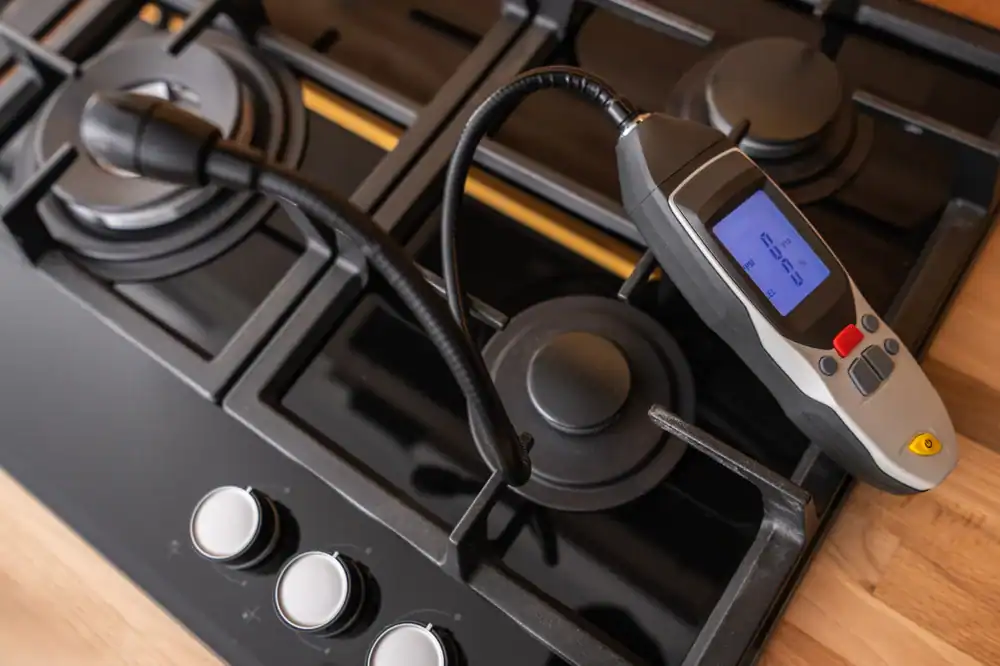
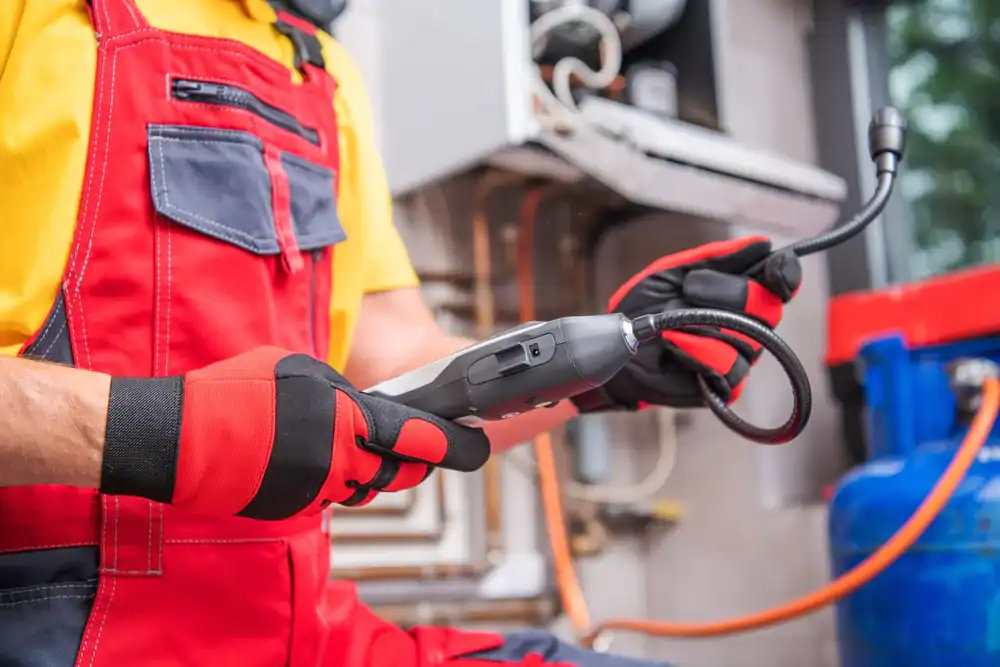
We then test rather than guess. A pressure test tells us whether the system holds. A combustible gas detector tells us where it does not. On a house with a buried service line we check the exterior run as well as the interior piping, because a dead patch of lawn is evidence and not a coincidence.
Repairs are filed through DOB NOW: Build. Paper filings are no longer accepted by the Department of Buildings. Repair or replacement of existing equipment commonly runs under a self-permitted Limited Alteration Application.
Restoration is the last step and it is a filing, not a phone call. A Department of Buildings inspection is required to authorize gas service being restored. We request the Gas Authorization, the Plumbing Unit reviews it, and the utility reconnects on that approval.

Ready to get started?
Get everyone out of the house. Do not switch anything on or off, do not use the garage door opener, and do not start a car in an attached garage. Make the call from outside.
Call 911 or National Grid on 718-643-4050. Both are answered around the clock.
Never reopen a gas valve that has been closed by the utility or the fire department. It is not yours to reopen, and in New York City restoring service without an authorization creates a legal problem on top of a safety one.
One thing specific to houses here: if you have had a basement converted, mention it when you call. A converted basement almost always means gas piping was extended, and if that work was never filed it is both the likeliest place for a fault and something we need to know about before an inspector sees it.

Get everyone out, do not touch any switch or appliance on the way, and call 911 or National Grid on 718-643-4050 once you are outside. Leave the door open behind you if you can do it without delay.
Call us afterwards. We are not the emergency responder and saying otherwise would be dangerous. We are who finds the fault, repairs it under the right filing, and gets your gas legally turned back on.
Yes, and on a Dyker Heights property it is a real possibility because part of your service run is buried. An underground leak vents into the soil rather than into your rooms, so you may never smell it indoors.
Look for a strip of dead or struggling grass over the line, plants failing on one side of a path, or bubbling in puddles after rain. Those are the surface signs, and they are easy to mistake for a lawn problem.
Broadly, the utility is responsible for its service line and the meter, and the owner for the piping past the meter. We are not going to state it more firmly than that for your address.
National Grid publishes this guidance separately for different parts of its territory and the terms are filed with the New York Public Service Commission, so before you pay for work near the meter, ask them in writing which pipe they own at your property. It is a phone call that has saved homeowners a bill.
For a gas leak it is useful information, not an accusation. A conversion almost always means gas piping was extended for a second kitchen or a heater, and added connections are where leaks most often begin.
If that work was never filed, it is better that we know before an inspection. Unpermitted gas work can bring significant fines and a loss of service, and an open penalty blocks the next permit, which is the permit you would need to put things right.
You may be thinking of Local Law 152, the periodic gas piping inspection. That exempts one and two family homes classified in Occupancy Group R-3, and a lot of Dyker Heights falls into that category.
That exemption is about the scheduled citywide inspection. It does not mean a leak is less dangerous or that a repair needs less paperwork. If you smell gas, the exemption is irrelevant.
Yes. Fuel gas piping repairs in New York City are restricted to a Licensed Master Plumber, which we are, so detection, repair, filing and the restoration sign off stay with one company.
You can check our licence, or anyone’s, on the Department of Buildings License Search before work starts. On gas work that is worth two minutes of anyone’s time.