

There is a predictable path from where Bath Beach’s gas piping starts to where it ends up. Salt air accelerates corrosion on exposed metal. Corroded steel thins. Thinned steel on a pressurized gas line eventually weeps, then leaks.
The useful thing about that sequence is that it is slow and it is visible. Pitting and scaling on a basement run is not an emergency. It is a warning with months on it, and it is sitting in plain sight in a lot of basements a few blocks from the water.
That is the difference worth paying attention to. A corroded section found during a test is a planned repair you schedule. The same section found after it fails is an emergency shutoff, a Department of Buildings filing, an inspection and days without gas.
Damp basements make it worse again, and there are plenty of those here. A line running through a wet basement near the bay is corroding faster than the same line two floors up.
RB Mechanical Plumbing and Heating is third generation and owner operated, licensed master plumbers working in New York City since 1983. We are on Staten Island’s south shore, across the Verrazzano from Bath Beach, and on the same gas utility.
Bath Beach is largely small buildings owned by the people living in them. There is no managing agent tracking when anything was last looked at, which is not a criticism, just the reality of a four or six unit building.
It does mean gas systems here often go unexamined for very long stretches. We are regularly the first people to pressure test a system in decades. That is not a disaster: most of the time the answer is that it holds and you now know it. But on a corroded run near the water, finding out early is worth a great deal.
If gas is actively escaping, the utility or the fire department makes the building safe and shuts it off first. That always comes before us.
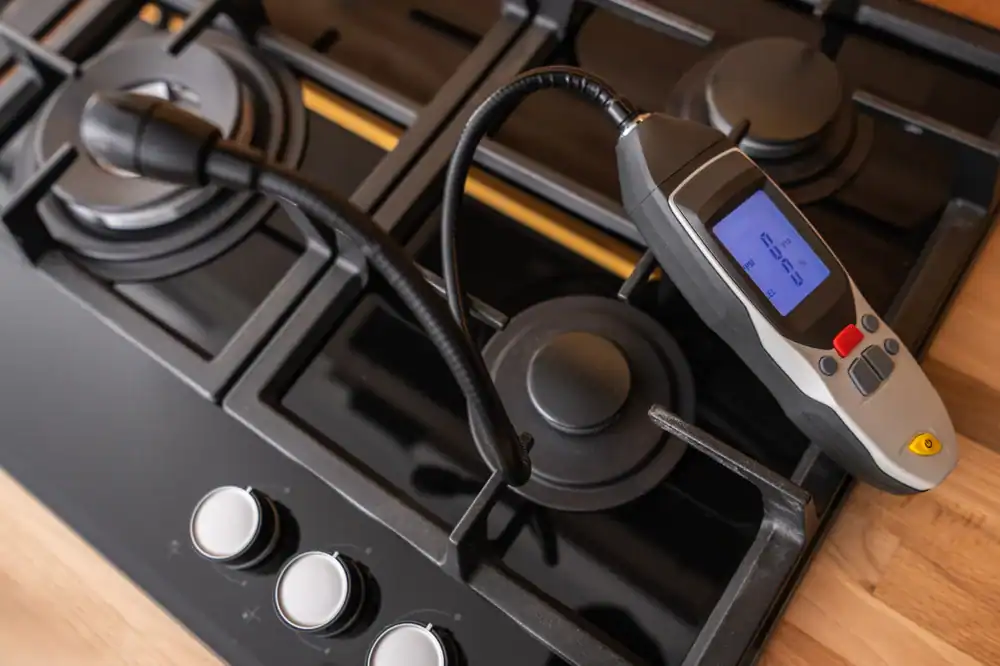
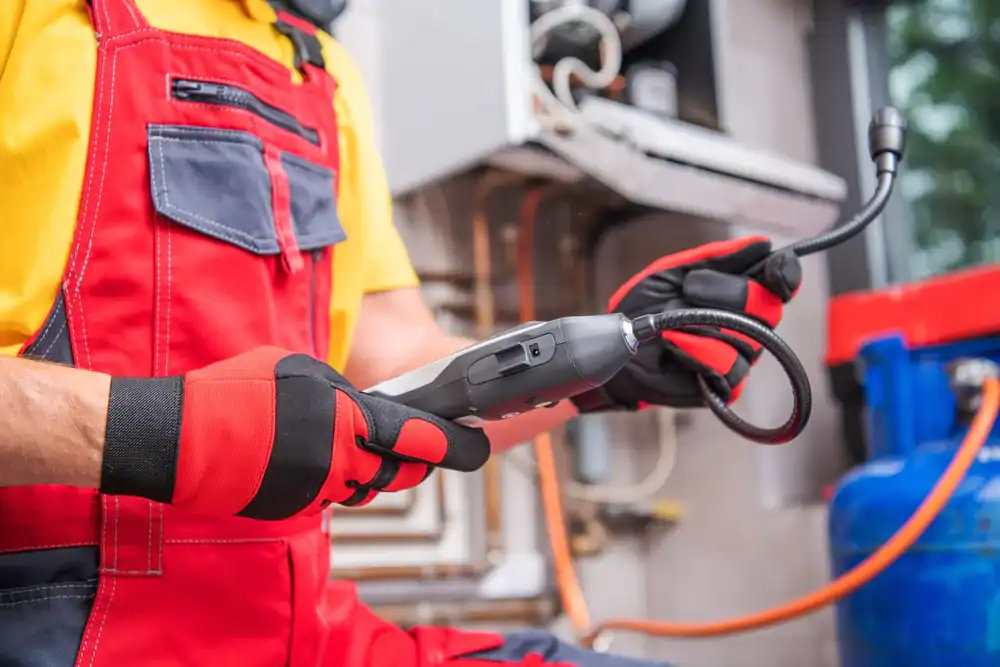
We pressure test the system and walk the exposed piping with a combustible gas detector. Near the bay we pay particular attention to the basement run, the service entry and anywhere pipe passes through damp masonry, because that is where corrosion concentrates.
Repairs are filed through DOB NOW: Build, since the Department of Buildings no longer accepts paper filings. Repair or replacement of existing equipment commonly runs under a self-permitted Limited Alteration Application.
If gas was shut off, restoration has to be authorized by the Department of Buildings. We request the Gas Authorization through DOB NOW: Inspections and the Plumbing Unit reviews it. In a small owner occupied building, that is the step nobody has done before, so we take it rather than explain it.

Ready to get started?
First, the emergency rules. If you smell gas, leave, touch no switch, and call 911 or National Grid on 718-643-4050 from outside. Never reopen a valve that has been closed.
Now the thing you can actually do yourself on a quiet afternoon: go and look at the pipe. Surface rust on steel is normal and not an emergency. What you are looking for is pitting, where the surface is dimpled rather than evenly rusted, and scaling, where it is flaking off in layers. Either means metal has been lost.
Also look at where pipe meets masonry or passes through a wall. Those points trap damp and corrode first, and they are the easiest to walk past because they are half hidden.
If you find any of that, you are not in danger this minute. You are looking at something that should be tested and planned for, which is a much better position than the alternative.

Salt in the air accelerates corrosion on exposed metal, and that is what we see in basements close to Gravesend Bay. Corrosion is also one of the specific things a gas piping inspection looks for, which tells you it is a recognized problem rather than a local theory.
It does not mean your pipe is failing. It means the clock runs faster here than it does inland, and a system that has never been tested is more worth testing.
Even surface rust on steel pipe is common and usually not urgent. What matters is loss of metal: pitting, where the surface is dimpled, and scaling, where rust flakes away in layers.
A pressure test settles it either way. The pipe either holds or it does not, and that is a fact rather than an opinion about how bad the rust looks.
A small building has the same gas pressure and the same consequences as a large one. What it usually does not have is anyone tracking maintenance, which is the actual argument for testing rather than the building’s size.
If you cannot find out when your system was last tested, the honest answer is that nobody knows its condition. That is the position worth changing.
You get told where it is and how bad, and then you decide. A short corroded section on a system that holds pressure is a planned repair. A run that is corroded in several places is a replacement, and we will say so rather than sell you three repairs.
Either way it is filed properly. Repair or replacement of existing equipment commonly goes under a self-permitted Limited Alteration Application through DOB NOW: Build.
A Licensed Master Plumber. Repairs to fuel gas piping in New York City are restricted to LMPs, including work classed as ordinary maintenance that needs no permit.
You can check any licence before work starts using the Department of Buildings License Search and the Know Your Construction Professional tool. It takes a couple of minutes.
Yes. We work across Brooklyn for gas line services, and Bath Beach is close enough to our Staten Island base that it is a short trip rather than a cross-city job.
Brooklyn and Staten Island also share a gas utility, so when a shut off and restoration has to be coordinated, that is a process we run regularly.