

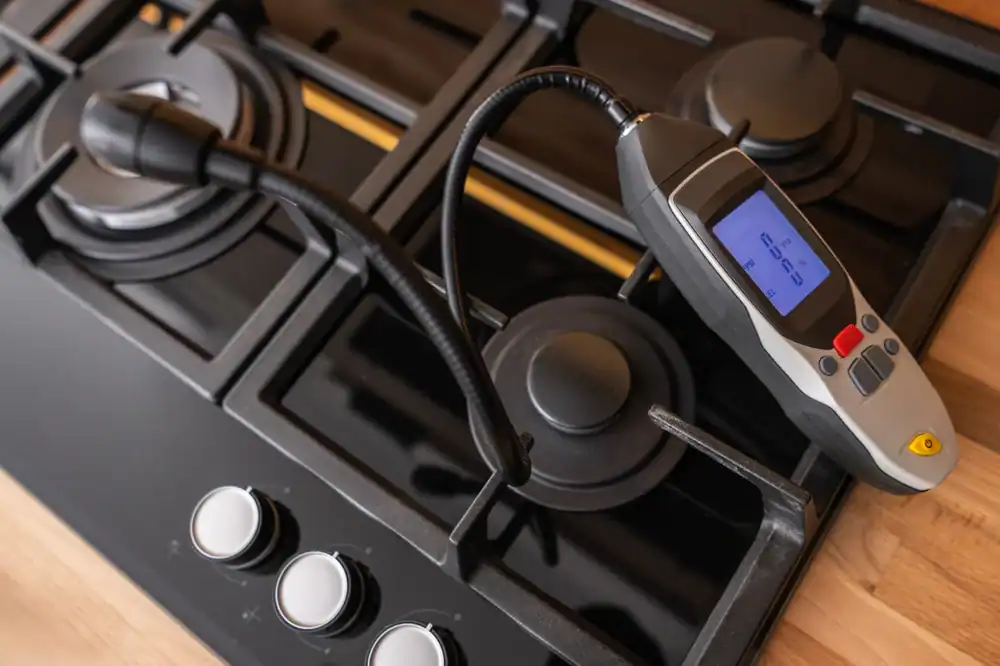
There’s a specific kind of stress that comes with smelling something off in your kitchen or basement and not knowing whether it’s serious. You open a window, wait a few minutes, and tell yourself it probably went away. The problem is that natural gas doesn’t always announce itself clearly — and in Grant City, where salt air off Lower New York Bay accelerates corrosion in metal piping and fittings, a slow leak can develop quietly in infrastructure that’s been in place for decades without anyone ever looking at it closely.
When we come in with professional-grade gas detectors and infrared cameras, you stop guessing. You get a clear picture of what’s actually happening inside your walls, under your floors, and along your gas lines — not a best estimate based on a quick sniff test. For homes along Lincoln Avenue or Richmond Road that were built in the 1920s or earlier, that kind of documentation isn’t just peace of mind. It’s the first real look those gas systems may have ever had.
After the inspection, you know exactly where you stand. If there’s a problem, you know what it is, where it is, and what fixing it involves — before any work begins, with transparent pricing and no surprises. If everything checks out, you have that confirmed in writing. Either way, you’re not left wondering.
We’ve been doing this work since 1983 — over 40 years of gas line inspections, emergency repairs, Local Law 152 compliance filings, and everything in between across Manhattan and Staten Island, including the East Shore communities that took the hardest hit from Superstorm Sandy and have been rebuilding ever since.
We’re a father-and-son operation — Bobby and Rob — which means when something goes wrong or right, there are real names attached to it. Every technician is a NYC Licensed Master Plumber, drug-tested and vetted before they ever set foot in a Grant City home or anywhere else we serve. That matters in a neighborhood like Grant City, where most residents have owned their homes for years and aren’t in the habit of letting just anyone through the door.
National Grid serves Grant City’s gas infrastructure, and we know exactly how to work alongside them — handling the building-side repairs and DOB filings that the utility cannot do. That coordination is something a lot of homeowners don’t realize they need until they’re already dealing with a shutoff.

When you call, you’ll talk to someone who can actually tell you what to do next — not a voicemail, not a call center. If it’s an active emergency, our response target is 30 to 60 minutes. If it’s a scheduled inspection or a concern that’s been building for a while, you’ll get a clear appointment and a straight answer about what to expect before anyone shows up.
Once on-site, our technician uses professional-grade combustible gas detectors and infrared cameras to check your gas lines, connections, appliances, and any accessible piping throughout your home. In Grant City’s older housing stock — particularly the Victorian-era and 1920s-era homes on and around Lincoln Avenue — that means checking areas that haven’t been looked at in years, including piping that runs through finished walls or below grade. The infrared cameras are especially useful here because they can identify temperature anomalies and hidden leak points that no handheld sniffer alone would catch.
If a leak or a problem area is found, you’ll hear exactly what it is, what the repair involves, and what it costs — before any work starts. If the repair requires a DOB filing or coordination with National Grid to restore service, that’s handled as part of the process. Nothing gets handed off. The same team that found the problem sees it through to resolution and documentation.

Ready to get started?
Our gas leak detection service isn’t a quick pass with a handheld meter and a handshake. The inspection covers your exposed gas piping, appliance connections, flexible connectors behind stoves and dryers, and any accessible lines running through the property. Infrared cameras go where eyes can’t, and professional-grade detectors can identify combustible gas concentrations well below the threshold your nose would catch — which matters a great deal in older Grant City homes where the odorant added to natural gas can dissipate before it ever reaches you.
For multi-unit buildings in Grant City — including condo properties and any building with three or more units — Local Law 152 compliance is part of the picture. Grant City falls within Staten Island Community Board 2, and buildings in this district are subject to the city’s mandatory gas piping inspection cycle. Non-compliance carries a $5,000 civil penalty. We handle the full workflow: the inspection itself by a Licensed Master Plumber, any necessary repairs, the DOB filing, and the certification — so building owners aren’t juggling multiple vendors or risking a missed deadline.
For single-family homeowners, especially those in homes that predate the 1960s construction boom or that experienced any basement flooding during Sandy, the inspection also serves as a formal record — documentation that your gas system was professionally evaluated and cleared, or that specific issues were identified and addressed. That paper trail has real value, whether it’s for insurance purposes, a future sale, or simply your own confidence.

This is one of the most common situations Grant City homeowners run into, and it causes a lot of confusion. When you call National Grid about a gas smell, they respond to the utility side of the system — the main distribution line running to your building. If their infrastructure checks out, they clear their side and leave. What they cannot do is inspect or repair the gas piping inside your home, which is a completely separate system and entirely your responsibility as the property owner.
The building-side piping — everything from the meter inward, including the lines running to your stove, boiler, water heater, and any other gas appliances — can only be legally inspected and repaired by a NYC Licensed Master Plumber. If National Grid found nothing wrong on their end but you’re still detecting an odor, the source is almost certainly somewhere in your internal gas system. That’s exactly what we do when you call us for a professional detection visit, using equipment sensitive enough to catch concentrations your nose might not register consistently.
Honestly, unless you have documentation from a licensed plumber who performed a formal inspection after the storm, you probably don’t know — and that’s a reasonable concern. The East Shore of Staten Island sustained severe flooding during Superstorm Sandy, and even homes that didn’t flood to the first floor can have buried gas piping and underground connections that were affected by ground movement, saltwater intrusion, or the pressure of surge water. National Grid documented gas infrastructure damage across Staten Island’s coastal zones during and after the storm, but their work addressed the utility distribution side, not your building’s internal piping.
More than a decade later, many Grant City properties have been renovated, sold, or simply lived in without anyone formally evaluating the gas system post-storm. A professional inspection with infrared cameras can identify corrosion, compromised fittings, or deteriorating connections that developed in the years following Sandy — before they become an emergency. If you bought a post-Sandy renovated home in Grant City or the surrounding East Shore area, this is especially worth doing.
A fading gas smell does not mean the problem is gone. The odorant added to natural gas — mercaptan — can dissipate through physical and chemical processes, particularly in enclosed or poorly ventilated spaces. What this means practically is that a real leak can become temporarily undetectable by smell without the underlying problem changing at all. Gas can continue accumulating in a basement, crawl space, or wall cavity long after the odor fades at nose level.
This is one of the reasons consumer-grade gas detectors, while useful for alerting you to a problem, aren’t a substitute for a professional inspection. They detect the presence of gas but can’t pinpoint the source, assess how serious the concentration is, or produce documentation you can use for insurance or compliance purposes. In Grant City’s older homes — particularly those with finished basements or aging piping that runs through enclosed spaces — the risk of gas accumulating without a clear odor warning is real. If you’ve smelled it once, even briefly, it’s worth having us confirm what’s actually happening.
A gas leak inspection and a Local Law 152 inspection overlap in some ways but aren’t the same thing. A gas leak inspection is typically triggered by a concern — a smell, a hissing sound, a utility notice, or a post-flood precaution. It’s focused on identifying whether there’s an active or developing leak in your gas system and locating the source. A Local Law 152 inspection is a mandatory, scheduled compliance requirement for most NYC buildings with three or more units, performed on a rotating four-year cycle by community district.
Grant City falls within Staten Island Community Board 2, which is subject to the city’s Local Law 152 inspection schedule. Buildings that miss the deadline face a $5,000 civil penalty, and the inspection must be performed by a Licensed Master Plumber or under their direct supervision. We handle both — the emergency or precautionary detection visit and the formal LL152 compliance inspection — and manage the DOB filing and certification that follows. For building owners in Grant City managing multi-unit properties or condos, having one team handle both removes a significant administrative burden.
For most single-family homes in Grant City, a thorough gas leak detection visit runs roughly one to two hours. That accounts for a full walkthrough of the accessible gas piping, appliance connections, flexible connectors, and any areas of concern flagged during the initial assessment. Homes with more complex layouts, finished basements, or piping that runs through harder-to-access areas may take longer — particularly in the older Victorian-era and 1920s-built properties along Lincoln Avenue and Richmond Road, where gas infrastructure may have been modified or extended multiple times over the decades.
If a leak is found and a repair is needed, the timeline depends on the scope of the problem. Many repairs can be completed the same day, which means gas service doesn’t have to be off for long. If the repair requires a DOB filing or coordination with National Grid to restore service after a shutoff, that process adds time — but we manage that coordination directly, so you’re not making separate calls to the utility and waiting without a clear answer on when service comes back.
It depends on your policy and the cause of the leak, but in many cases, yes — at least partially. Most standard homeowner’s insurance policies cover sudden and accidental damage caused by a gas leak, which can include the cost of repairs and, in some situations, the detection work that identified the problem. What policies typically don’t cover is damage resulting from gradual deterioration or deferred maintenance — so the older your piping and the longer a slow leak has been developing, the more likely an insurer is to dispute a claim on those grounds.
For Grant City homeowners with flood insurance or policies that were updated after Sandy, coverage terms can vary significantly depending on how the property was documented and repaired post-storm. We work directly with insurance companies when gas leak damage is involved, which means you’re not left navigating that process alone while also dealing with a repair. Having a licensed professional document the inspection findings, the source of the leak, and the scope of the repair gives your insurer exactly what they need to evaluate the claim — and gives you a clear record regardless of how the coverage question resolves.
Other Services we provide in Grant City