
When you upgrade a kitchen or swap in a high-efficiency water heater, the last thing you want to find out mid-project is that your existing gas line can’t keep up. A 1950s-era Grant City home was typically plumbed for a modest range and a standard water heater — not a 60,000 BTU professional range or a tankless unit drawing close to 200,000 BTU. Getting the sizing right before you buy the appliance saves you a real headache down the road.
There’s also the infrastructure side of things. Grant City sits on Staten Island’s East Shore, and homes here have been exposed to decades of salt air, humidity, and storm-related ground movement. That kind of environment accelerates corrosion in older gas piping — the kind you can’t see from the outside but can absolutely detect with the right equipment. A proper installation or assessment gives you documented confirmation that what’s running through your walls is actually safe.
For condo owners and building managers near Colfax and Lincoln Avenues, there’s Local Law 152 to think about too. NYC requires gas piping inspections on a four-year cycle for most multi-family buildings, and missing the deadline carries penalties up to $10,000. Getting that handled by a Licensed Master Plumber who files the GPS-2 certification directly with the DOB means you’re not scrambling when the deadline hits.
We’ve been doing this in New York City since 1983. That’s before the first major renovation cycle hit most of Grant City’s post-Verrazzano housing stock, and well before Local Law 152 existed or DOB NOW replaced paper permit filings. That kind of history isn’t just a number — it means we’ve seen what happens inside mid-century East Shore homes when gas infrastructure gets ignored for decades.
Staten Island is served by National Grid, not Con Edison. That distinction matters when you’re trying to get a new line authorized, upsize an existing service, or restore gas after a shutoff. We handle National Grid coordination directly, so you’re not left trying to figure out which process applies to your address or which department to call.
Every job comes with a Licensed Master Plumber on-site and on record — the credential NYC law requires for all gas work. The work is permitted, pressure-tested, and fully documented before the job is closed out.

It starts with an assessment. Before any pipe gets touched, the full BTU load of your appliances gets calculated — every connected unit, not just the new one you’re adding. For a lot of Grant City homes, this is where people find out their existing line is undersized for what they’re trying to run. That’s not a problem, it’s just information, and it’s a lot better to know upfront than after the appliance is installed and underperforming.
Once the scope is clear, the DOB permit gets filed through DOB NOW — NYC’s required digital system for all gas piping work. There are no paper submissions anymore, and no shortcuts around the permit process. For Staten Island jobs, National Grid authorization runs parallel to the DOB process when new service or a capacity increase is involved. We handle both sides of that coordination.
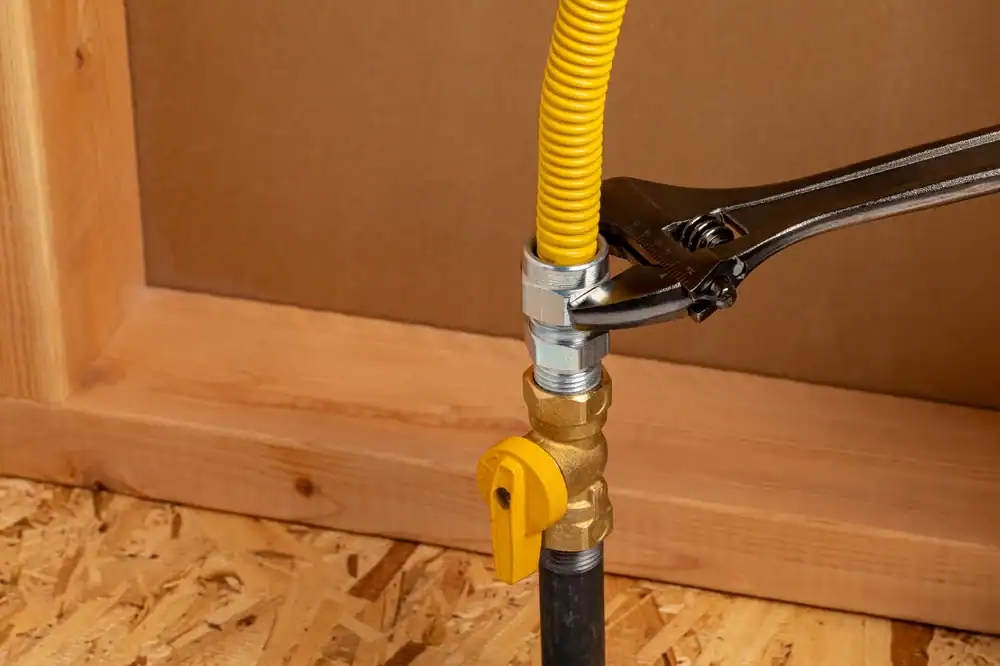
Installation uses either black iron pipe or listed CSST systems depending on the run and the application. After the line is in, it gets pressure-tested at 1.5 times working pressure — the NYC Fuel Gas Code standard — using electronic detection equipment. You get written documentation of the test results, the permit records, and any GPS-2 filings when applicable. That paper trail matters for insurance, for building management, and if you ever sell the home.
Ready to get started?
A gas line installation through us covers the full scope — not just the pipe. That means the BTU load calculation, the DOB permit filing, the installation itself, pressure testing, National Grid coordination where required, and written documentation delivered when the job is complete. For Grant City homeowners upgrading kitchens or replacing aging boilers, that documentation is what protects your investment and satisfies your insurer.
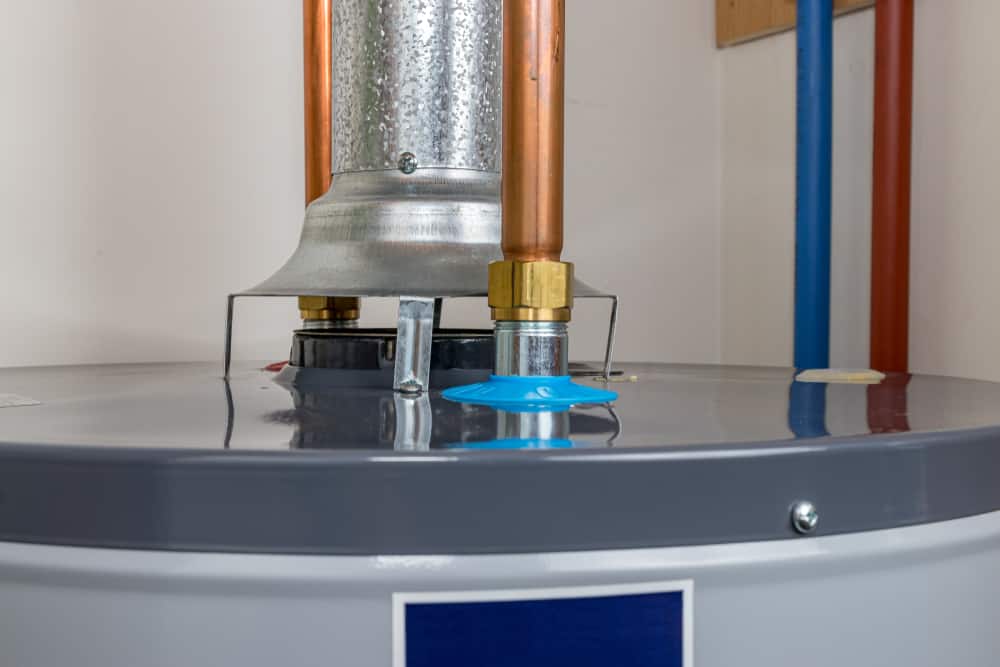
Appliance hookups follow the same standard. Whether you’re connecting a new gas range, a tankless water heater, a gas dryer, or a boiler, each appliance needs its own dedicated shutoff valve and a line sized to its actual demand. High-BTU professional ranges and tankless water heaters are the two most common situations where existing lines turn out to be undersized — and both are increasingly common in Grant City as home values climb and renovation activity picks up across the neighborhood.
For multi-family buildings and condo associations in the 10306 zip code, the full Local Law 152 compliance service is available: LMP-performed inspection, violation remediation, and GPS-2 certification filing with the NYC Department of Buildings. Single-appliance hookups typically range from $500 to $2,000. Whole-home gas installations run $1,300 to $3,500. Pricing is provided in a written estimate before any work begins.

Yes — every gas line installation in Grant City requires a permit filed with the NYC Department of Buildings, no exceptions. This applies whether you’re running a new line to a single appliance or doing a full re-pipe. NYC eliminated paper submissions a few years ago, so all filings now go through DOB NOW, the city’s digital portal. The permit process also involves coordination with National Grid, which is the gas utility serving Staten Island, when new service capacity is needed or when an existing service is being upsized.
Skipping the permit isn’t just a code violation — it’s the reason National Grid won’t activate gas service to the new line, and it can void your homeowner’s insurance coverage if something goes wrong down the road. We handle the entire permit process as part of the job, including DOB filing and National Grid coordination, so you’re not navigating two separate bureaucracies on your own.
The short answer is that you probably don’t — and that’s the most common surprise homeowners run into during a kitchen renovation or appliance upgrade. Gas line sizing depends on the total BTU demand of every appliance connected to the system, the length of the pipe run from the meter to the farthest appliance, the pipe diameter, and the gas pressure available. A 1950s Grant City home was typically plumbed for a modest load. Add a high-BTU professional range at 60,000 BTU or a tankless water heater drawing close to 199,000 BTU, and that original line may not be able to deliver adequate pressure.
The fix isn’t always a full re-pipe. Sometimes it’s upsizing one section of the run or adding a dedicated line to the new appliance. But you need the calculation done first — before you buy the appliance or start the renovation — so the scope and cost are clear upfront. We do that sizing assessment as the first step of every installation.
Local Law 152 is a New York City law that requires gas piping inspections on a four-year cycle for most buildings in the five boroughs. It applies to virtually all NYC buildings except one- and two-family homes — so if you own or manage a condo, a small apartment building, or a mixed-use property in Grant City, it almost certainly applies to you. The inspection must be performed by a Licensed Master Plumber or a Registered Journeyman Plumber under LMP supervision, and the results get filed with the DOB using a GPS-2 certification form through DOB NOW.
Missing the deadline carries penalties up to $10,000, and if violations are found during a utility inspection before you’ve completed your LL152 filing, you’re looking at a potential gas shutoff on top of the fine. For condo associations and building managers near Lincoln and Colfax Avenues in Grant City, the full compliance process — inspection, any required repairs, and GPS-2 filing — is something we handle start to finish.
For a single appliance hookup — connecting a new gas range or water heater to an existing line — the work typically takes four to eight hours in a straightforward situation. A longer run, a line that needs to be upsized, or a job that involves wall or ceiling penetrations adds time. Full home installations or re-pipes are generally completed over one to three days depending on the scope.
The timeline that catches people off guard is the permit-to-activation window, not the installation itself. After the work is done, National Grid needs to inspect and authorize the service before gas is activated — and that scheduling step adds time to the overall process. For Grant City homeowners planning a kitchen renovation or appliance swap, building that window into your project timeline from the start avoids the frustration of a finished kitchen that can’t be used yet. We coordinate the National Grid side directly, which helps keep that window as short as possible.
Finding violations during a Local Law 152 inspection doesn’t mean your gas gets shut off on the spot — but it does mean you’re on the clock. Depending on the severity, violations are classified as either conditions requiring prompt repair or conditions that trigger immediate reporting to the utility. For most buildings in Grant City, violations found during an LL152 inspection are correctable conditions: aging fittings, improper connections, missing shutoff valves, or sections of pipe that no longer meet current code. Those get repaired, re-tested, and then the GPS-2 certification gets filed.
The problem is when building owners treat the inspection as the finish line and don’t have a plan for what happens if something gets flagged. The GPS-2 can’t be filed until violations are remediated — which means the clock on your compliance deadline keeps running while repairs are being scheduled. Working with a contractor who does both the inspection and the remediation under the same LMP license keeps that process moving without the delay of coordinating between two separate companies.
Grant City’s housing stock is predominantly from the 1950s and 1960s, with some homes dating back to the early 1900s. The original gas piping in many of these homes is galvanized steel — a material that corrodes from the inside over time. As the interior walls of the pipe narrow from corrosion, gas flow decreases, appliances underperform, and in advanced cases, pinhole leaks can develop that aren’t visible without pressure testing and electronic detection equipment. A homeowner who has lived in the same house for thirty years may have no idea this is happening.
The East Shore location adds another layer. Decades of salt air, humidity, and the ground movement that comes with coastal storm events accelerate corrosion in buried service lines and below-grade basement piping. For Grant City homeowners who made repairs after Hurricane Sandy in 2012, those systems are now well over a decade old — done quickly under emergency conditions, not necessarily to the standard of a planned installation. A current assessment with proper pressure testing gives you an accurate picture of what you’re actually working with, and written documentation of the results.
Other Services we provide in Grant City