


When the gas system in your home is working the way it should, you don’t think about it. The heat runs, the stove lights, and life moves forward. When something goes wrong — whether it’s a faint smell you can’t quite place or a National Grid shutoff notice that blindsides you — everything stops. Getting back to normal quickly, safely, and without a surprise bill is what this is really about.
Grant City’s housing stock is one of the older pockets on Staten Island. Colonials and Tudors along Lincoln Avenue, Hull Avenue, and Adams Avenue were largely built during the 1940s and 1950s, with another wave following the 1964 opening of the Verrazzano-Narrows Bridge. That means a lot of homes here are running on gas infrastructure that’s been in continuous service for 60 to 80 years. Black iron pipes from that era don’t fail all at once — they degrade slowly, through corrosion, loosening joints, and fittings that have been through thousands of heating cycles. By the time there’s a detectable smell, the problem has often been building for years.
The East Shore location adds another layer. Hurricane Sandy hit this corridor hard in 2012, and the ground shifting and soil disruption that came with that storm stressed buried gas lines in ways that aren’t always visible from the surface. If your Grant City home was repaired or elevated after Sandy and you don’t have clear records of what was done to the gas system, you may be living with work that was never fully inspected or permitted. Getting a proper assessment now — before National Grid finds something first — is the difference between a planned repair and an emergency shutoff in January.
We’ve been serving Staten Island since 1983. Bobby and Rob — father and son — are the people who show up, do the work, and put our names on it. We’re not a dispatch center routing calls to whoever is available. When you call, you know who’s coming.
That kind of continuity matters in a neighborhood like Grant City. The homes here have history, and so does our company. We’ve been working on Staten Island gas systems through the post-Verrazzano development era, through Sandy’s aftermath, and through every winter in between. We understand what aging infrastructure looks like in a 1950s East Shore colonial, and we know how National Grid handles gas restoration on Staten Island — which is a very different process from what Manhattan homeowners deal with through Con Edison.
Every job comes with a written estimate before any work begins. We’re fully licensed, fully insured, and hold the Gas Work Qualification endorsement required by NYC to file permits for gas piping work — the credential that matters legally, not just on paper.
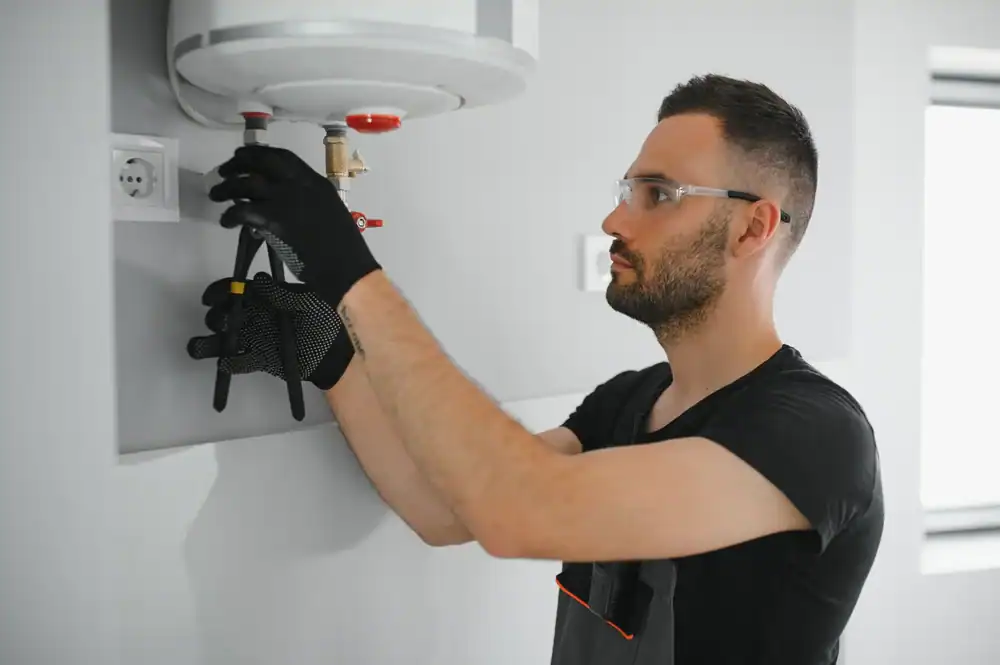
It starts with a call. If you’re smelling gas or you’ve already had a National Grid shutoff, that call can happen at any hour — we’re available 24/7 for gas emergencies, and there’s no after-hours surcharge added to your bill. The same rate applies at 11 PM on a Sunday as it does at 10 AM on a Tuesday.
Once on site, the first step is a full assessment of the gas system — identifying the source of the leak or the issue that triggered the shutoff, evaluating the condition of the surrounding piping, and determining what the repair actually requires. For older homes in Grant City, that assessment often turns up more than the original complaint. Corroded fittings, degraded joints, or sections of black iron pipe that have been quietly failing for years tend to show up once someone is actually looking. A written estimate follows before anything is touched.
From there, we complete the repair work as a Licensed Master Plumber with the Gas Work Qualification endorsement required by NYC DOB to file permits for gas piping work. After repairs are done, a pressure test is performed to confirm the system is sound. Because Grant City is National Grid territory, the final step is coordinating directly with National Grid for the witnessed pressure test and service restoration — a process that can stretch to weeks if the plumber doesn’t know the system. We handle that coordination from start to finish, so you’re not left navigating it alone.
Ready to get started?
Gas line work in Grant City covers a range of situations, and we handle all of them. Emergency leak repair is the most urgent — a confirmed gas odor or a National Grid shutoff requires immediate response, proper diagnosis, and permitted repair before service can be restored. But not every call is an emergency. Plenty of Grant City homeowners reach out because they’re renovating a kitchen, adding a gas dryer, or simply wondering whether the original pipes in their 1950s colonial have any life left in them.
Corroded gas pipe replacement is one of the most common jobs on the East Shore. Original black iron pipes from the 1940s through 1960s are well past the age at which corrosion and joint degradation become serious concerns, and the thermal cycling from decades of heating seasons accelerates that process. Gas line rerouting comes up frequently during kitchen renovations and appliance upgrades — any time a gas connection needs to move, a Licensed Master Plumber with a GWQ endorsement has to do that work and pull the proper DOB permit. Gas pressure testing is required after every repair or new installation to confirm system integrity before National Grid restores service.
For the condominium buildings in Grant City — including properties along Colfax Avenue and Lincoln Avenue — Local Law 152 compliance is a separate but related concern. NYC requires gas piping inspections every four years for buildings with gas service, and the second compliance cycle runs through 2028. The fine for non-compliance can reach $10,000 per year. We handle the full LL152 process, from the inspection itself through DOB filing and utility notification.
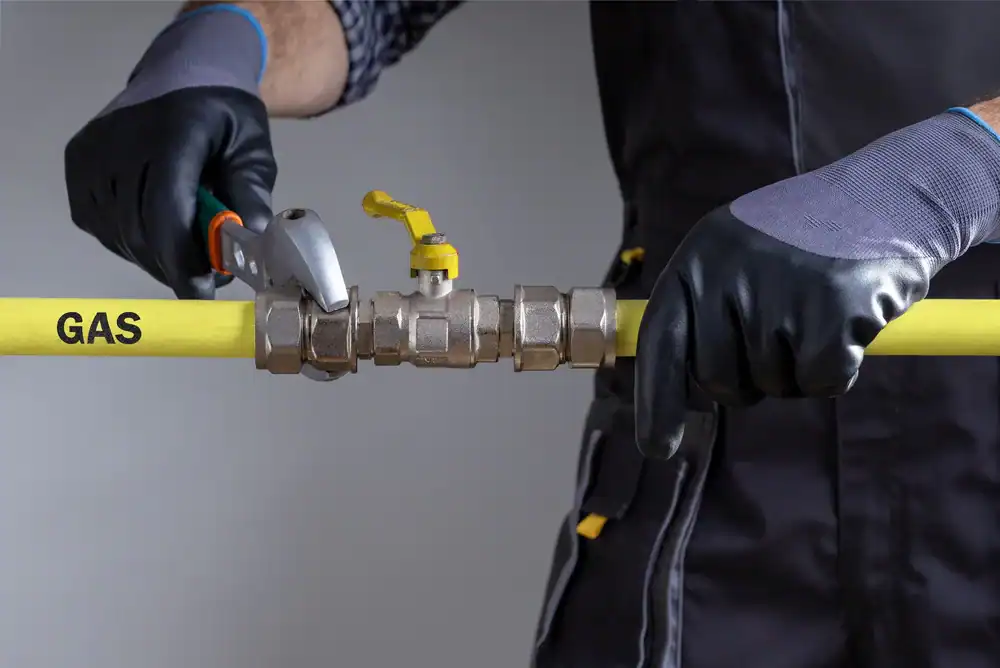
If you smell gas — that rotten egg or sulfur odor — don’t try to find the source yourself. Don’t flip light switches, use your phone inside the house, or do anything that could create a spark. Get everyone out of the building, leave the door open as you go, and call National Grid from outside or from a neighbor’s home. National Grid serves all of Staten Island, including Grant City, and they will respond to shut off service if there’s an active leak.
Once the immediate danger is handled and National Grid has been to the property, the next call is to a Licensed Master Plumber. National Grid will not restore your gas service on their own — they require a licensed plumber to complete the repair, pull a DOB permit, and pass a witnessed pressure test before they’ll turn the gas back on. That process can take days or longer if you’re working with someone who doesn’t know how National Grid handles Staten Island restorations. We manage that entire coordination, so the path from shutoff to restored service is as direct as possible.
The honest answer is that cost depends on what the repair actually involves, and that’s not always clear until someone looks at the system. Simple repairs — fixing a leaky fitting or a minor gas connection — can run in the range of $150 to $300. More involved work, like corroded pipe replacement or a full gas line rerouting for a kitchen renovation in Grant City, involves more labor, materials, and permitting, which affects the total.
What we do differently is give you a written estimate before any work starts. No surprises, no bill that looks nothing like what you were told. For Grant City homeowners dealing with an emergency, there’s also no after-hours surcharge — the rate is the same whether the call comes in on a weekday afternoon or a Saturday night. That’s a real distinction from how most plumbing companies handle emergency calls, and it matters when you’re already dealing with a stressful situation.
For most gas line work in New York City — including Grant City — yes, a permit is required. The NYC Department of Buildings requires a Licensed Master Plumber to file for any gas piping work that goes beyond ordinary maintenance. On top of the standard Master Plumber license, the plumber also needs a Gas Work Qualification endorsement, which is a separate credential under NYC Local Law 150 of 2016. Not every plumber advertising gas work in Staten Island actually holds that endorsement.
Skipping the permit process is not a shortcut worth taking. Unpermitted gas work creates violations that stay attached to the property, can void your homeowner’s insurance, and can result in the building being flagged by National Grid or the DOB. For Grant City homeowners who had gas work done after Hurricane Sandy — especially any emergency repairs completed quickly during the Build It Back period — it’s worth confirming that the work was properly permitted and closed out. If it wasn’t, that’s a fixable problem, but it’s better to address it proactively than to discover it during a sale or a utility inspection.
This is one of the most frustrating parts of the process for homeowners, and the timeline varies more than people expect. Once National Grid shuts off gas service — whether because of a reported leak, a failed inspection, or a Local Law 152 violation — they won’t restore it until a Licensed Master Plumber completes the required repair, files the necessary DOB permit, and coordinates a witnessed pressure test with the utility. That sequence takes time even when everything goes smoothly.
In practice, the biggest variable is whether the plumber you hire knows how to navigate National Grid’s specific process for Staten Island restorations. A plumber who does this regularly — who knows what National Grid requires, how to schedule the witnessed test, and what documentation needs to be in order — can move through that process in a matter of days. A plumber who’s less familiar with the utility coordination side can stretch it to weeks. For a Grant City family in the middle of a cold January without heat or a working stove, that difference is not abstract. We handle the National Grid coordination directly, from repair through final restoration.
It’s a reasonable question, and the honest answer is that age alone is a risk factor worth taking seriously. Gas pipes installed in the 1940s and 1950s — the dominant construction era for Grant City’s housing stock — are now 65 to 80 years old. Black iron pipes from that period have been through thousands of heating cycles, decades of moisture exposure, and, for homes on the East Shore, the ground disruption that came with Hurricane Sandy’s storm surge in 2012. Corrosion and joint loosening are cumulative processes that often don’t produce a detectable smell until the problem is already significant.
That doesn’t mean every 1950s home in Grant City has a gas emergency waiting to happen. It means that if the gas system in your home has never been assessed — if no one has looked at the pipes, tested the pressure, or evaluated the condition of the fittings — you don’t actually know what you have. A proactive inspection by a Licensed Master Plumber gives you a clear picture of the system’s condition, identifies anything that needs attention, and creates a record of the work. That record matters both for your own peace of mind and for the property’s documentation, especially if you’re thinking about selling or renovating.
Local Law 152 is a New York City law that requires gas piping inspections every four years for buildings with gas service. The inspection must be performed by a Licensed Master Plumber, and the results have to be filed with the NYC Department of Buildings within 30 days of the inspection. The second compliance cycle runs from 2024 through 2028, and buildings that missed the first cycle are currently receiving Notices of Deficiency from the DOB. Non-compliance fines can reach $10,000 per year, and National Grid has the authority to shut off gas service to buildings that remain out of compliance.
For most single-family homes in Grant City, Local Law 152 applies if the building has gas service and meets the building classification thresholds under the law. For the multi-family and condominium buildings in the neighborhood — including properties along Colfax Avenue and Lincoln Avenue — compliance is not optional, and the responsibility typically falls on the building owner or board. We handle the full LL152 process: the inspection itself, the DOB filing, and the utility notification. If your building received a Notice of Deficiency or you’re unsure where you stand in the compliance cycle, that’s the right place to start.
Other Services we provide in Grant City