


The most important thing we give you during a gas leak detection visit is certainty. Not a rough guess, not a “probably fine” — actual confirmation of what’s happening inside your gas system, where the problem is, and what needs to happen next. That clarity matters whether you’re dealing with an emergency or just a nagging concern you’ve been putting off.
For Hamilton Park homeowners specifically, that certainty is harder to come by than it sounds. The core of this neighborhood is built on housing stock that dates back to the 1850s. These are beautiful homes — genuinely irreplaceable — but their gas infrastructure doesn’t share that timeless quality. Corroded supply lines, worn-out flexible connectors, and valve assemblies that have been in place for decades are common in pre-war buildings throughout Hamilton Park and New Brighton. The problem is that deterioration at this scale often happens quietly, without the rotten-egg smell most people rely on to flag a problem.
There’s also the waterfront factor. Hamilton Park sits above the Kill Van Kull, and the salt air that moves up from the North Shore waterfront accelerates corrosion on metallic infrastructure — including gas piping. Homes on the northern slopes and along Richmond Terrace face this more acutely than properties further inland. We use calibrated gas detectors and infrared cameras to find what corrosion hides long before it becomes a crisis.
We’ve been operating in New York City since 1983 — the same year the Hamilton Park Community Houses were added to the National Register of Historic Places. That’s not a coincidence we planned, but it’s a fitting parallel. While those Victorian homes on Harvard Avenue and Franklin Avenue were being formally recognized for what they are, we were already working in buildings just like them.
Bobby and Rob — the father-and-son team behind RB Mechanical Plumbing and Heating — are NYC Licensed Master Plumbers. That’s not a marketing credential. It’s the highest-level gas work license available in New York State, and it’s legally required for anyone performing gas piping work in the city. Every technician we send is drug-tested and vetted, which matters when you’re allowing someone access to a landmarked or historically sensitive property in Hamilton Park.
We also handle the full compliance picture: Local Law 152 inspections, DOB filings, violation removal, and the GPS certification that building owners in Staten Island Community District 1 were required to complete by the end of 2024. If your Hamilton Park building missed that window, we can help you address it now.
When you call us, the first thing that happens is a real conversation — not a form submission that goes into a queue. You describe what you’re noticing: a smell, a sound, a utility notice, or just a gut feeling about a system that hasn’t been touched in years. From there, we commit to a 30–60 minute emergency response time if the situation calls for it, or we schedule a visit that works for you.
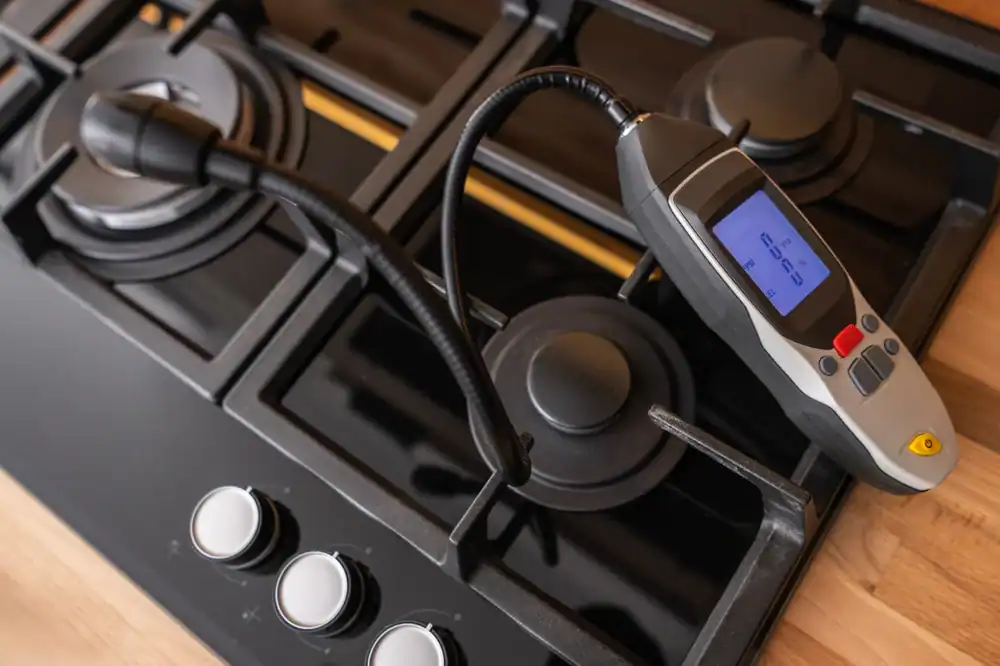
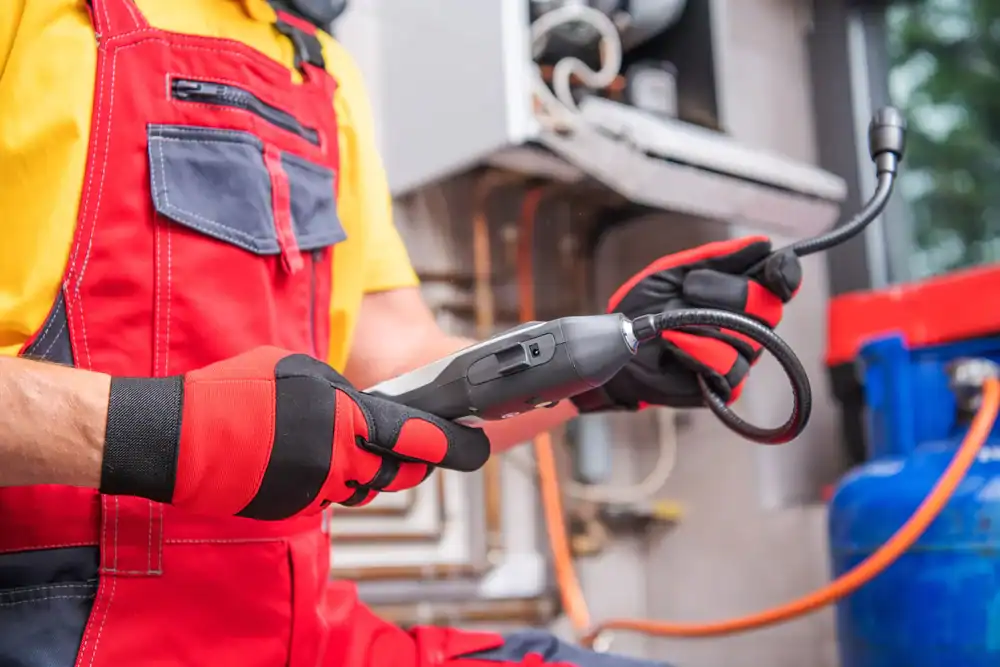
On-site, our technician uses professional-grade gas detectors and infrared cameras to inspect your gas system — not just the obvious access points, but the areas behind walls, beneath floors, and in the crawl spaces and basements that are common in Hamilton Park’s Victorian-era homes. These tools find leaks that are invisible to the eye and undetectable by smell, which is especially important in older buildings where corrosion-driven leaks can develop slowly and silently.
If a leak or deficiency is found, you get a clear explanation of what was found, where it is, and what the repair involves — with transparent pricing stated before any work begins, no hidden fees. If the visit is part of a Local Law 152 compliance inspection for a multi-unit building in Staten Island Community District 1, we handle the repair, the DOB filing, and the GPS certification from start to finish. You don’t have to coordinate separate vendors or track separate regulatory threads.

Ready to get started?
Gas leak detection with RB Mechanical Plumbing and Heating covers the full scope of what a Licensed Master Plumber should be doing in a building like yours. We inspect exposed and accessible gas piping, appliance connections, flexible connectors, valve assemblies, and any areas of concern flagged during the visit. Professional-grade gas detectors and infrared cameras are used throughout — not just a visual sweep.
For Hamilton Park’s multi-unit building owners, this visit can also serve as your Local Law 152 gas piping inspection. Staten Island Community District 1 — which covers Hamilton Park and the surrounding New Brighton area — had its inspection cycle due between January 1 and December 31, 2024. If your building hasn’t been inspected and certified, you’re currently out of compliance and exposed to a $5,000 civil penalty. We’re licensed to perform the inspection, complete any required repairs, and file the GPS certification with NYC DOB, so the entire compliance obligation is handled through one call.
Beyond the inspection itself, we also handle gas line repair and replacement, boiler-related gas connections, gas appliance installation, DOB violation removal, and coordination with insurance companies when gas leak damage has occurred. For homeowners in the St. George/New Brighton Historic District who are already navigating LPC approvals and DOB permits for renovation work, having a plumber who understands the full regulatory stack isn’t a luxury — it’s a practical necessity.
Yes — and if your building hasn’t been inspected yet, you’re already past the deadline. Hamilton Park falls within Staten Island Community District 1, and the Local Law 152 gas piping inspection window for CD1 buildings ran from January 1 through December 31, 2024. Any multi-unit building that didn’t complete the inspection and submit the GPS certification to NYC DOB within 60 days of the inspection is currently out of compliance and faces a $5,000 civil penalty.
Missing the window doesn’t mean you wait until the next cycle — the next scheduled CD1 inspection period isn’t until 2028, but that doesn’t eliminate your exposure for the missed 2024 deadline. The right move is to complete the overdue inspection as soon as possible, address any deficiencies found, and get the certification filed. We’re licensed to handle all three steps: the inspection itself, any required repairs, and the DOB filing. One call covers the entire compliance obligation.
If you’re smelling gas, don’t try to locate the source yourself, don’t flip any light switches, and don’t use your phone inside the building. Leave immediately, get outside, and call 911 or Con Edison from a safe distance. These are the steps the FDNY recommends, and they apply whether the smell is faint or strong.
Once the utility company and emergency responders have cleared the scene, that’s when a Licensed Master Plumber becomes essential. Con Edison handles the utility distribution side — the main line feeding your building — but they don’t repair building-side gas piping. If the problem is inside your building’s gas system, which it often is in Hamilton Park’s older housing stock, a Licensed Master Plumber is the only person legally authorized to diagnose and fix it. We can respond within 30–60 minutes for true emergencies and will give you a clear picture of what’s happening and what it takes to resolve it before any work begins.
Not necessarily. The odorant added to natural gas — mercaptan — can dissipate through physical and chemical processes, a phenomenon called odor fade. That means a leak can still be present even after the smell disappears. In enclosed spaces like the basements and crawl spaces common in Hamilton Park’s Victorian-era homes, gas can also accumulate in pockets that don’t always make it to the areas where you’d notice them by smell.
A brief or intermittent smell is a reason to get a professional inspection, not a reason to wait and see. Gas leaks don’t resolve on their own — the underlying cause, whether it’s a corroded fitting, a worn connector, or a deteriorated valve, doesn’t repair itself just because the odor isn’t constant. A professional-grade gas detector will find what your nose missed and give you a definitive answer rather than a guess.
Con Edison (or National Grid, depending on your service area) is responsible for the gas distribution infrastructure — the main lines that run under the street and into your building. When you call Con Ed about a gas smell, they’ll inspect and address anything on their side of the meter. If they find a problem on the utility side, they’ll handle it. If they don’t, they’ll leave.
What they won’t do is repair the gas piping inside your building. That’s the building owner’s responsibility, and under NYC law, it can only be performed by or under the direct supervision of a NYC Licensed Master Plumber. In Hamilton Park, where the internal gas systems of many homes and multi-unit buildings haven’t been comprehensively updated in decades, the building-side piping is often where the real issue lives. We handle exactly that — the portion of the gas system that Con Ed can’t touch.
There’s no single age threshold that automatically means replacement, but there are clear warning signs. Galvanized steel gas lines — common in pre-war and early-postwar construction — have a finite lifespan and are prone to corrosion from the inside out. Flexible connectors behind stoves and dryers deteriorate over time, especially in homes with high ambient humidity. In Hamilton Park, the combination of aging housing stock and the salt-air environment off the Kill Van Kull creates conditions where corrosion can progress faster than in inland neighborhoods.
A professional inspection with calibrated gas detection equipment and infrared cameras will give you a real picture of what’s happening inside your system — not a visual guess. If replacement is warranted, we’ll tell you exactly what’s needed, what it involves, and what it costs before any work begins. If the system is in serviceable condition, we’ll tell you that too. The goal is an honest assessment, not a reason to sell you work you don’t need.
No. Under NYC law, gas piping work — including any repair, modification, or replacement of gas lines inside a building — must be performed by or under the direct supervision of a NYC Licensed Master Plumber. A building superintendent, no matter how experienced or capable, is not legally authorized to perform this work. Attempting unlicensed gas repairs can result in DOB violations, fines, and in serious cases, a full gas service shutoff for the entire building until a licensed plumber resolves the violation and the work is properly filed.
This matters especially in New Brighton’s older multi-unit buildings, where a gas shutoff affects multiple households and the restoration process involves both the utility company and NYC DOB sign-off. The fastest path to a safe, compliant resolution is calling a Licensed Master Plumber from the start — not after an unlicensed repair creates a second problem on top of the first. We handle the repair, the permit filing, and any required DOB coordination so the building gets back to normal as quickly as possible.
Other Services we provide in Hamilton Park