


Hamilton Park’s homes were built starting in 1851. That’s beautiful architecture and serious history — but it also means gas infrastructure that was never designed for a professional-grade range drawing 60,000 BTU or a tankless water heater demanding nearly 200,000. When the line can’t keep up, your appliances underperform. Burners run weak. Hot water cuts out. And you’re left wondering why a premium appliance isn’t doing what it’s supposed to.
The right gas line installation fixes that at the source. A properly sized, permitted line — run through original construction by someone who actually knows how to work in it — means your Wolf range runs at full power, your water heater delivers, and your home has documented, inspected gas work that protects its value.
That last part matters more in Hamilton Park than in most places. Many properties here carry real historic weight, and some are individually landmarked. Undocumented gas work in a home like yours creates liability that follows the deed. Permitted, pressure-tested, and fully documented work protects your investment — at resale, with your insurer, and with your building’s records.
We’ve been doing licensed gas line work in New York City since 1983. That’s four decades of navigating pre-war buildings, DOB permit systems, utility authorizations, and the kinds of original construction that would send a less experienced contractor back to their truck.
On Staten Island, the gas utility is National Grid — not Con Edison. That distinction matters more than most homeowners realize. New gas service, capacity upgrades, and post-shutoff restoration all run through National Grid’s authorization process, which is entirely separate from the DOB permit. Contractors who primarily work Manhattan sometimes don’t know this until there’s already a delay. We serve both sides of the harbor and know the National Grid process from start to finish.
For Hamilton Park residents — whether you’re a few blocks from Snug Harbor or on one of the curving carriage roads near Franklin Avenue — you get a Licensed Master Plumber on-site, full permit handling, and documentation delivered when the job is done. Not a subcontractor. Not a name on a license. The actual LMP, accountable for every foot of pipe.
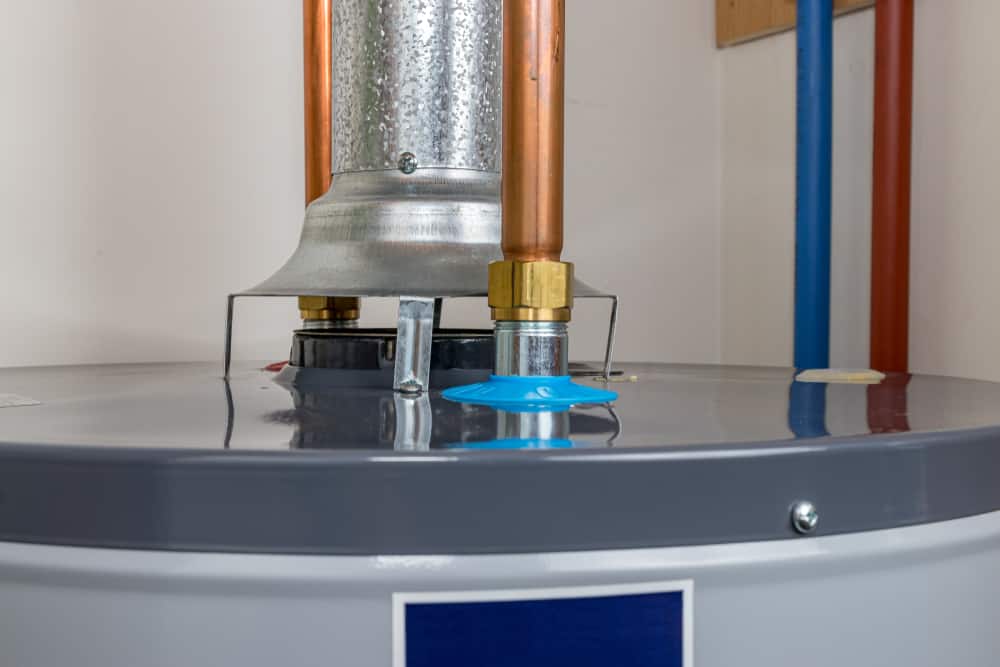
It starts with an assessment. Before any pipe gets run, we evaluate your existing gas infrastructure — what’s there, how old it is, and whether it can handle what you’re adding. In Hamilton Park’s older homes, that step is not optional. A line that was sized for a 1960s gas range and a single water heater may be completely undersized for the appliances going in today. Getting that calculation right upfront is what separates an installation that performs from one that causes problems six months later.
Once the scope is clear, the permit gets filed through DOB NOW — New York City’s all-digital permitting portal. You don’t touch a government website. We handle the filing, coordinate the required National Grid authorization for Staten Island service, and schedule the inspections. All of it runs in sequence so there’s no gap between installation completion and gas activation.
The installation itself follows NYC Fuel Gas Code to the letter: proper pipe sizing, correct materials, a dedicated shutoff valve for each appliance, and pressure testing at 1.5 times working pressure before anything gets turned on. When the job is done, you receive written documentation — safety test results, permit records, and LMP certification. That paperwork is what your insurance carrier, your real estate attorney, and any future buyer will ask for, and it’s ready the day the work is complete.
Ready to get started?
Gas line installation in Hamilton Park covers the full scope — new line runs from the meter, appliance gas hookups for stoves, ranges, water heaters, dryers, and boilers, gas line sizing for high-BTU appliances, and Local Law 152 inspections with GPS-2 certification filing for multifamily properties in New Brighton. Single-appliance installations typically range from $500 to $2,000. Whole-home installations run $1,300 to $3,500. Pipe material and linear footage factor into the final number, with most projects priced at $12 to $25 per linear foot depending on complexity.
For Hamilton Park’s older homes, the scope often involves more than just running a new line. Routing pipe through original Victorian construction — around original plaster, through walls that haven’t been opened in decades, across longer runs in larger-footprint homes — requires real experience with historic building stock. We account for that in the assessment and the estimate, so there are no surprises once the walls are open.
For properties near Richmond Terrace or along the waterfront blocks closest to the Kill Van Kull, salt air and moisture exposure can accelerate corrosion in older gas piping. If an inspection surfaces deteriorated pipe during the work, that gets addressed as part of the job — not flagged as a separate call. Everything is documented, pressure-tested, and filed with the DOB before the job is closed out.
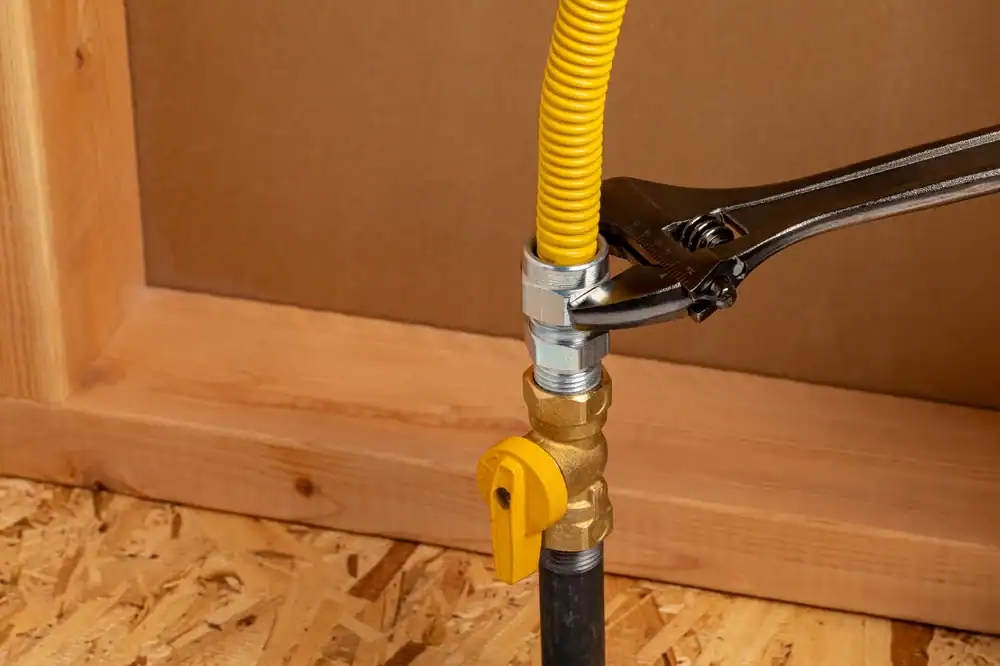
Probably worth finding out before you assume the existing line is fine. Hamilton Park’s homes were built over a span of more than a century, and the gas infrastructure in many of them was sized for appliances that drew a fraction of what modern professional ranges demand. A high-end range can pull anywhere from 45,000 to 60,000 BTU or more. A tankless water heater runs 150,000 to 199,000 BTU. If your existing line was sized for a standard residential range and a single water heater, it may not be able to supply both simultaneously without pressure dropping.
The only way to know for certain is a proper BTU load calculation — accounting for every connected appliance, the total pipe run from the meter, and the diameter of what’s currently installed. We do that assessment before recommending any new installation. If the existing line can handle the load, you’ll hear that. If it can’t, you’ll get a clear explanation of what needs to change and why, with a written estimate before any work begins.
Yes, every gas line installation in New York City requires a permit — no exceptions for small jobs or single-appliance hookups. In Staten Island, that means filing through DOB NOW, the city’s all-digital permitting portal. Paper submissions are no longer accepted. On top of the DOB permit, new gas service or any capacity upgrade on Staten Island also requires authorization from National Grid, which is the gas utility serving the borough. That’s a separate process from the DOB filing and involves its own inspection before National Grid will activate or restore service.
We handle both. The DOB NOW filing, the National Grid coordination, the inspection scheduling — all of it runs through us. You don’t have to figure out which agency does what or why your gas isn’t on yet after the work is done. The permit record and all associated documentation are delivered to you when the job closes, so you have everything on file for insurance, building management, or future resale.
For a single-appliance hookup — say, a new gas line run to a range or water heater — most installations are completed in a day. More involved work, like a whole-home re-pipe or a longer run through original construction in a larger Victorian home, may take two to three days. The timeline that actually concerns most people isn’t the installation itself — it’s the gap between finishing the work and getting gas activated, which depends on how quickly the permit inspections are scheduled and how fast National Grid processes the authorization on their end.
We sequence the permit filing and National Grid coordination before the installation starts, so those processes are already in motion when the physical work is done. That reduces the gap significantly compared to contractors who file after the fact. If you’re in Hamilton Park and relying on gas heat during the colder months — when Kill Van Kull winds make the waterfront blocks noticeably colder — that sequencing matters.
Local Law 152 is a New York City mandate that requires gas piping inspections every four years for virtually all buildings except one- and two-family homes. If you own or manage a multifamily building, a mixed-use property, or a commercial building anywhere in New Brighton, it applies to you. The inspection must be performed by a Licensed Master Plumber or a Registered Journeyman Plumber under direct LMP supervision. After the inspection, the LMP files a GPS-2 certification with the NYC Department of Buildings through DOB NOW to confirm the building’s gas piping system is compliant.
Missing the deadline or failing to file the GPS-2 on time carries penalties up to $10,000. In a neighborhood like New Brighton, where much of the building stock is older and gas infrastructure hasn’t always been regularly maintained, inspections are more likely to surface violations than in newer construction areas. If violations are found, they need to be repaired before the GPS-2 can be filed. We handle the full cycle — inspection, any necessary repairs, and GPS-2 filing — so the compliance process doesn’t stall between steps.
Yes, but it requires more care and, in some cases, additional coordination. Several properties within Hamilton Park are individually landmarked by the NYC Landmarks Preservation Commission, including homes on Pendleton Place. For those properties, any exterior alteration — which can include gas meter placement, exterior piping runs, or utility penetrations through the building envelope — may require LPC review before work begins. Interior gas line work generally falls outside LPC jurisdiction, but it’s worth confirming the scope before assuming.
Beyond the landmark question, working in a 150-year-old home presents practical challenges that newer construction doesn’t. Original plaster walls, unconventional framing, and gas piping that was retrofitted decades after the home was built all affect how a new line gets routed. Our experience in Manhattan’s pre-war and landmarked building stock — where co-op board approvals and preservation requirements are routine — translates directly to Hamilton Park’s historic homes. The goal is always to do the work correctly without damaging what makes the property worth protecting.
For a single-appliance hookup — connecting a new range, water heater, or dryer to an existing gas supply — most installations in Staten Island run between $500 and $2,000. Whole-home installations, which involve running new lines to multiple appliances or re-piping an older system, typically fall between $1,300 and $3,500. Pipe material and the length of the run factor into the final number, with most projects priced somewhere between $12 and $25 per linear foot depending on the complexity of the job.
In Hamilton Park specifically, a few things can affect where a project lands in that range. Larger Victorian homes have longer pipe runs than a typical row house, which adds linear footage. Routing through original construction — around historic millwork, through walls with unconventional framing, or across a footprint that wasn’t designed with modern utility access in mind — takes more time than a straightforward new-construction install. We provide written, itemized estimates before any work begins, so you know exactly what you’re looking at before a single wall gets opened.
Other Services we provide in Hamilton Park