

You stop guessing. That’s the most honest way to put it. Whether you’ve caught a faint smell near your stove, had National Grid knock on your door, or you’re simply aware that your home went through a lot during Sandy and the years that followed — a professional gas inspection gives you a clear picture instead of a lingering question.
For New Dorp Beach homeowners specifically, that clarity carries extra weight. A lot of homes on and around Cedar Grove Avenue, Hett Avenue, and Finley Avenue were rebuilt or significantly modified under the Build It Back program after 2012. That work happened fast, under pressure, and with gas connections that in some cases were extended or rerouted to accommodate elevated foundations. More than a decade later, those connections are aging.
We catch what’s quietly developing before it becomes an emergency. The $84 million drainage and street project that wrapped up in May 2025 also changed the underground picture across more than 50 blocks in New Dorp Beach. When excavation happens at that scale — new storm sewers, raised street grades, replaced water mains — adjacent gas lines can experience stress from soil movement and vibration. If your home sits on or near one of the affected streets, knowing your gas system is intact isn’t paranoia. It’s just good sense.
We’ve been operating in New York since 1983. That’s over 40 years of gas lines, boiler rooms, DOB filings, and utility coordination — in a city where the codes change, the buildings are old, and the margin for error on gas work is zero. Bobby and Rob are the names behind the business, and when something goes wrong — or right — there’s a real person accountable for it.
We work throughout Staten Island, which means we coordinate with National Grid, not just Con Edison. That distinction matters in New Dorp Beach. When National Grid shuts off gas service to a home in your neighborhood, the path to restoration runs through a Licensed Master Plumber — and that’s exactly what every technician on our team holds. Not a journeyman working under a license they don’t own. A Licensed Master Plumber.
Every technician is also drug-tested and vetted before they set foot in a customer’s home. In a tight-knit, family-oriented neighborhood like New Dorp Beach — where most households have owned their homes for years and neighbors know each other — that’s not a throwaway line. It’s the standard we hold ourselves to.
When you call us with a gas concern, the first thing that happens is a real conversation — not a voicemail loop. You describe what you’re noticing, and based on that, we determine whether this is an emergency response situation or a scheduled inspection. For true emergencies, our commitment is a 30–60 minute response time. That’s a specific number, not a vague promise.
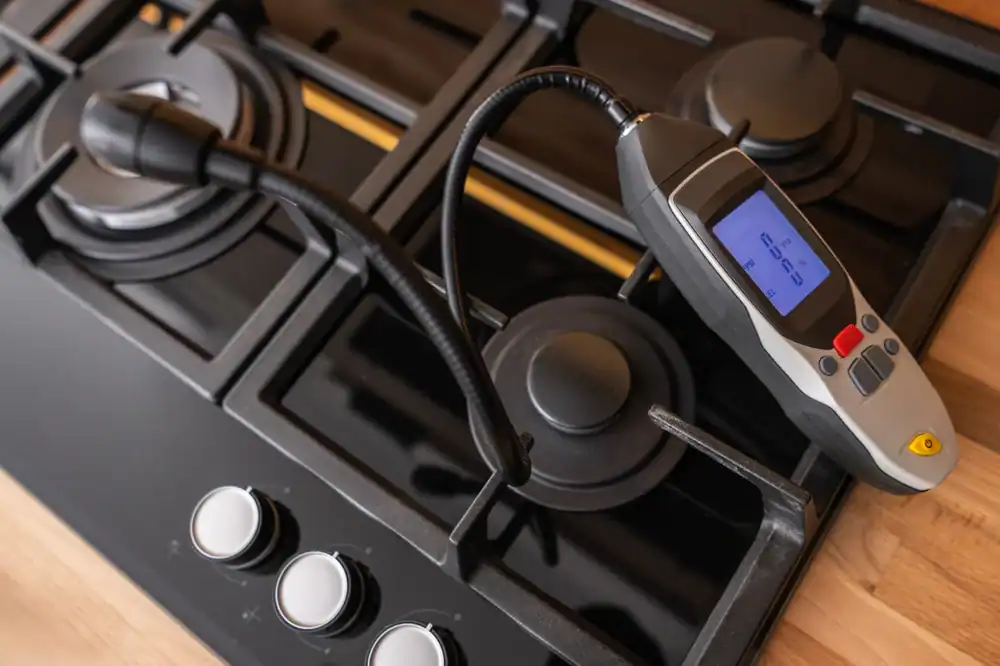
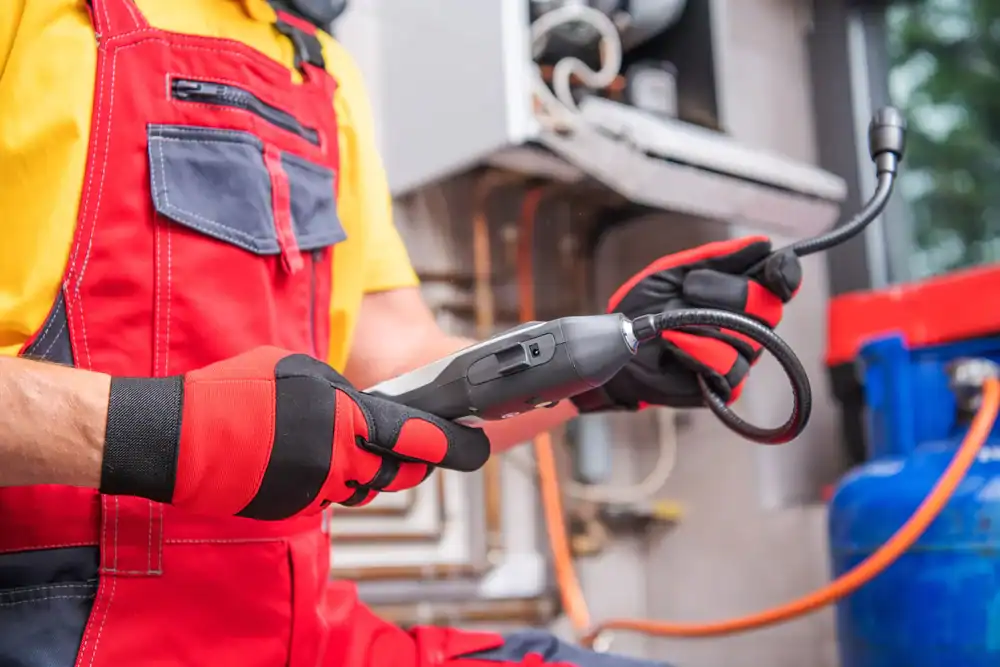
Once on-site, our technician runs a full inspection using professional-grade gas detectors and infrared cameras. The infrared equipment is important here, because New Dorp Beach homes — especially those that were elevated or rebuilt post-Sandy — often have gas connections in locations that aren’t easily visible. Behind walls, beneath elevated floor systems, along rerouted service lines. A detector that only checks the air in the room misses what’s happening inside the structure. Infrared cameras don’t.
If a leak is found, we handle the repair the same visit whenever possible. We take care of all required NYC DOB permits and filings, and if National Grid is involved — meaning they shut off your service and need a licensed sign-off before restoring it — we coordinate that directly. You don’t have to manage two conversations at once. For any multi-unit buildings in the neighborhood, Staten Island Community District 2 is currently in its active Local Law 152 inspection window for 2025, and we handle that compliance paperwork the same way: one call, one vendor, done.

Ready to get started?
Our gas leak detection isn’t a single-point check. We inspect the full gas system — exposed piping, flexible connectors, appliance connections, shutoff valves, and any sections that may have been modified during renovation or post-Sandy rebuilding. In a neighborhood like New Dorp Beach, where a significant portion of the housing stock has been rebuilt, elevated, or substantially repaired within the last decade, that full-system approach matters. A partial inspection on a home with a mixed-vintage gas system — original piping interfacing with newer post-flood connections — misses where the real risk tends to sit.
Salt air corrosion is a specific factor we look for in coastal homes. Metal gas piping, fittings, and flexible connectors in homes two blocks from the Raritan Bay face a different corrosion environment than homes in inland Staten Island neighborhoods. The professional-grade equipment we use on every inspection is calibrated to detect leaks that corrosion creates before they become detectable by smell alone — which matters because odor fade is real. The mercaptan odorant added to natural gas can dissipate, meaning the absence of a smell is not a clearance.
Pricing is transparent and stated before any work begins. No hidden fees get added after the fact. If your situation involves insurance — when gas leak damage has occurred — we work directly with insurance companies, which takes one significant administrative burden off your plate during an already stressful situation. Local Law 157 natural gas detector installation, required in all NYC residences by January 1, 2027, can also be addressed at the same visit.

This is one of the most common situations we handle on Staten Island. When National Grid detects a leak or flags a concern on their end, they’ll shut off gas service and inform you that a Licensed Master Plumber must inspect and sign off on the building-side gas system before they’ll restore it. That’s not optional, and it’s not something a building super or a general handyman can handle — NYC law requires a Licensed Master Plumber for all gas piping work.
Here’s how we handle it: we come to your home, inspect the internal gas system using professional-grade detectors and infrared cameras, identify and repair any issues, and provide the documentation National Grid needs to restore service. We coordinate with National Grid directly — you’re not left managing two separate conversations while your heat or stove is out. The goal is getting your gas back on as quickly as the work safely allows.
Yes, and here’s the honest reason why. The Build It Back program moved fast, and a lot of the gas work done during home elevations and post-flood rebuilds was completed under time pressure and emergency conditions. Gas service lines were extended to reach elevated foundations, connections were rerouted, and in some cases the work was done by contractors juggling dozens of jobs at once. That doesn’t mean it was done wrong — but it does mean it hasn’t necessarily been looked at since.
More than a decade later, those connections are aging. Flexible connectors in particular have a finite service life, and any that were installed during the Sandy rebuild period are now well past the point where a professional inspection makes sense. We use infrared cameras that can inspect sections of the gas system that aren’t visibly accessible — including beneath elevated floor systems and behind finished walls — so the inspection covers the full picture, not just what’s easy to reach.
It can, and it does over time. Salt air accelerates corrosion on metal gas piping, fittings, and the flexible connectors that connect appliances to the gas supply. Homes in New Dorp Beach — sitting directly on the Raritan Bay shoreline — face a more corrosive environment than homes even a mile inland. Iron and galvanized piping, which is common in homes built before the 1970s and present in some older sections of the neighborhood, is particularly susceptible to salt-air corrosion over decades of exposure.
The issue is that this kind of corrosion develops slowly and isn’t always visible from the outside of a pipe. It can create small pinholes or weaken joints to the point where gas escapes at a rate too low to trigger a strong odor — especially given that the odorant added to natural gas can dissipate over time. Professional-grade gas detectors catch what your nose might not. If your home is older, or if it has any original gas piping that predates the Sandy rebuild, a coastal corrosion inspection is a reasonable and straightforward thing to schedule.
It’s a fair question, and the short answer is: possibly, and it’s worth checking. The project that completed in May 2025 involved installing 8,701 feet of new storm sewers, raising street elevations on Cedar Grove Avenue, Milton Avenue, Finley Avenue, and Hett Avenue, and replacing water mains across more than 50 blocks. That’s a significant amount of underground excavation across a dense residential neighborhood. When large-scale underground work happens — especially work that involves changing street grades — adjacent utilities can experience stress from soil movement, vibration, and shifting ground loads.
There’s also documented precedent in New Dorp Beach specifically: a CBS News report confirmed that a contractor struck a gas line in the neighborhood during construction activity, forcing four home evacuations. If your home is on or near one of the project streets, scheduling a post-construction gas inspection is a logical, proactive step. We use infrared cameras and professional-grade gas detectors to check the full system, including underground connections and sections adjacent to areas where excavation occurred.
This is one of the most common points of confusion for Staten Island homeowners, and it’s worth clearing up directly. National Grid is responsible for the gas distribution infrastructure — the mains running under the street and the service line up to your meter. When they respond to a reported leak, they’re checking and managing their side of the system. If they find a problem on their end, they handle it. If they find a problem on the building side — meaning inside your home or in the piping between the meter and your appliances — that’s where their authority ends.
Building-side gas piping is the jurisdiction of a NYC Licensed Master Plumber. National Grid cannot legally repair internal gas lines; that work requires a licensed plumber to perform and sign off. So when National Grid tells you to hire a licensed plumber, they’re not passing the buck — they’re following the law. We handle the building-side inspection and repair, coordinate the documentation National Grid needs, and manage the process from detection through restoration of service.
Local Law 152 applies to most NYC buildings except one- and two-family homes. Since New Dorp Beach is predominantly single-family and two-family residential housing, the majority of individual homeowners in the neighborhood are not subject to the mandatory inspection schedule under this law. However, if you own or manage a multi-unit building in the area — including any of the attached homes that exist throughout the neighborhood — Local Law 152 does apply, and Staten Island Community District 2 is currently in its active inspection window, which runs through December 31, 2025. Missing that deadline carries a $5,000 civil penalty.
For single-family homeowners, Local Law 152 may not apply, but Local Law 157 does. That law requires natural gas detectors to be installed in all NYC residences, including single-family homes, with a compliance deadline of January 1, 2027. If you’re already scheduling a gas inspection or having repair work done, detector installation can be addressed at the same visit. We handle both the inspection and any required repairs, plus all DOB filings — so compliance doesn’t require coordinating multiple contractors.
Other Services we provide in New Dorp Beach