
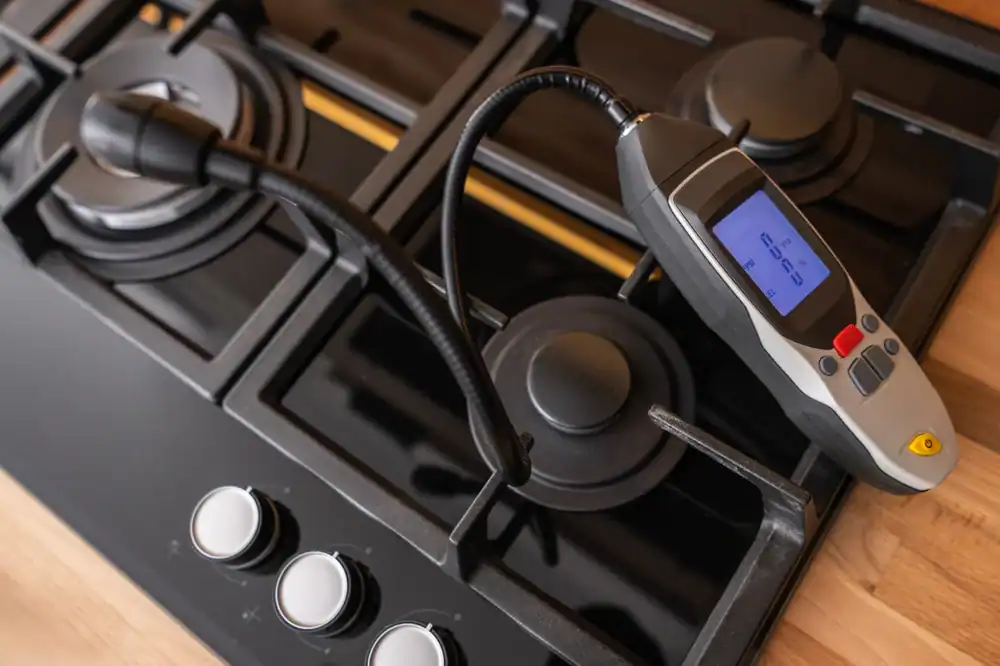

Port Richmond has some of the oldest residential building stock on Staten Island. The two-family woodframes that line the streets here — most of them built between 1895 and 1925 — weren’t designed with modern gas safety in mind. The piping inside those walls has been there for decades, sometimes longer, and corrosion doesn’t wait for a convenient time to become a problem.
When we run a proper gas leak detection on your Port Richmond home, you stop guessing. You find out exactly where the issue is, how serious it is, and what it takes to fix it — before it turns into an emergency call at 2 AM or worse.
For property owners in Port Richmond, there’s also the compliance side of this. Staten Island Community District 1 had a Local Law 152 gas piping inspection deadline of December 31, 2024. If your multi-unit building missed that window, you’re already out of compliance and facing a $5,000 civil penalty. Getting a proper inspection now doesn’t just protect the people living in your building — it protects you from a penalty that compounds the longer you wait.
We’ve been operating in New York City since 1983. That’s over four decades of working on the exact kind of aging, multi-era gas systems you find in North Shore neighborhoods like Port Richmond — buildings that have been renovated in pieces, with gas lines from three different eras running through the same walls.
Bobby and Rob are the father-and-son team behind the business. When you call, you’re dealing with people who have their name on the work, not a dispatch center routing you to whoever’s available. Every technician is a NYC Licensed Master Plumber — the highest credential for gas work in New York State — and all are drug-tested and vetted before they ever set foot in a client’s home.
We serve Port Richmond and Staten Island directly and know this market. That means familiarity with National Grid as the local gas utility, knowledge of the DOB filing process for Staten Island properties, and real experience with the pre-war building stock that defines Port Richmond’s housing landscape.

When you call us about a potential gas leak, the first thing that happens is a real conversation. You describe what you’re noticing — a smell near the stove, something faint in the basement, a hissing sound near a wall — and a licensed master plumber assesses whether this needs an immediate emergency response or a scheduled inspection. For true emergencies, our response time is 30 to 60 minutes.
On-site, our technician uses professional-grade gas detectors and infrared cameras to locate the source. This matters especially in Port Richmond’s older woodframe homes, where gas lines may run behind plaster walls, under original hardwood floors, or through basement spaces that haven’t been touched in 40 years. A nose test or a consumer-grade detector won’t find a slow leak hiding behind a wall. The equipment we use will.
Once the leak is located, you get a clear explanation of what was found and what the repair involves — with transparent pricing stated before any work begins. If the issue requires a DOB permit or ties into a Local Law 152 compliance situation, we handle that paperwork as part of the process. You don’t have to figure out the filing on your own. And if National Grid needs to be coordinated for service restoration, we handle that directly as well.

Ready to get started?
Gas leak detection in Port Richmond isn’t a one-size-fits-all visit. The scope of what needs to be checked depends on your building type, the age of your gas system, and what triggered the concern in the first place. For a single-family or two-family home on a block off Port Richmond Avenue, that might mean checking the lines running to the stove, the boiler, and any flexible connectors behind appliances. For a small multi-unit building, it means a more thorough inspection of the full exposed gas piping system — which is also what Local Law 152 requires.
Every detection visit includes a full assessment using professional-grade gas detectors and infrared cameras, a clear explanation of findings, and transparent pricing before any repair work starts. If a repair is needed, we handle it on the spot when possible — same-day resolution is the goal, not a drawn-out process that leaves you without gas for days. For building owners dealing with a DOB violation or a missed Local Law 152 deadline, we handle the inspection, repair, DOB filing, and compliance certification all together.
One detail that’s specific to Port Richmond: the Kill Van Kull waterfront location means salt air and humidity from the tidal strait are a real factor in how quickly exposed gas infrastructure deteriorates. That’s not a concern you’d have in Great Kills or Bay Terrace, but it’s a legitimate one here on the North Shore. It’s one more reason why routine inspection — not just emergency response — makes sense for Port Richmond property owners.
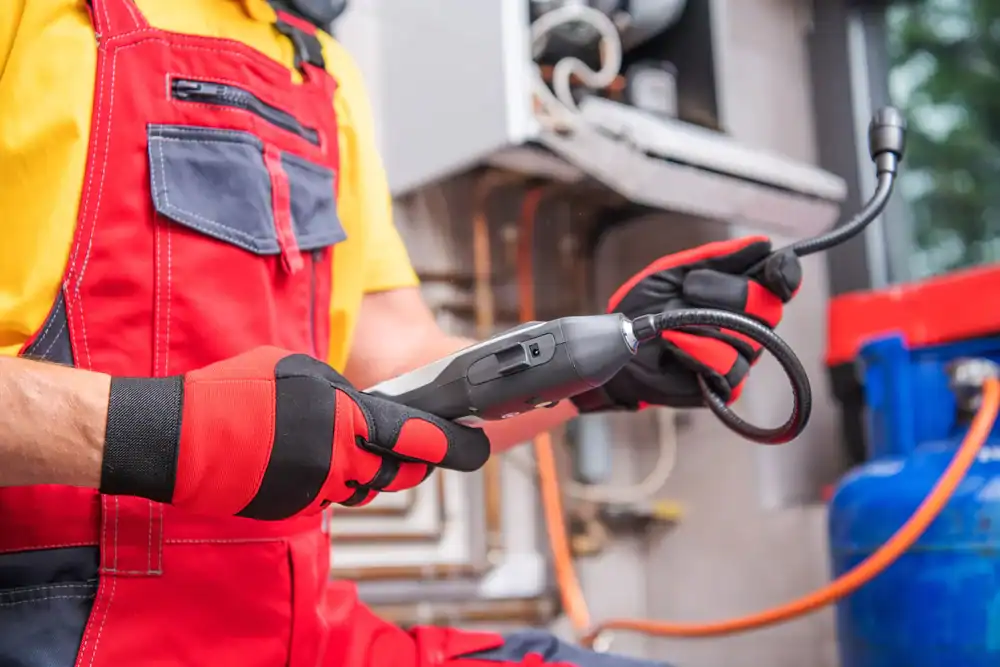
The first move is to get everyone out of the building immediately. Don’t stop to turn off appliances, don’t flip light switches, and don’t use your phone until you’re outside — any spark can ignite accumulated gas. Once you’re clear of the building, call 911 and then National Grid, which is the gas utility serving Staten Island. They’ll respond to the utility side of the situation.
Here’s what most Port Richmond residents don’t realize: National Grid’s responsibility ends at the meter. They check and secure the distribution system up to your building, but they don’t inspect or repair the gas piping inside your home. Once they’ve cleared the utility side, you still need a NYC Licensed Master Plumber to assess and repair the building-side piping before gas service can be restored. That’s where we come in — and with a 30 to 60 minute emergency response time, you’re not waiting around for hours on the sidewalk.
No — and this is one of the most common points of confusion for Staten Island homeowners. National Grid handles the gas distribution infrastructure up to and including the meter. Everything on the building side of that meter — the gas lines running through your walls, floors, basement, and up to your appliances — is your responsibility as the property owner, and it can only be legally repaired by a NYC Licensed Master Plumber.
When National Grid responds to a gas complaint in Port Richmond, they may shut off service at the meter if they detect an issue or if the situation warrants it. At that point, you need a licensed master plumber to locate the problem, make the repair, and coordinate with National Grid for service restoration. Trying to handle this yourself or hiring an unlicensed contractor isn’t just a code violation — it can result in continued gas shutoff and DOB violations that are expensive and time-consuming to resolve.
It’s a direct relationship. The older the building, the older the gas infrastructure is likely to be — and the higher the chance that corrosion, joint deterioration, or failing flexible connectors are present somewhere in the system. Port Richmond’s dominant housing type is the two-family woodframe built between 1895 and 1925. That means some of these homes are over 100 years old, and the gas piping inside them may have been installed decades ago with minimal updates since.
Plumbing industry sources specifically name Port Richmond as one of the Staten Island neighborhoods where early-1900s homes require frequent infrastructure updates due to age. Add in the North Shore’s proximity to the Kill Van Kull waterfront — where salt air and humidity from the tidal strait accelerate corrosion of exposed metal piping — and you have conditions that make routine gas inspection genuinely important, not just a precaution. A slow leak developing in a wall of a 100-year-old woodframe doesn’t announce itself. Professional-grade detection equipment finds it before it becomes an emergency.
Local Law 152 applies to most buildings in New York City that have gas piping, with the main exception being one- and two-family homes. If you own a three-unit building, a small apartment building, or any mixed-use property in Port Richmond, it almost certainly applies to you.
Port Richmond is in Staten Island Community District 1, and the most recent Local Law 152 inspection cycle for CD1 had a deadline of December 31, 2024. If your building didn’t complete a gas piping inspection by that date, you’re currently out of compliance and exposed to a $5,000 civil penalty. The inspection must be performed by a NYC Licensed Master Plumber or a qualified gas operator working under LMP supervision, and the certification has to be filed with the NYC DOB within 60 days of the inspection. We’re licensed to perform the inspection, make any required repairs, and handle the DOB filing — so you’re not coordinating multiple vendors or trying to navigate the paperwork on your own.
Not necessarily, and this is genuinely important to understand. The smell associated with natural gas comes from mercaptan, an odorant that’s added to the gas specifically so you can detect it. But mercaptan can dissipate — through physical and chemical processes in enclosed spaces, through absorption into building materials, or simply because gas accumulates in a space where airflow is limited. This is called odor fade, and it’s a documented phenomenon.
The absence of a gas smell is not the same as the absence of a gas leak. A slow leak in the walls of an older Port Richmond home can continue releasing gas into an enclosed space even after the odor becomes undetectable to the human nose. Consumer-grade gas detectors can alert you to the presence of gas, but they can’t pinpoint the source or tell you how serious the situation is. Professional-grade detection equipment — the kind we use on every visit — is specifically designed to locate leaks that smell alone would miss. If you noticed a gas odor and it went away, that’s still worth a call.
For a typical two-family home in Port Richmond, a thorough gas leak detection visit generally takes between one and two hours, depending on the size of the home, how accessible the gas lines are, and what we find. Older woodframe homes with original plaster walls and tight basement spaces can take longer to inspect properly than newer construction, simply because the piping may be harder to access and the system may have been modified across multiple renovation eras.
If a leak is found and the repair is straightforward — a failed flexible connector behind a stove, a corroded joint at an accessible fitting — we can often resolve it the same day. More involved repairs, or situations that require a DOB permit and filing, take longer to complete through the proper channels. The goal is always same-day resolution where possible. For building owners dealing with a Local Law 152 compliance situation in Staten Island Community District 1, the inspection itself is typically completed in a single visit, with the DOB certification filing following within the required 60-day window.
Other Services we provide in Port Richmond