


There’s a difference between a home that smells fine and a home that actually is fine. In Tottenville, that gap is wider than most people realize. The Arthur Kill to your west and Raritan Bay to your south create a coastal environment that accelerates corrosion in metal gas piping — the kind of slow, invisible deterioration that doesn’t trigger your nose until something has already gone seriously wrong. A professional inspection closes that gap with equipment, not guesswork.
For homeowners in the older Victorian and mid-century homes along Amboy Road and the historic core, this matters even more. Gas infrastructure in those homes can be 50, 60, even 80 years old. That’s not a reason to panic — it’s a reason to know. When a Licensed Master Plumber walks through with professional-grade gas detectors and infrared cameras, you get a clear answer instead of a lingering doubt. If something is found, we fix it the same day with the same people who found it.
For building owners in Staten Island Community District 3, there’s also a compliance reality to face. The Local Law 152 gas piping inspection deadline for your district was December 31, 2024. If that certification hasn’t been filed with the NYC DOB, you’re already in violation — and the penalty is $5,000. We handle the inspection, the repair, the filing, and the paperwork as one process.
We’ve been doing this work in New York City since 1983. That’s over 40 years in the same market — long enough to have worked on the kind of pre-war and Victorian-era homes that define Tottenville’s historic core, and the 1990s colonial developments that filled in south of Hylan Boulevard. We know the gas systems these homes were built with and how they’ve aged over decades in Tottenville’s coastal environment.
Bobby and Rob run this operation as a father-and-son team. When you call, there’s a real person on the other end who’s accountable for the outcome — not a dispatch center routing you to whoever’s available. Every technician is a NYC Licensed Master Plumber, drug-tested, and vetted. That matters when someone is walking through your front door.
We explicitly serve Staten Island, which means Tottenville isn’t a stretch of our service area — it’s part of our core territory. For true emergencies, our response time commitment is 30 to 60 minutes. That’s a real number, not a vague promise.
When you reach out, the first thing that happens is a real conversation — not a form submission that disappears into a queue. You describe what you’re noticing: a smell that comes and goes, a hissing sound near an appliance, a National Grid notice, or just a house that’s old enough that you’ve started wondering. From there, one of our Licensed Master Plumbers comes to you.
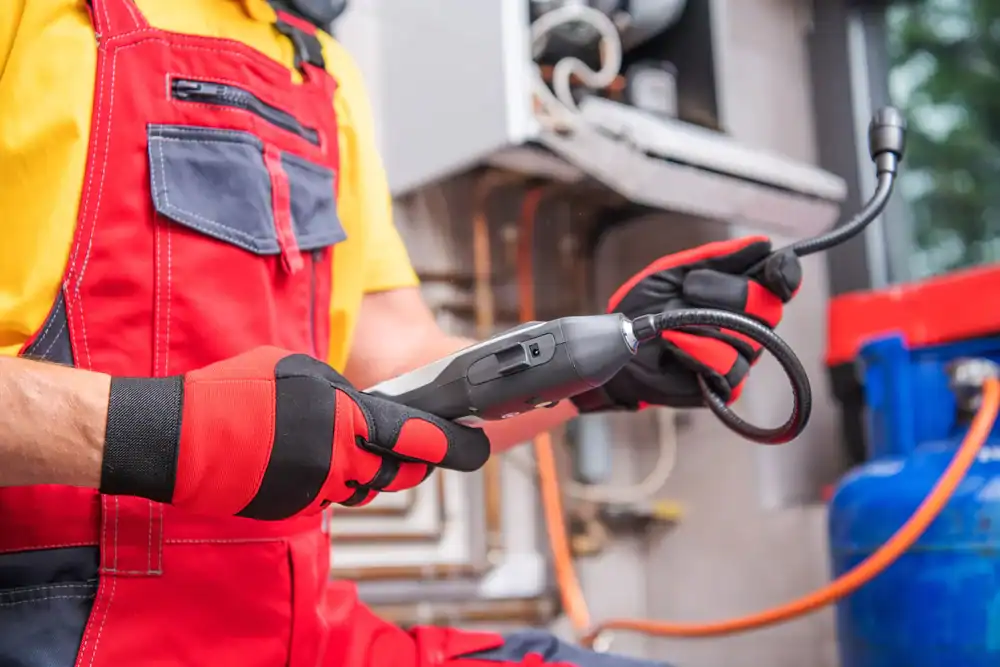
On-site, we use professional-grade gas detectors and infrared cameras to assess your gas system — not just the areas you can see, but the ones you can’t. In Tottenville’s older homes, that means checking behind walls, in basements, and along aging lines that may have never been professionally inspected. Coastal moisture and salt air corrode piping in places that a visual check alone would miss entirely. The infrared camera finds heat and pressure anomalies that indicate a leak without unnecessary demolition.
If a leak is found, we give you a clear explanation of what it is, where it is, and what the repair involves — with transparent pricing before any work begins. No hidden fees, no surprise additions at the end. If your building requires a Local Law 152 certification, we handle the DOB filing as part of the process. One call, one provider, one resolved situation.

Ready to get started?
Our gas leak detection service in Tottenville covers more ground than most homeowners expect. The inspection uses professional-grade gas detectors and infrared cameras to locate leaks in exposed and concealed piping — including the flexible connectors behind stoves and dryers that age out quietly, and the basement lines in older homes that have been through more than a few wet seasons. In a flood-zone neighborhood like Tottenville, where Superstorm Sandy left its mark on homes throughout the South Shore, those basement systems deserve a closer look than they typically get.
If a leak is confirmed, we handle the repair under the same roof — we’re licensed to both inspect and fix, so you’re not waiting on a second company to come out and pick up where we left off. That includes gas line repair and replacement, appliance connection work, and any piping that needs to be brought up to current NYC code. For multi-unit building owners in Staten Island Community District 3 who missed the 2024 Local Law 152 deadline, we provide the full compliance workflow: inspection, repair, DOB filing, and certification — everything needed to clear the violation and avoid the $5,000 civil penalty.
We also coordinate directly with insurance companies when gas leak damage has occurred. If your home has been affected and you’re dealing with a claim, you don’t have to manage that conversation alone.
The first step is to get out. Don’t flip light switches, use your phone inside, or try to locate the source yourself. Leave the building, move away from it, and call 911 from outside. FDNY Engine Co. 151 and Ladder Co. 76 serve Tottenville directly and will respond to confirm whether there’s an immediate danger.
Once the scene is cleared and the first responders have done their assessment, that’s where a Licensed Master Plumber comes in. FDNY and National Grid — which is the utility provider for Staten Island, not Con Edison — handle the utility-side infrastructure. They do not repair the gas piping inside your home. If the source of the smell is within your building’s gas system, a Licensed Master Plumber needs to assess and fix it before service can be safely restored. We can respond with a 30 to 60 minute turnaround for true emergencies and handle everything from detection through repair.
This is one of the most common points of confusion for Tottenville homeowners, and it’s worth understanding clearly. National Grid’s responsibility ends at your meter. They inspect and maintain the utility distribution system — the gas mains running under your street and the service line coming into your building. If their equipment shows no problem on that side, they’ll clear the call and leave. That doesn’t mean your building-side piping is clean.
The gas piping inside your home — from the meter inward, through your walls, to your appliances — is your responsibility, and it requires a NYC Licensed Master Plumber to assess. In Tottenville’s older housing stock, particularly the Victorian-era and mid-century homes along the Amboy Road corridor, that interior piping can be decades old and may have developed corrosion or connection failures that National Grid’s equipment never touches. If the smell persists after National Grid clears the scene, call us. That’s the next step, not a wait-and-see.
An intermittent smell is not a sign that everything is fine — it can actually be a sign of a slow leak that’s accumulating in cycles. Natural gas has a chemical odorant called mercaptan added to it precisely so people can detect it, but that odorant can dissipate through a process called odor fade. In certain conditions — particularly in enclosed spaces with variable airflow — the smell may be detectable at some moments and completely absent at others, even while gas continues to escape.
In Tottenville specifically, homes near the waterfront and those with older basement systems may experience airflow patterns that make intermittent smells more common. A smell that comes and goes is not a reason to wait. It’s a reason to have us run a proper detection sweep with equipment that doesn’t rely on the human nose. Gas does not fix itself, and a leak that’s too small to smell consistently today can become a much larger problem over time.
If your building is a multi-unit property in Tottenville — meaning anything beyond a one- or two-family home — then yes, Local Law 152 applies. The law requires all covered NYC buildings to have their exposed gas piping inspected by a Licensed Master Plumber on a rotating four-year cycle, organized by community district.
Tottenville is in Staten Island Community District 3, which was assigned to the first sub-cycle of the inspection schedule. That deadline was December 31, 2024. If your building hasn’t completed the inspection and filed the Gas Piping System Periodic Inspection Certification with the NYC DOB, you’re currently out of compliance. The civil penalty for non-compliance is $5,000. The next inspection cycle for Community District 3 won’t come around until December 31, 2028, but that doesn’t resolve the existing violation — it needs to be addressed now. We’re licensed to perform the inspection, make any required repairs, and handle the DOB filing as a single-vendor process.
Yes, and it’s not a minor difference. Tottenville sits at the confluence of the Arthur Kill and Raritan Bay, which means the ambient moisture levels and salt content in the air are consistently higher than in inland Staten Island neighborhoods. Salt air is a documented accelerant for corrosion in metal piping — the same process that rusts out car undercarriages faster near the shore affects gas lines, particularly in older homes where the piping is galvanized steel rather than modern materials.
For homes in Tottenville’s historic core — the Victorian-era and early 20th-century properties closest to the waterfront — this means gas infrastructure that was installed 60 to 100 years ago has been exposed to coastal conditions for its entire lifespan. That’s a meaningful risk factor that simply doesn’t apply to the same degree in a neighborhood like Grymes Hill or Grasmere. Add in the flood zone history from Superstorm Sandy, where basement systems across the South Shore were exposed to water infiltration, and the case for a professional inspection with infrared cameras — not just a visual walkthrough — becomes straightforward.
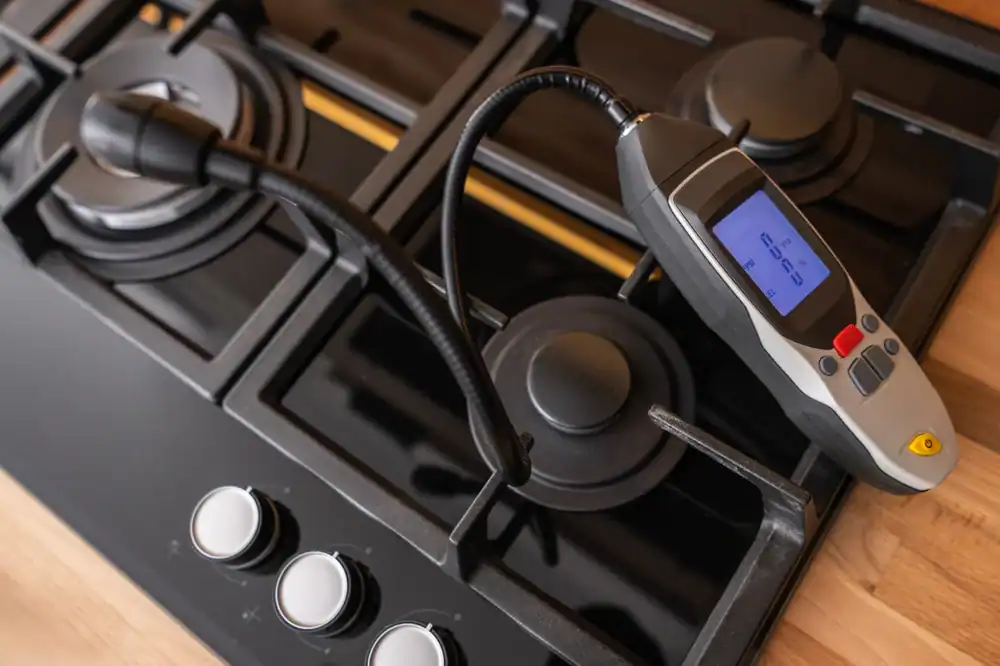
They detect completely different hazards, and yes, you need both. Natural gas — primarily methane — has mercaptan added to it during processing, which gives it that distinctive rotten egg odor. A natural gas detector is calibrated to pick up methane at concentrations well below what your nose would catch, and it can alert you to a leak before the smell becomes obvious or before odor fade has a chance to mask it.
Carbon monoxide is a different problem entirely. It’s a combustion byproduct — produced when gas appliances burn fuel incompletely — and it is completely odorless and colorless. You cannot smell it, and neither can a natural gas detector. A CO detector is the only way to know it’s present. In Tottenville homes with older boilers and furnaces, particularly those that have been running for decades without a full system inspection, incomplete combustion is a real and documented risk. New York City’s Local Law 157 requires natural gas detectors in all NYC residences, with a compliance deadline of January 1, 2027. If your home doesn’t have both types of detectors installed and working, we can assess your gas appliances as part of a full inspection visit.
Other Services we provide in Tottenville