


A lot of Tottenville homeowners don’t find out their gas line is undersized until after the new range is sitting in the kitchen. You fire it up, the flame is weak, the burners cycle unevenly, and now you’re calling the appliance company wondering if something’s wrong with the unit. Nothing’s wrong with the unit. The line feeding it was sized for a 1960s stove, not a 60,000-BTU professional range.
That gap between what your piping can deliver and what your appliances actually demand is one of the most common and most fixable problems in a neighborhood with Tottenville’s housing stock. When the gas line is sized right, the appliances perform the way they’re supposed to. Your water heater heats fast. Your range responds. Your boiler runs efficiently through a South Shore winter without starving for gas pressure.
When the work is fully permitted and documented, you have something tangible — a paper trail that matters for insurance, for building records, and for the next time a storm rolls in off Raritan Bay and someone asks whether your gas system is certified. New construction in Tottenville gets this right from the ground up. Older homes that have been renovated or rebuilt since Sandy get it corrected. Either way, the outcome is the same: a gas system that’s legal, documented, and built to handle what you’re running through it.
We’ve been doing this since 1983. That’s over four decades of gas line installation across New York City — including Staten Island’s specific conditions, its National Grid service territory, and the mix of older homes and new construction that defines neighborhoods like Tottenville.
Every gas line job we take on is performed by a Licensed Master Plumber registered with the NYC Department of Buildings. That’s not a subcontracting arrangement — the LMP is on-site, signs the permit, and is personally accountable for the work. In New York City, that credential is the legal requirement for all gas line work, and it’s verifiable directly through the DOB.
Staten Island was the first NYC borough to go through the Local Law 152 gas inspection cycle, and we’ve been navigating that compliance landscape since it began. From the South Shore to the North Shore, we know what building owners and homeowners in this borough are dealing with — and how to handle it without making it your problem to figure out.
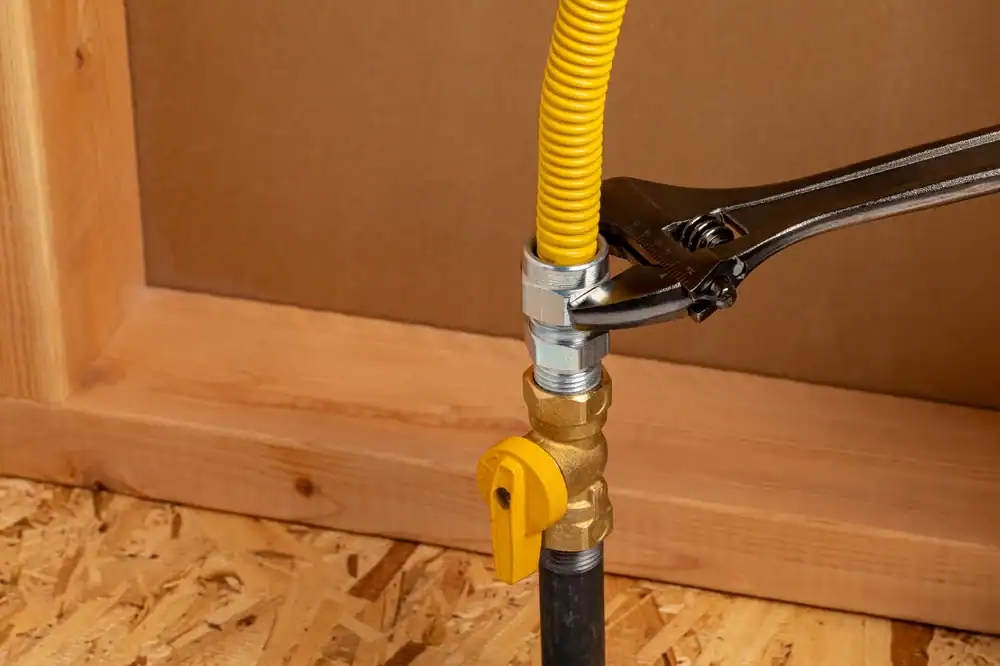
It starts with an assessment. Before any pipe gets touched, we look at what you’re running — every appliance, every BTU demand, the full connected load — and size the line accordingly. In Tottenville, where a lot of homes still have original gas piping that was never designed for modern appliances, this step isn’t optional. It’s what prevents an undersized installation that causes problems six months later.
Once the sizing is confirmed, the permit gets filed through DOB NOW — the NYC Department of Buildings’ online portal. All gas line work in the five boroughs requires this permit, no exceptions. After the permit is approved, the physical installation happens: pipe run, fittings, shutoff valves at each appliance, and a pressure test at 1.5 times working pressure before anything gets turned on. That test is documented in writing.
The final step is utility coordination. Staten Island runs on National Grid, not Con Edison, and getting gas service activated or expanded requires National Grid’s authorization in addition to the DOB permit. We handle that coordination directly. You don’t need to call National Grid, navigate their process, or figure out what they need — that’s part of the job. When the work is done, you get the documentation: permit records, pressure test results, and the LMP certification. Everything in writing.
Ready to get started?
Gas line installation isn’t just running pipe from point A to point B. The scope depends on what you’re connecting, what’s already in the wall, and what the building’s existing infrastructure can support.
For a single appliance hookup in Tottenville — a new gas range, a dryer, or a water heater — most installations fall in the $500 to $2,000 range. Whole-home installations, which cover multiple appliances or a full re-pipe, typically run $1,300 to $3,500. Linear footage is priced at $12 to $25 per foot depending on the complexity of the run and the pipe type required. Every job starts with a written estimate before any work begins.
For Tottenville homeowners upgrading to high-BTU appliances — a professional-grade range, a tankless water heater pulling 150,000 to 199,000 BTU, or a whole-house generator — the line sizing calculation is critical. An undersized line doesn’t just underperform; it can void the appliance manufacturer’s warranty and create a code violation. We calculate the full connected load before recommending pipe diameter, so the line is built for everything you’re running, not just what’s currently hooked up.
For property owners with multifamily or mixed-use buildings in Tottenville, Local Law 152 compliance is part of the picture. Staten Island completed its first LL152 inspection cycle in 2019 and is now in subsequent cycles. The full compliance service — LMP inspection, violation remediation, and GPS-2 certification filing with the DOB — is available for building owners who need to meet their deadline and avoid penalties that can reach up to $10,000.
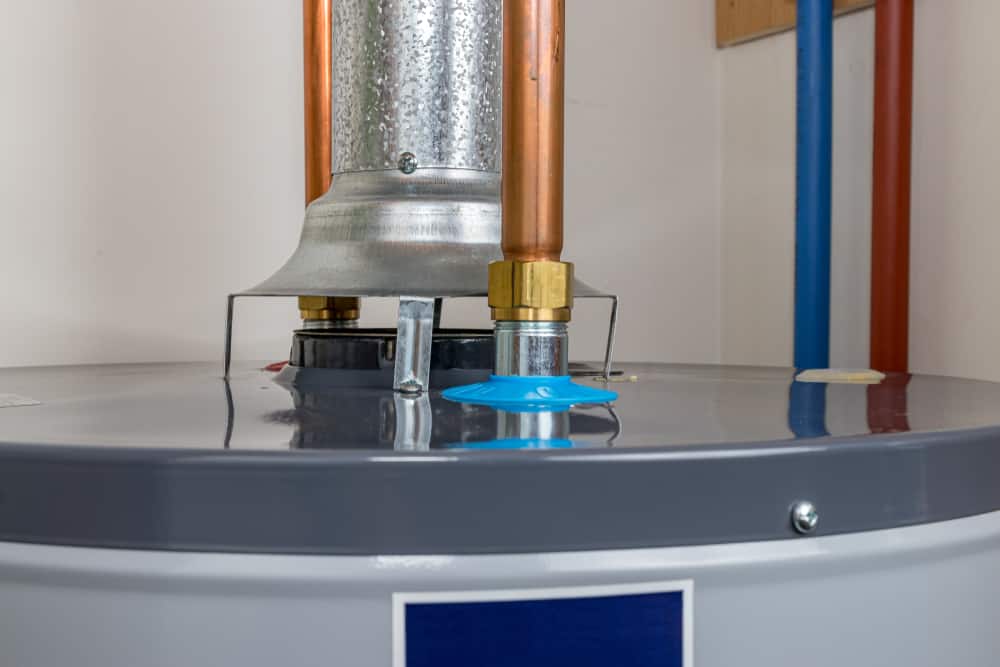
It depends on what’s already there and what you’re adding. A lot of homes in Tottenville — particularly the Victorian-era properties and mid-century colonials along and around Amboy Road — were originally plumbed with gas lines sized for the appliances available at the time. A standing-pilot water heater and a basic four-burner stove don’t demand much. A modern tankless water heater or a professional gas range demands significantly more.
Before recommending replacement versus extension, we do a full assessment: pipe diameter, material condition, total connected BTU load, and the length of the run from the meter to each appliance. If the existing line can handle the added demand after a proper calculation, an extension may be all you need. If it can’t — and in older Tottenville homes, that’s a real possibility — a new line or partial re-pipe is the right call. The assessment tells you exactly what you’re working with before any money is committed.
In New York City, only a Licensed Master Plumber registered with the NYC Department of Buildings can legally install, repair, or alter gas piping. This applies to every borough, including Staten Island. It’s not a suggestion or a best practice — it’s state law, and it’s enforced. Hiring someone without an LMP license for gas work isn’t just a code violation; it’s a criminal offense in NYC.
The practical consequence of unlicensed gas work is significant. The NYC DOB won’t approve the permit, National Grid won’t authorize gas service to the work, and your homeowner’s insurance can be voided if a claim arises from unpermitted installation. Beyond the legal exposure, unlicensed work simply doesn’t get inspected or pressure-tested to code, which creates real safety risk. When you’re getting quotes, ask for the contractor’s LMP license number and verify it directly through the NYC DOB’s online license lookup. Any legitimate gas plumber in Tottenville will give you that number without hesitation.
For a standard single-appliance hookup — a gas range, dryer, or water heater — most installations are completed in a day, and gas is restored the same day once the pressure test passes. More involved jobs, like running a new line from the meter to a different floor or adding capacity for a whole-home installation, can take two to three days depending on the complexity of the run.
The part that adds time isn’t the physical installation — it’s the utility coordination. On Staten Island, that means National Grid. If the job requires new service or an increase in gas capacity, National Grid’s authorization and inspection is a separate step that happens after the DOB permit is approved and the installation is complete. We manage that coordination directly, which keeps the timeline moving. The clearest answer to “how long” is something you’ll get in writing at the estimate stage, specific to your job — not a guess.
Yes. All gas line work in New York City requires a permit filed through DOB NOW, regardless of how minor the job seems. There’s no exemption for small appliance hookups or short runs. The permit must be filed by a Licensed Master Plumber — homeowners cannot pull their own gas permits in NYC.
This requirement applies uniformly across all five boroughs, including Tottenville. The permit process involves submitting the scope of work through the NYC DOB’s online portal, and all submissions are now digital — paper filings are no longer accepted. Once the permit is approved, the installation can proceed. After the work is done and pressure-tested, the LMP certifies the installation and the permit is closed out. We handle every step of this process, including the DOB NOW filing, so you’re not navigating a government portal on your own. The permit documentation becomes part of the written record delivered to you at job completion.
If your Tottenville home was flooded, rebuilt, or significantly renovated after Sandy, it’s worth having the gas system evaluated by a Licensed Master Plumber before assuming everything is in order. Storm surge flooding — Tottenville saw surges up to 16 feet during Sandy — can compromise gas piping, shutoff valves, meter connections, and appliance hookups in ways that aren’t always visible. Some post-Sandy repairs were done quickly under pressure, and not all of them were permitted or pressure-tested to code.
An LMP inspection looks at the full system: pipe condition, joint integrity, shutoff valve function, and whether the installation matches what’s on file with the DOB. If violations are found, they can be remediated and certified before they become a problem during an insurance claim, a refinance, or a future sale. For Tottenville homeowners in FEMA flood zones — and there are a significant number of them given the neighborhood’s three-sided water exposure — having documented, certified gas system records is genuinely useful, not just a formality.
A gas line installation means running new piping — from the meter, from an existing branch, or through walls and floors — to get gas supply to a location where it doesn’t currently exist or where the existing line is inadequate. An appliance gas hookup is the final connection between an existing gas supply line and a specific appliance, typically using a flexible connector and a dedicated shutoff valve.
In practice, many jobs in Tottenville involve both. A homeowner upgrading to a high-BTU range may need the supply line to that location upsized before the hookup can be made. A new construction home near Conference House Park needs the full gas line run before any appliance can be connected. The distinction matters for scoping and pricing: a straight hookup to an existing, adequately sized line is a simpler job than running new pipe and sizing it for a new load. During the estimate, we will identify exactly which work applies to your situation — so you know what you’re paying for and why before anything starts.
Other Services we provide in Tottenville