

If your Tottenville building is in Staten Island Community District 3 and you haven’t completed your Local Law 152 gas piping inspection, you’re not waiting on a deadline — you’ve already missed one. The Cycle 2 deadline was December 31, 2024.
We’ve seen what happens next. The NYC Department of Buildings began issuing Notices of Deficiency to non-compliant CD3 buildings in January 2025. By early 2026, formal Notices of Violation followed. The civil penalty for non-compliance is $5,000 per violation — and that’s before any additional DOB filing fees that took effect in 2026.
Getting compliant now means stopping the clock on penalties and getting your building documented before the situation compounds. Acting now costs less than waiting another month.
There’s something specific to Tottenville worth understanding. Chloride deposits from salt air accumulate on metal surfaces year-round, accelerating the atmospheric corrosion that Local Law 152 inspections are specifically designed to catch. If your building is older — and many in Tottenville are, some dating back to the mid-1800s — there’s a real chance that corrosion has been quietly building up in your boiler room or mechanical spaces.
Knowing where you stand is the only way to get ahead of it.
We’ve been working in Tottenville and the surrounding South Shore neighborhoods since 1983. That’s not a marketing figure — it’s how long Bobby and Rob have been showing up, doing the work themselves, and putting our names on every job. No subcontractors. No anonymous crews. When you call RB Mechanical Plumbing and Heating, you get the actual licensed master plumbers whose credentials are on file with the NYC Department of Buildings.
That matters for Local Law 152 specifically because the GPS1 inspection report is a legal document. It has to be signed and sealed by a Licensed Master Plumber. If the person who shows up isn’t properly credentialed, the report isn’t valid — and you’re still non-compliant, regardless of what you paid.
We’ve been in South Shore buildings — Victorian-era homes near the Conference House, older mixed-use properties along Amboy Road, boiler rooms in buildings that have been standing since before the Outerbridge Crossing was built. The experience in this specific building stock isn’t something you can replicate by adding a service area to a website.

The first step is straightforward: you reach out, describe your building, and get a clear quote before anything starts. We give you a detailed cost breakdown upfront — no vague ranges, no surprise additions at the end.
The cost depends on your building’s size, number of gas meters, total length of exposed piping, and complexity of the system. Smaller buildings come in at the lower end; larger or more complex properties cost more. You’ll know the number before any work begins.
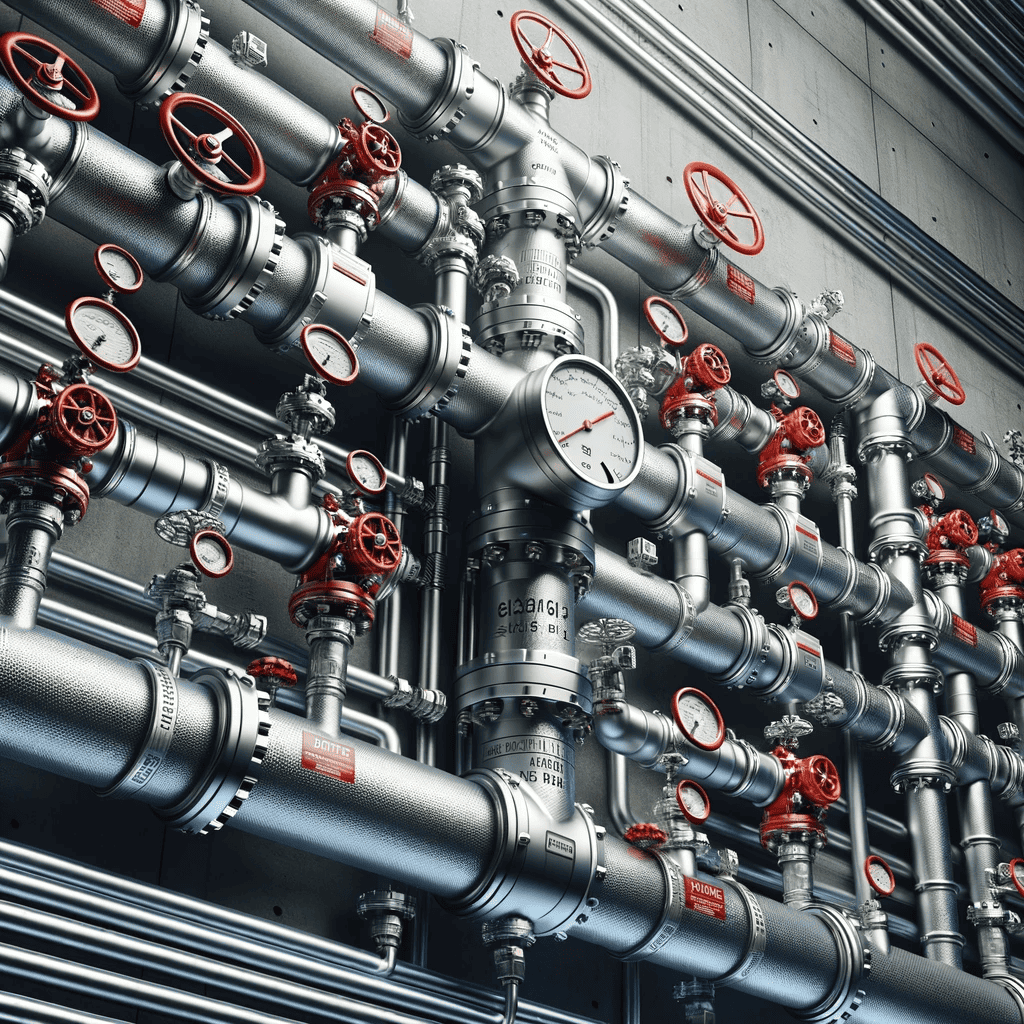
On inspection day, Bobby or Rob personally walks every inch of exposed gas piping covered under Local Law 152 — that means common areas, boiler rooms, mechanical spaces, rooftops, and hallways. We’re looking for atmospheric corrosion, improper pipe supports, illegal connections, missing shut-off tags, and any Abnormal Operating Conditions that need to be flagged.
In a coastal neighborhood like Tottenville, corrosion is one of the most common findings, particularly in buildings close to the waterfront. That gets documented thoroughly and accurately in the GPS1 report, which we deliver to you within 30 days of the inspection.
If deficiencies are found, you don’t need to start the process over with a second contractor. We handle the repairs directly, then coordinate with National Grid — Staten Island’s gas utility — for the restoration process if gas service was affected. Once everything is resolved, you file the GPS2 certification with the NYC DOB through the DOB NOW portal. That filing closes the loop and puts your building back in good standing.
Ready to get started?
Local Law 152 covers all exposed gas piping from the point where the gas line enters your building up to — but not including — the interior of individual tenant spaces. That means boiler rooms, mechanical rooms, common hallways, rooftops, and any shared mechanical areas. It does not cover in-wall or concealed piping, and it does not extend into individual apartments.
If your building has no gas piping at all, you’re not off the hook — you still need to file a certification confirming that, signed by a registered design professional.
For Tottenville buildings specifically, the inspection scope takes on added weight because of the building stock and environment. Older Victorian and early-20th-century structures along the historic core of the neighborhood may have gas piping that’s been in service for decades.
Buildings that sustained flooding during Hurricane Sandy in 2012 and were repaired rather than rebuilt may have piping that experienced saltwater exposure — a form of accelerated internal corrosion that isn’t visible from the outside. These aren’t hypotheticals for this neighborhood; they’re real conditions that a thorough inspection needs to account for.
After the inspection, you receive the GPS1 report — the official gas piping periodic inspection report — within 30 days. You then have 60 days from the inspection date to file the GPS2 certification with the NYC DOB. As of early 2026, all GPS2 filings go through DOB NOW digitally — no paper submissions are accepted.
If you’re already past the December 31, 2024 deadline for Staten Island Community District 3, the priority is getting the inspection done and the GPS2 filed as quickly as possible to stop the penalty exposure from continuing to grow.
Yes — and this is the most important thing Tottenville building owners need to know right now. Tottenville falls within Staten Island Community District 3, and the Cycle 2 Local Law 152 deadline for CD3 was December 31, 2024. That date has passed.
If you did not complete your gas piping inspection and file your GPS2 certification with the NYC Department of Buildings by that date, your building is currently out of compliance. The DOB began issuing Notices of Deficiency to non-compliant CD3 buildings starting in January 2025. By early 2026, formal Notices of Violation were being issued.
The civil penalty for non-compliance is $5,000 per violation, and new 2026 DOB filing fees have added additional costs on top of that. The longer you wait, the more exposure accumulates. The right move is to schedule the inspection now, get the GPS2 filed as quickly as possible, and stop the clock. Your next scheduled cycle deadline after this one is December 31, 2028 — but that doesn’t help if you still haven’t resolved the current cycle.
Finding a deficiency during a Local Law 152 inspection doesn’t automatically mean your gas gets shut off. The outcome depends on what type of deficiency is found. Class 1 conditions — those that pose an immediate safety hazard, like an active gas leak — do require immediate action and can result in a gas service interruption.
Class 2 conditions are less urgent and typically allow gas to remain on while corrections are made within a specified timeframe. Most inspections in older Tottenville buildings find issues that fall into the Class 2 category — things like atmospheric corrosion on exposed piping, improper pipe supports, or missing shut-off tags. These are correctable without a gas shutoff.
The important thing is having a plumber who can handle the repairs immediately rather than sending you back out to find a second contractor. We perform both the inspection and any necessary repairs, then coordinate with National Grid — Staten Island’s gas utility — for the restoration process if service was interrupted. You don’t end up managing two separate vendors under deadline pressure.
The honest answer is that it depends on your building. Local Law 152 inspection costs are driven by several factors: the size of the building, the number of gas meters, the total length of exposed gas piping, the number of floors, and the overall complexity of the system. Smaller buildings typically fall toward the lower end of the range; larger or more complex properties with extensive piping or multiple mechanical rooms cost more.
For Tottenville specifically, older buildings — particularly the Victorian-era and early-20th-century structures in the historic core of the neighborhood — can have more complex gas systems than newer construction. Buildings that were repaired or modified after Hurricane Sandy flooding may also have non-standard configurations that take more time to document properly.
What you should expect from any reputable plumber is a specific, itemized quote before the inspection begins — not a vague range after the fact. We provide a detailed cost breakdown upfront, with no hidden charges and no surprise additions when the job is done.
Most one- and two-family homes in Tottenville are exempt from the Local Law 152 inspection requirement. Buildings classified as Occupancy Group R-3 — which covers the majority of single-family and two-family residential properties — are not required to undergo the periodic gas piping inspection under the law. This exemption covers a significant portion of Tottenville’s residential housing stock, including many of the Victorian-era cottages and older single-family homes in the historic district.
That said, there are situations where the exemption doesn’t apply. If your property has been converted, has a commercial component, or is classified differently than a standard one- or two-family residence, it may fall under the inspection requirement. And if your building has no gas piping at all, you’re still required to file a certification confirming that absence — signed by a registered design professional — or you risk a violation for non-filing.
If you’re unsure whether your specific property is subject to Local Law 152, the fastest way to find out is to check your building’s occupancy classification with the NYC Department of Buildings or ask a licensed master plumber who knows the DOB system.
The NYC Department of Buildings requires that Local Law 152 gas piping inspections be performed by a Licensed Master Plumber, or by a Registered Journeyman Plumber working under the direct and continuing supervision of a Licensed Master Plumber who has completed a DOB-approved 7-hour gas piping inspector qualification course. This isn’t a technicality — it’s a legal requirement that directly affects whether your GPS1 report is valid.
The DOB explicitly recommends that building owners verify a plumber’s license status before hiring them for a Local Law 152 inspection. You can do this through the DOB’s public license lookup tool online. If the person who performs your inspection isn’t properly credentialed, the GPS1 report they produce won’t be accepted, and your building will still be considered non-compliant — regardless of what you paid.
For Tottenville building owners who are already past the December 31, 2024 deadline and facing active enforcement, getting this right the first time matters more than ever. Verifying credentials before you book takes about 60 seconds and protects you from having to start the process over.
It’s a fair concern, especially in a neighborhood with as much historic building stock as Tottenville. Victorian-era homes, Second Empire structures, and early-20th-century construction along the historic core of the neighborhood can have gas piping that’s been in service for a long time.
Add in Tottenville’s coastal environment — salt air off the Arthur Kill and Raritan Bay accelerates atmospheric corrosion on exposed metal piping — and older buildings here do face a higher baseline likelihood of corrosion-related findings than buildings in more inland neighborhoods. That said, most older buildings pass Local Law 152 inspections with findings that are correctable — not catastrophic.
Atmospheric corrosion at lower severity levels, minor pipe support issues, or missing tags are common findings that don’t require major work. The inspection is a visual survey of exposed piping, not a full system teardown. What you’re really doing is getting an accurate picture of where your building stands, which is always better than finding out through a utility emergency or a DOB violation notice.
Buildings that experienced flooding during Hurricane Sandy in 2012 may have additional considerations around internal pipe corrosion from saltwater exposure — something worth flagging to your plumber before the inspection so they know what to look for.
Other Services we provide in Tottenville