


There’s a specific kind of quiet confidence that comes from knowing your gas system has been checked by someone who actually knows what they’re looking at. Not a consumer detector from a hardware store. Not a utility worker who handles the street-side line and leaves. A Licensed Master Plumber with professional-grade equipment who can tell you exactly what’s going on inside your walls.
For Westerleigh homeowners, that peace of mind carries extra weight. A significant portion of the homes along Neal Dow Avenue, Willard Avenue, and the surrounding streets were built between the late 1800s and the 1930s. That’s beautiful architecture — Victorian cottages, Dutch Colonials, Cape Cods — but it also means gas infrastructure that could be original or near-original. Galvanized steel and early black iron pipe corrode from the inside out, quietly, over decades. You won’t see it. You may not smell it, either, because the odorant added to natural gas can actually dissipate before reaching a detectable concentration — a phenomenon called odor fade that most homeowners have never heard of.
After a proper inspection, you know. You have documentation. You know what’s in good shape, what needs attention, and what can wait. That’s not a small thing when you’ve invested $500,000 or more in a home you intend to keep.
We’ve been operating in New York City since 1983. That’s over 40 years of working inside pre-war buildings, Victorian-era homes, and everything in between — the exact kind of housing stock that defines Westerleigh and the North Shore of Staten Island. Bobby and Rob, the father-and-son team behind RB Mechanical Plumbing and Heating, aren’t dispatching subcontractors to your door. Every technician who touches a gas line is a NYC Licensed Master Plumber — the highest credential available for this work in New York State — and all technicians are drug-tested and vetted before they ever set foot in a client’s home.
That last point matters more than it might seem. In a neighborhood like Westerleigh, where homeowners have put serious money and care into maintaining historic properties, who you let through the front door is a real consideration. We serve Staten Island directly, which means familiarity with National Grid’s infrastructure, local DOB requirements, and the aging gas systems common to Westerleigh and the surrounding area. Transparent pricing is provided before any work begins — no hidden fees, no surprises after the fact.
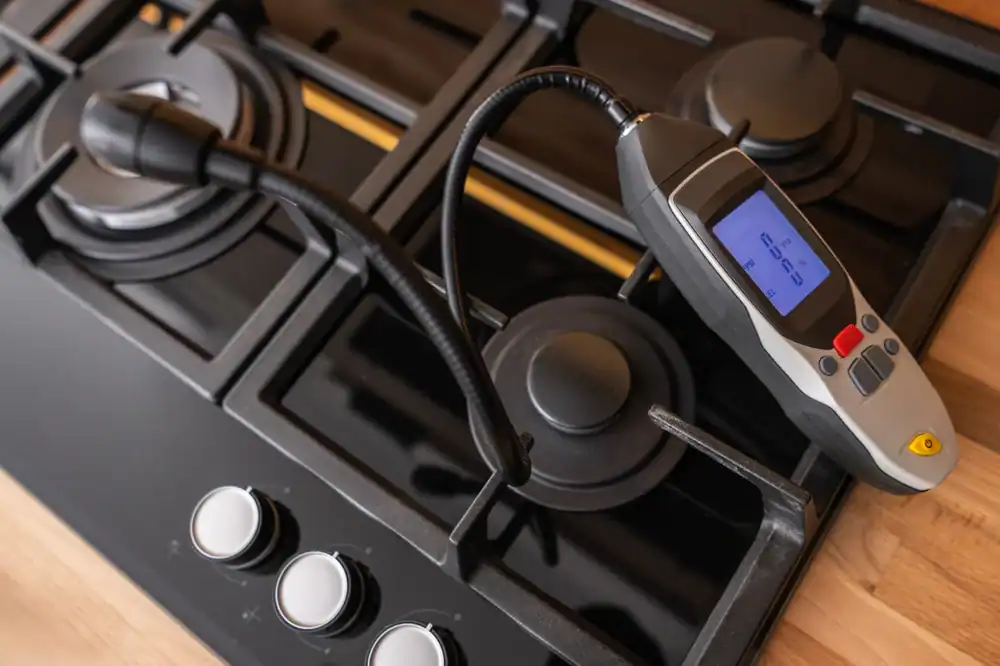
When you call about a suspected gas leak, the first thing that happens is a real conversation — not a scripted intake form. You describe what you noticed: a smell that came and went, a hissing sound near the stove, a utility notice, or just a nagging feeling that something’s off. Based on that, a Licensed Master Plumber is dispatched. The stated response time for true emergencies is 30 to 60 minutes. That’s a specific commitment, not a vague promise.
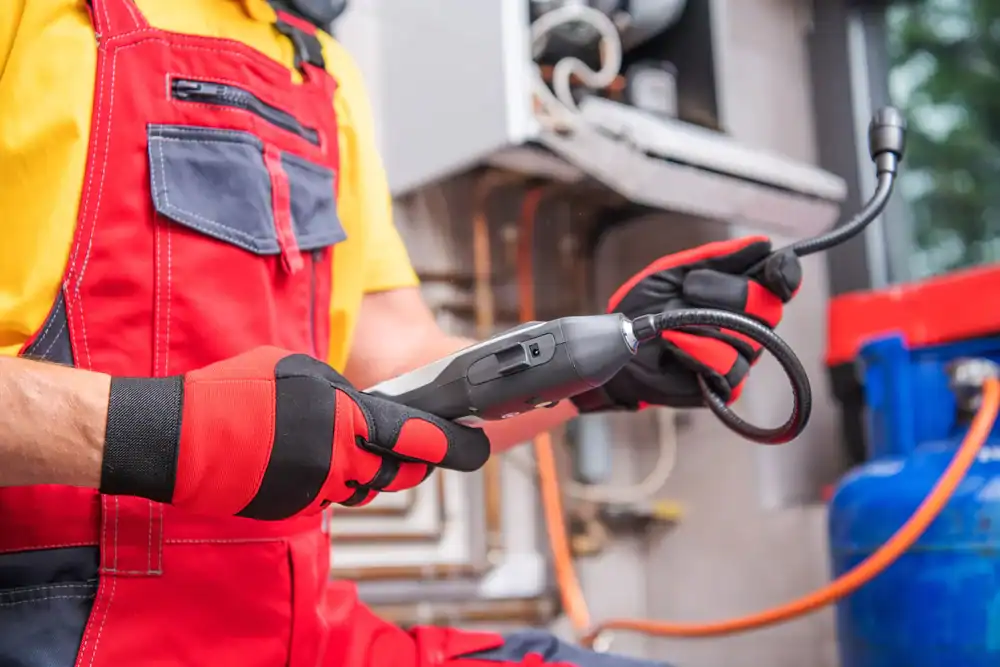
On-site, we use professional-grade gas detectors and infrared cameras to check your system — not just the obvious spots, but behind walls, at connection points, along aging pipe runs, and near appliances. In a home built in the 1920s or 1930s, this matters. Infrared cameras can identify leaks hidden behind original plaster without tearing anything open. If a leak is found, you’re told exactly what it is, where it is, and what fixing it involves before any work begins. Pricing is stated upfront.
If repairs are needed, we handle the full picture: the repair itself, any required NYC DOB permits, and all associated paperwork. For Westerleigh homeowners who need to comply with Local Law 157 — which requires natural gas detectors in all NYC residences by January 1, 2027 — that compliance conversation happens during the same visit. One call, one crew, no coordinating between multiple vendors.
Ready to get started?
Our gas leak detection service covers the full scope of what a Westerleigh home actually needs — not a quick walk-through with a handheld sensor and a handshake. The inspection covers exposed and accessible gas piping throughout the home, appliance connections including stoves and water heaters, flexible connectors that degrade over time, and any areas of concern flagged during the visual assessment. Infrared camera technology is used where visual inspection alone isn’t enough, which in an older home with original plaster walls and narrow utility chases, is often.
If National Grid has shut off your gas — something that happens when a leak is detected during a utility inspection or reported by a neighbor — we handle the building-side repair and the documentation required to get your service restored. That’s a critical distinction: National Grid manages the utility infrastructure up to your building, but a Licensed Master Plumber must resolve anything on the building side before they’ll turn the gas back on. In the middle of a Staten Island winter, that process needs to move quickly, and having one company handle both the repair and the permit filing makes a real difference.
For buildings in Westerleigh that fall under Local Law 152 — multi-family properties along Victory Boulevard or Forest Avenue, for example — we are licensed to perform the required gas piping inspection, make any necessary repairs, and file the certification with the NYC DOB. The $5,000 penalty for missing a Local Law 152 deadline is not a technicality; it’s a real consequence that building owners in Staten Island face.

National Grid handles the gas distribution infrastructure — the mains running under the street and the service line coming into your building. What they do not do is repair the gas piping inside your home. Once National Grid identifies a problem on the building side of the meter, that’s where their responsibility ends. A NYC Licensed Master Plumber has to take it from there.
This distinction trips up a lot of Westerleigh homeowners. National Grid may come out, confirm there’s a leak or a concern, and shut off service — and then it’s on you to hire a licensed plumber to make the repair, pull the necessary DOB permit, and provide documentation before National Grid will restore your gas. We handle exactly that sequence: the repair, the permit, the filing, and the coordination to get your service back on. In a neighborhood where homes depend on gas for heat, hot water, and cooking, that full-service capability matters.
Yes, and this is one of the most important things to understand about natural gas safety. The odorant added to natural gas — called mercaptan — can dissipate through a process called odor fade. That means the smell can disappear even when gas is still present. A leak that you noticed briefly and then stopped smelling has not necessarily resolved itself. Gas can accumulate in enclosed spaces, in wall cavities, or in basement areas without ever reaching a concentration your nose will detect again.
In Westerleigh specifically, where a large portion of homes were built before 1940 and may have original or aging gas infrastructure, an intermittent smell is worth taking seriously. Older pipe joints, deteriorating flexible connectors, and aging appliance connections are exactly the kind of sources that produce slow, inconsistent leaks. A professional inspection with gas detection equipment will either confirm the system is clear or locate the source — either way, you’ll have a real answer instead of a guess.
This is a practical concern for a lot of Westerleigh homeowners, and it’s a fair one. Many of the Victorian and Dutch Colonial homes in this neighborhood have original plaster walls, narrow utility chases, and gas runs that were installed decades ago and may not be easily accessible. The worry is that finding a leak means tearing into walls and damaging original finishes that are difficult or impossible to replicate.
Professional gas detection equipment — specifically infrared cameras — can identify temperature anomalies and gas concentrations through walls without requiring destructive investigation. The goal is always to locate the source with as little disruption as possible. If a repair does require access to a pipe behind a wall, that conversation happens before any work begins, and the scope is explained clearly. We’ve been working in NYC’s pre-war building stock for over 40 years, which means the crew showing up to your Westerleigh home has seen this before and knows how to work carefully in older homes.
Local Law 157 is a New York City law that requires natural gas detectors to be installed in all NYC residences — including single-family homes. The compliance deadline is January 1, 2027. Detectors must be installed within one foot of the ceiling and within ten feet horizontally of any gas appliance. This applies to every gas-using household in Westerleigh, not just multi-family buildings.
The reason this law exists is straightforward: natural gas leaks don’t always produce a smell strong enough to detect, and having a working gas detector provides an early warning that the human nose can miss. For Westerleigh homeowners with older homes and aging gas systems, the combination of a professional gas inspection and proper detector installation addresses both the compliance requirement and the underlying safety concern at the same time. We can walk you through what’s required, confirm your current gas system is in safe operating condition, and make sure you’re covered well ahead of the 2027 deadline.
The fall is the highest-risk period for gas issues in a neighborhood like Westerleigh, and it’s the most practical time to schedule an inspection. When heating systems — boilers, furnaces, gas heaters — sit dormant through the summer and then get fired up for the first time in September or October, connection points that have dried out, shifted, or corroded during the off-season can develop leaks. This is a well-documented seasonal pattern, and it’s more pronounced in homes with older heating equipment.
Getting an inspection done in late summer or early fall — before you need your heat — means you’re not discovering a problem on the first cold night of the year. It also gives you time to schedule any necessary repairs without urgency driving the timeline. For Westerleigh homeowners with boilers or gas furnaces that have been in service for many years, a pre-season inspection is a straightforward way to avoid the scenario where your heat goes out in January and you’re scrambling to find a licensed plumber who can respond quickly.
No. In New York City, all gas piping work — repairs, modifications, installations — must be performed by or under the direct supervision of a NYC Licensed Master Plumber. A building superintendent, regardless of how experienced or capable they are in other areas of building maintenance, cannot legally perform gas line repairs. Unlicensed gas work can result in DOB violations, significant fines, and in serious cases, a complete gas shutoff for the entire building until the violation is resolved by a licensed professional.
This matters particularly in Westerleigh, where some older multi-family properties along the neighborhood’s boundaries may have had unpermitted gas work done by previous owners or supers over the years. If there’s a DOB violation tied to your gas system — whether you knew about it or not — that has to be resolved by a Licensed Master Plumber before service can be restored or the system can be legally used. We handle DOB violation removal as part of our services, which means if you discover an existing violation during an inspection, you don’t need to find a second company to sort it out.
Other Services we provide in Westerleigh