
When we repair your gas line correctly — permitted, pressure-tested, and signed off — you stop wondering. No more second-guessing that faint smell near the stove. No more putting off the inspection because you’re not sure who to call or what it will cost. You get your heat back, your peace of mind back, and documentation that proves the work was done right.
For Westerleigh homeowners specifically, that matters more than it might in a newer neighborhood. The homes along Watchogue Road and the side streets off Victory Boulevard are beautiful — and old. Colonial-style homes from the 1920s and 1930s are common here, and many are still running on original or near-original black iron gas piping. At 70, 80, or even 90 years old, those pipes don’t fail dramatically. They degrade slowly — joints loosen, fittings corrode, and the galvanized-to-black-iron transitions that were standard in mid-century construction become the weak points nobody sees until something goes wrong.
Westerleigh sits on an elevated plateau on Staten Island’s North Shore. That position means more pronounced temperature swings than lower-lying areas, and those swings put repeated stress on aging pipe joints through expansion and contraction cycles every single season. The January 2026 cold that hit Staten Island harder than any other borough wasn’t an anomaly — it’s the kind of winter that tests infrastructure that’s been quietly deteriorating for decades. Getting your gas lines inspected and repaired now, before the next cold snap, is the kind of decision that makes sense in a neighborhood like this.
We’ve been working on Staten Island since 1983. Bobby and Rob — father and son — built this company on straightforward, honest work that gets us called back by the same families for decades. We know the borough. We know National Grid’s restoration process. We know what original black iron piping looks like inside a 1930s Westerleigh colonial, and we know where those systems tend to fail first.
This isn’t a company dispatching anonymous crews from a call center. When you call us, you know who’s coming. That accountability matters in a neighborhood like Westerleigh, where families have owned the same homes for generations and word travels fast. Our reviews consistently say the same things: trustworthy, honest, found problems others missed, showed up fast. Those aren’t marketing words — they’re what homeowners in Westerleigh actually care about.
We’re fully licensed, carry comprehensive insurance, and hold the NYC DOB Gas Work Qualification endorsement required to legally file permits for gas piping work anywhere in the five boroughs, including right here on the North Shore.

It starts with a call. If you’re smelling gas or National Grid has already shut off your service, that call can happen at any hour — we’re available 24/7, and we charge the same rate at 10 PM on a Saturday as we do on a Tuesday afternoon. No after-hours surcharge.
Once we’re on-site, the first step is locating the problem — whether that’s a corroded fitting, a failing joint in an older pipe run, or a section of line that needs full replacement. You’ll get a detailed written estimate before any work begins, so there are no surprises on the back end.
From there, the work gets permitted properly. In New York City — including Westerleigh — most gas piping work requires a DOB permit filed by a Licensed Master Plumber with a Gas Work Qualification endorsement. Skipping that step isn’t a shortcut; it’s a violation that follows the property. We handle the permit filing as part of the job, not as an afterthought.
Once the repair or replacement is complete, a pressure test confirms the system is sealed and safe before gas service is restored. If National Grid needs to be coordinated for restoration — which is often the case after a shutoff — we handle that too. The goal isn’t just to fix the pipe. It’s to hand the job back to you fully closed out, documented, and done.

Ready to get started?
Gas line repair in a neighborhood like Westerleigh covers more ground than it might in a newer development. The homes here are old enough that a single service call can involve diagnosing corroded black iron pipe, identifying a failing galvanized-to-black-iron transition, rerouting a line around a structural element that’s shifted over decades, and pressure-testing the entire system before anything goes back online. We handle all of it — emergency leak repair, corroded pipe replacement, gas line rerouting for kitchen or appliance upgrades, gas pressure testing after any repair, and full Local Law 152 compliance for multi-unit properties and two-family homes in the area.
For Westerleigh property owners with two-family homes — a common housing type here — Local Law 152 is worth understanding. Buildings with more than two units are required to have their gas piping inspected every four years by a Licensed Master Plumber. Non-compliance can mean fines reaching $10,000 per year, and National Grid has the authority to shut off gas service to buildings that haven’t filed. We manage the full compliance cycle, from the inspection itself through DOB filing and utility notification, so you’re not left navigating that process alone.
Whether it’s an emergency call in the middle of the night or a planned inspection to get ahead of a compliance deadline, the scope of work gets explained clearly before anything starts. Written estimate, permitted work, pressure test, utility coordination — that’s our standard, not the exception.
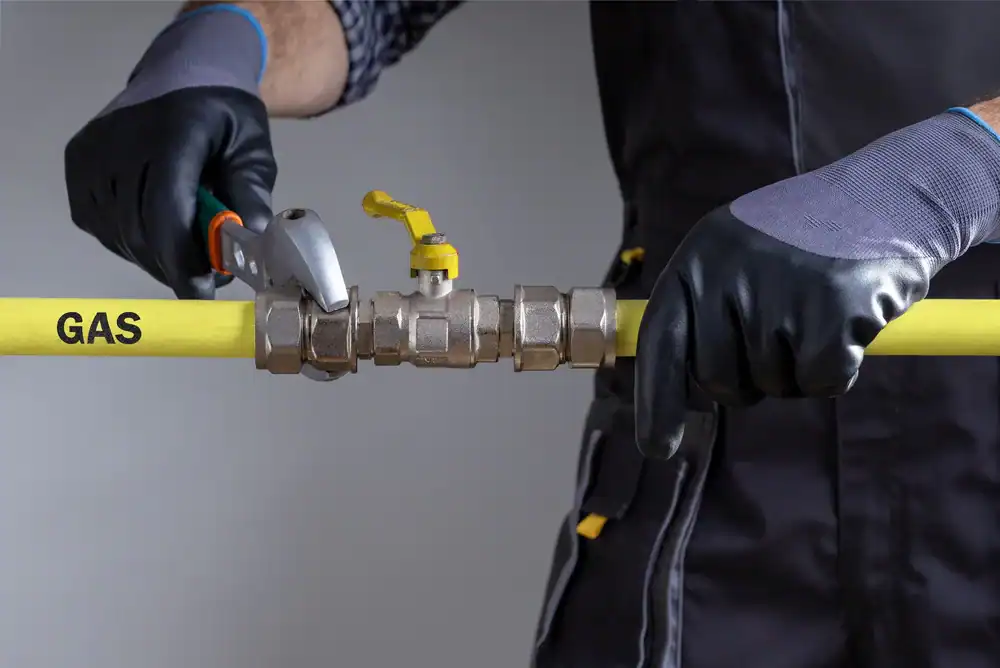
Don’t try to find the leak yourself, and don’t flip any light switches or use anything electrical — a spark in the wrong place can ignite gas that’s already accumulated. Get everyone out of the house, leave the door open as you go, and call National Grid from outside or from a neighbor’s phone. National Grid will send someone to shut off the gas and assess the situation.
Once that’s done, you’ll need a Licensed Master Plumber to locate and repair the source before service can be restored. That’s where we come in. We’re available 24/7 for exactly this kind of call, and we charge the same rate regardless of what time it is — no after-hours surcharge. In a neighborhood like Westerleigh, where a lot of the housing stock dates back to the 1920s and 1930s, a gas smell is worth taking seriously. Older pipe systems don’t always give obvious warning signs before a fitting fails or a joint finally gives out.
The honest answer is that it depends on what’s actually wrong and how accessible the problem is. A straightforward repair — fixing a leaky fitting or replacing a short section of pipe — costs significantly less than a job that involves rerouting a line through a finished wall or excavating to reach a buried section. National averages run around $598 for a standard gas line repair, with rerouting work running $250 to $800 depending on complexity, and pressure testing typically adding $75 to $150.
In Westerleigh, the age of the housing stock is a real cost factor. Homes from the 1920s and 1930s sometimes reveal additional issues once work begins — original fittings that weren’t up to code even when they were installed, or pipe runs that were modified over the decades without proper permits. That’s not a reason to avoid the repair; it’s a reason to hire someone experienced enough to catch those things and tell you upfront what they found. We provide a written estimate before any work starts, so you know what you’re committing to.
Yes, in almost every case. New York City requires that gas piping work be performed by a Licensed Master Plumber who holds a Gas Work Qualification (GWQ) endorsement from the NYC Department of Buildings. That endorsement is separate from a general plumbing license — not every plumber who advertises gas work actually holds it. The permit requirement applies to Westerleigh the same as anywhere else in the five boroughs.
Skipping the permit isn’t just a technicality. Unpermitted gas work creates a violation that attaches to the property — not just to the contractor who did the work. If you sell the home or a DOB inspector flags it, that history comes up. For homeowners in Westerleigh who have maintained their properties for decades and are protective of their investment, it’s worth making sure the work is filed correctly the first time. We handle permit filing as a standard part of every job.
Local Law 152 is a New York City law that requires gas piping systems in most buildings to be inspected every four years by a Licensed Master Plumber. The inspection has to happen within a specific compliance window based on your community district, and after the inspection, the plumber files a report with the DOB within 30 days. If deficiencies are found, they need to be corrected and certified within a set timeframe.
For Westerleigh specifically, the law applies to buildings with more than two units — so if you own a two-family home or a small multi-unit property, it likely applies to you. Non-compliance can result in fines of up to $10,000 per year, and National Grid has the authority to shut off gas service to buildings that haven’t met the requirement. Staten Island’s first compliance cycle ran through 2019, and buildings that missed it or have outstanding deficiencies are now receiving Notices of Deficiency from the DOB. If you’re not sure where your property stands, we can walk you through it and handle the full compliance process from inspection through DOB closeout.
This is one of the most frustrating parts of a gas shutoff, and the timeline depends on a few things working together. National Grid controls when service gets restored — they won’t turn the gas back on until a Licensed Master Plumber has completed the required repairs, filed the necessary paperwork with the DOB, and certified that the system is safe. How quickly that happens depends entirely on how fast the plumbing work gets done and how smoothly the coordination with National Grid goes.
The plumber you hire makes a real difference here. A contractor who knows the National Grid restoration process — what documentation they need, how to communicate with the utility, and what steps can run in parallel rather than sequentially — can significantly reduce the time your household is without gas. For Westerleigh families relying on gas for heat and cooking, especially during a cold stretch on the North Shore, that time gap matters. We’ve been navigating this process on Staten Island for over 40 years and handle the utility coordination as part of the job.
The honest answer is that you don’t know without a professional inspection — and that’s not meant to alarm you, it’s just the reality of how gas infrastructure ages. Black iron pipe, which was standard in homes built in the 1920s and 1930s, can last a long time under the right conditions. But at 80 or 90 years old, corrosion is a real risk, especially at fittings and joints where the pipe transitions between materials or changes direction. The problem is that this degradation happens inside walls and under floors, completely invisible until something fails.
Westerleigh’s older homes carry an additional layer of complexity — many have been modified over the decades, with appliances added, lines rerouted, and work done at various points in the property’s history. Not all of that work was permitted or done to code. A thorough gas line inspection by a Licensed Master Plumber will identify corroded sections, failing joints, and any modifications that don’t meet current NYC code — and give you a clear picture of what actually needs attention versus what’s fine for now. We’ve been working inside Staten Island’s older homes since 1983, and that kind of accumulated experience with the specific pipe configurations common in mid-century construction is exactly what an inspection like this requires.
Other Services we provide in Westerleigh