
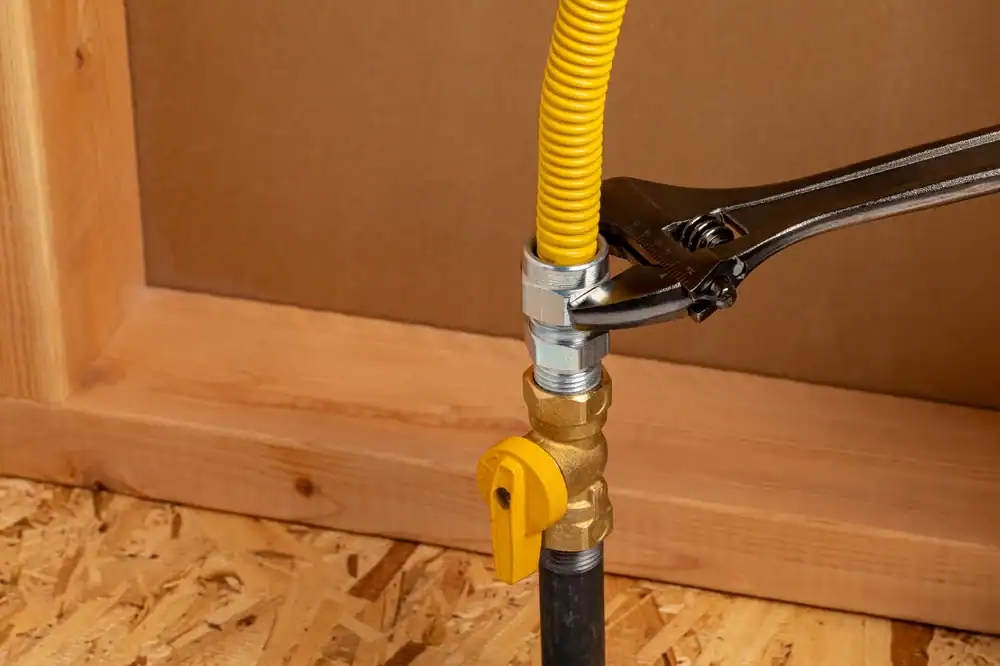

The new range doesn’t get hot enough. The tankless water heater underperforms. The boiler replacement gets complicated because the existing line can’t support the new unit. These aren’t appliance problems — they’re gas line problems, and they’re extremely common in Rossville, where the majority of homes were built in the 1980s and haven’t had their gas infrastructure seriously evaluated since.
When a gas line is properly sized and installed, everything downstream works the way it’s supposed to. Your appliances hit their rated performance. Your boiler runs efficiently through the winter. And if you’ve been thinking about adding a whole-home standby generator — something a lot of South Shore homeowners have reconsidered since Hurricane Sandy — the line is there to support it, permitted and pressure-tested to code.
You also get documentation. A written record of the permitted work, the pressure test results, and the Licensed Master Plumber certification. In a market where Rossville homes are selling and appreciating quickly, that paper trail matters. Unpermitted gas work is one of the things that kills deals at closing — permitted, documented work protects your investment and your resale value.
We’ve been operating since 1983. That’s not a marketing number — it’s relevant here because Rossville’s major residential build-out happened in the 1980s. The gas infrastructure in your home and the regulatory environment we navigated professionally are roughly the same age. That kind of institutional knowledge doesn’t come from a company that showed up five years ago.
Rossville falls in Con Edison territory, not National Grid. That distinction matters because every gas line installation requires Con Edison authorization in addition to a NYC Department of Buildings permit, and a contractor who doesn’t know that process cold will slow your project down. We handle both, start to finish, including the DOB NOW filing required for all gas piping work in New York City.
We have a Licensed Master Plumber on staff — not a subcontracted name on a license while someone else does the work. That LMP is personally accountable for every installation and signs off on the GPS-2 certification filed with the DOB. For Rossville homeowners, that’s the difference between work that holds up and work that creates problems later.
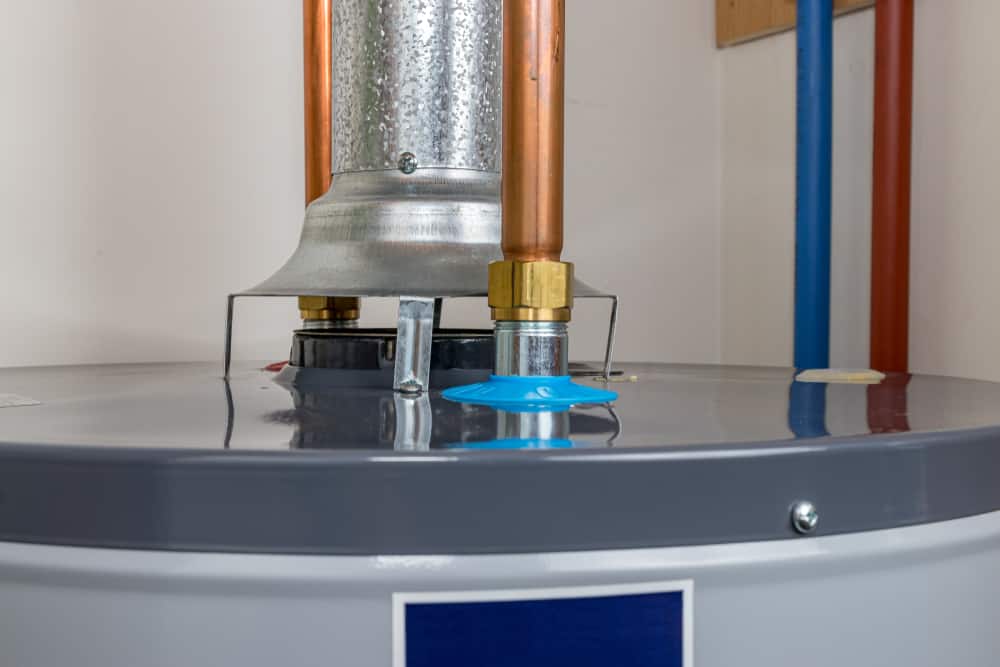
It starts with an assessment. Before any pipe is touched, we evaluate the existing gas infrastructure in your home — what’s there, what condition it’s in, and whether it can support what you need. If you’re adding a high-BTU range, a tankless water heater, or a standby generator, the line has to be sized for the full BTU load of every appliance it feeds. That calculation drives everything downstream: pipe diameter, run length, fittings, and the permit application.
Once the scope is clear, we file the gas piping permit through DOB NOW — the NYC Department of Buildings’ online portal. Rossville falls under Staten Island Community Board 3 for DOB purposes, and that affects how the permit is routed and how inspections are scheduled. We handle that routing.
Installation follows the permit. Black iron pipe is the standard for interior residential gas lines, and every joint gets pressure-tested at 1.5 times working pressure before anything goes live — that’s the NYC Fuel Gas Code requirement, not optional. After the installation passes, we coordinate with Con Edison for the utility authorization and meter activation. The final step is documentation: you receive written records of the permit, the pressure test, and the LMP certification. That’s the complete package.

Ready to get started?
Gas line installation in Rossville covers a wider range of situations than most homeowners expect. The most common starting point is a single appliance hookup — a new gas stove, a water heater replacement, or a dryer conversion. For single-appliance work, costs typically range from $500 to $2,000 depending on how much new pipe needs to be run and what the existing infrastructure looks like.
Whole-home installations, which include running gas service to multiple appliances throughout the house, generally run $1,300 to $3,500. Pipe material is priced at $12 to $25 per linear foot depending on complexity and pipe type.
Two-family homes are common in Rossville — the neighborhood has a significant stock of two-family colonials, including active new construction. A two-family installation is more involved than a single-family job because the gas supply line has to be sized for the combined BTU demand of both units, with individual shutoff valves for each. That’s not a job to hand off to whoever is cheapest — it requires a Licensed Master Plumber who understands multi-unit gas sizing and can file the permit accurately for a two-unit structure.
For homeowners along the South Shore who are looking at whole-home standby generators, that’s a separate gas line project with its own sizing requirements, dedicated shutoff, and permit. We handle generator gas line installation as part of the same permitted process — not as an add-on that gets figured out after the fact.
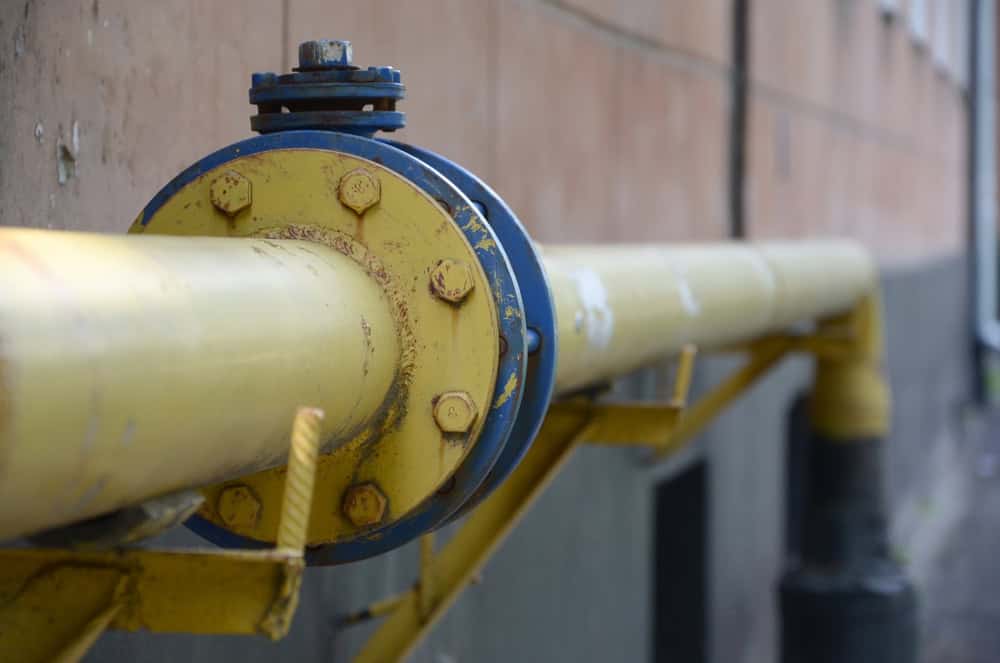
It depends on what you’re adding and what’s already there — but it’s a question worth taking seriously. A home built in Rossville in the 1980s was piped for the appliances of that era. Standard residential ranges, older-style water heaters, and conventional boilers all have relatively modest BTU demands compared to what’s common today. A professional-grade range can pull 60,000 BTU or more. A tankless water heater can demand 150,000 to 199,000 BTU. A whole-home standby generator adds its own sustained load on top of that.
If the existing line was sized for a 1985 appliance package and you’re stacking modern high-demand equipment onto it, you may be looking at a line that’s undersized for the total load — which means appliances that underperform, pilot issues, or pressure problems. We calculate the total BTU demand of every connected appliance and compare it against your current pipe diameter and run length. That assessment tells you whether you need new pipe or whether your existing line can handle the upgrade.
In New York City — which includes Staten Island and Rossville — only a Licensed Master Plumber can legally perform gas line installation, repair, or modification. This is codified in the NYC Fuel Gas Code and the city’s Administrative Code. It’s not a technicality. It’s a criminal offense to perform gas work without an LMP license in NYC, and the consequences extend beyond legal trouble: utility companies won’t activate gas service to unpermitted work, and building insurance can be voided if unlicensed work is discovered.
This matters practically because the LMP isn’t just a credential — it’s who is legally accountable for the installation. When we complete a gas line job in Rossville, our Licensed Master Plumber signs the GPS-2 certification that gets filed with the NYC Department of Buildings. That signature means something. It’s not a name borrowed for a permit while someone else does the work. The LMP is on the job and personally responsible for every step of the installation.
For most residential gas line installations in Rossville, the actual installation work takes one to three days depending on scope. A single appliance hookup with a short pipe run is typically faster. A whole-home installation or a two-family home with longer runs and multiple appliances takes longer.
The full sequence — permit filing through DOB NOW, installation, pressure testing, Con Edison authorization, and meter activation — can extend beyond the installation window depending on how Con Edison schedules their utility inspection. We coordinate directly with Con Edison throughout the process to minimize that gap. The honest answer is that you should plan for a few days without gas service at minimum, and potentially longer if Con Edison’s scheduling is backed up. What we control — the permit filing, the installation, and the pressure testing — gets done efficiently.
Yes — all gas line work in New York City requires a permit filed with the NYC Department of Buildings, regardless of how small the job seems. There are no exceptions for minor work or single-appliance hookups. The permit must be filed through DOB NOW, the city’s online portal, and it must be filed by a Licensed Master Plumber. A homeowner cannot file a gas piping permit on their own behalf in NYC.
Rossville falls under Staten Island Community Board 3 for DOB purposes. That affects how the permit application is routed and how inspections get scheduled — it’s not a generic NYC process, it has community district specifics that an experienced LMP knows how to navigate. We handle the entire permit process: the DOB NOW filing, the coordination with the DOB inspector, and the final GPS-2 certification that closes out the permit record. You don’t need to create a DOB NOW account or figure out which community district codes apply to your address.
Yes, and it’s one of the more common gas line requests on Staten Island’s South Shore. After Hurricane Sandy knocked out power across the South Shore for days — and in some cases weeks — standby generator adoption in neighborhoods like Rossville went up significantly. A whole-home standby generator, typically 20kW or larger, requires a dedicated gas line with enough capacity to sustain high BTU demand for extended run times. That’s not the same line that feeds your stove or water heater — it needs to be sized independently for the generator’s fuel consumption rate.
The generator manufacturer or installer handles the mechanical installation of the generator unit itself, but the gas line that feeds it is a separate project that requires a Licensed Master Plumber and a DOB permit. We size the generator gas line based on the unit’s BTU demand, install a dedicated manual shutoff valve, pressure-test the line to NYC Fuel Gas Code standards, and file the permit through DOB NOW. If you had a generator installed after Sandy without a proper gas line permit, that’s worth addressing before it becomes a problem at resale or during a Con Edison inspection.
Two-family homes are a significant part of Rossville’s housing stock — the neighborhood has a long history of two-family colonials, and new construction in the area continues to include two-family builds. Gas line installation for a two-family home is more involved than a single-family job, and the cost reflects that added complexity.
The core difference is that a two-family gas line has to be sized for the combined BTU load of both units — two kitchens, two sets of water heaters, potentially two boilers or heating systems, and any additional appliances in either unit. The main service line coming in from the meter needs to be large enough to handle that total demand, and the system needs individual shutoff valves for each unit. Pricing for this type of work falls within the whole-home installation range of $1,300 to $3,500 as a starting point, but the actual cost depends on the total pipe run, the number of appliances being served, and whether the existing service entry needs to be upsized. We provide a written, itemized estimate before any work begins — so you know what you’re looking at before committing to anything.
Other Services we provide in Rossville