
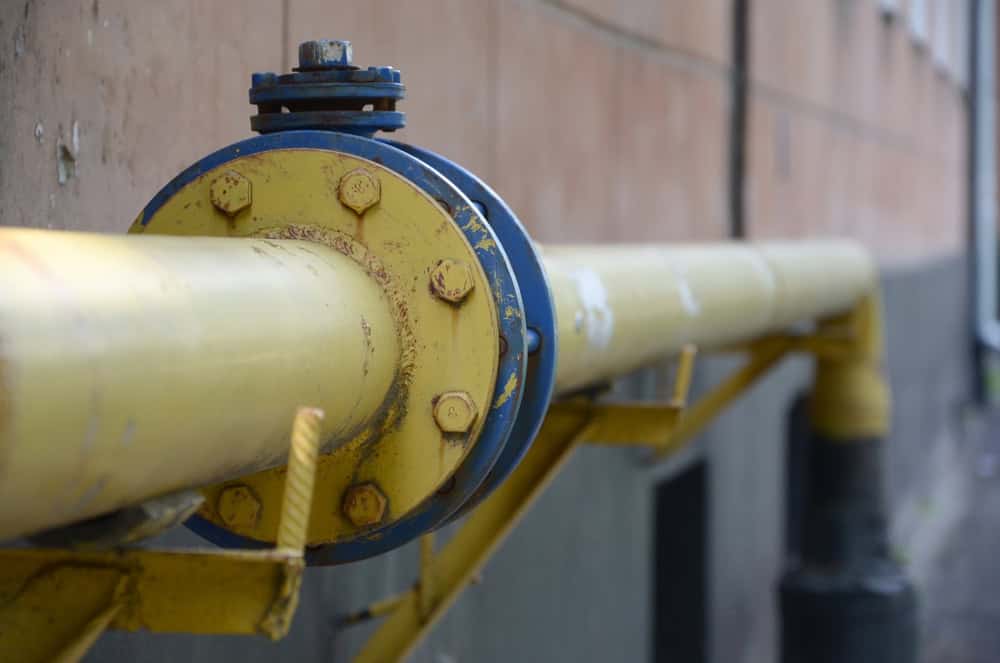
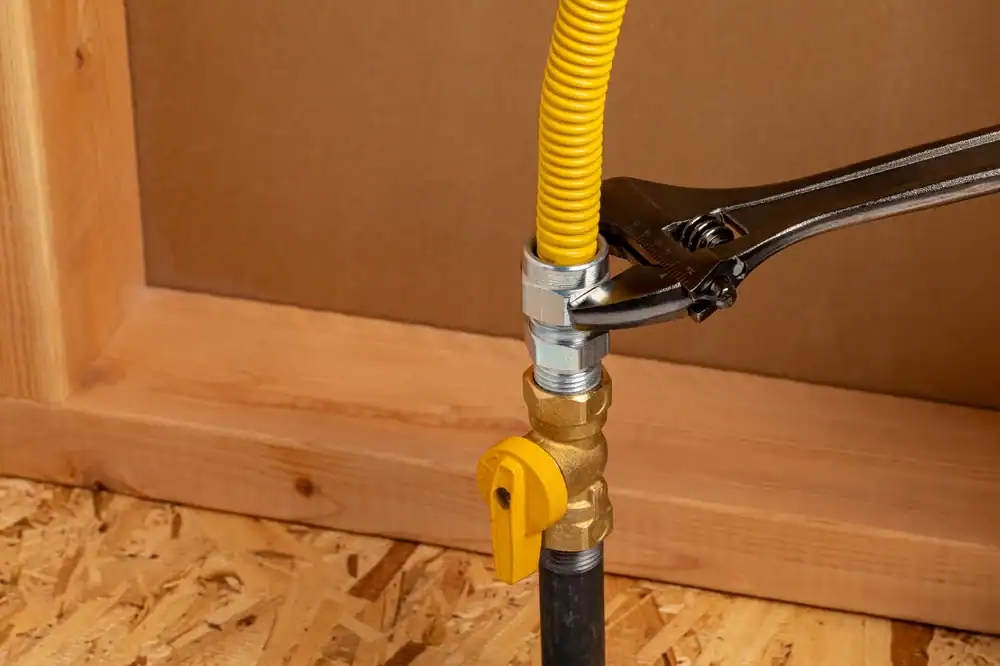
A gas shutoff hits differently when you’re at 374 feet above sea level with the harbor wind coming through. Grymes Hill sits at the second-highest natural point in all five boroughs, and when the heat goes out in January, you feel every degree of that elevation. We don’t just get gas restored — we get it restored fast, legally, and without the paperwork mistakes that drag a two-week process into two months.
Most people don’t realize until they’re in the middle of it that gas restoration in NYC isn’t just a repair job. It involves filing an Emergency Work Notification with the NYC Department of Buildings, pulling the right permits, passing a DOB pressure test, coordinating with Con Edison, and then waiting for the utility to schedule its own inspection before service is restored. Every one of those steps has to happen in the right order, and we handle all of it.
For homeowners in Grymes Hill — where Victorian-era homes, Federal-style properties, and early 20th-century buildings line Howard Avenue, Prospect Avenue, and the surrounding hillside streets — the gas piping inside the walls is often decades old. Cast iron and galvanized pipe from that era corrodes from the inside out. When Con Edison detects a problem and locks the meter, we assess what’s actually needed honestly, quote it accurately, and execute it without surprises.
We’ve been operating on Staten Island since 1983 — four decades of gas work, permit filings, DOB inspections, and utility coordination through every regulatory change this industry has faced, including the full overhaul that came with Local Laws 150 through 154 in 2016. When those laws took effect and reshaped what licensed gas work actually requires in NYC, we were already 33 years into doing it right.
We’re a family-owned, father-and-son operation. Bobby and Rob Jr. are the ones who answer the call, show up to the job, and do the work. There’s no dispatcher routing a crew from across the borough. When you hire RB Mechanical Plumbing and Heating, you know exactly who’s walking through the door — and exactly who’s responsible for the outcome.
For Grymes Hill residents — whether you’re in a historic home near Casa Belvedere on Howard Avenue or a multi-family building on Arlo Road — that direct accountability matters. The person holding Licensed Master Plumber #1169 is the person doing your gas work.
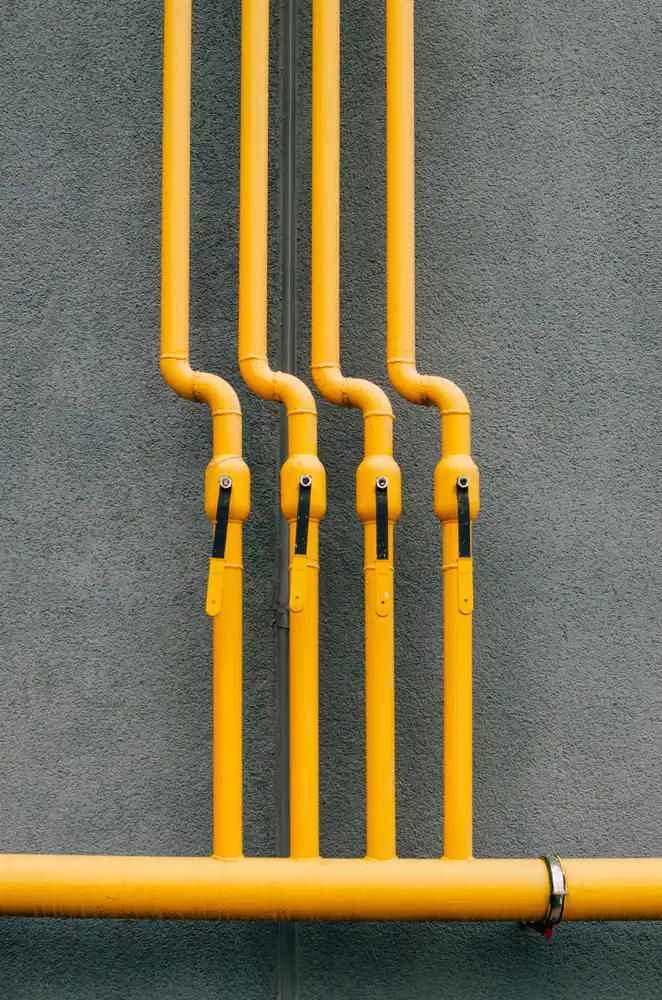
The first thing that needs to happen after a gas shutoff is an Emergency Work Notification filed with the NYC Department of Buildings. This is the legal gateway that allows a Licensed Master Plumber to begin emergency repair work. We handle this filing immediately — it’s not something you should be chasing us to do days after the shutoff.
Once the EWN is filed and the scope of repair is confirmed, we begin the actual pipe work. For many Grymes Hill homes — particularly the older properties on the hillside streets above the Staten Island Expressway — this may involve replacing sections of aging gas piping that have corroded or failed pressure tolerances. After repairs are complete, a DOB pressure test is required. This is a hard regulatory gate. The system has to hold pressure before any inspection can be scheduled.
Our track record here matters: a failed pressure test means starting the inspection process over, which adds weeks. Once the pressure test passes, the DOB schedules a final inspection. After that clears, Con Edison coordinates its own two-step process — a visual inspection of our repair work, followed by a separate leak test — before service is restored. Con Edison’s timeline in Staten Island typically runs one to three weeks from the point repairs are approved. We keep every step moving without gaps, so you’re looking at the low end of that window.
Ready to get started?
Gas restoration isn’t one service — it’s a sequence of coordinated steps, and the quality of the outcome depends on how well each one is handled. We manage the full process: Emergency Work Notification filing, DOB permit coordination, gas line repair or replacement, pressure testing, DOB final inspection, Con Edison coordination, and utility reconnection sign-off. One call, one point of contact, no handoffs to subcontractors.
For multi-family buildings in Grymes Hill — including properties on Arlo Road, Howard Avenue, and Van Duzer Street — there’s an additional layer to consider. Under Local Law 152, most buildings with more than two units are required to undergo gas piping inspections on a four-year cycle. Staten Island Community Board 1, which covers Grymes Hill, fell within the 2024–2025 inspection cycle. If your building missed that filing deadline, or if it failed the inspection, a DOB-ordered gas shutoff is a real possibility.
We handle both the compliance inspection side and the restoration side — so whether you’re trying to prevent a shutoff or recover from one, the process starts the same way. The credentials behind this work matter in a city where not every plumber can legally touch gas piping. Under Local Law 150 of 2016, all gas work in NYC must be performed by a Licensed Master Plumber with a Gas Work Qualification. We hold LMP #1169, FDNY Certificates of Fitness #89078745 and #88089263, and Licensed Master Fire Suppression Contractor #954B. Every one of those is verifiable. Non-compliance with NYC gas regulations can carry penalties of up to $10,000 — the credentials your plumber carries are not a formality.
The honest answer depends on two things: how quickly the repair work is completed and how efficiently the DOB and Con Edison steps are handled afterward. On the repair side, a straightforward gas line fix in a Grymes Hill home can be done in a day. The regulatory process that follows is where timelines vary.
After repairs are complete, a DOB pressure test has to pass before an inspection can be scheduled. Once the DOB inspection clears, Con Edison coordinates its own process — a visual inspection of our work and then a separate leak test — before restoring service. Con Edison’s timeline in Staten Island typically runs one to three weeks from the point all repairs are approved.
For older Grymes Hill properties where the gas piping itself may need more extensive replacement — which is common in Victorian-era and early 20th-century homes on the hillside streets — the repair phase may take longer. We file paperwork correctly the first time and pass the pressure test without a re-do, keeping the total timeline at the low end. A plumber who misfiles or fails the test can add weeks or months to the process.
No, and this is one of the most important things to understand before you hire anyone. Since January 1, 2020, all gas work in New York City must be performed by a Licensed Master Plumber who also holds a Gas Work Qualification — a separate credential issued by the NYC Department of Buildings. A standard plumbing license is not enough. Many licensed plumbers do not hold this qualification, which means they cannot legally perform gas piping repairs, conduct pressure tests, or submit the required documentation to the DOB.
This matters especially in a neighborhood like Grymes Hill, where older homes may need more than a simple valve repair. If a plumber without the Gas Work Qualification starts the job and it comes out during inspection, the work stops, the paperwork gets rejected, and you’re back to square one — with a longer outage and potentially more money spent. Before anyone starts work on your gas system, ask for their LMP number and confirm their Gas Work Qualification status on the NYC DOB website. We hold LMP #1169, and that credential is publicly verifiable.
An Emergency Work Notification, or EWN, is a filing submitted to the NYC Department of Buildings that gives a Licensed Master Plumber legal authorization to begin emergency repair work on a gas system. It’s filed by email to the DOB’s LAA Unit and has been required since November 2016. If your gas was shut off by Con Edison, National Grid, the DOB, or the FDNY due to a detected leak or safety concern, an EWN is almost certainly required before any repair work can legally begin.
The EWN is not something a homeowner files — it has to come from the Licensed Master Plumber taking responsibility for the job. This is one of the first things we handle after you make contact, because nothing else in the restoration process can move forward until this filing is in place. Delays in filing the EWN are one of the most common reasons gas restorations in NYC drag on longer than they should. Getting it filed immediately — the same day if possible — is how you keep the overall timeline from slipping.
Local Law 152 requires most buildings in New York City — excluding single- and two-family homes — to undergo gas piping inspections on a four-year cycle, organized by community district. Grymes Hill falls within Staten Island Community Board 1, which was in the inspection cycle for 2024 and 2025. If your building didn’t file the required GPS1 inspection report or GPS2 certification by the deadline, you’re likely looking at a DOB violation and possible enforcement action.
The DOB can order a gas shutoff for non-compliance with Local Law 152, which means the problem doesn’t stay administrative for long. The path forward involves getting the inspection completed by a Licensed Master Plumber with a Gas Operator Qualification, addressing any deficiencies found during the inspection, and filing the appropriate documentation with the DOB. If the inspection reveals piping issues that require repair, those have to be resolved before the building can be cleared.
We handle both the inspection compliance side and any repair or restoration work that follows — so you’re not managing two separate contractors through a process that needs to move in a straight line.
Con Edison or National Grid shuts the gas off for safety reasons — but they do not repair the building’s internal gas piping. That’s entirely the responsibility of the property owner. The utility’s role is to shut off service when a problem is detected and then restore it once the building’s piping has been repaired, inspected by the DOB, and cleared.
So the sequence is: you hire a Licensed Master Plumber, the plumber repairs the gas piping, the system passes a DOB pressure test, the DOB conducts a final inspection, and then Con Edison comes back to do its own inspection and reconnect service. The utility is the last step, not the first.
For building owners and property managers in Grymes Hill — whether you’re managing a two-family on Van Duzer Street or a larger multi-unit building on Arlo Road — understanding this distinction matters. Waiting for the utility to “fix it” is not how this process works. The clock on Con Edison’s restoration timeline doesn’t even start until all the building-side work is done and approved.
The pressure test is the hard gate in this process. Before the DOB schedules a final inspection, the repaired gas system has to hold pressure — and if it doesn’t, the inspection process starts over. A failed pressure test isn’t just a setback; it adds real time to an outage that’s already affecting your heat, hot water, and ability to cook. The difference between a plumber who passes on the first attempt and one who doesn’t can easily be the difference between two weeks and two months without gas service.
What drives first-time success is experience with the full regulatory process — not just the physical repair, but the paperwork, the sequencing, and the pressure test protocol. We’ve been doing gas work on Staten Island since 1983, through every version of the city’s permitting and inspection requirements. The 2016 Local Law overhaul changed the rules significantly, and we adapted immediately and have operated under the current framework from day one.
For a Grymes Hill home with aging infrastructure — where the scope of work may be more involved than a simple repair — that institutional knowledge is what keeps the process moving forward instead of backward.
Other Services we provide in Grymes Hill