
Stapleton residents already know what a prolonged gas outage looks like. When nearly 100 families at the Stapleton Houses went close to a year without cooking gas, it wasn’t just an inconvenience — it was hot plates, slow cookers, and a neighborhood watching the clock. That’s what happens when gas restoration gets mishandled or delayed.
When gas restoration is handled correctly the first time — with the right permits filed immediately, the pressure test passed on the first attempt, and National Grid coordinated properly from day one — you’re looking at weeks, not months. That’s the difference between a disruption and a disaster.
For Stapleton specifically, this matters even more. The neighborhood’s housing stock runs the full range from 1880s Victorians on Van Duzer Street to 1920s row houses near Tappen Park to mid-century multi-families east of Bay Street. Older buildings mean older gas piping — and older piping means the scope of work is often more involved than a simple patch. Getting that work done right, and getting it approved by the DOB and National Grid without delays, is what actually gets your gas back on.
We’ve been working on Staten Island’s buildings since 1983 — that’s 40-plus years of navigating the DOB, working directly with National Grid, and handling gas restoration jobs in the exact kind of pre-war and multi-family building stock that lines the streets of Stapleton.
When you call, Bobby and Rob Jr. are the ones who show up. Not a crew you’ve never met. The Licensed Master Plumber — LMP #1169 — is on-site doing the work ourselves. That accountability matters in a neighborhood where residents have seen firsthand what happens when a gas problem gets handed off to people who don’t treat it with the urgency it deserves.
We also hold two FDNY Certificates of Fitness, a Licensed Master Fire Suppression Contractor license, and Certified Backflow Prevention Technician credentials. For a gas restoration job in Stapleton, where the buildings are old and the stakes are real, that depth of credentialing is exactly what you want on your side.
The first thing to understand is that once National Grid locks your gas meter, you cannot turn it back on yourself. Tampering with a locked meter is illegal and dangerous. The only path forward is through a Licensed Master Plumber with a Gas Work Qualification — and that process has a specific sequence that has to be followed correctly.
Here’s how it works when you call us. The first step is assessing what caused the shutdown and determining the full scope of repair needed. In Stapleton’s older buildings, that sometimes means discovering that a section of corroded cast-iron pipe needs full replacement rather than a spot fix — and it’s better to know that upfront than to find out after a failed pressure test.
Once the repair scope is clear, an Emergency Work Notification gets filed with the NYC DOB, which is the legal authorization to begin emergency gas work. From there, we complete the repair, a DOB pressure test is scheduled and passed, and National Grid is coordinated for the final utility inspection and meter restoration.
National Grid’s stated timeline, once all work is complete and approved, is one to two days — not exceeding five business days. That clock starts only after the plumber’s work passes inspection. The faster the paperwork is right and the pressure test passes on the first try, the faster that clock starts. That’s where our 40-plus years on Staten Island — working specifically with National Grid’s restoration protocols — makes the real difference for every Stapleton customer we serve.
Ready to get started?
Gas restoration in Stapleton isn’t a single task — it’s a coordinated sequence of regulatory and technical steps, and every one of them has to be done correctly. We handle the complete process: Emergency Work Notification filing with the DOB, full repair of the gas piping system, DOB pressure testing, inspection coordination, and National Grid sign-off for meter restoration. Nothing gets handed off or left for you to figure out on your own.
Stapleton falls under Staten Island Community District 1, which means buildings here are subject to Local Law 152’s four-year gas piping inspection cycle. If your shutdown was triggered by a failed inspection rather than a utility-detected leak, that compliance piece has to be resolved as part of the restoration — not just the physical repair. We handle both sides of that, which means you’re not calling one company for the repair and scrambling to find another for the compliance filing.
For multi-family buildings along the Bay Street corridor or the side streets running toward Tompkins Avenue, a gas shutdown affects every tenant in the building simultaneously. We’re equipped to handle building-wide restoration — pressure testing across multiple units, full DOB permit coordination for the entire structure, and National Grid reconnection for the whole building. Before any work begins, you’ll receive a detailed cost breakdown with no hidden charges and no surprise invoices at the end.
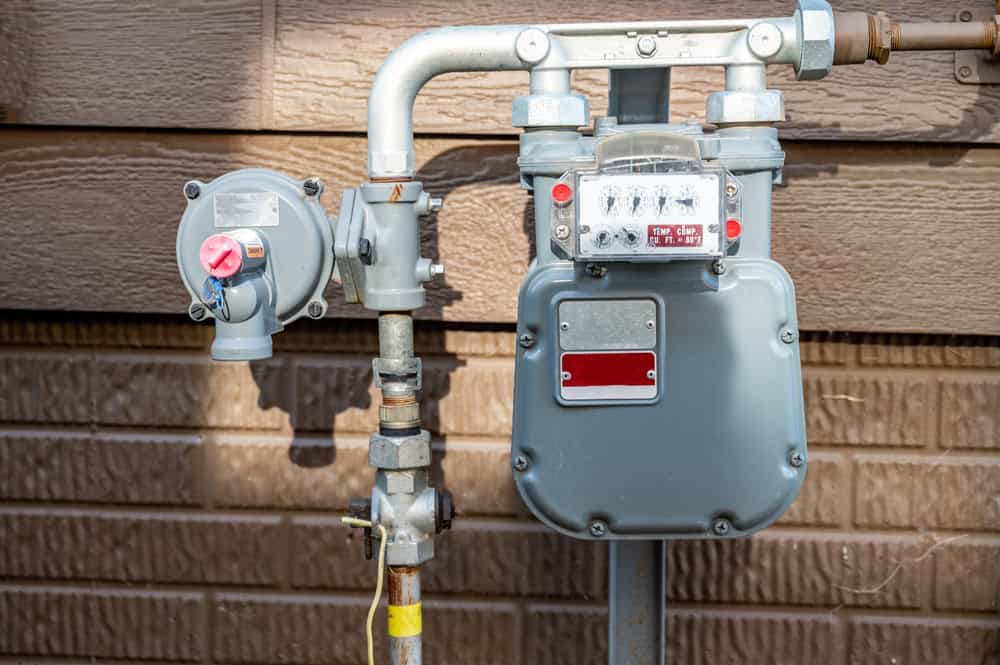
National Grid’s official position is that once all repair work is complete and approved, service restoration takes one to two days — and no more than five business days. The catch is that the clock doesn’t start until the plumber’s work has passed the DOB pressure test and National Grid has completed its own inspection of the repair. If the paperwork is filed incorrectly, or if the pressure test fails and has to be repeated, those delays stack up before the five-business-day window even begins.
In Stapleton, where much of the housing stock involves older gas piping systems, the repair itself can take longer than it would in a newer building — especially if corroded sections of pipe need full replacement rather than a targeted fix. The realistic timeline from the day National Grid shuts off your gas to the day it’s restored is typically a matter of weeks when everything goes right. The difference between weeks and months almost always comes down to who you hired and how well they managed the process from the first filing to the final utility sign-off.
No — and this is one of the most important things to understand before you hire anyone. Since January 1, 2020, under Local Law 150 of 2016, all gas work in New York City must be performed by a Licensed Master Plumber who also holds a Gas Work Qualification. A general plumbing license alone is not enough. If a plumber doesn’t hold both credentials, they cannot legally perform the repair, file the required permits, or pass the DOB pressure test — which means the job stalls, and your gas stays off.
Before you hire anyone for gas restoration in Stapleton, ask for the plumber’s LMP license number and confirm it includes a Gas Work Qualification. Both are verifiable on the NYC DOB website. We hold LMP #1169 with Gas Work Qualification. You can look that up yourself. In a neighborhood with multiple plumbing companies competing for this work, that verification step takes about two minutes and tells you immediately whether the person you’re calling can actually do the job legally.
An Emergency Work Notification, or EWN, is the document your Licensed Master Plumber files with the NYC Department of Buildings to get legal authorization to begin emergency gas repair work. It’s filed by email with the DOB’s LAA Unit and it’s the required first step before any gas restoration work can legally start. Without it, the plumber isn’t authorized to touch the gas system, and any work done without it won’t be recognized by the DOB or National Grid during the inspection process.
If your gas was shut off due to a detected leak, a DOB violation, or a failed Local Law 152 inspection — all of which are common triggers in Stapleton’s older multi-family buildings — an EWN is typically required to initiate the restoration process. The faster it gets filed, the faster the clock starts moving toward getting your gas back on. This is one of the steps where an experienced plumber makes a tangible difference: knowing exactly how to file the EWN correctly the first time avoids the delays that come from paperwork errors or incomplete submissions.
Yes, in most cases. When National Grid detects a leak or a safety issue in a multi-family building, they typically shut off gas service to the entire building — not just the affected unit. That means every tenant in every apartment loses heat, hot water, and cooking gas simultaneously. For the multi-family buildings that line much of the Bay Street corridor and the surrounding blocks in Stapleton, that can mean a significant number of households affected by a single shutdown event.
From a restoration standpoint, a building-wide shutdown requires pressure testing across all units, DOB permit coordination for the full structure, and National Grid sign-off for the entire building before service can be restored. It’s a more involved process than a single-unit repair, and it requires a plumber who has handled this kind of scope before. We handle building-wide gas restoration, including all the multi-unit coordination that comes with it. As the building owner, you’re also exposed to HPD violations and potential rent abatement claims from tenants if restoration drags on — which is another reason speed and competence on the first attempt matter so much.
The most common triggers are a gas leak detected by National Grid during routine inspection or service work, a DOB-ordered shutdown following a Local Law 152 inspection failure, or a safety issue flagged during unrelated work on the building. In Stapleton specifically, the age of the housing stock is a major factor. Buildings from the 1880s through the mid-20th century — the Italianate Victorians on Van Duzer Street, the row houses near Tappen Park, the mid-century apartment buildings throughout the neighborhood — were built with gas piping systems that are now decades past their expected service life.
Stapleton’s waterfront location adds another layer. The salt air and humidity coming off Upper New York Bay accelerate corrosion in aging steel and cast-iron gas pipes. Hairline cracks and joint failures that might take longer to develop in an inland neighborhood can show up sooner here because of the coastal environment. That combination of old infrastructure and waterfront exposure means Stapleton buildings are more likely to see gas shutoffs related to pipe deterioration than newer neighborhoods further inland — and more likely to need full pipe replacement rather than a simple repair when the shutdown happens.
Local Law 152 is a New York City law that requires most buildings — everything except single and two-family homes — to have their gas piping systems inspected every four years by a Licensed Master Plumber with a Gas Operator Qualification. The inspections are scheduled on a rolling cycle by community district. Stapleton is in Staten Island Community District 1, which is on the city’s four-year inspection rotation.
If your building fails the inspection, or if the required compliance certification isn’t filed with the DOB by the deadline, the DOB can issue a gas shutdown order. This is separate from a National Grid shutoff — it’s a regulatory action triggered by non-compliance, not a utility-detected leak. The restoration process in that case involves both fixing whatever the inspection identified and filing the correct compliance documentation with the DOB before National Grid will restore service.
We handle both sides of this — the inspection itself and, if needed, the restoration work that follows a failed inspection. For building owners in Stapleton who haven’t filed their Local Law 152 certification or aren’t sure where they stand in the inspection cycle, getting ahead of this proactively is far less disruptive than dealing with a DOB-ordered shutdown after the fact.
Other Services we provide in Stapleton