
The restoration process, while genuinely bureaucratic, has a clear sequence. When that sequence is handled correctly by someone who knows National Grid’s field crews, the NYC Department of Buildings permit system, and what a pressure test actually requires, you’re looking at weeks — not months. The difference between a two-week resolution and a two-month ordeal almost always comes down to who you hired and how quickly they moved.
For homeowners across Staten Island — whether you’re in a pre-war row house in Port Richmond or a newer build off Hylan Boulevard in Great Kills — the outcome is simple: gas restored, paperwork done right the first time, and no surprise invoice at the end. That’s exactly what this process looks like when it’s handled by people who’ve been doing it on Staten Island for over 40 years.
We’ve been doing gas work on Staten Island since 1983. Bobby and Rob Jr. — a father and son — built this business here, and we still run every job ourselves. When you call, you’re not getting a dispatcher routing a crew from another borough. You’re getting Licensed Master Plumber #1169, with a Gas Work Qualification, FDNY Certificates of Fitness, and over four decades of hands-on experience across every corner of Staten Island.
We know this island’s gas systems the way you only can after 40 years of working them. From the aging North Shore housing stock in Stapleton and New Brighton to the newer South Shore developments near our home base on Englewood Avenue, we’ve handled every gas system type Staten Island has. In a community where reputation travels fast, we’ve stayed in business this long because the work is done right and people talk.
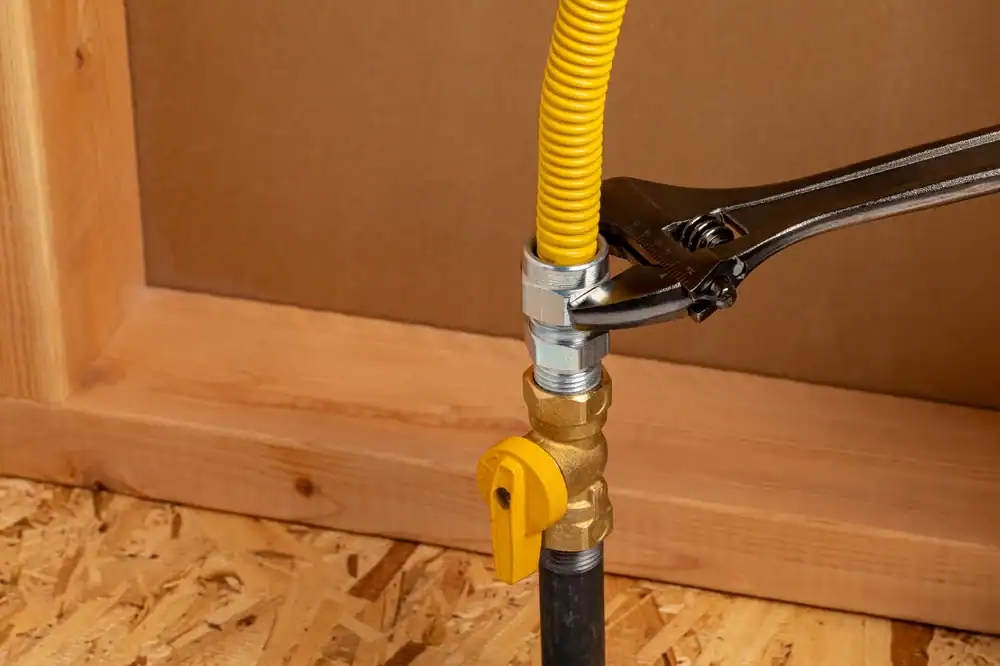
Once National Grid locks your meter, you cannot turn it back on yourself. Only the utility can restore service — and only after the repair work passes both a NYC DOB inspection and National Grid’s own sign-off. That’s the sequence, and skipping any step means starting over.
Here’s how it works in practice. We assess the situation and file an Emergency Work Notification with the NYC Department of Buildings — this is the legal authorization to begin emergency gas repair work. The damaged or non-compliant piping gets repaired or replaced, and a pressure test is conducted. That pressure test has to pass before anything else moves forward.
Once it does, the DOB schedules an inspection, and after that clears, we contact National Grid to schedule the reconnection. National Grid’s stated timeline, once all approvals are in place, is one to two days — though it can extend to five business days depending on scheduling.
What slows this process down is almost always paperwork filed incorrectly, a failed pressure test, or a plumber who doesn’t know how to coordinate with National Grid’s Staten Island field operations. We handle every step — the DOB filings, the pressure test, the inspection scheduling, and the utility coordination — so nothing stalls because someone didn’t know who to call next.
Ready to get started?
Gas restoration on Staten Island involves more than fixing a pipe. Because all of Staten Island is served by National Grid — not Con Edison — the utility coordination process has its own specific requirements, contacts, and inspection protocols. A plumber who primarily works Con Edison territory in Manhattan or the Bronx is operating on unfamiliar ground here. We’ve been working with National Grid’s Staten Island operations for decades and know exactly how that process runs.
The scope of work typically includes leak detection and pipe repair or replacement, Emergency Work Notification filing with the NYC DOB, permit coordination, pressure testing, DOB inspection scheduling, and final National Grid reconnection sign-off. If your boiler or water heater needs to be re-lit and inspected after service is restored, we handle that too — we hold FDNY Certificates of Fitness (#89078745 and #88089263) for fuel-burning equipment, which matters for the older boiler systems common in North Shore homes and the gas appliances found throughout Mid-Island and South Shore properties.
One thing worth knowing for Staten Island homeowners specifically: if you own a one- or two-family home, you are generally exempt from Local Law 152’s mandatory periodic gas inspections. But that exemption does not remove the permit and DOB inspection requirements when your gas gets shut off and needs to be restored. Those steps apply regardless of building type, and they require a Licensed Master Plumber with a Gas Work Qualification — which is exactly what LMP #1169 carries.
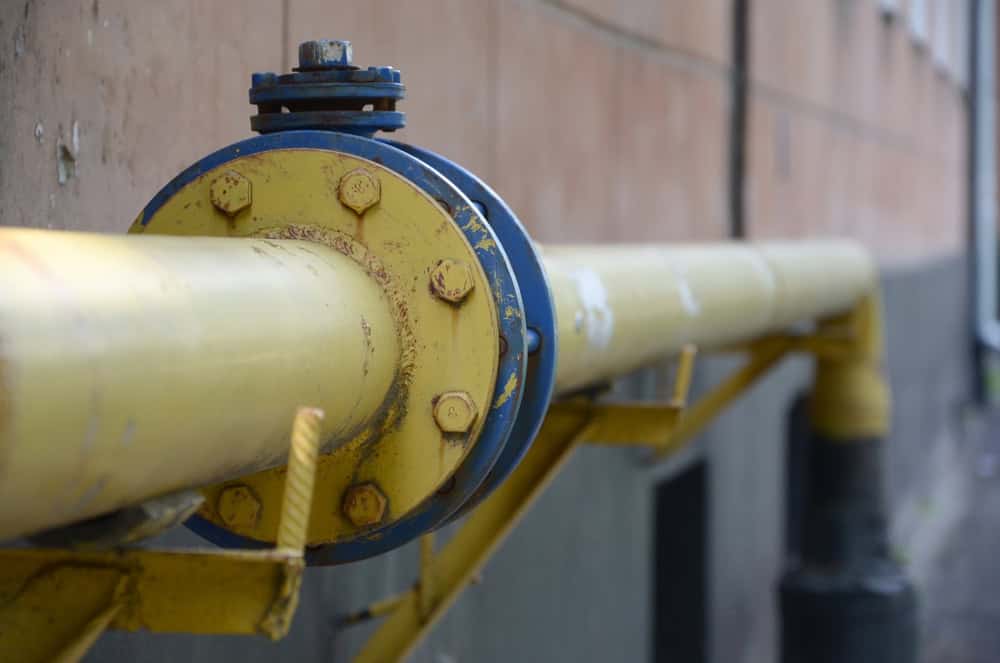
The first thing to do is not try to restore it yourself. Once National Grid locks the meter, tampering with it is illegal and will make the restoration process significantly harder. What you need immediately is a Licensed Master Plumber who holds a Gas Work Qualification — because under Local Law 150 of 2016, that’s the only person legally permitted to perform gas restoration work in New York City.
From there, we file an Emergency Work Notification with the NYC Department of Buildings, which is the legal authorization to begin emergency repair work. That filing has to happen before any physical work starts. On Staten Island, where National Grid is the gas utility, we also coordinate National Grid’s specific inspection and reconnection process — which differs from Con Edison’s process used in other boroughs. Getting that coordination right from the start is what keeps the timeline in the two-to-three-week range rather than dragging into months.
National Grid’s stated timeline, once all repair work is approved and inspections are complete, is one to two days for reconnection — though it can take up to five business days depending on crew scheduling. The longer part of the process is everything that happens before National Grid comes back: the DOB permit filing, the physical repair, the pressure test, the DOB inspection, and the utility coordination.
In realistic terms, a straightforward restoration on Staten Island — a single-family home with a localized issue and a plumber who files correctly the first time — can be resolved in two to three weeks total. What extends that timeline is a failed pressure test, incorrect paperwork, or a plumber who isn’t familiar with National Grid’s Staten Island field operations. Every delay in the permit or inspection chain adds days. Getting it right the first time is not just convenient — in a Staten Island winter, when your heat and hot water are both offline, it’s a genuine urgency.
No — and this is one of the most important things to understand before you hire anyone. Since January 1, 2020, under Local Law 150 of 2016, all gas work in New York City must be performed by a Licensed Master Plumber who also holds a specific Gas Work Qualification. A general plumbing license alone is not enough. If a plumber doesn’t have that qualification, they cannot legally touch the gas piping, perform the pressure test, or submit the required documentation to the DOB.
This matters especially on Staten Island because the borough has a mix of older and newer housing stock — from pre-war buildings in Stapleton and Port Richmond to newer construction on the South Shore — and the gas systems in each era of home present different repair challenges. An under-qualified contractor who attempts the work will fail the DOB inspection, forcing the job to start over. That means more time without gas and additional costs on top of the original repair. Verifying a plumber’s LMP number and Gas Work Qualification on the NYC DOB website before you hire is worth the two minutes it takes.
An Emergency Work Notification, or EWN, is a filing submitted to the NYC Department of Buildings that authorizes a Licensed Master Plumber to begin emergency gas repair work before a full permit is processed. It’s sent to the DOB’s LAA Unit and is specifically required when gas service has been shut off and needs to be restored urgently — which is exactly the situation most Staten Island homeowners find themselves in after a National Grid lockout.
Without the EWN, the plumber cannot legally begin the repair work. It’s the starting gate for the entire restoration process. On Staten Island, where the vast majority of gas shutoffs involve National Grid rather than Con Edison, the EWN filing is coordinated alongside National Grid’s own notification requirements — meaning the plumber needs to know both systems simultaneously. This is not the kind of filing you want someone learning on the job. It needs to be done correctly and submitted immediately, because every hour it sits unfiled is another hour your family is without heat, hot water, or the ability to cook.
The end result is the same — your gas is off and you need a Licensed Master Plumber to get it back on — but the starting point is different, and it affects what paperwork is required. A safety shutoff typically happens when National Grid’s field crew detects a leak during a routine inspection or service call and locks the meter on the spot. A DOB-initiated shutoff happens when a building fails a compliance inspection or has an outstanding violation.
On Staten Island, most homeowners in one- and two-family homes are exempt from Local Law 152’s mandatory periodic gas inspections — so a DOB compliance shutoff is less common for the typical South Shore or Mid-Island homeowner than it is for apartment building owners. However, National Grid conducts its own residential line inspections on a roughly three-year cycle, and those inspections do result in immediate shutoffs when a problem is found. Either way, the restoration path runs through the same sequence: Emergency Work Notification, repair, pressure test, DOB inspection, and National Grid reconnection. The paperwork varies slightly depending on the shutoff type, which is another reason to work with a plumber who knows the difference.
It matters because gas restoration on Staten Island is a National Grid job — not a Con Edison job. The two utilities have different restoration processes, different field crew contacts, different inspection protocols, and different timelines. A plumber who primarily works Manhattan or the Bronx is operating in Con Edison territory. When they come to Staten Island and encounter National Grid’s system, there’s a learning curve — and that learning curve shows up as delays, misfiled paperwork, and failed coordination.
We’re based at 49 Englewood Avenue on Staten Island’s South Shore and have been doing gas work across the island — from the North Shore neighborhoods along Bay Street to the South Shore communities near the Korean War Veterans Parkway — since 1983. That’s four decades of working with National Grid’s Staten Island operations specifically. We know the field crews, we know the inspection process, and we know how to keep the restoration moving. On an island where everyone knows everyone and reputation is everything, that kind of local track record isn’t something you manufacture. It’s built one job at a time, over 40 years.
Other Services we provide in Staten Island