
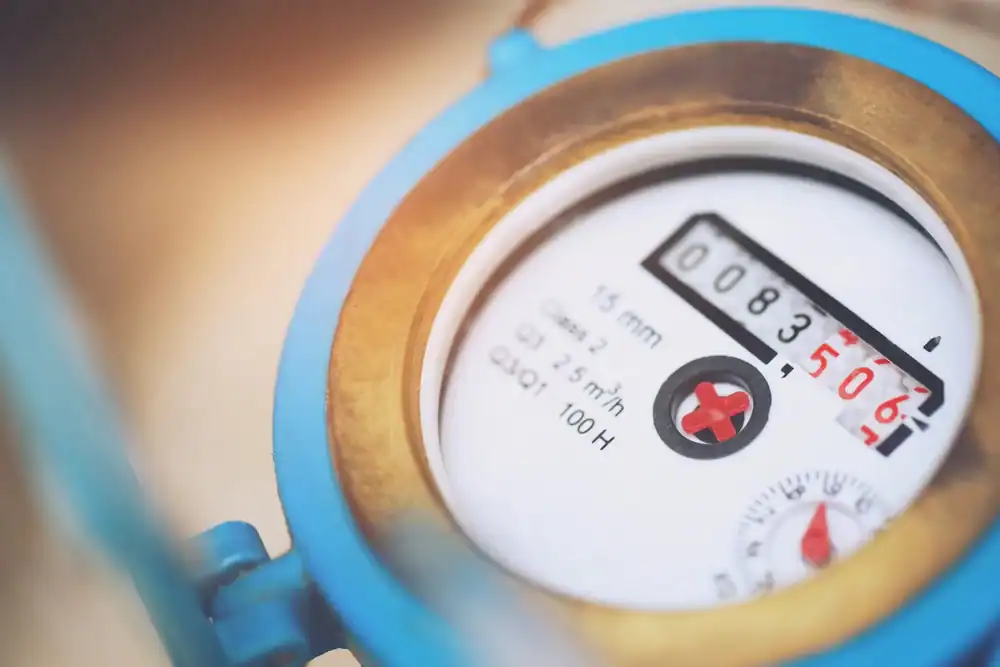

When your building’s gas piping inspection is done correctly and your GPS2 certification is filed with the NYC DOB, the anxiety stops. No more wondering if a Notice of Violation is coming in the mail. No more guessing whether your 1970s gas lines are going to pass. You know where you stand, and you have the paperwork to prove it.
For Heartland Village building owners, that peace of mind carries extra weight right now. Community District 2’s Cycle 2 deadline was December 31, 2025 — it’s gone. The DOB began issuing formal Notices of Violation in January 2026 for buildings that missed it. If you live in your two-family home and rent the other unit, a gas shutoff doesn’t just affect your tenant — it affects your own kitchen and hot water. The stakes here are personal, not just financial.
Most of the original Heartland Village development went up between the late 1960s and early 1980s. That means a large portion of the neighborhood’s gas piping systems are now 40 to 60 years old — all aging at roughly the same pace. Getting ahead of what’s actually in those pipes, on your timeline and with a plumber you trust, is a very different experience than finding out during an emergency.
We’ve been doing this work since 1983 — which means we were already working inside NYC buildings before most of Heartland Village’s current housing stock was finished. That’s not a coincidence worth ignoring. When the gas piping in a neighborhood was installed during roughly the same decade we started our career, we develop a real feel for what those systems look like today.
Bobby and Rob are the licensed master plumbers at RB Mechanical Plumbing and Heating, and we’re the ones who actually show up. No subcontractors, no crews you’ve never met. The GPS1 report — the legal inspection document that gets submitted to the NYC DOB — has our names and license on it. That creates a level of personal accountability you don’t get from a larger operation.
Staten Island is National Grid territory, not Con Edison. When an inspection turns up an Abnormal Operating Condition and repairs are needed, the gas restoration process runs through National Grid’s specific protocols. That’s a detail that matters when you’re trying to get your Heartland Village building back to normal quickly, and it’s something we navigate as part of the job.
It starts with a call. You describe your building — how many units, when it was built, whether you’ve had any prior inspections — and we give you a clear, upfront cost breakdown before anything begins. No guessing, no surprise charges at the end. For a two-family home in Heartland Village, that conversation is usually straightforward.
On inspection day, a licensed master plumber conducts a visual examination of all exposed gas piping throughout the building — boiler room, mechanical spaces, common areas, hallways. We’re looking for atmospheric corrosion, pipe support issues, potential leaks, and anything that qualifies as an Abnormal Operating Condition under the law. Electronic leak detection equipment is part of the process. Because Heartland Village’s housing stock was largely built in a concentrated window during the late 1960s through early 1980s, the piping in these buildings tends to share similar characteristics — and we know what to look for in systems of that age.
After the inspection, you receive the GPS1 report within 30 days. From there, the GPS2 certification — the filing that actually closes your compliance obligation with the NYC DOB — needs to be submitted within 60 days. We walk you through that process so you’re not navigating the DOB NOW portal on your own. If repairs are needed, we handle those too, including the National Grid coordination required before gas service is restored.

Ready to get started?
Local Law 152 requires that your building’s exposed gas piping be inspected by a Licensed Master Plumber every four years. The inspection covers everything from the point where gas enters the building through the common areas, mechanical rooms, and boiler room — up to but not including individual tenant spaces. It does not cover piping hidden inside walls. For the two-family homes and mid-rise condominiums that make up most of Heartland Village’s housing stock, this scope is typically manageable, and the inspection itself is far less disruptive than most building owners expect.
What separates us from an inspection-only firm is what happens if something is found. If the inspection turns up a deficiency — a corroded section of pipe, a support issue, an Abnormal Operating Condition — we can handle the repair in the same engagement. You don’t have to go find a second contractor under deadline pressure while your tenants wait. For Class 1 conditions that require immediate correction, that continuity matters enormously. For Class 2 conditions, where gas typically remains on during the correction window, it still saves you significant coordination time.
The civil penalty for non-compliance with Local Law 152 is $5,000 per violation — reduced from the original $10,000 figure you may have seen cited elsewhere. For three-family buildings, that figure was further reduced to $1,500 as of late 2024. Either way, the cost of the inspection is a fraction of what non-compliance will run you, especially now that enforcement in Community District 2 is active.

If your building is in Heartland Village, you’re in Staten Island Community District 2. The Cycle 2 deadline for Community District 2 was December 31, 2025. If your GPS2 certification wasn’t filed with the NYC DOB by that date, your building is currently non-compliant.
That doesn’t mean the situation is unresolvable — it means you need to move. The DOB began issuing formal Notices of Violation in January 2026 for buildings that missed prior-cycle deadlines, and the $5,000 civil penalty is active, not hypothetical. Getting inspected now, filing your GPS2 as quickly as possible, and addressing any deficiencies found is still the right path forward. A late filing is significantly better than no filing. We can prioritize scheduling for Heartland Village building owners who are already behind, and we have specific experience navigating DOB violation removal for owners who have already received a notice.
The inspection must be performed by a Licensed Master Plumber — that’s a specific NYC DOB credential, not just a general contractor license or a plumbing license from another state. The NYC DOB explicitly recommends that building owners verify a plumber’s LMP status and disciplinary record on the DOB’s public database before hiring anyone to perform this inspection.
This matters because the GPS1 report — the legal document produced by the inspection — is signed and sealed by the LMP. If that credential isn’t current and valid, the report isn’t valid either, and your GPS2 filing won’t hold up. In Staten Island, where National Grid serves as the gas utility, you also want an LMP who understands National Grid’s specific protocols for reporting Abnormal Operating Conditions and coordinating gas restoration after repairs. That’s a different process than what applies in Con Edison territory, and a plumber who primarily works in Manhattan may not have that working familiarity.
This is one of the most common questions we hear from Heartland Village building owners, and it’s a fair one. Gas piping installed in the late 1960s through early 1980s — which covers most of the original Heartland Village development — is now 40 to 60 years old. At that age, the most common findings are atmospheric corrosion on steel pipe, degraded pipe supports, and older fittings that may no longer meet current standards.
Atmospheric corrosion is rated on a scale, and only Level 3 or Level 4 corrosion requires pipe replacement. Many older Heartland Village buildings pass inspections with minor findings or none at all. The inspection is a visual survey of exposed piping — it’s not a full teardown of your building’s gas system. That said, knowing what’s actually in your building’s pipes before a utility emergency forces the issue is always the better outcome. Finding a corroded section during a scheduled inspection, on your timeline, is a very different situation than having National Grid shut off your gas after a leak call.
Not necessarily, and this is important to understand before you assume the worst. Local Law 152 deficiencies are classified as either Class 1 or Class 2. Class 1 conditions represent an immediate hazard — an active gas leak, for example — and do require immediate correction, which can involve a gas shutoff until the repair is made. Class 2 conditions are less urgent, and gas typically remains on while the building owner has a defined window to make corrections.
Most inspections in well-maintained buildings don’t turn up Class 1 conditions. And when they do, having a plumber who can perform the repair immediately — rather than leaving you to find a second contractor while National Grid holds your gas — makes a significant difference in how long your tenants are affected. We handle both the inspection and any necessary repairs, so if something is found, the path to restoration is already in front of you, not something you have to figure out separately.
These are two separate documents with two separate responsibilities, and confusing them is one of the most common mistakes building owners make during the compliance process.
The GPS1 is the inspection report. It’s prepared by the Licensed Master Plumber who performed the inspection, delivered to you as the building owner within 30 days of the inspection date. It documents what was found, how it was classified, and what — if anything — needs to be corrected. The GPS2 is the certification you file with the NYC DOB. That’s your legal obligation as the building owner, and it must be filed within 60 days of the inspection. As of early 2026, all GPS2 filings go through the DOB NOW digital portal — there’s no paper submission option anymore. There’s also a $35 filing fee per GPS2 submission, which is new for this cycle. We walk building owners through the GPS2 filing process so the paperwork side of compliance doesn’t become its own problem after the inspection is done.
It depends on how your property is classified by the NYC DOB. One- and two-family homes that fall under Occupancy Group R-3 are generally exempt from the Local Law 152 inspection requirement. However, many two-family homes in Heartland Village are classified differently — particularly if they were built and permitted as multi-family dwellings rather than traditional one- or two-family residences. The original Heartland Village development from the late 1960s and early 1980s includes a significant number of properties where the occupancy classification isn’t always obvious to the owner.
The safest approach is to confirm your building’s occupancy classification through the NYC DOB before assuming you’re exempt. If your property has been classified as a multi-family dwelling, the inspection requirement applies. And even if your building genuinely has no gas piping at all, there’s still a filing obligation — a certification confirming the absence of gas piping must be submitted to the DOB. Ignoring that requirement because you assume you’re exempt can still result in a violation. We can help you confirm where your building stands before you make any assumptions.
Other Services we provide in Heartland Village